Executive Takeaways
- Critical Infrastructure Milestone: NASA astronauts successfully finalized the installation of the final Rollout Solar Array (iROSA) on the International Space Station, securing a vital power upgrade for orbital operations through the end of the decade.
- Enterprise ROI & Longevity: The $100 billion-plus orbital laboratory receives a crucial 30% power generation boost, mitigating structural degradation risks and safeguarding long-term capital allocation for commercial space R&D.
- Aerospace Supply Chain Impact: Led by prime contractors Boeing and deployable structure specialists Deployable Space Systems (Redwire), the deployment validates next-gen lightweight composite architectures for future deep-space habitats and lunar gateways.
- Commercialization Catalyst: Stabilized, high-capacity orbital power ensures continuous payload execution for private-sector manufacturing, pharmaceutical research, and high-bandwidth cloud compute infrastructure testing in microgravity.
WASHINGTON & HOUSTON — In a triumph of high-stakes orbital engineering, spacewalking astronauts completed the final installation phase of the International Space Station's (ISS) next-generation Rollout Solar Arrays (iROSAs). The successful deployment marks the culmination of a multi-year, highly complex infrastructure overhaul designed to offset the natural degradation of the station's legacy power grid and secure uninterrupted energy yields for the aging orbital outpost.
Clad in Extravehicular Mobility Units (EMUs), the spacewalking crew members executed intricate mechanical linkages and electrical tie-ins outside the orbiting laboratory, culminating in the triumphant radio transmission: "We got it done!" This operational milestone not only guarantees the energetic viability of the station through its planned retirement window but also sets a new benchmark for deployable infrastructure scalability in extreme environments—a vital consideration for institutional risk mitigation and future valuation multiples across the burgeoning commercial space economy.
The Catalytic Need for Power: Mitigating Orbital Infrastructure Decay
Test Our Free AI & Tech Utilities Suite
Calculate LLM API token costs, analyze article dwell-time, or simulate tech DCA returns.
Launched more than two decades ago, the ISS relies on a sprawling network of photovoltaic channels originally designed to support a 15-year operational lifespan. Over years of constant thermal cycling, atomic oxygen exposure, and micro-meteoroid impacts, the station's legacy silicon solar arrays have suffered progressive power output degradation. By the late 2010s, output capacity had dropped significantly from its initial peak, threatening to constrain future payload utilization, advanced scientific experimentation, and the burgeoning demands of commercial resupply modules.
To address this structural vulnerability, NASA, in coordination with international partners and primary industrial stakeholders, greenlit the iROSA program. Rather than replacing the legacy arrays entirely—a cost-prohibitive and structurally perilous endeavor—engineers devised a clever augmentation strategy. The new, highly compact carbon-composite roll-up blankets are mounted directly in front of the existing, degraded arrays, partially shading them while injecting a massive surge of new electricity into the station’s main power channels.
From a capital allocation perspective, the iROSA upgrade represents a masterclass in infrastructure extension. By investing in modular, high-efficiency photovoltaic technology, mission architects preserved the utility of a sovereign asset valued well in excess of $100 billion. This ensures that enterprise-grade research and private-sector product development aboard the station can scale without encountering energy bottlenecks.
Engineering Feats in Microgravity: The Deployment Mechanics

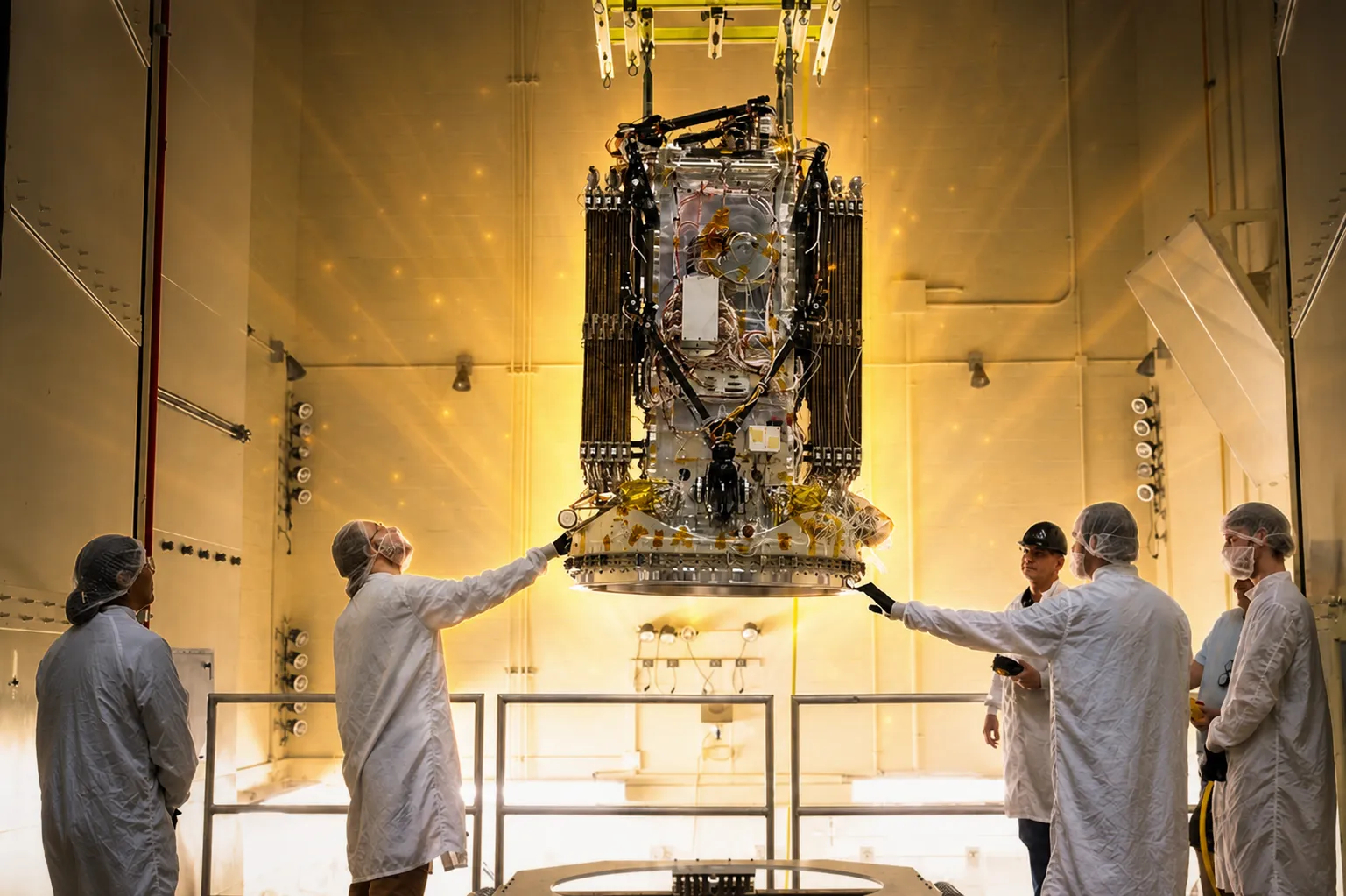
Executing heavy industrial construction in a zero-gravity, high-velocity orbital environment requires extraordinary precision. Each iROSA unit arrives packed tightly into a compact rocket cargo carrier. Once extracted by the station's robotic Canadarm2, spacewalking astronauts must manually maneuver structures weighing hundreds of pounds—yet possessing zero effective weight—through narrow structural pathways on the station’s truss system.
The installation process demands rigorous adherence to safety protocols and regulatory compliance standards established by flight safety boards. Astronauts must secure mounting brackets, align delicate electrical power distribution harnesses, and trigger the self-deploying kinetic release mechanisms that allow the ultra-thin, flexible solar membranes to unroll smoothly.
The deployment sequence utilizes strain-energy composite booms that unfurl automatically when unlatched, eliminating the need for heavy, motor-driven deployment mechanisms. This passive design minimizes mechanical failure points, offering a blueprint for future deep-space exploration infrastructure where robust risk mitigation is paramount.
Verified Data & Metrics Breakdown
| Metric / Specification | Legacy Solar Array System | Next-Gen iROSA System |
|---|---|---|
| Total Power Output | ~160 kW (degraded capacity) | Restored to ~215 kW total capacity |
| Array Dimensions | Rigid planar panels (112 ft long) | Roll-out flexible blankets (60 ft x 20 ft) |
| Primary Contractors | Lockheed Martin / Boeing (Legacy) | Boeing / Deployable Space Systems (Redwire) |
| Operational Lifespan | 15 Years (Exceeded) | 10+ Years (Through ISS Retirement) |
| Power Boost Percentage | Baseline Reference | ~30% Net Increase |
Industry & Market Implications: Who Wins and Who Loses
The successful completion of the iROSA installation sends positive ripple effects across the aerospace and defense sectors, while underscoring the shifting dynamics of institutional versus commercial space operations.
The Winners: Advanced Materials and Commercial R&D
Deployable Structures & Composite Manufacturers: Companies specializing in ultra-lightweight, high-stiffness composite materials—such as Redwire (parent of Deployable Space Systems)—emerge as major beneficiaries. The proven flight heritage of the roll-out architecture positions these firms to capture lucrative supply chain contracts for upcoming commercial space station projects (e.g., Axiom Station, Orbital Reef) and NASA's lunar Gateway.
Commercial Payload Operators: Biotechnology firms, semiconductor manufacturers, and cloud compute infrastructure providers utilizing the ISS laboratory environment win big. The 30% power boost guarantees that power-hungry experiments—ranging from protein crystal growth to fiber-optic manufacturing—can operate simultaneously without triggering load-shedding protocols.
The Strategic Reality Check: Managing Legacy Overhead
While the hardware deployment is a resounding technical victory, it underscores the staggering financial commitment required to maintain legacy orbital assets. As institutional space agencies pivot toward public-private partnerships to fund post-ISS infrastructure, keeping the current station operational requires ongoing capital allocation that could otherwise be redirected toward deep-space exploration initiatives.
Frequently Asked Questions (People Also Ask)
What are iROSAs and why were they installed on the ISS?
iROSA stands for International Space Station Roll-Out Solar Array. They are advanced, highly compact solar panels designed to supplement the station's aging and degraded original power system. As the original silicon arrays experienced natural efficiency loss over two decades of operation, the iROSAs were installed to inject a 30% boost in total electrical power, ensuring the station has sufficient energy for ongoing scientific research and commercial operations.
How do the new roll-out solar arrays work compared to traditional panels?
Traditional ISS solar arrays are rigid, bulky planar structures that were transported to orbit in folding configurations. In contrast, iROSAs utilize flexible photovoltaic blankets attached to self-deploying composite booms. When released in microgravity, the booms automatically unroll the solar blankets, similar to unrolling a carpet. This design drastically reduces cargo volume during launch and simplifies mechanical deployment.
What impact does the iROSA installation have on commercial space activities?
The additional power supply directly benefits commercial entities conducting research and manufacturing aboard the ISS. With increased electrical capacity, private-sector partners can scale up energy-intensive operations such as pharmaceutical crystallization, advanced alloy casting, and microgravity-based technological testing without risking power deficits on the station's primary bus lines.
How long will the new solar arrays support the International Space Station?
The iROSA units are engineered to provide robust power yields for at least a decade, comfortably bridging the operational gap through the planned end-of-life and safe de-orbit timeline of the International Space Station, currently targeted for the early 2030s.
Future Outlook: Transitioning to Post-ISS Infrastructure
With the iROSA power augmentation campaign successfully finalized, attention within the aerospace community shifts toward the horizon of low-Earth orbit (LEO) commercialization. The technical lessons learned from deploying large-scale, flexible structures in orbit will directly inform the engineering of privately owned and operated space stations scheduled to replace the ISS.
Key milestones to watch over the next 24 to 36 months include the uncrewed and crewed developmental flights of commercial free-flyer habitats, continued testing of edge-computing architectures in microgravity, and the evolution of regulatory frameworks governing orbital debris mitigation. As capital liquidity continues to flow into space-tech venture funds and prime defense contractors adapt to agile commercial paradigms, the success of the iROSA deployment proves that humanity's engineering prowess in low-Earth orbit remains razor-sharp, paving a bright, highly energized path toward the future of space-based enterprise.