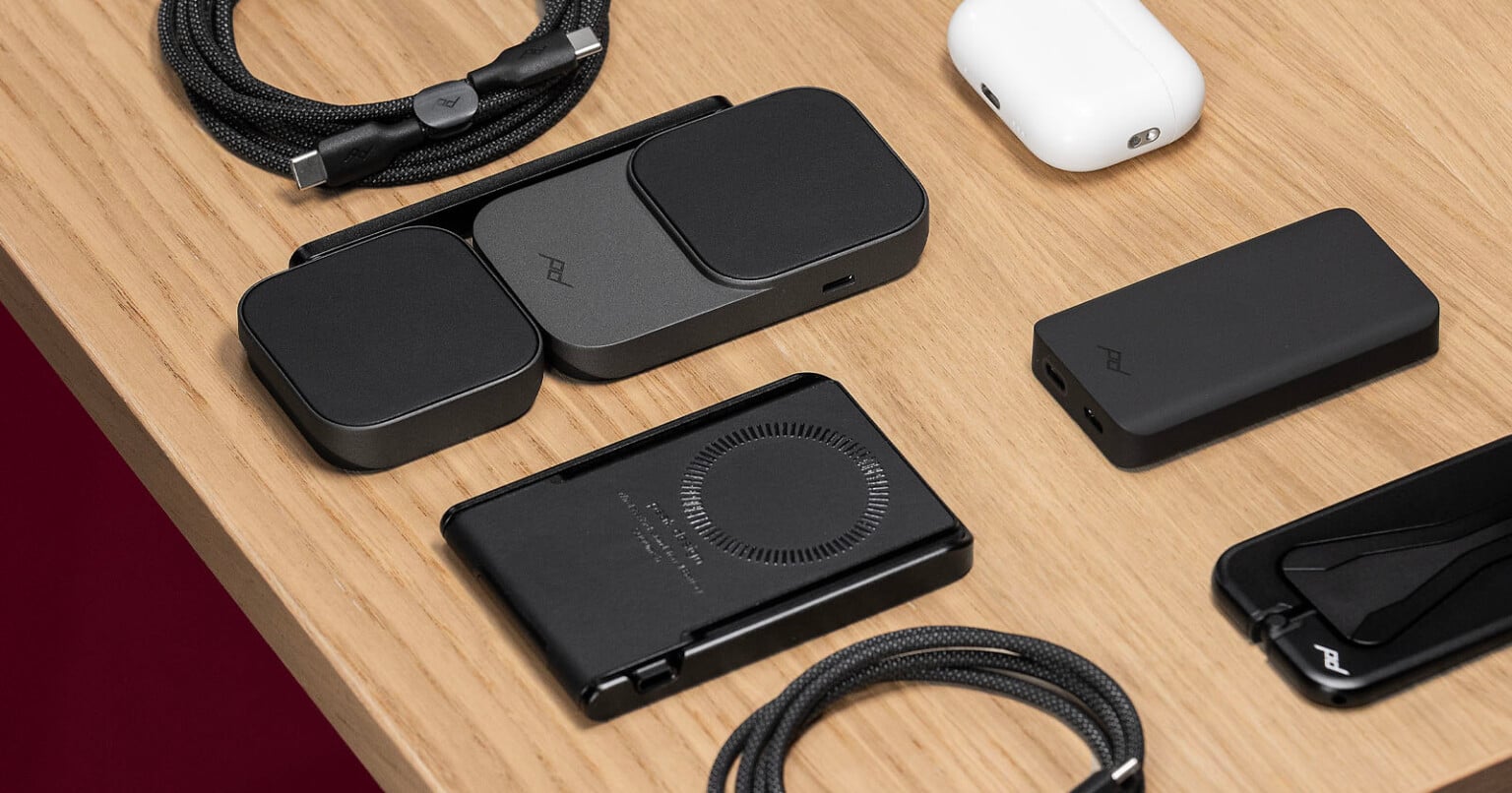
Power Play: How Peak Design’s High-Stakes Pivot into Chargers and Cables Reshapes the Premium Tech Accessory Economy
Test Our Free AI & Tech Utilities Suite
Calculate LLM API token costs, analyze article dwell-time, or simulate tech DCA returns.

In the hyper-competitive consumer technology landscape, brand extension is often a high-stakes gamble with narrow margins for error. For Peak Design—a company whose valuation and market dominance were built on meticulously engineered camera carry solutions, minimalist daily backpacks, and proprietary mounting hardware—the decision to plunge into the commoditized electronics sector represents a seismic strategic shift. By debuting a robust suite of chargers, power banks, and cables, Peak Design is not merely diversifying its catalog; the San Francisco-based enterprise is testing the limits of its brand equity against entrenched incumbents in the high-end power delivery ecosystem. This comprehensive investigative report examines the catalytic events, supply chain dynamics, capital allocation strategies, and broader market implications of Peak Design’s aggressive electronics rollout.
Executive Takeaways
- Strategic Diversification: Peak Design is expanding beyond its core soft-goods and camera-accessory heritage into high-end mobile power infrastructure, targeting power-hungry creative professionals.
- Design-Led Differentiation: The new line—featuring ultra-slim GaN chargers, modular power banks, and braided cables—leverages proprietary mechanical interfaces and space-saving architecture to justify premium pricing models.
- Margin Expansion vs. Execution Risk: While high-end electronics offer lucrative gross margin profiles, entering the semiconductor-dependent power sector introduces complex supply chain vulnerabilities, inventory carrying costs, and strict regulatory compliance mandates.
- Ecosystem Lock-In: The hardware launch directly integrates with Peak Design’s existing Mobile ecosystem, creating a sticky, cross-compatible hardware loop designed to maximize enterprise ROI and customer lifetime value (LTV).
The Catalytic Pivot: Tracing Peak Design’s Evolution
Founded on the back of wildly successful Kickstarter campaigns, Peak Design established its reputation through relentless functional innovation in the photography and everyday carry (EDC) markets. Products like the Capture Camera Clip and the Everyday Backpack set a gold standard for durability, aesthetic restraint, and user-centric engineering. However, as the digital creator economy matured, the company faced a classic innovator's dilemma: how to scale revenue growth within finite niche categories without diluting brand prestige.
The groundwork for this electronics expansion was quietly laid years prior with the launch of their mobile ecosystem—a series of phone cases, mounts, and wallets anchored by the proprietary SlimLink magnetic-mechanical locking system. By proving they could successfully manufacture precision-toleranced hardware that interfaced directly with sensitive mobile devices, leadership validated the internal infrastructure needed for a broader electronics play. The current rollout of power adapters, portable batteries, and cables is the logical culmination of this strategy, transforming Peak Design from a carry brand into an indispensable mobile workflow partner.
Market analysts note that this move reflects astute risk mitigation. Soft-goods manufacturing is increasingly subject to volatile raw material costs, labor fluctuations, and shifting tariff landscapes. By diversifying into high-margin consumer electronics—specifically power delivery, which benefits from perpetual upgrade cycles driven by power-intensive smartphone and laptop chips—Peak Design is fortifying its financial foundation against sector-specific downturns.
Engineering and Architectural Breakdown
Unlike white-label accessories that flood e-commerce marketplaces, Peak Design’s electronics line approaches power delivery through an architectural lens. The engineering team focused heavily on solving perennial user pain points: bulkiness, thermal inefficiency, and cable fraying.
At the center of the lineup are Gallium Nitride (GaN) chargers. By utilizing GaN semiconductors instead of traditional silicon, Peak Design has achieved unprecedented power density, allowing multi-port chargers to maintain a remarkably thin profile that easily slips into crowded travel kits. This reduction in physical footprint without sacrificing thermal dissipation represents a major feat of electronic packaging design.
Simultaneously, the portable battery solutions incorporate modular charging arrays designed to interface seamlessly with MagSafe and the company’s own SlimLink ecosystem. This ensures that power delivery is not just static, but dynamic—allowing users to mount phones directly to power banks during high-drain tasks like mobile vlogging, field journalism, or remote cloud compute management. The accompanying cables utilize custom-machined aluminum housings and heavy-duty braided exteriors, engineered to withstand thousands of bend cycles, thereby addressing the high failure rates common in standard-issue tech cords.
Verified Data & Metrics Breakdown
| Product Category | Core Technology & Materials | Key Performance Metric | Market Positioning & Pricing Tier |
|---|---|---|---|
| GaN Wall Chargers | Gallium Nitride (GaN) Semiconductors | Ultra-slim profile (under 15mm thick), Multi-port USB-PD 3.1 | Premium ($50 - $90) |
| Portable Power Banks | Lithium-Ion Cells, SlimLink Magnetic Mount | High energy density, pass-through charging capabilities | Upper-Mid ($70 - $130) |
| High-Durability Cables | Custom Aluminum Shells, Nylon Braiding | Rated for 20,000+ bend cycles, 240W EPR support | Mid-Tier ($30 - $50) |
| Legacy Ecosystem | Anodized Aluminum, Weatherproof Canvas | Modular interoperability across all hardware verticals | Premium Flagship |
Industry & Market Implications
The rollout of Peak Design’s electronics line sends ripples across the tech accessory landscape, creating distinct winners and losers among industry participants.
The Winners: Premium consumers and digital creators emerge as primary beneficiaries. For years, professionals carrying high-end MacBooks, mirrorless cameras, and flagship smartphones have had to piece together disparate charging ecosystems from generic brands that clash aesthetically and functionally with their gear. Peak Design offers a cohesive, aesthetically unified power infrastructure. Furthermore, specialty retailers and high-end boutique tech stores stand to gain lucrative inventory that commands strong foot traffic and healthy retail margins.
The Losers: Commodity accessory makers and legacy peripheral brands face immediate competitive pressure. Companies that rely on low-cost, uninspired plastic power bricks will struggle to defend their market share against a brand with cult-like consumer loyalty and superior industrial design credentials. Additionally, major phone manufacturers who bundle substandard charging bricks—or omit them entirely—inadvertently create a vacuum that premium independent brands like Peak Design are aggressively filling.
From a broader macroeconomic perspective, this launch highlights how brand equity can transcend category boundaries. In an environment where venture capital funding for hardware startups has tightened significantly, a profitable, self-funded enterprise like Peak Design leveraging its balance sheet to expand into high-growth adjacencies serves as a masterclass in disciplined capital allocation and infrastructure scalability.
Frequently Asked Questions (People Also Ask)
Why is Peak Design expanding into chargers, batteries, and cables?
Peak Design is expanding into electronics to capture higher-margin opportunities within the mobile workflow ecosystem. As digital creators and remote professionals carry increasingly power-hungry devices, providing an integrated, design-forward power infrastructure allows the company to deepen customer loyalty, increase average order value (AOV), and reduce reliance solely on soft-goods carry products.
Are Peak Design’s new chargers compatible with non-Apple devices?
Yes. The entire charging lineup utilizes industry-standard protocols, including USB Power Delivery (USB-PD) 3.1 and Programmable Power Supply (PPS). This ensures optimal, high-speed power delivery across a wide array of hardware ecosystems, including Android smartphones, Windows laptops, tablets, and Nintendo Switch consoles.
How does the SlimLink system integrate with the new power banks?
The SlimLink system combines a secure mechanical hard-lock with high-strength neodymium magnets. In the new power bank lineup, this allows mobile devices to snap securely onto the battery surface, aligning wireless charging coils perfectly while providing a stable mounting solution for hands-free viewing or content creation on the go.
What warranties or guarantees come with Peak Design electronics?
Aligning with their reputation for bulletproof durability, Peak Design backs its electronics line with its signature lifetime warranty policy. This signals strong manufacturing confidence and mitigates consumer hesitation regarding the longevity of complex electronic components compared to traditional mechanical gear.
Future Outlook: What Comes Next
As Peak Design transitions its electronics line from initial launch phase to mass-market execution, several key milestones will dictate its long-term trajectory. Analysts will closely monitor supply chain resilience, particularly regarding semiconductor availability and stringent global regulatory compliance standards for power transmission (such as CE, FCC, and UL certifications).
Furthermore, industry watchers anticipate further ecosystem convergence. The logical next step for the brand involves deepening software-hardware integration—potentially exploring smart charging management apps or IoT-enabled power hubs for studio environments. For investors and market observers, Peak Design’s bold leap into electronics is a defining test of whether exceptional industrial design and community-driven branding can successfully conquer the complex, high-stakes world of mobile power infrastructure.