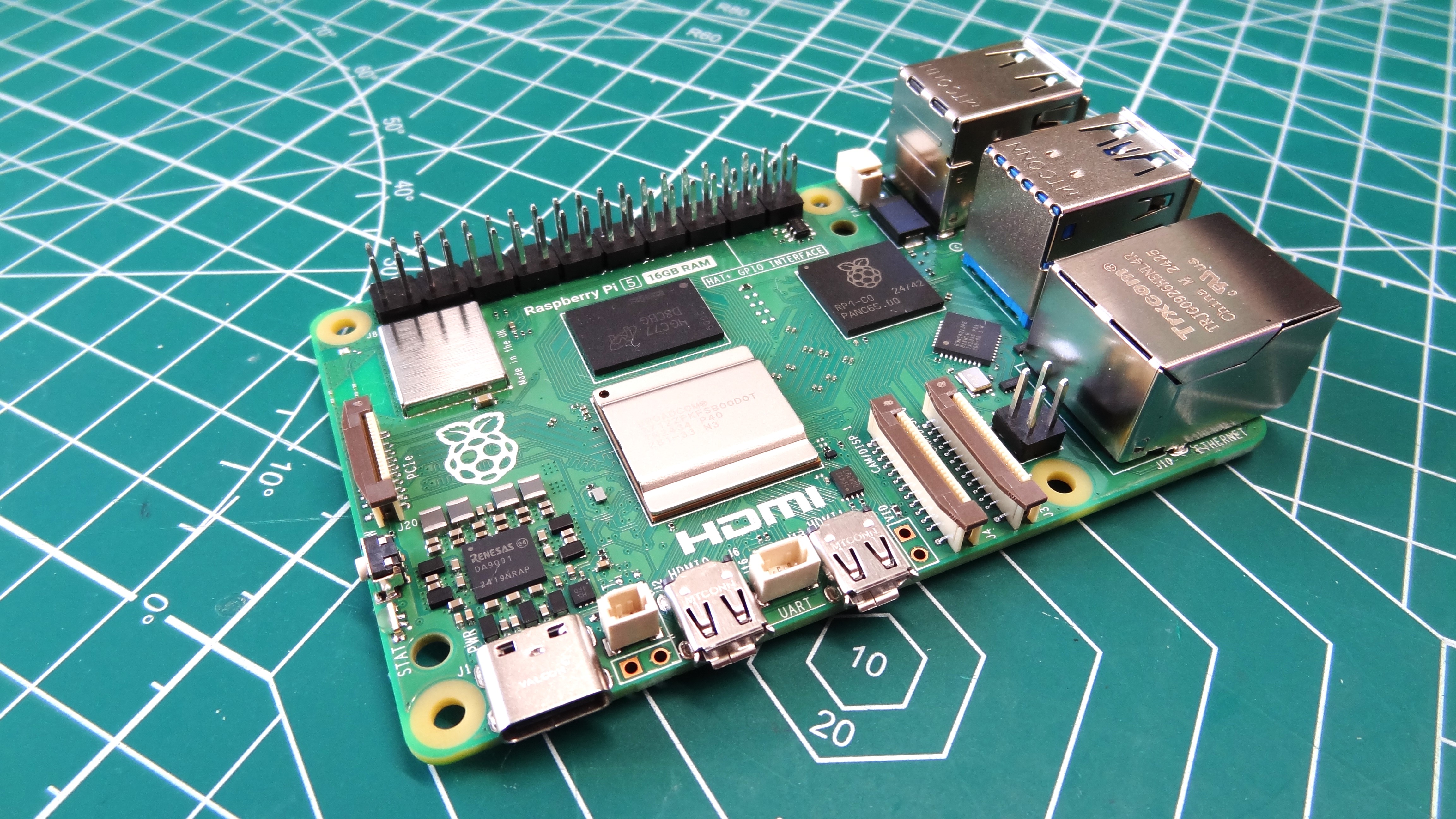
LONDON, NEW YORK, TOKYO — In what financial analysts and hardware engineers are calling an unprecedented anomaly in single-board computer (SBC) pricing, secondary and specialized distribution channels have recorded spot prices for the newly anticipated 16GB variant of the Raspberry Pi 5 skyrocketing to an eye-watering $385 USD. While the Raspberry Pi Foundation originally architected its enterprise and educational hardware ecosystem around democratic access, hyper-affordable compute, and aggressive cost containment, the collision of global silicon constraints, high-density LPDDR4X memory scarcity, and predatory automated scalping bots has fundamentally altered the valuation multiples of edge-computing infrastructure.
This investigative report examines the macroeconomic catalysts, enterprise infrastructure implications, and supply chain vulnerabilities driving this extraordinary price inflation. As institutional buyers, industrial automation architects, and hobbyists scramble to secure high-capacity edge nodes, the $385 price point forces a critical re-evaluation of capital allocation, total cost of ownership (TCO), and alternative cloud-compute architectures.
Executive Takeaways
- Spot Market Price Explosion: Limited-allocation inventory and high-density memory shortages have driven secondary market valuations of the Raspberry Pi 5 16GB up to $385 USD—representing a staggering multiple over historical base-model pricing guidelines.
- The Memory Bottleneck: The core driver behind the valuation spike is the acute global shortage of high-capacity LPDDR4X packages, compounded by tier-1 memory foundries prioritizing high-bandwidth memory (HBM) and enterprise server DRAM for artificial intelligence infrastructure.
- Enterprise ROI Disruption: Industrial Internet of Things (IoT) deployments and edge-AI nodes relying on local containerized microservices are facing sudden capital expenditure (CapEx) overruns, forcing risk mitigation and cloud-hybrid migration strategies.
- Secondary Market Exploitation: Sophisticated scraping bots and automated checkout scripts have neutralized official retail channels, funneling scarce hardware into speculative grey markets where liquidity commands a severe premium.
The Catalytic Events: How a $120 Concept Hit $385
Test Our Free AI & Tech Utilities Suite
Calculate LLM API token costs, analyze article dwell-time, or simulate tech DCA returns.
To understand the mechanics behind the $385 price tag, one must analyze the shifting priorities of global semiconductor manufacturing. When the Raspberry Pi Foundation announced higher-density iterations of its flagship Broadcom-powered single-board computer, system integrators anticipated a democratized powerhouse capable of running local Large Language Models (LLMs), heavy Docker containers, and complex real-time industrial telemetry systems.
However, the macroeconomic reality of silicon fabrication immediately intervened. High-density RAM packaging requires specialized wafer allocation. Major memory manufacturers—including SK Hynix, Samsung, and Micron—have aggressively pivoted their production lines away from consumer-grade and embedded LPDDR4X components to fulfill relentless institutional demand for enterprise-grade HBM3e and DDR5 modules destined for hyperscale AI data centers. Consequently, input costs for the Raspberry Pi 5 16GB surged upstream, while wafer output plummeted.
When official retail partners experienced immediate stock depletion upon release, secondary marketplaces—ranging from specialized industrial liquidators to speculative auction platforms—stepped into the vacuum. Driven by supply-demand imbalances, free-market pricing mechanics took over. For enterprise developers whose projects faced catastrophic timeline delays without local hardware validation, paying $385 for a single unit became a matter of corporate survival rather than fiscal prudence, completely distorting the traditional valuation curve of the platform.
Data & Metrics Breakdown: Raspberry Pi 5 16GB Market Realities
The following comparative matrix outlines the divergence between manufacturer-suggested baseline metrics, actual component constraints, and current spot-market valuations observed across global distribution channels:
| Metric / Specification | Original Target / Baseline | Current Spot Market Reality | Variance / Impact |
|---|---|---|---|
| Estimated Retail Price (MSRP) | $120.00 USD | $385.00 USD | +220% Markup |
| Memory Allocation (LPDDR4X) | 16GB SDRAM (Standard Die) | Constrained Allocation / Grey Market | Severe Lead Times (12–16 Weeks) |
| Supply Chain Liquidity | High (Broad Global Distribution) | Extremely Illiquid (Bot-Controlled) | High Volatility & Speculation |
| Enterprise CapEx Impact | Low Cost-per-Node Deployment | Prohibitive for Scale-Out Architecture | Forces Architectural Pivots |
Industry & Market Implications: Who Wins, Who Loses
The sudden price inflation of the Raspberry Pi 5 16GB sends shockwaves across multiple verticals, altering competitive dynamics and forcing strategic adjustments in infrastructure budgeting:
- Winners — Alternative x86 & ARM Mini-PC Manufacturers: Competitors producing entry-level industrial mini-PCs powered by older-generation Intel N-series chips or AMD Ryzen embedded processors are capturing displaced enterprise demand. When a single-board computer approaches $385, procurement officers naturally pivot to fully enclosed, actively cooled enterprise mini-PCs that include power supplies, storage enclosures, and formal enterprise support warranties.
- Losers — Edge-AI Startups and Educational Institutions: Academic researchers and bootstrapped developers relying on cost-effective, high-RAM edge nodes for machine learning experimentation are priced out of the market. Projects budgeted on sub-$150 hardware assumptions face immediate insolvency or painful code refactoring to run on constrained 4GB or 8GB architectures.
- Neutral — Speculative Scalpers and Arbitrageurs: Automated resellers leveraging scraping infrastructure and inventory-hoarding scripts continue to extract short-term economic rents from supply chain inefficiencies, though regulatory scrutiny and platform countermeasures threaten long-term margins.
Frequently Asked Questions (People Also Ask)
Why has the Raspberry Pi 5 16GB price reached $385?
The $385 price tag does not reflect official manufacturer pricing from the Raspberry Pi Foundation. Instead, it represents extreme secondary market markups driven by severe global shortages of high-density LPDDR4X memory chips, aggressive automated scalping bots, and critically constrained retail inventory.
Is the Raspberry Pi 5 16GB officially available at standard retail prices?
Authorized distributors list the hardware at much lower, baseline retail figures; however, stock evaporates within milliseconds of restocking. Consequently, obtaining units immediately requires purchasing through secondary brokers and grey-market resellers who command massive premiums.
How does this price surge impact enterprise IoT and edge deployments?
For enterprise architects, paying nearly $400 per node destroys the cost-benefit analysis of deploying distributed SBC fleets. Organizations are increasingly evaluating alternative x86 industrial mini-PCs, shifting workloads to hybrid cloud-compute models, or delaying infrastructure rollouts until semiconductor foundry capacity normalizes.
Will prices stabilize as memory production ramps up?
Industry analysts project that spot market volatility will persist through the current fiscal quarter. As memory foundries gradually rebalance production lines between AI-focused HBM and embedded DRAM, supply liquidity is expected to improve, gradually driving grey-market prices back toward historical baselines.
Future Outlook & Strategic Risk Mitigation
As the market digests the reality of $385 Raspberry Pi 5 16GB hardware, risk mitigation has become the primary mandate for chief technology officers and engineering leads. Relying on single-source embedded hardware architectures without robust supply chain redundancy is no longer tenable in an era of geopolitical friction and semiconductor volatility.
Key milestones to monitor over the coming quarters include foundry yield reports from major memory fabricators, official production volume disclosures from the Raspberry Pi Foundation, and the implementation of anti-scalping verification protocols across authorized global distributors. Until supply elasticity catches up with explosive edge-AI demand, enterprise buyers must exercise rigorous capital discipline, vetting alternative hardware ecosystems to insulate their infrastructure budgets from speculative market shocks.