Executive Takeaways
- Capital Allocation Paradigm Shift: DeepSeek-V3 achieved state-of-the-art performance at a training cost of just $5.58 million, exposing a stark divergence from the multi-billion-dollar capex cycles favored by Silicon Valley hyperscalers.
- Architectural Efficiency: By pioneering advanced Mixture-of-Experts (MoE) routing and Multi-head Latent Attention (MLA), DeepSeek circumvented traditional memory bandwidth bottlenecks, fundamentally altering cloud compute architecture benchmarks.
- Enterprise ROI Acceleration: The collapse in inference and training costs drastically compresses enterprise payback periods, forcing CIOs and CFOs to re-evaluate their long-term infrastructure scalability and software vendor contracts.
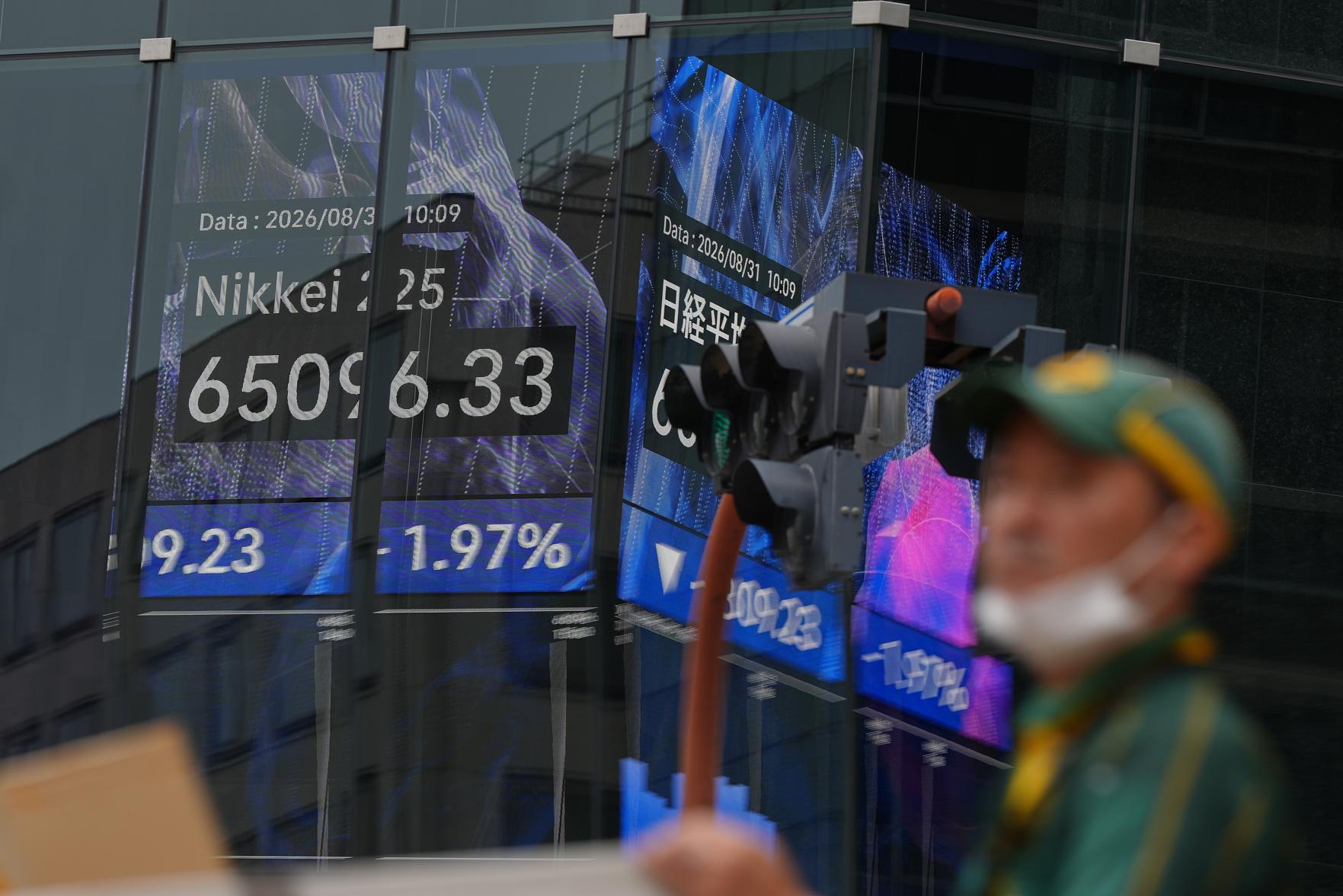
- Geopolitical & Market Liquidity Re-pricing: The model's debut sent immediate shockwaves across global semiconductor supply chains, triggering sharp valuation corrections and forcing a rigorous risk mitigation review among institutional investors.
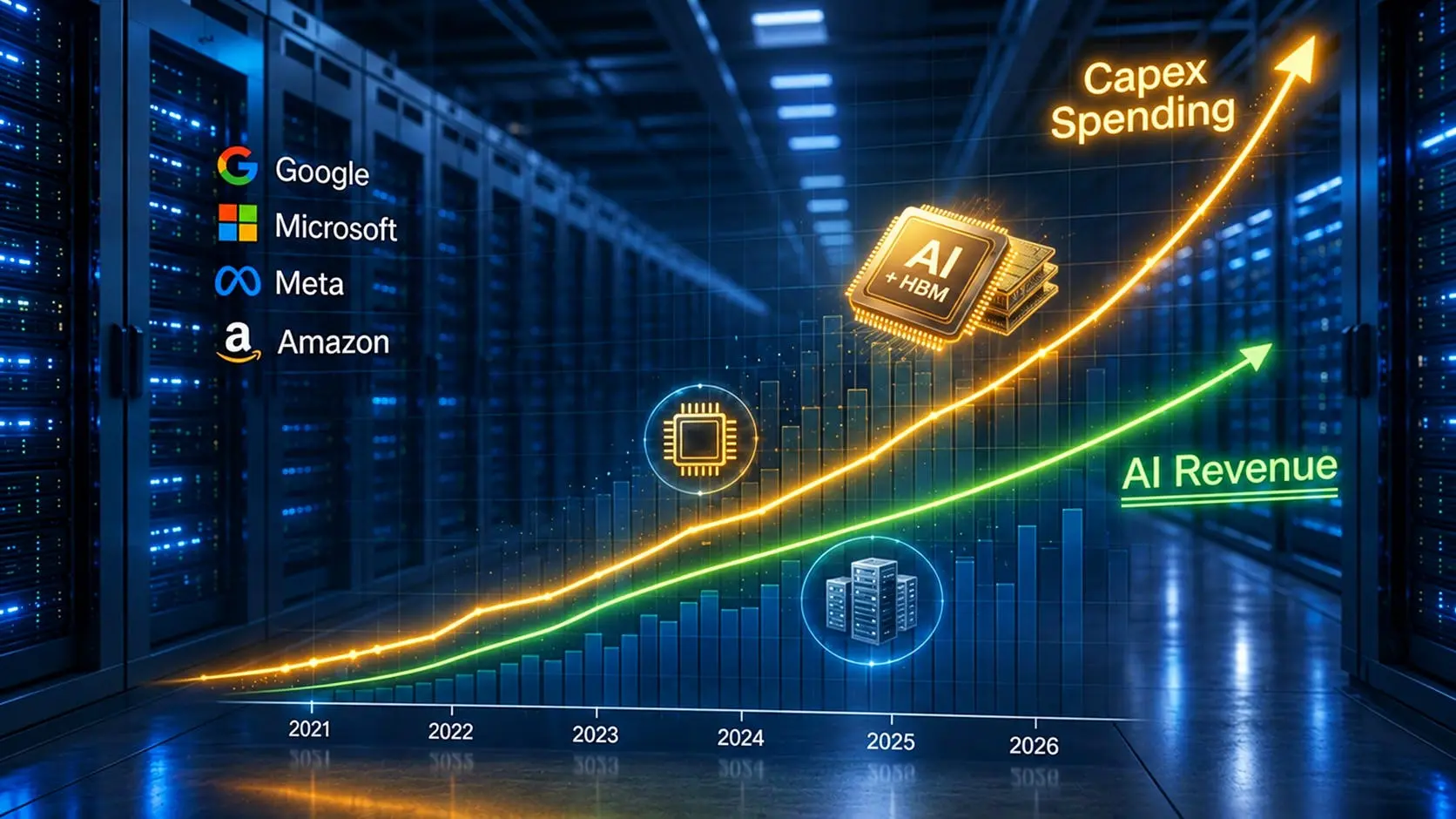
For the better part of three years, the generative artificial intelligence boom operated on a singular, unyielding economic dogma: market dominance required massive capital expenditure, thousands of specialized enterprise accelerators, and sprawling data centers consuming megawatts of power. Wall Street valuations and venture capital allocations alike marched in lockstep with this compute-heavy thesis, pricing AI infrastructure leaders at unprecedented valuation multiples.
That consensus fracture occurred not in a Silicon Valley laboratory, but through the quiet, calculated execution of a disruptive architecture. The emergence of DeepSeek-V3 fundamentally challenged the foundational economics of foundational models. As enterprise adoption transitions from speculative proofs-of-concept to rigorous balance-sheet scrutiny, understanding what makes DeepSeek-V3 different from legacy Large Language Models (LLMs) is no longer merely an academic exercise—it is a critical imperative for corporate risk mitigation, strategic capital allocation, and long-term portfolio positioning.
The Anatomy of Disruption: Background and Catalytic Events
Test Our Free AI & Tech Utilities Suite
Calculate LLM API token costs, analyze article dwell-time, or simulate tech DCA returns.
To contextualize the market shock delivered by DeepSeek-V3, one must examine the operational blueprint of traditional cloud-native LLMs. Historically, commercial foundation models were designed as monolithic cloud services accessed via plug-and-play APIs. While this model offered rapid developer onboarding and seamless integration for common enterprise use cases, it masked deep inefficiencies in parameter utilization and inference economics. Every token generated incurred heavy compute penalties, locking enterprises into rigid, high-cost vendor ecosystems.
When technical benchmarks for DeepSeek-V3 were published, the industry was forced to confront an uncomfortable reality. Traditional models required tens of millions of dollars in raw compute power, utilizing tens of thousands of high-end GPUs over grueling training schedules. DeepSeek achieved competitive—and in many benchmark categories, superior—performance metrics while slashing training expenditures to a fraction of that baseline. This catalyzed an immediate reassessment across Wall Street equity research desks, questioning whether Western hyperscalers were over-capitalized or misallocated.
The catalytic impact extended directly to infrastructure scalability. While standard cloud architectures rely on brute-force scaling laws, DeepSeek leveraged algorithmic ingenuity. By rethinking how information flows through neural networks during both training and inference, the engineering team demonstrated that intelligence could be engineered rather than merely bought through sheer hardware density.
Technical Breakdown: The Pillars of Efficiency

The core differentiators separating DeepSeek-V3 from standard LLMs lie deep within its mathematical architecture and hardware-software co-design. Three distinct pillars explain its unprecedented operational efficiency:
- Advanced Mixture-of-Experts (MoE) Routing: Unlike dense models that activate every parameter for every token, DeepSeek-V3 utilizes a fine-grained MoE framework. This architecture routes tokens only to the most relevant expert sub-networks, drastically reducing the active parameter count per token while maintaining a massive total parameter pool for complex reasoning tasks.
- Multi-head Latent Attention (MLA): Standard transformer models suffer from severe memory bandwidth bottlenecks during inference due to the massive size of the Key-Value (KV) cache. DeepSeek introduced MLA, which compresses the KV cache into a low-rank latent space. This innovation dramatically reduces memory footprints, enabling higher batch sizes, lower latency, and reduced hardware requirements.
- Multi-Token Prediction (MTP) Training Objectives: Moving beyond traditional next-token prediction, DeepSeek incorporates multi-token prediction objectives during pre-training. This forces the model to anticipate longer horizons of text simultaneously, yielding superior linguistic coherence, tighter reasoning loops, and accelerated convergence rates.
| Architectural Metric | Traditional Monolithic LLMs | DeepSeek-V3 Architecture |
|---|---|---|
| Training Expenditure | Tens to hundreds of millions USD | ~$5.58 million |
| Parameter Activation | Dense (100% active per token) | Sparse Mixture-of-Experts (Fractional activation) |
| KV Cache Optimization | Standard Multi-Head Attention (High memory overhead) | Multi-head Latent Attention (Compressed latent space) |
| Inference Cost Efficiency | High per-token operational expense | Significantly compressed via optimized memory bandwidth |
Industry & Market Implications: Who Wins, Who Loses
The macroeconomic fallout of DeepSeek-V3 reverberates across multiple asset classes, fundamentally altering the competitive landscape for enterprise technology.
The Winners: Enterprise CIOs and Software Agility. For corporate technology buyers, the democratization of high-performance, low-cost intelligence is a massive win. Enterprise ROI timelines shrink drastically when the cost of running sophisticated reasoning models drops by an order of magnitude. Companies can now deploy proprietary, domain-specific AI agents at scale without breaking IT budgets or incurring punitive API service fees.
The Pressured: Semiconductor Manufacturers and Hyperscale Cloud Providers. Conversely, the narrative of insatiable hardware demand has faced a necessary stress test. If algorithmic breakthroughs allow developers to extract state-of-the-art performance using a fraction of the compute infrastructure previously deemed mandatory, the hyper-growth assumptions underpinning high-end semiconductor valuations face downward pressure. While overall compute consumption will continue to expand, hardware pricing power is no longer unchecked.
From a regulatory compliance and sovereign cloud perspective, models like DeepSeek-V3 demonstrate that advanced AI capabilities are increasingly accessible outside the traditional Silicon Valley oligopoly. This accelerates the push for regional data sovereignty and forces Western cloud providers to compete more aggressively on pricing and architectural transparency.
Frequently Asked Questions (People Also Ask)
What makes DeepSeek-V3 cheaper to train than other frontier models?
DeepSeek-V3 achieves radical cost efficiency through architectural co-design, specifically utilizing a sparse Mixture-of-Experts (MoE) framework that activates only a fraction of its total parameters per token. Combined with algorithmic optimization in data routing and communication overhead reduction across GPU clusters, it bypasses the brute-force scaling expenses required by traditional dense models.
How does Multi-head Latent Attention (MLA) impact enterprise deployment?
MLA compresses the Key-Value (KV) cache into a low-latent space during inference. For enterprise deployments, this dramatically lowers memory bandwidth requirements per query, allowing organizations to serve more concurrent users with less hardware infrastructure, thereby improving operational margins and reducing cloud hosting overhead.
Can enterprises run DeepSeek-V3 on-premises for strict regulatory compliance?
Yes. Unlike proprietary API-only models locked inside third-party walled gardens, efficient open-weights models like DeepSeek-V3 enable enterprises to deploy, fine-tune, and audit models within private data centers or secure sovereign cloud environments, satisfying stringent data privacy and regulatory compliance mandates.
Does DeepSeek-V3 compromise on accuracy to achieve its low cost?
Rigorous third-party evaluations indicate that DeepSeek-V3 matches or exceeds the performance of many established Western frontier models across standard coding, mathematics, and general reasoning benchmarks, proving that high efficiency does not necessitate a penalty in output quality.
Future Outlook: What Comes Next
The emergence of DeepSeek-V3 marks the definitive end of the early, unrefined "brute-force" era of generative artificial intelligence and ushers in an era of engineering discipline. As we look toward the horizon, several key milestones will dictate market trajectories:
- Algorithmic Efficiency as the Primary Competitive Moat: Future model releases will be judged less by raw parameter counts and more by token-to-cost efficiency ratios. Hyperscalers will be forced to pivot their research priorities from mere scaling laws to algorithmic optimization.
- Accelerated Enterprise Adoption Curves: With inference costs trending toward marginal zeros, CFOs will unlock previously unviable automation workflows, driving real productivity gains across financial services, healthcare, and industrial manufacturing.
- Consolidation and Margin Compression in Cloud Services: As open-weights models close the capability gap with closed-source alternatives, enterprise pricing power will shift away from legacy API providers toward nimble, infrastructure-agnostic software integrators.
Ultimately, DeepSeek-V3 serves as a vital market corrective. It demonstrates that innovation in artificial intelligence is driven as much by mathematical elegance and architectural ingenuity as it is by capital concentration. For enterprise leaders and financial markets alike, navigating this new paradigm requires looking past marketing hype and focusing on tangible operational efficiency.