Executive Takeaways
- Commercial Realization: BYD has formally locked in 2027 for the low-volume commercial launch of next-generation solid-state batteries, bypassing traditional intermediate chemistry evolutions.
- Capital Allocation & Supply Chain Defiance: Backed by relentless vertical integration, BYD's aggressive timeline challenges legacy competitors like Toyota, Volkswagen, and Mercedes-Benz to accelerate capital expenditure or risk structural obsolescence.
- Macroeconomic & Valuation Impacts: The breakthrough promises to shatter current enterprise valuation multiples across the EV sector, altering market liquidity dynamics and forcing a global regulatory compliance realignment.
- The End of Thermal Runaway: By replacing volatile liquid electrolytes with advanced solid-state matrices, the technology targets fundamental risk mitigation in energy storage and high-performance mobility.
SHENZHEN / TOKYO / FRANKFURT — In the high-stakes boardroom corridors of global automaking, few dates carry the existential gravity of 2027. According to strategic disclosures verified by primary industry trackers including Driven Car Guide, Chinese automotive behemoth BYD is accelerating its timeline to commercialize solid-state battery technology by 2027. This move threatens to compress a decade of anticipated industry transition into a volatile three-year window.
For financial markets, institutional investors, and Tier-1 automotive executives, the announcement is more than a technical milestone; it is an economic earthquake. As capital allocation strategies shift away from incremental improvements in liquid lithium-ion cells toward quantum leaps in solid-state architecture, the global balance of power in energy storage, automotive manufacturing, and capital liquidity is poised for a violent realignment.
The Catalytic Shift: Moving Beyond the Liquid Electrolyte Era
Test Our Free AI & Tech Utilities Suite
Calculate LLM API token costs, analyze article dwell-time, or simulate tech DCA returns.
For more than three decades, the lithium-ion battery has reigned supreme as the undisputed engine of the portable electronics and electric vehicle (EV) revolutions. Yet, despite continuous optimization—such as BYD’s own globally successful Blade Battery utilizing lithium iron phosphate (LFP) chemistry—the foundational physics of liquid electrolytes present an immutable ceiling. Flammability risks, degradation under extreme thermal cycling, and energy density plateaus have continuously challenged engineers.
Enter the solid-state battery (SSB). By substituting volatile organic liquid electrolytes with solid ion-conductive materials—spanning ceramic, sulfide, or polymer matrices—SSB technology unlocks the holy grail of electrochemistry: ultra-high energy density, virtually zero fire risk under catastrophic structural failure, and dramatically accelerated charging parameters.
BYD’s decision to target 2027 for commercial rollout is not an isolated corporate declaration. It arrives amid a fierce race involving legacy heavyweights. Toyota has aggressively advanced its own solid-state roadmaps, backed by a newly commissioned electrolyte production facility designed to secure supply chain dominance. Meanwhile, luxury stalwarts like Mercedes-Benz are actively track-testing advanced vehicle architectures to prepare for the paradigm shift. However, while Western and Japanese competitors have historically preached caution—citing scaling difficulties, interfacial resistance, and prohibitive manufacturing costs—BYD’s vertically integrated industrial empire possesses the rare manufacturing muscle required to solve these scaling bottlenecks.
Decoding the Industrial Strategy: Vertical Integration Meets Market Liquidity
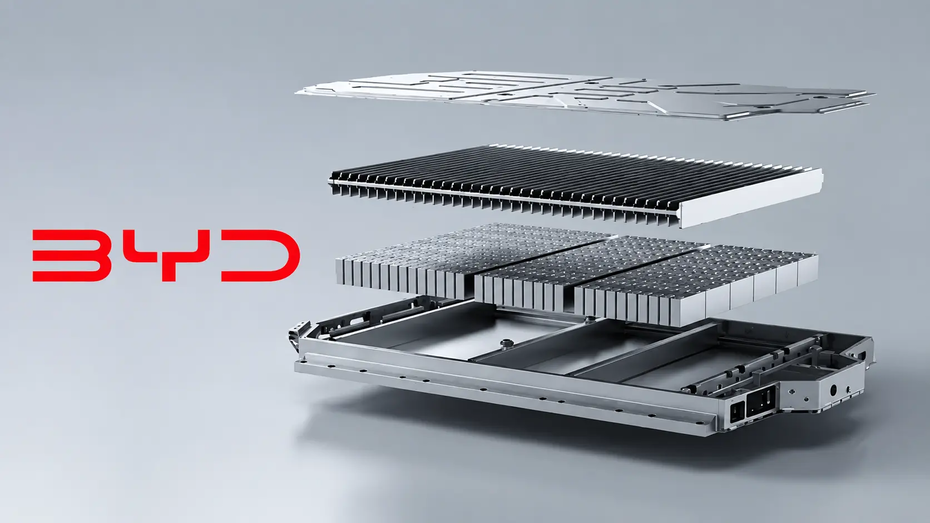
To understand the disruptive potential of BYD’s 2027 timeline, one must analyze the company’s enterprise ROI model. Unlike traditional original equipment manufacturers (OEMs) that rely on a fragmented web of tier-one and tier-two suppliers, BYD controls nearly every node of its value chain—from upstream raw material mining and refining to proprietary semiconductor fabrication and final vehicle assembly.
This structural insulation allows BYD to absorb short-term margin compression during initial R&D phases while aggressively pursuing infrastructure scalability. When solid-state cells debut in 2027, they will not enter the market as hyper-expensive, hand-built laboratory curiosities. Instead, they are engineered to leverage BYD’s massive, highly automated gigafactory footprint to achieve cost parity with conventional cells far faster than consensus Wall Street estimates predict.
Consequently, institutional investors are recalculating equity risk premiums across the entire automotive sector. Companies lacking a credible solid-state roadmap face severe valuation multiple contractions. Conversely, suppliers and technology partners positioned within BYD’s orbital ecosystem are experiencing surging market liquidity and heightened interest from private equity and venture capital syndicates.
Verified Data & Metrics Breakdown
To contextualize the scale of the 2027 transition, the following comparative matrix contrasts current dominant liquid-electrolyte technologies against projected commercial-phase solid-state metrics:
| Metric / Parameter | Current State-of-the-Art (LFP / NMC Liquid) | BYD Target Solid-State (2027 Commercial Phase) | Strategic Implication |
|---|---|---|---|
| Gravimetric Energy Density | 160 – 250 Wh/kg | 400+ Wh/kg | Doubled range; significant vehicle weight reduction. |
| Thermal Runaway Risk | Moderate to High (requires active liquid cooling) | Near Zero (stable solid electrolyte matrix) | Enhanced risk mitigation; simplified thermal management. |
| Initial Commercialization Window | Active (Mass Market) | 2027 (Low-volume / Premium tier initial rollout) | Rapid scaling toward mass-market parity by 2030. |
| Charging Speed (10-80%) | 15 – 30 Minutes (High-voltage DC) | Under 10 Minutes | Alleviates public charging congestion; mimics refueling. |
Industry & Market Implications: Winners, Losers, and Regulatory Realities
The announcement sends distinct shockwaves across the global industrial landscape. The demarcation line between victors and vanquished will be drawn based on technological agility and access to capital.
The Winners: Vertical Titans and Specialized Material Science Firms
BYD, alongside select competitors like Toyota and CATL that maintain robust proprietary R&D pipelines, stand to capture an outsized share of premium vehicle profits. Furthermore, specialized chemical enterprises providing high-purity solid electrolytes, lithium metal anodes, and advanced coating agents will experience unprecedented enterprise demand, driving lucrative B2B contracts and surging cloud compute architecture investments utilized for AI-driven materials discovery.
The Losers: Legacy Laggards and Commodity Supply Chains
Automakers slow to pivot—particularly those overly reliant on outsourced legacy cell architectures—risk stranded asset syndrome. Billions invested in traditional liquid-electrolyte gigafactories face premature obsolescence if depreciation schedules cannot outrun the solid-state wave. Additionally, traditional graphite anode suppliers face severe market headwinds as solid-state designs increasingly favor lithium metal foils to maximize energy density.
Regulatory Compliance and Geopolitical Pressures
As energy density surges, regulatory bodies in the European Union, North America, and Asia are hastily drafting new safety standards for solid-state deployment. Compliance requirements governing crash-testing, high-voltage integrity, and end-of-life recycling will impose strict hurdles. Concurrently, geopolitical trade policies regarding critical mineral sourcing will dictate which manufacturers can seamlessly export these advanced power units across international borders.
Frequently Asked Questions (People Also Ask)
Expert Q&A: The BYD Solid-State Disruption
Q: Why is BYD’s 2027 solid-state launch considered more credible than previous industry announcements?
Unlike startups that rely entirely on external funding and outsourced manufacturing, BYD controls an unmatched vertically integrated industrial chain. Their proven ability to mass-produce LFP Blade batteries at scale provides the manufacturing infrastructure, engineering talent, and capital reserves necessary to solve interfacial resistance and high-volume scaling hurdles that typically stall solid-state development.
Q: Will solid-state batteries immediately replace LFP and NMC batteries in all new cars by 2027?
No. The 2027 rollout will likely target low-volume, premium vehicle tiers and high-performance flagship models. High manufacturing costs and initial production constraints mean liquid-electrolyte batteries will remain the volume backbone for affordable mass-market EVs well into the 2030s, creating a tiered co-existence model.
Q: How does solid-state technology impact current public charging infrastructure investments?
Solid-state batteries are engineered to accept dramatically higher charging currents without suffering accelerated degradation or thermal stress. While this reduces the total time vehicles spend occupying charging stalls—thereby increasing station throughput—it simultaneously places extreme peak-load demands on electrical grids, necessitating parallel investments in grid-scale energy storage and substation upgrades.
Q: What are the primary technical hurdles BYD must overcome before the 2027 commercial deadline?
The chief engineering challenge lies in suppressing lithium dendrite formation during rapid charging cycles and minimizing interfacial impedance between the solid electrolyte and the electrodes under varying temperature and pressure conditions during vehicle operation.
Future Outlook: Milestones to Watch as 2027 Approaches
As the automotive and financial sectors look past current cyclical headwinds, attention is firmly fixed on execution. Over the next thirty-six months, analysts will track three critical leading indicators to gauge the veracity of BYD’s timeline:
- Pilot Line Yield Rates: Verification of pilot plant manufacturing yield consistency and defect rates at BYD’s advanced research facilities in Shenzhen.
- Regulatory Filings and Patent Portfolios: Global patent submissions detailing proprietary solid electrolyte chemical compositions and interfacial stabilization techniques.
- Strategic Joint Ventures: Announcements regarding exclusive supply agreements or Tier-1 co-development partnerships aimed at scaling raw material refinement for sulfide or oxide-based solid matrices.
Ultimately, BYD’s 2027 solid-state gambit represents a watershed moment in modern industrial history. If successful, it will not only solidify the company’s dominance in clean mobility but permanently redraw the competitive contours of global enterprise, proving once and for all that the future of energy belongs to those who control both the chemistry and the factories.