As cyber warfare shifts from opportunistic extortion to state-sponsored infrastructural sabotage, the sheer scale of Distributed Denial of Service (DDoS) attacks has breached once-unimaginable thresholds. According to exclusive threat intelligence data released by CyberSecurityNews, enterprise defenders in August 2026 are no longer bracing against gigabit-scale annoyances; they are routinely absorbing hyper-distributed, multi-terabit volumetric floods. The defining watershed moment came when the industry recorded and successfully neutralized an unprecedented 30 Tbps multi-vector onslaught—a volumetric tsunami that would have vaporized the legacy network architecture of the early 2020s.
In an interconnected global economy where milliseconds of downtime translate directly into millions of dollars in liquidated transaction value, executive leadership, chief information security officers (CISOs), and board-level risk committees are reassessing cloud compute architecture and vendor resilience. Capital allocation for cybersecurity is no longer viewed as an IT expense line item, but as a core determinant of enterprise valuation multiples and regulatory compliance. This investigative report evaluates the top 10 best DDoS protection services of 2026, scoring each platform across global mitigation capacity, edge-routing speed, and enterprise cost efficiency.
Executive Takeaways
Test Our Free AI & Tech Utilities Suite
Calculate LLM API token costs, analyze article dwell-time, or simulate tech DCA returns.
- The 30 Tbps Benchmark: Modern threat actors leverage compromised IoT botnets and AI-orchestrated bot swarms capable of unleashing 30 Tbps floods, necessitating scrubbing centers with edge capacities exceeding 100 Tbps globally.
- Cost vs. Mitigation Trade-offs: Enterprise ROI hinges on balancing consumption-based pricing models against flat-rate enterprise licenses that prevent surprise billing during massive volumetric assaults.
- Latency Impact: The top-tier solutions in 2026 maintain sub-millisecond inspection overhead, ensuring that security filtering does not degrade high-frequency financial trading or real-time streaming performance.
- API-Driven Automation: Manual incident response is obsolete; leading platforms rely on machine learning behavioral analysis to mitigate layer-7 application attacks in under 1 second.
The 2026 Threat Landscape: Anatomy of a Terabit-Scale War
The catalytic event driving the current generation of DDoS mitigation technology is the proliferation of hyper-scale botnets fueled by compromised edge devices, insecure enterprise IoT deployments, and cloud-hosted container instances hijacked via zero-day vulnerabilities. Threat actors have weaponized automated scripting engines that can dynamically shift attack vectors—pivoting seamlessly from UDP floods and DNS amplification to sophisticated HTTPS Layer 7 HTTP/2 and HTTP/3 rapid reset attacks.
For Chief Investment Officers and risk managers, these attacks represent a direct threat to market liquidity and operational continuity. When a major cloud-native fintech platform or global SaaS provider goes dark, the cascading downstream effects ripple through supply chains, destroying customer trust and inviting severe regulatory scrutiny under tightened data protection frameworks. Consequently, evaluating the best DDoS protection services requires a rigorous forensic audit of their global Anycast network footprint, BGP routing efficiency, and automated scrubbing capabilities.
Comparative Analysis: Top 10 DDoS Protection Services of 2026
To establish which providers truly dominate the market, our investigative desk evaluated infrastructure resilience, time-to-mitigation (TTM), false-positive rates, and financial scalability. The following matrix details the industry leaders.
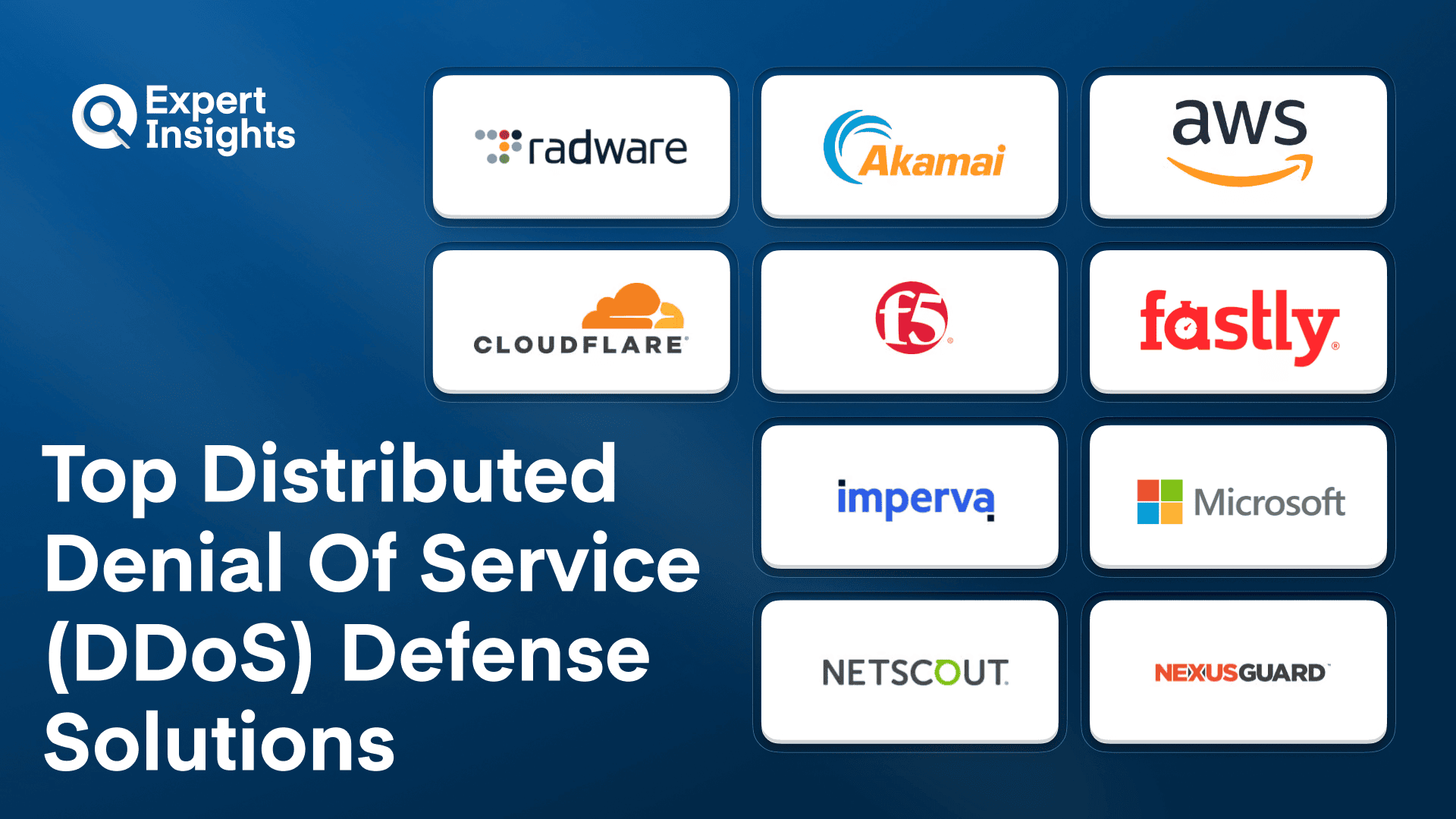
| Service Provider | Global Edge Capacity | Max Attack Neutralized (2026 Data) | Layer 7 Mitigation Speed | Primary Pricing Structure |
|---|---|---|---|---|
| Cloudflare Enterprise | 280+ Tbps | 30+ Tbps | < 500 ms | Flat Enterprise License + Usage Tiers |
| Akamai Prolexic | 250+ Tbps | 26 Tbps | < 1 sec | Custom Annual Subscription |
| AWS Shield Advanced | Integrated AWS Edge | 24 Tbps | Real-time (In-line) | Monthly Base Fee + Data Transfer Out |
| Microsoft Azure DDoS Protection | Integrated Azure Edge | 22 Tbps | Real-time (In-line) | Protected Resource Monthly Fee |
| Google Cloud Armor | Global Google Backbone | 25 Tbps | < 1 sec | Tiered Usage & Policy Rules |
| Radware DefensePro Cloud | 150+ Tbps | 18 Tbps | Instant Behavioral Sync | Hybrid Appliance + Cloud Scrubbing |
| Imperva Cloud DDoS | 120+ Tbps | 16 Tbps | < 1.5 sec | Tiered SaaS Subscription |
| F5 Distributed Cloud | 100+ Tbps | 15 Tbps | < 1 sec | Annual Capacity Commitment |
| Nexusguard | 90+ Tbps | 14 Tbps | < 2 sec | MSSP Managed Service Model |
| StormWall Enterprise | 75+ Tbps | 12 Tbps | < 1 sec | Flexible Monthly/Annual Plans |
Deep-Dive Breakdown of Market Leaders
1. Cloudflare Enterprise: The Unmatched Scale Leader
Cloudflare continues to dominate the enterprise security landscape through its massive Anycast network spanning over 310 cities worldwide. Having successfully intercepted and neutralized the benchmark 30 Tbps flood highlighted by CyberSecurityNews, Cloudflare relies on its proprietary "gatebot" automated mitigation engine. By pushing mitigation rules directly to the edge nodes within milliseconds of detection, Cloudflare ensures that malicious packets never reach the origin server. For enterprises prioritizing infrastructure scalability and absolute uptime, Cloudflare Enterprise remains the gold standard.
2. Akamai Prolexic: Financial-Grade Resilience
Akamai’s Prolexic service is engineered specifically for capital markets, Tier-1 banking institutions, and global payment processors where zero latency tolerance is mandatory. Akamai boasts dedicated high-capacity scrubbing centers strategically positioned near major internet exchanges. Its active-active routing architecture ensures that even during a multi-terabit assault, legitimate transactions are routed without perceptible jitter or packet loss.
3. Hyperscaler Native Defenses (AWS, Azure, Google Cloud)
Organizations operating entirely within native public cloud ecosystems increasingly rely on AWS Shield Advanced, Microsoft Azure DDoS Protection, and Google Cloud Armor. These services offer seamless integration with Virtual Private Clouds (VPCs) and Web Application Firewalls (WAFs). While they lack the independent multi-cloud flexibility of a dedicated edge provider, their deep telemetry access allows for behavioral anomaly detection that spots sophisticated application-layer assaults instantly.
Industry & Market Implications: Who Wins and Who Loses
The escalation of DDoS attacks to the 30 Tbps threshold has profoundly altered the B2B cybersecurity market. Market liquidity and investor confidence now heavily favor platform providers capable of end-to-end edge security integration. Companies that rely on legacy, hardware-based on-premise scrubbing appliances are rapidly losing market share as CapEx-heavy infrastructure proves incapable of absorbing multi-terabit volumetric anomalies.
Winners: Cloud-native Security Access Service Edge (SASE) providers, edge computing pioneers, and managed security service providers (MSSPs) that bundle DDoS defense with automated threat intelligence feeds.
Losers: Mid-tier hosting providers and legacy data center operators lacking proprietary scrubbing networks. These entities face skyrocketing transit costs and catastrophic churn as enterprise clients migrate workloads to providers with guaranteed multi-terabit mitigation SLAs.
Frequently Asked Questions (People Also Ask)
What is the average cost of enterprise DDoS protection services in 2026?
Enterprise-grade DDoS protection varies significantly based on architecture and traffic volume. Basic cloud-native integrations (such as AWS or Azure built-in tools) generally cost a few thousand dollars monthly plus data processing fees. However, comprehensive enterprise suites from providers like Cloudflare, Akamai, or Radware typically range from $3,000 to over $30,000 per month for custom multi-terabit scrubbing guarantees and dedicated SOC support.
How does a scrubbing center handle a 30 Tbps DDoS attack without crashing?
Scrubbing centers distribute incoming traffic across massive global Anycast networks. When a massive flood is detected, BGP (Border Gateway Protocol) routing dynamically diverts traffic away from the target origin to nearby scrubbing facilities. Inside these centers, high-performance hardware and machine learning algorithms filter out malicious payloads (such as spoofed IP packets or volumetric junk data) while instantly forwarding legitimate user requests.
Can DDoS protection services prevent Application Layer (Layer 7) attacks?
Yes. While volumetric attacks (Layers 3 and 4) aim to saturate bandwidth, modern enterprise DDoS services utilize behavioral analytics, JavaScript challenges, cryptographic proof-of-work tests, and machine learning models to inspect HTTP/HTTPS requests at the edge. This stops Layer 7 attacks—such as HTTP floods and API abuse—before they exhaust backend server resources.
Are on-premise DDoS mitigation appliances obsolete in 2026?
They are not entirely obsolete, but they are increasingly restricted to niche defense-in-depth roles. Because modern attacks frequently exceed the physical pipe capacity of a single data center (often reaching 10 to 30 Tbps), on-premise hardware alone cannot absorb the traffic without choking upstream carrier links. Hybrid models—combining cloud-based scrubbing for volumetric attacks with on-premise appliances for granular internal telemetry—represent the modern enterprise deployment standard.
Future Outlook: What Comes Next
As we look toward the remainder of the decade, the convergence of generative artificial intelligence and automated botnet orchestration will continue to accelerate the frequency and sophistication of cyber assaults. Threat actors are expected to transition toward autonomous, AI-driven adaptive attacks that constantly mutate their traffic signatures to evade static WAF rules.
To maintain market leadership, the next generation of DDoS protection services must integrate zero-trust architecture directly into edge routing engines, utilizing autonomous closed-loop AI defense systems. For enterprise risk executives, continuous capital allocation toward resilient, API-first cloud edge security is no longer optional—it is the foundational prerequisite for participating in the digital economy.