WASHINGTON — In what is rapidly culminating as one of the most complex orbital infrastructure overhauls in human spaceflight history, space station crew members have officially initiated the final phase of a multi-year power system upgrade. This high-stakes engineering campaign, designed to modernize the aging electrical grid of humanity's premier microgravity laboratory, represents a critical exercise in asset lifecycle management, capital allocation efficiency, and long-term risk mitigation for both public space agencies and private commercial spaceflight partners.
As the International Space Station (ISS) continues to orbit approximately 250 miles above Earth, navigating extreme thermal fluctuations and severe radiation profiles, the structural integrity and operational capacity of its electrical backbone dictate the viability of ongoing scientific research and commercial manufacturing in low-Earth orbit (LEO). With this final sequence of spacewalks—known internationally as Extravehicular Activities (EVAs)—flight controllers and aerospace engineers are executing a masterclass in orbital infrastructure scalability, ensuring uninterrupted power distribution through the station's projected retirement window.
Executive Takeaways
Test Our Free AI & Tech Utilities Suite
Calculate LLM API token costs, analyze article dwell-time, or simulate tech DCA returns.
- Final Phase Initiation: Astronauts have commenced the ultimate series of spacewalks to install advanced roll-out solar arrays, marking the end of a multi-year electrical grid modernization initiative.
- Grid Capacity Restoration: The new arrays restore the ISS power generation baseline to approximately 215 kilowatts, effectively reversing the natural power degradation of the station's original 20-year-old photovoltaic panels.
- Commercial & Enterprise Stakes: The upgrade directly safeguards billions of dollars in active biotechnology, materials science, and pharmaceutical research payloads, reinforcing enterprise ROI for commercial users operating in the national laboratory.
- Bridge to the Commercial LEO Era: Successful execution provides critical empirical data and engineering risk mitigation strategies for upcoming private space station developers currently seeking capital market liquidity and regulatory compliance approval.
The Catalytic Need for an Orbital Grid Overhaul
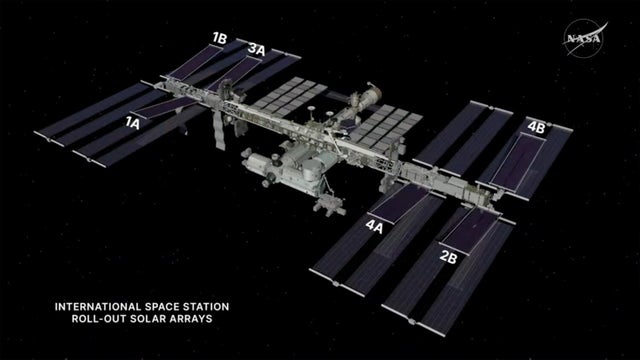
When the foundational elements of the ISS power architecture were designed in the late 1990s and deployed throughout the 2000s, they represented the pinnacle of aerospace engineering. Built with a designed operational lifespan of 15 years, the station's original rigid solar array wings and associated nickel-hydrogen battery systems have faced relentless battering from atomic oxygen, micrometeoroids, and orbital debris. By the late 2010s, power output from these legacy systems had experienced predictable, measurable degradation, threatening to bottleneck onboard research capabilities.
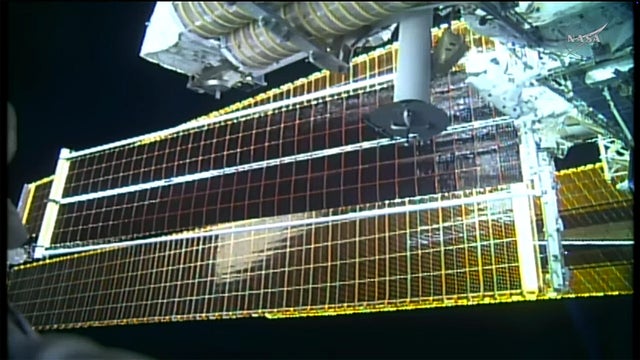
Recognizing the impending threat to enterprise productivity and scientific throughput, mission architects devised a comprehensive capital expenditure and technical remediation strategy. Rather than replacing the massive, unwieldy original wings entirely—an enterprise deemed financially and logistically prohibitive—engineers engineered a brilliant retrofitting solution: the IROSA (ISS Roll-Out Solar Array) project. These compact, high-efficiency flexible blankets are deployed directly over the top of the existing legacy channels, augmenting rather than replacing the foundational infrastructure.
This deployment model mirrors sophisticated ground-based infrastructure scalability projects, where legacy assets are upgraded via modular, high-density additions to maximize enterprise ROI without requiring catastrophic downtime or total system replacement. Over the course of multiple mission increments, spacewalking astronauts have systematically deployed pairs of these advanced solar arrays, routing high-voltage power through newly upgraded channels, transformer units, and lithium-ion battery assemblies.
Technical Complexity and High-Stakes Execution
Executing heavy industrial electrical engineering in a vacuum while encased in a pressurized mobility unit remains one of the most demanding operational challenges known to humanity. Spacewalkers face severe environmental hazards, including extreme temperature swings ranging from -250°F to 250°F every 90 minutes, blinding solar glare, and the constant threat of suit puncture.
The final phase requires absolute precision. Astronauts must maneuver massive, tightly wound carbon-composite canisters out of the space shuttle cargo bay equivalent or payload storage platforms, align them with meticulous mechanical mounts, and drive structural bolts while tethered in microgravity. Once the physical mounting is secured, delicate electrical connections must be mated to tie the new generation capacity directly into the station’s main power bus.
From a cloud compute architecture and telemetry standpoint, ground control teams at NASA’s Johnson Space Center and international partner facilities monitor thousands of real-time data points. Load balancing, voltage regulation, and thermal dissipation metrics are scrutinized instantaneously to ensure the newly integrated power channels sync seamlessly with the station's legacy computer systems. This technological bridge between 1990s avionics and 2020s photovoltaic material science exemplifies high-level systems integration under extreme regulatory compliance and safety constraints.
Verified Data & Metrics Breakdown
The following metrics outline the scale, performance benchmarks, and financial parameters associated with the multi-year ISS power system modernization initiative:
| Project Metric / Specification | Legacy Power System (Original) | Modernized Power System (IROSA) |
|---|---|---|
| Total Power Generation Capacity | ~160 Kilowatts (at peak degradation) | ~215 Kilowatts (fully restored baseline) |
| Photovoltaic Technology | Rigid silicon solar panels | Advanced flexible solar arrays (compounded composites) |
| Design Lifespan | 15 Years (Exceeded operational window) | 10+ Years (Extending station viability to 2030+) |
| Battery Storage Architecture | Nickel-Hydrogen (Ni-H2) cells | High-density Lithium-ion (Li-ion) battery units |
| Deployment Methodology | Original structural assembly | Overlay retrofit onto existing framework |
Industry & Market Implications: Who Wins, Who Loses
The successful conclusion of this power upgrade carries profound ripple effects across the global aerospace sector, influencing valuation multiples, institutional capital allocation, and supply chain dynamics.
The Winners: Commercial space station developers and enterprise research tenants emerge as the primary beneficiaries. Companies operating in microgravity pharmaceuticals, semiconductor crystal growth, and advanced material manufacturing rely entirely on stable, redundant power supplies. A 215-kilowatt power ceiling guarantees that power-hungry experiments will not face rationing or brownouts. Furthermore, aerospace contractors responsible for designing the roll-out arrays secure valuable performance validation, enhancing their positioning for upcoming defense and commercial orbital infrastructure contracts.
The Broader Economic Impact: As low-Earth orbit transitions from government-managed outposts to commercialized enterprise hubs, proving that legacy infrastructure can be effectively modernized rather than prematurely abandoned alters the economic calculus of space station operations. Private entities evaluating the capital expenditure required to maintain commercial habitats can utilize the ISS power upgrade as a benchmark for asset lifecycle management and risk mitigation.
Frequently Asked Questions (People Also Ask)
Why does the International Space Station need a power upgrade now?
The original solar arrays and power distribution equipment installed on the ISS were designed for a 15-year operational lifespan. Over two decades of continuous exposure to the harsh space environment—including ultraviolet radiation, atomic oxygen, and micrometeoroids—caused natural power generation degradation. Upgrading the grid ensures the station has sufficient electricity to support expanding scientific research and commercial payloads through the remainder of its operational lifetime.
How do the new roll-out solar arrays (IROSAs) work?
Unlike the heavy, rigid solar panels originally launched with the station, IROSAs utilize advanced, flexible photovoltaic blankets made from high-efficiency solar cells. These arrays are launched in a tightly rolled configuration, transported to the worksite via spacewalkers, and unrolled directly over the top of the existing structural wings. They capture significantly more solar energy and feed it into the station's modernized electrical grid.
Will this power upgrade extend the operational life of the ISS?
Yes. By boosting total power capacity back up to approximately 215 kilowatts and replacing aging battery systems with modern lithium-ion units, flight controllers ensure the station remains fully powered and viable until its planned decommissioning and safe orbital de-orbit sequence, currently targeted for the early 2030s.
How do spacewalkers manage the high electrical voltages during installation?
Safety is the primary governing parameter for all extravehicular activities. Before astronauts touch or connect any electrical components, ground controllers command the specific power channel to be "safed"—meaning the circuits are completely de-energized and grounded. Spacewalkers also wear specialized insulated gloves and follow strict verification protocols to prevent electrical arcing or shock hazards.
Future Outlook & Key Milestones to Watch
As the current series of spacewalks concludes, attention within the aerospace community will immediately pivot toward system validation and stress-testing under peak operational loads. Flight engineers will monitor the thermal performance and energy conversion efficiency of the newly integrated channels as the station transitions through varying orbital sun-angle seasons.
For investors, policymakers, and industry analysts, the successful execution of this complex orbital retrofit serves as a vital proof-of-concept. As humanity looks past the retirement of the ISS toward the deployment of private commercial space stations, the engineering methodologies, risk mitigation protocols, and supply chain logistics perfected during this multi-year power upgrade will form the foundational playbook for the next generation of human enterprise in space.