Executive Takeaways
- Massive Capital Deployment: The Indian central government has earmarked a foundational $10 billion Production-Linked Incentive (PLI) scheme to derisk the global electronics supply chain and incentivize domestic wafer fabrication, assembly, and testing.
- Strategic Joint Ventures: Global heavyweights—including Tata Group, Micron Technology, and CG Power—are spearheading multi-billion-dollar infrastructure investments in states like Gujarat and Assam.
- Beyond Pure-Play Fab: India’s structural opportunity extends beyond traditional silicon fabrication into specialized deep-tech, such as rare-earth-free electric motors, advanced packaging (OSAT), and analog/mature-node chip design.
- Enterprise & Investor Impact: While capital allocation risks remain high regarding water, power, and supply chain maturity, valuation multiples for early-stage Indian deep-tech startups and infrastructure plays are experiencing an unprecedented structural re-rating.
For decades, the global semiconductor narrative has been written across a rigid axis: design in Silicon Valley, lithography in the Netherlands, precision manufacturing in Taiwan and South Korea, and packaging predominantly across Southeast Asia. Today, that geopolitical and operational matrix is fracturing. Amid intensifying technological decoupling, supply chain vulnerabilities, and post-pandemic risk mitigation strategies, New Delhi has launched one of the most ambitious industrial policies of the 21st century. The objective: transform the world’s most populous nation into an indispensable node in the global silicon supply chain.
According to recent market analyses, including landmark briefings by India Briefing, India’s strategic play is no longer viewed as a speculative long-term bet. It is an active, heavily subsidized industrial mobilization. With a multi-billion-dollar fiscal war chest, streamlining of regulatory compliance, and a surging domestic consumption base, the subcontinent is positioning itself as the premier alternative for enterprise ROI, infrastructure scalability, and supply chain resilience.
The Catalytic Shift: Why India, Why Now?
The genesis of India’s semiconductor renaissance lies in a hard-learned lesson from global disruptions. When supply chain bottlenecks crippled automotive production lines and consumer electronics fulfillment globally, enterprise risk committees realized that absolute reliance on East Asian manufacturing hubs represented an untenable single point of failure. India’s strategic pivot is designed to capture this displacement.
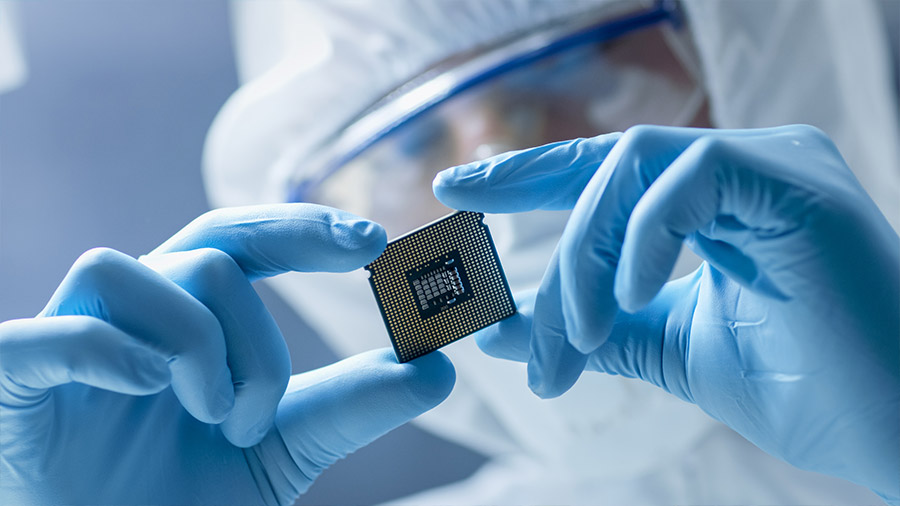
The foundational pillar of this initiative is the Modified Programme for Semiconductors and Display Fab Ecosystem, backed by a robust $10 billion financial commitment. Rather than attempting to immediately rival Taiwan Semiconductor Manufacturing Company (TSMC) at the bleeding-edge 2-nanometer or 3-nanometer nodes—a capital and intellectual property race that requires decades of institutional momentum—India is executing a multi-pronged approach. The focus centers on mature nodes (28nm and above), outsourced semiconductor assembly and test (OSAT) facilities, analog chips, and high-growth verticals like power electronics and compound semiconductors.
This strategy aligns precisely with current market demand. Legacy and mature nodes drive the vast majority of industrial automation, automotive electronics, Internet of Things (IoT) devices, and medical instrumentation. By capturing this segment, India is building a stable, high-margin foundation before scaling toward advanced packaging and complex wafer fabrication.
Key Players and Mega-Projects Transforming the Landscape
The policy framework has successfully catalyzed private-sector capital allocation, drawing commitments from both domestic industrial conglomerates and foreign direct investors.
1. Micron Technology’s Sanand OSAT Facility
Marking a watershed moment for the sector, U.S.-based memory giant Micron Technology broke ground on an $825 million assembly and test facility in Sanand, Gujarat. This project represents the first major foreign-led semiconductor investment under the central government’s incentive scheme. By integrating local packaging with global memory supply chains, Micron’s facility demonstrates that India can meet the stringent operational standards demanded by tier-1 global tech enterprises.
2. Tata Group’s Semiconductor Offensive
India’s premier conglomerate, Tata Group, has assumed a vanguard role in the nation’s hardware ambitions. Through Tata Electronics, the group is constructing a massive $11 billion semiconductor fabrication plant in Dholera, Gujarat, in strategic partnership with Taiwan’s Powerchip Semiconductor Manufacturing Corp (PSMC). Simultaneously, Tata is advancing a multi-million-dollar OSAT facility in Jagiroad, Assam. These capital-intensive projects are poised to generate thousands of high-skilled engineering jobs and anchor a domestic supplier ecosystem.
3. CG Power, Renesas, and Stars Microelectronics
Diversification is further evidenced by CG Power’s joint venture with Japan’s Renesas Electronics and Thailand’s Stars Microelectronics. This consortium is establishing an OSAT facility in Sanand with an investment outlay exceeding $900 million. This partnership highlights how cross-border technological alliances are bridging the gap between design expertise and manufacturing execution.
Deep-Tech Innovation Beyond Silicon: Rare-Earth-Free Motors
A comprehensive examination of India’s semiconductor and advanced electronics ecosystem reveals that the opportunity extends far beyond traditional silicon wafers. The convergence of power electronics, electric mobility, and deep-tech innovation is yielding entirely new asset classes.
Consider the breakthrough in magnet-free and rare-earth-free electric motors developed by Indian deep-tech startups such as Vimag Labs and Chara Technologies. Historically, the electric vehicle (EV) and industrial motor sectors have been hostage to geopolitical monopolies over rare-earth elements like neodymium and dysprosium. By engineering sophisticated software-defined, rare-earth-free motor architectures, these firms are solving a critical supply chain bottleneck. This innovation directly reduces regulatory and cost exposure for global automotive manufacturers, offering a masterclass in risk mitigation and sustainable cloud compute architecture-aligned hardware design.
| Project / Entity | Location | Estimated Capital Outlay | Strategic Focus |
|---|---|---|---|
| Micron Technology | Sanand, Gujarat | ~$825 Million | Memory OSAT (Assembly & Test) |
| Tata Group / PSMC | Dholera, Gujarat | ~$11 Billion | Pure-Play Wafer Fabrication (Mature Nodes) |
| Tata Electronics | Jagiroad, Assam | ~$3.2 Billion | Advanced Semiconductor Packaging (OSAT) |
| CG Power & Renesas | Sanand, Gujarat | ~$900 Million | OSAT for Industrial & Automotive Chips |
Industry & Market Implications: Who Wins, Who Loses?
The structural transformation of India’s manufacturing sector generates distinct economic winners and losers across the global financial ecosystem.
The Winners
- Global Enterprise Tech & Automakers: Companies seeking supply chain diversification gain a reliable, state-subsidized alternative manufacturing hub that insulates them from geopolitical shocks in the Taiwan Strait and South China Sea.
- Indian Industrial Conglomerates: Groups like Tata and CG Power are cementing their status as national champions, capturing high-barrier-to-entry industrial verticals with robust government backing.
- Domestic Engineering Talent: With hundreds of thousands of chip design engineers already residing in tech hubs like Bengaluru, Hyderabad, and Pune, the transition from pure-design services to physical manufacturing commands premium valuation multiples for domestic human capital.
The Vulnerabilities and Challenges
- Resource-Intensive Bottlenecks: Semiconductor manufacturing requires immense quantities of ultra-pure water and uninterrupted power supply. States like Gujarat and Assam must aggressively upgrade their underlying infrastructure to prevent operational friction.
- Upstream Supply Dependence: India remains dependent on specialized chemical suppliers, lithography machinery (such as ASML scanners), and raw silicon providers from Japan, the US, and Europe. True complete self-sufficiency remains a multi-decade horizon.
Frequently Asked Questions (People Also Ask)
What is the total financial outlay of India’s semiconductor incentive program?
The central government has committed an initial fiscal outlay of $10 billion (approx. ₹76,000 crore) specifically designed to incentivize semiconductor and display manufacturing ecosystems, covering up to 50% of project costs for approved greenfield fabrication units.
Why is India focusing heavily on mature nodes rather than advanced 2nm chips?
Mature nodes (ranging from 28nm to 65nm and above) power the vast majority of global electronics, including automobiles, medical devices, power grids, and consumer appliances. Focusing here allows India to build immediate manufacturing competence, supply chain stability, and workforce readiness before attempting capital-prohibitive bleeding-edge nodes.
Which global companies are currently setting up semiconductor units in India?
Prominent international players include Micron Technology (memory packaging in Gujarat) and Taiwan’s PSMC, which is partnering with the Tata Group on an $11 billion fabrication plant. Additionally, Japanese firms like Renesas Electronics are collaborating with domestic conglomerates on OSAT facilities.
How does this initiative impact global supply chain risk mitigation?
By establishing geographically diversified fabrication and testing hubs outside of traditional East Asian concentration zones, multinational enterprises can effectively hedge against geopolitical tensions, natural disasters, and logistical bottlenecks, ensuring long-term market liquidity and operational continuity.
Future Outlook: Milestones to Watch
The next 24 to 36 months will serve as the crucible for India’s semiconductor ambitions. Market analysts and institutional investors should monitor several key milestones:
- First Silicon Rollout: The commercial commissioning and initial wafer output from Micron’s Sanand facility and Tata’s Dholera fab will test execution speed against aggressive timelines.
- Ancillary Ecosystem Maturation: The arrival of Tier-2 and Tier-3 specialty chemical, gas, and precision equipment suppliers into Indian industrial corridors will signal true structural anchoring.
- Workforce Scaling: The efficacy of public-private partnerships in upskilling millions of specialized technicians and VLSI (Very Large Scale Integration) engineers to meet plant operational thresholds.
India’s silicon journey is no longer a rhetorical exercise in industrial ambition; it is a heavily capitalized reality reshaping the contours of global technology investments. For institutional investors, multinational executives, and enterprise strategists, understanding and participating in this ecosystem is no longer optional—it is a mandatory component of future-proofing global portfolios.