Executive Takeaways
- Accelerated Deployment: By mid-2026, India’s ambitious semiconductor roadmap has secured 12 officially approved manufacturing and assembly projects, signaling a decisive shift from policy blueprint to tangible enterprise execution.
- Capital Allocation & Subsidies: Backed by a foundational $10 billion incentive outlay, the Modified Programme for Semiconductors and Display Ecosystem is underwriting up to 50% of capital expenditure for greenfield fabrication and Outsourced Semiconductor Assembly and Test (OSAT) facilities.
- Strategic Realignment: While leading-edge node production remains an ultimate horizon, India’s immediate market liquidity and infrastructure scalability lie in mature nodes, high-volume OSAT packaging, and robust supply chain risk mitigation.
- Ecosystem Maturation: Public-private partnerships, specialized talent acquisition, and deep-tech startup integration are rapidly bridging historical gaps in domestic cleanroom manufacturing and chemical supply chains.
NEW DELHI and BENGALURU — In the high-stakes theater of global hardware supply chains, few industrial transformations match the deliberate, state-backed acceleration unfolding across the Indian subcontinent. As global boardrooms recalibrate their risk mitigation strategies amid persistent geopolitical friction and post-pandemic supply shocks, New Delhi has positioned silicon sovereignty as a cornerstone of its long-term economic growth. What began as a sweeping policy declaration under the India Semiconductor Mission (ISM) has graduated into an operational reality: as of mid-2026, the nation boasts a robust portfolio of 12 approved semiconductor projects, fundamentally rewriting the dynamics of South Asia’s high-tech manufacturing landscape.
For institutional investors, enterprise procurement directors, and venture capitalists, the pertinent question is no longer whether India can attract foundational capital, but rather how efficiently these multi-billion-dollar greenfield investments will integrate into global cloud compute architecture, automotive supply chains, and consumer electronics ecosystems. With global foundries hunting for alternative geostrategic hubs, India’s combination of immense domestic consumption, aggressive fiscal subsidies, and expanding technical human capital presents a compelling valuation multiple for early-mover participants.
The Genesis of India's Semiconductor Ambition
To understand the current velocity of India’s chip manufacturing ecosystem, one must examine the systemic vulnerabilities exposed during the 2020–2022 global silicon shortages. Dependent almost entirely on imports for microcontrollers, power management ICs, and advanced logic processors, Indian automotive lines and consumer electronics assembly plants faced crippling bottlenecks. Recognizing that modern industrial might is inextricably linked to semiconductor supply chain resilience, the Union Cabinet greenlit a landmark $10 billion (INR 76,000 crore) production-linked incentive (PLI) framework.
Initially launched in late 2021 and subsequently supercharged through policy iterations, the ISM was engineered to de-risk capital expenditure for global consortia and domestic industrial titans. The policy architecture offers fiscal support ranging from 30% to 50% of project cost for semiconductor fabs, display fabs, and compound semiconductor facilities. Furthermore, state-level incentives from proactive industrial states like Gujarat, Karnataka, Tamil Nadu, and Odisha have compounded these federal advantages, offering subsidized power, water security, and land acquisition easements that optimize enterprise ROI from day one.
Crucially, the early strategic focus has been calibrated with pragmatic realism. Rather than attempting to immediately leapfrog to sub-2nm leading-edge logic fabrication—a domain dominated by a handful of Taiwanese and American giants requiring astronomical R&D outlays—India has prioritized mature nodes (28nm and above), analog chips, specialized sensors, and crucially, Outsourced Semiconductor Assembly and Test (OSAT) units. This phased approach guarantees immediate utility for India’s booming automotive and industrial automation sectors while building the foundational cleanroom engineering expertise required for future technology nodes.
Key Players and Mega-Project Milestones
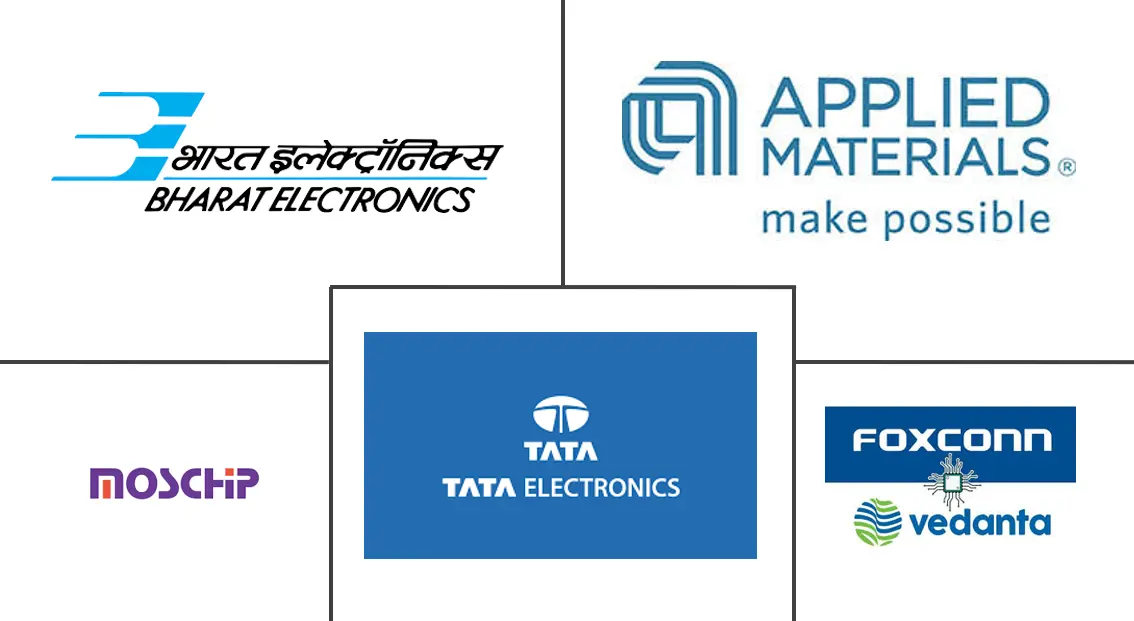
The industrial geography of India’s silicon corridor is rapidly taking shape. The most visible manifestation of this policy push is the anchor mega-project spearheaded by Tata Electronics in strategic partnership with Taiwan’s Powerchip Semiconductor Manufacturing Corporation (PSMC). Valued at approximately $11 billion, this flagship fabrication facility in Dholera, Gujarat, represents the gold standard of cross-border technology transfer and capital allocation.
Dholera is designed to feature a capacity of 50,000 wafer starts per month (WPM), targeting foundational nodes that power everything from electric vehicle (EV) power trains to telecommunications infrastructure. Concurrently, Tata is establishing a massive OSAT facility in Morigaon, Assam, valued at nearly $3 billion, aimed at advanced packaging—a critical choke point in modern chip manufacturing where wafers are sliced, tested, and housed into finished microchips.
Other major players have secured critical approvals and broken ground across the peninsula:
- CG Power, Renesas Electronics, and Stars Microelectronics: This powerful joint venture is executing a significant OSAT project in Sanand, Gujarat, targeting high-volume industrial and consumer applications.
- Kaynes Technology: Advancing specialized OSAT and module manufacturing facilities in southern India, capitalizing on the regional electronics manufacturing cluster strength in Karnataka and Tamil Nadu.
- Tower Semiconductor & Adani Group Proposals: Ongoing evaluations and foundational frameworks for mega-fab partnerships designed to scale specialized analog and mixed-signal foundry capabilities.
These entities are not operating in a vacuum. A thriving ecosystem of chemical suppliers, ultra-pure water treatment specialists, and Electronic Design Automation (EDA) software giants are establishing deep operational roots in design hubs like Bengaluru, Hyderabad, and Pune.
Verified Data & Project Metrics
A rigorous examination of India’s semiconductor evolution requires tracking concrete milestones, capital outlays, and output metrics. The following data table synthesizes the core parameters defining the approved industrial units as of mid-2026.
| Project / Entity | Location | Estimated CapEx | Facility Type / Node | Strategic Impact |
|---|---|---|---|---|
| Tata Electronics & PSMC | Dholera, Gujarat | ~$11 Billion | Logic Fab (28nm / Mature Nodes) | First commercial foundational logic fab in India; high-volume automotive & consumer output. |
| Tata Electronics (OSAT) | Morigaon, Assam | ~$3 Billion | Advanced Packaging & Testing | Geographic diversification into Northeast India; crucial supply chain backstop. |
| CG Power, Renesas & Stars | Sanand, Gujarat | ~$900 Million | OSAT / Power & Analog ICs | Rapid operationalization; bridges immediate domestic packaging deficits. |
| Kaynes Technology | Sanand, Gujarat | ~$400 Million | OSAT & Discrete Semiconductor | Strengthens SME integration and specialized component manufacturing. |
Industry & Market Implications: Winners, Losers, and Economic Shifts
The maturation of India’s semiconductor ecosystem generates profound structural ripples across global financial and industrial markets. Dissecting these implications reveals clear economic beneficiaries alongside sectors forced to adapt to shifting trade paradigms.
The Winners
- Automotive and Industrial OEMs: Domestic manufacturers of electric vehicles, smart meters, and industrial machinery will experience drastically reduced lead times and mitigated logistics vulnerability, shielding profit margins from global shipping bottlenecks.
- Engineering Talent & Specialized Academia: With hundreds of thousands of VLSI (Very Large Scale Integration) design engineers already based in India, the physical manufacturing shift creates a high-paying continuum from conceptual chip design to physical cleanroom management.
- Real Estate and Industrial Infrastructure Developers: Land banks surrounding Dholera, Sanand, and Hosur are witnessing unprecedented valuation multiples as ancillary chemical, gas, and equipment logistics hubs demand commercial real estate.
The Structural Challenges & Losers
- Traditional Pure-Play Exporters of Packaged Chips: Traditional overseas OSAT providers in Southeast Asia face long-term volume erosion as India captures a larger share of its domestic consumption and near-shores to neighboring markets.
- Resource-Intensive Bottlenecks: Local municipal authorities face rigorous compliance and regulatory scrutiny regarding uninterrupted ultra-pure water and high-voltage power delivery—vital operational inputs where any disruption can ruin billions of dollars in wafer production.
Frequently Asked Questions (People Also Ask)
Frequently Asked Questions
Q: How much financial incentive has the Indian government committed to the semiconductor industry?
A: The central government has dedicated a foundational financial outlay of $10 billion (INR 76,000 crore) under the Modified Programme for Semiconductors and Display Ecosystem. This scheme subsidizes up to 50% of capital expenditure for approved greenfield semiconductor fabrication plants, display units, and OSAT facilities, complemented by additional state-level fiscal packages.
Q: What types of chips are currently being prioritized for manufacturing in India?
A: India’s initial manufacturing focus centers on mature nodes (such as 28nm and above), power management integrated circuits (PMICs), analog semiconductors, discrete components, and high-volume Outsourced Semiconductor Assembly and Test (OSAT) packaging. This pragmatic approach addresses immediate high-demand sectors like automotive, power electronics, and telecommunications.
Q: Which major global and domestic players are leading India’s semiconductor push?
A: The premier industrial undertaking is led by Tata Electronics in strategic partnership with Taiwan’s PSMC, constructing a mega-fab in Dholera, Gujarat, alongside an advanced OSAT facility in Assam. Other key participants driving approved projects include CG Power, Renesas Electronics, Stars Microelectronics, and Kaynes Technology.
Q: When are the first commercially viable chips expected to roll out from these Indian fabs?
A: Several OSAT and assembly facilities have entered advanced construction and initial pilot testing phases, with commercial output scaling rapidly through 2026. Comprehensive wafer fabrication lines, such as the Tata-PSMC Dholera project, are progressing toward initial trial production milestones in alignment with multi-year capital deployment schedules.
Future Outlook and Strategic Milestones to Watch
As the Indian semiconductor ecosystem moves past its initial legislative and conceptual hurdles, the upcoming 18 to 36 months will test operational execution. The primary metric of success will not be the announcement of memorandum of understandings (MoUs), but rather the seamless qualification of silicon wafers and packaged chips meeting stringent automotive (AEC-Q) and industrial reliability standards.
Key milestones for institutional observers to monitor include:
- Chemical & Specialty Gas Localization: The establishment of domestic or tightly integrated supply chains for ultra-pure electronic gases, photoresists, and silicon wafers to minimize import dependency vulnerabilities.
- Workforce Scalability: The output of specialized VLSI design and cleanroom technician graduates from newly minted public-private academic partnerships across IITs and specialized technical institutes.
- Grid and Water Infrastructure Resilience: Successful stress-testing of dedicated high-voltage power grids and massive desalination/water-recycling plants servicing the Dholera and Sanand industrial clusters.
Ultimately, India’s ascent as a semiconductor powerhouse is shifting from a speculative macroeconomic thesis to an undeniable industrial reality. For global capital allocators and enterprise strategists, proactive engagement with India’s silicon supply chain is no longer an optional hedge—it is an indispensable component of forward-looking enterprise risk management.