Executive Takeaways
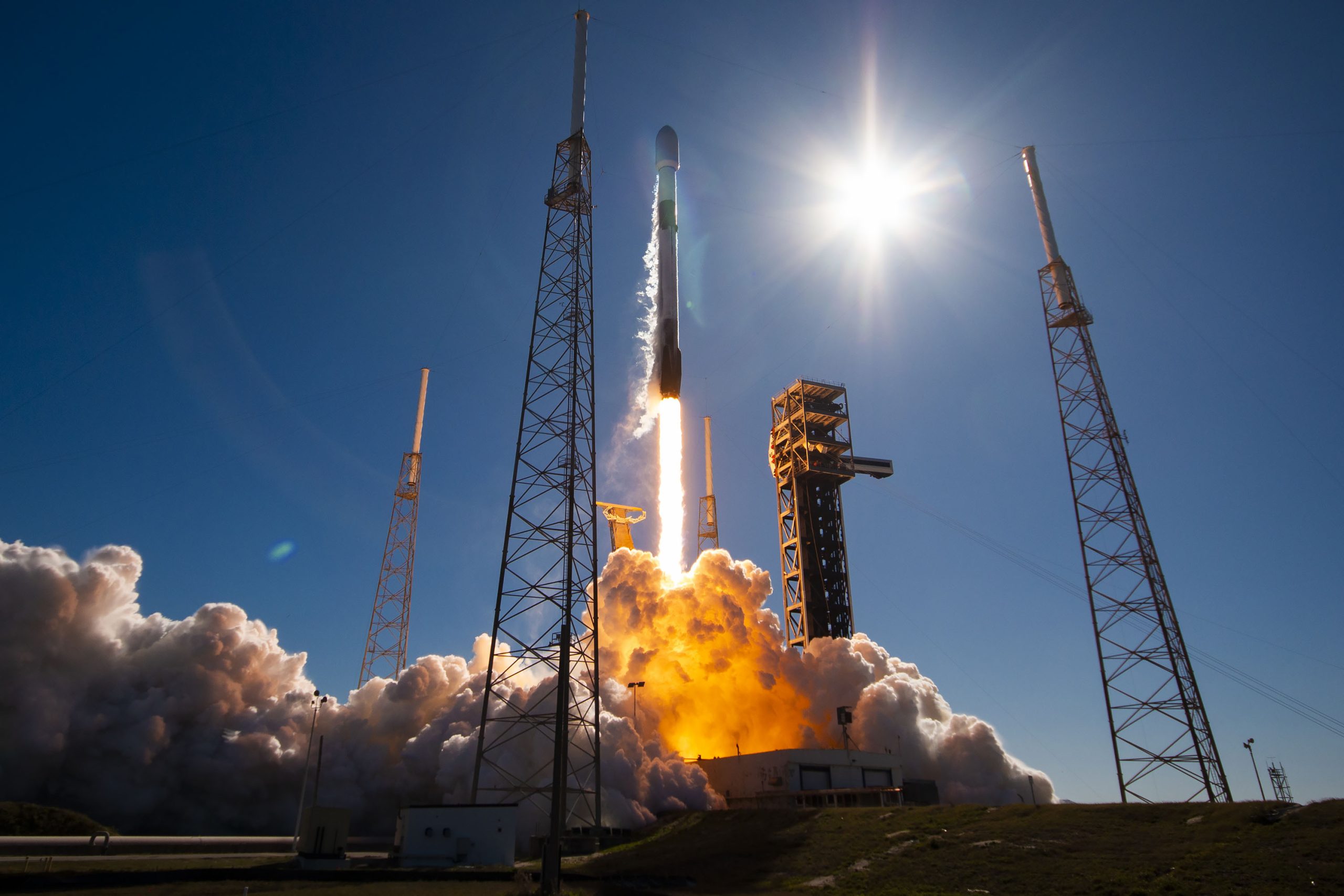
- Unprecedented Cadence: SpaceX officially closed out October by executing its historic 700th Falcon 9 mission, cementing the launch vehicle as the most frequently flown orbital rocket in human history.
- Bruising Capital Advantage: The unmatched flight rate and pioneered booster reusability have drastically compressed enterprise cost-per-kilogram metrics, driving institutional valuation multiples upward and reshaping global telecommunications and defense infrastructure scalability.
- Market Liquidity & Competitor Pressure: Legacy aerospace and emerging sovereign launch providers face acute capital allocation challenges as SpaceX widens its moat, forcing structural shifts in regulatory compliance, risk mitigation, and commercial supply chains.
- The Next Horizon: While the Falcon 9 continues to generate reliable cash flow and underwrite internal cloud compute architecture and satellite expansion, attention pivots to Starship's operational integration and its long-term impact on global supply chain logistics.
WASHINGTON & HAWTHORNE — As October drew to a close, SpaceX quietly yet decisively achieved another milestone that would have seemed entirely implausible a decade ago. With the successful liftoff of its latest batch of payloads, the Hawthorne-headquartered aerospace titan crossed the threshold of its 700th Falcon 9 launch to date. For an industry historically defined by crushing capital expenditures, exorbitant failure rates, and sluggish bureaucratic development cycles, the milestone represents far more than a mere engineering triumph. It is a masterclass in infrastructure scalability, supply chain mastery, and ruthless operational execution.
For institutional investors, sovereign defense planners, and telecommunications executives alike, the 700th launch serves as an inflection point. It forces a rigorous recalculation of enterprise ROI across the space economy. What began as an experimental partially reusable medium-lift vehicle has metastasized into the undisputed backbone of global orbital access, effectively dictating the terms of market liquidity and capital allocation for the entire commercial space sector.
The Catalytic Evolution of a Workhorse: From First Flight to 700 Missions
Test Our Free AI & Tech Utilities Suite
Calculate LLM API token costs, analyze article dwell-time, or simulate tech DCA returns.
To understand the magnitude of the 700-flight milestone, one must examine the precarious financial and technical reality of the commercial launch market in 2010. When the Falcon 9 made its maiden flight on June 4, 2010, incumbent launch providers in the United States, Europe, and Russia operated under cost-plus paradigms. These legacy models prioritized bespoke manufacturing, single-use hardware, and high-margin, low-frequency cadence. Risk mitigation was traditionally achieved through redundant, hand-built components rather than mass-manufacturing and iterative flight testing.
SpaceX systematically dismantled that playbook. By internalizing component manufacturing, leveraging vertical integration, and obsessively pursuing first-stage booster recovery, the company inverted traditional aerospace economics. The breakthrough came in December 2015 with the first successful orbital-class booster landing. What followed was an exponential scaling curve:
- The Early Years (2010–2015): Establishing reliability, securing NASA Commercial Resupply Services (CRS) contracts, and validating basic architectural concepts across the first 20 flights.
- The Reusability Revolution (2016–2020): Perfecting propulsive landing at sea and on land, introducing the Block 5 iteration (designed for maximum reusability with minimal refurbishment), and capturing a dominant share of the global commercial satellite market.
- The Hyper-Cadence Era (2021–Present): Scaling launch operations to unprecedented frequencies—often exceeding multiple flights per week—driven primarily by the relentless deployment cadence of the Starlink megaconstellation and third-party dedicated rideshare missions.
This relentless cadence has transformed regulatory compliance and launch insurance markets. Underwriters who once viewed reusable rockets as high-variance assets now view seasoned Falcon 9 boosters—some of which have flown 20 or more times—as statistically safer than many single-use competitors. This shift has materially lowered premium rates, injecting crucial financial efficiency into commercial operations.
Verified Data & Metrics Breakdown
A granular examination of the Falcon 9 program reveals the staggering scale of its operational velocity and technological maturity. The following metrics outline the trajectory of the vehicle that reshaped the aerospace sector:
| Program Metric | Historical Benchmark (Early Era) | Current Benchmark (700th Launch Era) |
|---|---|---|
| Total Falcon 9 Launches | 1 (June 2010) | 700+ (October closeout) |
| Booster Reusability Record | 0 flights (Expendable) | Up to 23 flights for a single booster |
| Average Launch Cadence | 2 to 3 launches per year (2010–2012) | 120+ launches projected annually |
| Payload to LEO (Reusable) | N/A (Non-reusable configuration) | ~17,400 kg (optimized recovery profile) |
| Estimated Cost Per Kilogram | >$5,000 / kg | Sub-$1,500 / kg (industry-leading) |
Industry & Market Implications: Winners, Losers, and Economic Realities
The achievement of 700 successful flights is not merely a technical feather in SpaceX's cap; it is a profound market-shaping event that reverberates across global balance sheets. The fallout from this dominance creates distinct winners and losers across the industrial and financial landscapes.
The Winners: Enterprise End-Users and Agile New-Space Entrants
Commercial satellite operators—particularly those deploying low-Earth orbit (LEO) constellations for Earth observation, IoT connectivity, and broadband delivery—are the primary beneficiaries. The predictability of the Falcon 9 schedule, combined with depressed cost-per-kilogram figures, allows venture-backed startups and established enterprise firms to secure project financing with greater confidence. Furthermore, rideshare programs like "Transporter" have democratized orbital access, enabling smaller academic and commercial payloads to reach space at a fraction of historical costs.
The Losers: Legacy Aerospace and Slow-Moving Sovereign Programs
Conversely, traditional aerospace primes and international space agencies relying on traditional manufacturing paradigms find themselves locked in an asymmetric economic battle. Developing a heavy-lift rocket with a projected cost structure that cannot compete with a flight-proven Falcon 9 creates severe commercial headwinds. European, Japanese, and legacy U.S. launch providers have been forced into aggressive redesign cycles, government-subsidized bailouts, or market consolidation just to remain viable.
From a capital markets perspective, the sheer cash flow generated by SpaceX's launch services and Starlink subscriptions provides the company with virtually unmatched liquidity. This financial cushion permits aggressive capital allocation toward next-generation research and development, insulating the firm from macroeconomic downturns that might otherwise stifle venture funding in the broader technology sector.
Frequently Asked Questions (People Also Ask)
What makes the Falcon 9 different from traditional rockets?
Unlike traditional rockets designed to be discarded into the ocean after a single use, the Falcon 9 features a reusable first-stage booster equipped with grid fins, cold-gas thrusters, and landing legs. This booster guides itself back through the atmosphere to land propulsively either on a drone ship at sea or a concrete pad on land, radically reducing manufacturing costs and enabling high-frequency flight cadences.
How many times can a single Falcon 9 booster fly?
SpaceX has successfully flown individual first-stage boosters up to 23 times. Engineering inspections, rigorous metallurgical testing, and continuous software refinements have allowed the company to steadily push the envelope on booster fatigue limits and refurbishment turnaround times.
How does the Falcon 9 support SpaceX’s broader business model?
The Falcon 9 serves a dual purpose: it acts as a highly profitable commercial and government launch service provider, and it functions as the primary delivery mechanism for the Starlink global satellite internet constellation. The revenue generated from external payloads and internal deployments underwrites SpaceX's massive ongoing development of Starship, its next-generation fully reusable deep-space transport system.
What impact has the Falcon 9 had on global launch insurance markets?
As the Falcon 9 established an extensive statistical record of reliability across hundreds of consecutive successful missions, marine and aerospace underwriters adjusted risk models accordingly. Premiums for payloads launched on flight-proven boosters have stabilized or decreased, reflecting the high confidence institutional risk managers place in the vehicle's hardware maturity.
Future Outlook: Beyond the 700th Mission
As SpaceX looks past the 700th Falcon 9 launch, the strategic focus within Hawthorne and Starbase is divided between maintaining operational dominance with its current workhorse and accelerating the transition to its heavy-lift successor. While the Falcon 9 will continue to fly critical national security payloads, NASA crewed missions, and commercial satellites for years to come, its ultimate destiny is to bridge the financial and operational gap until Starship assumes primary heavy-lift responsibilities.
For financial analysts and market observers, the key metrics to monitor over the next 24 to 36 months will include the rate at which Starship achieves full rapid reusability, the subsequent deflationary impact that vehicle will have on payload costs, and how global defense agencies adapt their procurement strategies to accommodate routine interplanetary-scale logistics. Whatever the timeline, the 700th Falcon 9 launch stands as a watershed moment—proving definitively that high-frequency, reusable orbital transport is not a theoretical aspiration, but a permanent, profit-generating reality of the modern global economy.