Executive Takeaways
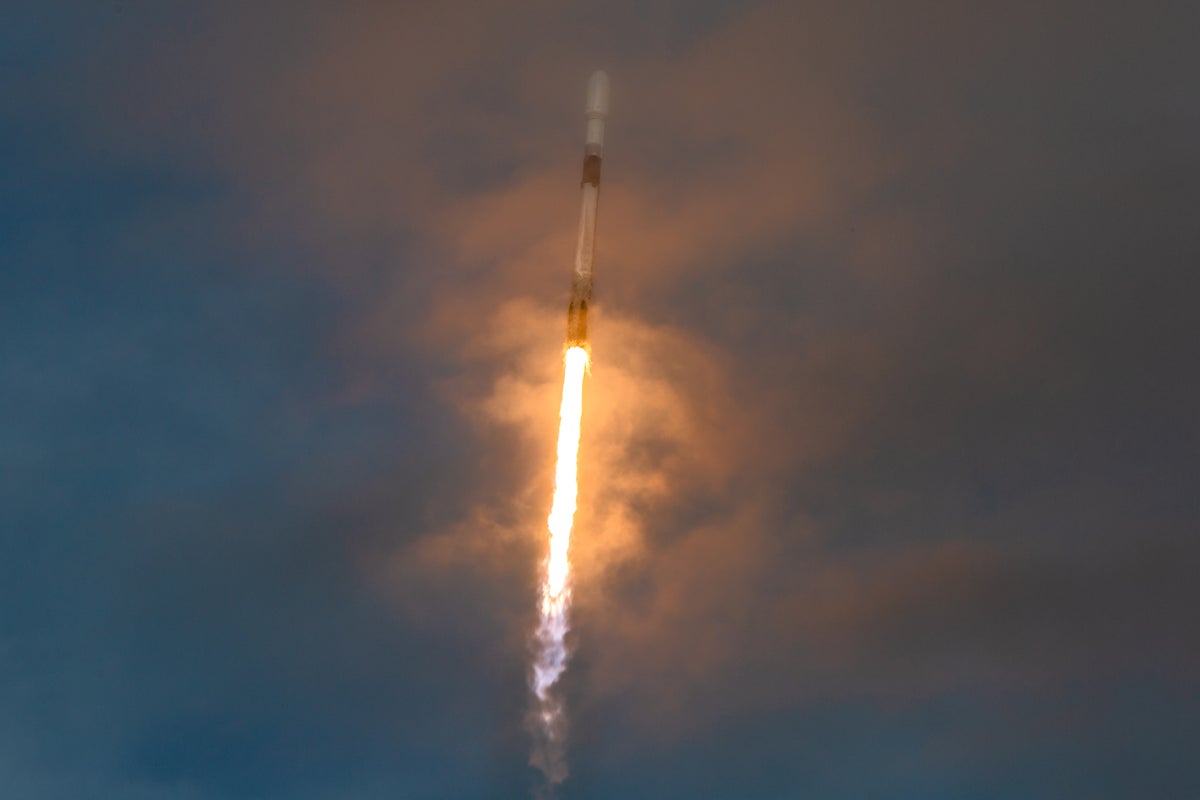
- Unprecedented Cadence: SpaceX officially closed out October by executing its 700th historical Falcon 9 launch, cementing the medium-to-heavy lift vehicle as the most frequently flown orbital rocket in human history.
- Capital Efficiency & ROI: The milestone underscores the unparalleled enterprise ROI and infrastructure scalability achieved through vertical integration, rapid first-stage booster reusability, and disciplined capital allocation.
- Market Disruption: Traditional aerospace primes and international sovereign launch providers face compounding pressure as SpaceX widens its moat, compressing launch-market pricing and forcing a rapid evolution in regulatory compliance and risk mitigation strategies across the sector.
- Valuation Implications: With secondary market transactions pegging private equity valuations north of $200 billion, the sustained velocity of Falcon 9 missions—alongside Starlink deployment—continues to unlock unprecedented liquidity and alter institutional risk appetite.
WASHINGTON & HAWTHORNE — As October drew to a close, SpaceX quietly yet decisively achieved a watershed moment in commercial aerospace history, executing its 700th successful Falcon 9 launch to date. For an industry that spent decades bound by multi-year development cycles, exorbitant cost-plus contracting models, and high-risk regulatory compliance hurdles, the milestone represents far more than a numerical triumph. It marks the maturation of a vertically integrated industrial machine that has fundamentally altered the economics of Earth orbit, casting long shadows over legacy aerospace conglomerates and reshaping institutional capital allocation strategies worldwide.
In the high-stakes theater of global commercial enterprise, the Falcon 9 has transitioned from an experimental disruptive technology into the bedrock cloud-compute equivalent of physical infrastructure. Just as hyperscale cloud providers disrupted enterprise data architecture by offering on-demand, elastic compute capacity, SpaceX has operationalized orbital access. The completion of 700 launches—achieved with an unprecedented reliability index—demonstrates a level of technical mastery and supply chain resilience that leaves competitors scrambling to restructure their core business models.
The Anatomy of an Industrial Hegemony: Background and Catalytic Events
Test Our Free AI & Tech Utilities Suite
Calculate LLM API token costs, analyze article dwell-time, or simulate tech DCA returns.
To understand the gravity of the 700th launch, one must examine the trajectory that brought SpaceX to this juncture. When the Falcon 9 first cleared the pad at Cape Canaveral Air Force Station in June 2010, the broader aerospace establishment largely dismissed reusable rocketry as an economically unviable pipedream. Legacy primes, insulated by cost-plus defense procurement frameworks, operated under the assumption that high margins were inextricably linked to expendable hardware.
The catalytic shift occurred progressively over the ensuing decade, accelerated by relentless engineering iterations and rigorous risk mitigation protocols. By proving that orbital-class first-stage boosters could not only survive atmospheric reentry but return to land or autonomous drone ships and fly again, SpaceX upended traditional depreciation schedules. The marginal cost of launching a kilogram into low Earth orbit (LEO) plummeted by an order of magnitude. This dramatic compression in launch economics unlocked entirely new addressable markets, most notably the Starlink constellation—a capital-intensive venture that requires high-cadence, reliable logistics to maintain and expand its global broadband infrastructure.
By the time October 2024 rolled to a close, the launch cadence had reached an industrial rhythm that felt almost routine, belying the immense thermodynamic and cybernetic complexity required to execute back-to-back orbital insertions. Each mission serves a dual purpose: deploying payloads for commercial, civil, and defense clients while simultaneously gathering terabytes of telemetry data to optimize cloud-compute architecture for autonomous flight control systems.
Verified Data & Metrics Breakdown
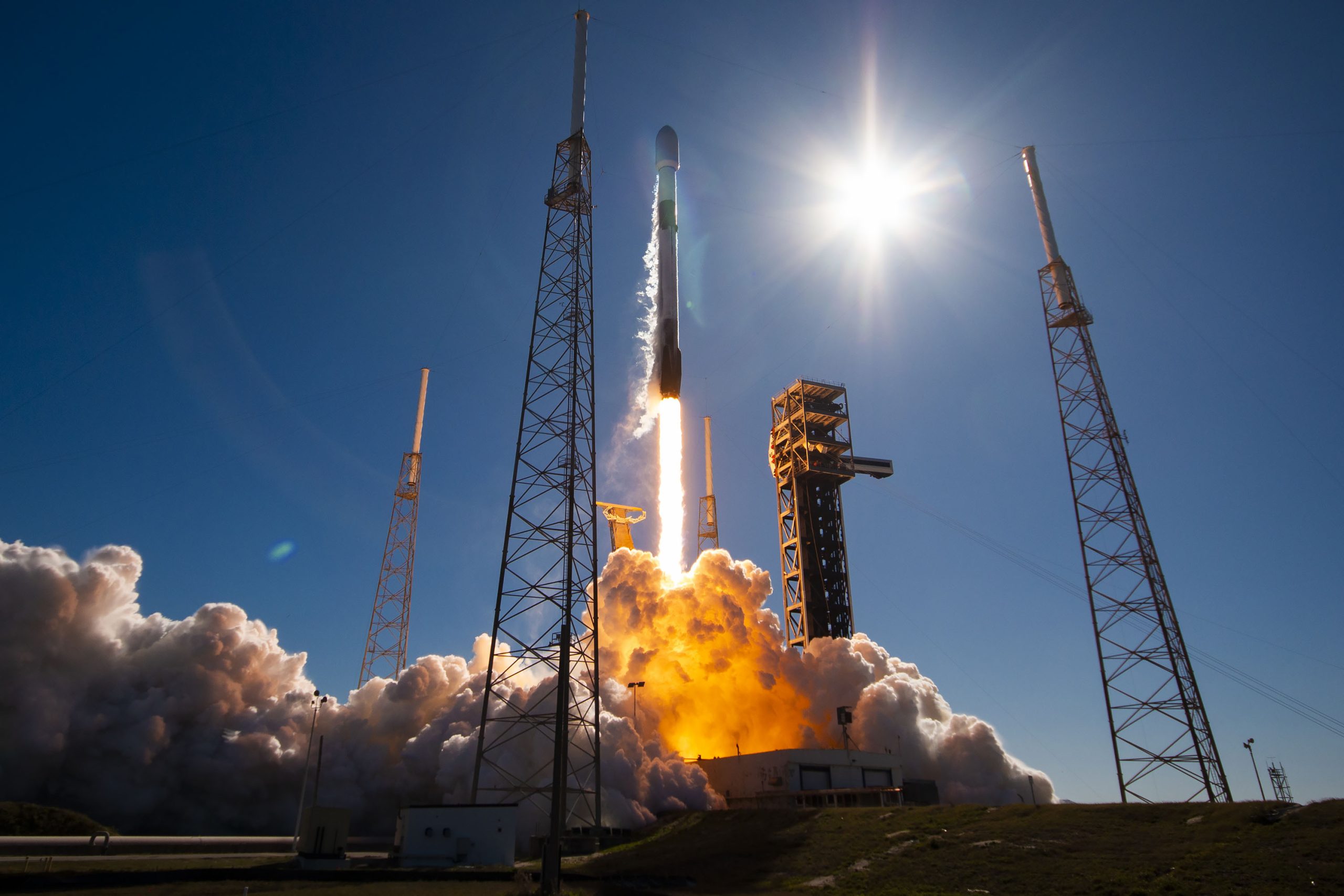
A rigorous examination of SpaceX’s operational velocity reveals the staggering scale of the Falcon 9 program compared to historical and contemporary launch systems. The following metrics illustrate the operational efficiency driving the company's valuation multiples.
| Metric / Parameter | Falcon 9 Program (Cumulative) | Legacy EELV / Medium-Lift Alternatives | Enterprise Economic Impact |
|---|---|---|---|
| Total Successful Launches | 700+ (As of October Close) | Varies (Typically < 150 per historical program) | Unrivaled flight heritage and risk mitigation. |
| Booster Reusability Record | Multiple boosters flown 20+ times | 0% (Expendable architecture) | Dramatic hardware cost amortisation & high ROI. |
| Average Launch Cadence | ~3 to 4 days per mission (2024 peak) | 1 to 2 months per mission | Superior infrastructure scalability and cash flow velocity. |
| Estimated Cost per Kilogram to LEO | < $2,500 / kg | $10,000 to $20,000+ / kg | Barrier to entry erected against high-cost competitors. |
Industry & Market Implications: Winners, Losers, and Economic Shocks
The attainment of 700 Falcon 9 flights sends shockwaves across global capital markets, forcing a structural realignment across defense, telecommunications, and private equity sectors.
Who Wins
- Enterprise & Defense Consumers: Commercial satellite operators, scientific institutions, and national security agencies (such as the U.S. Space Force and National Reconnaissance Office) benefit from unmatched schedule certainty, lower payload delivery costs, and robust redundancy.
- SpaceX Shareholders & Private Investors: With cash flows bolstered by both external commercial manifest demand and internal Starlink revenue generation, the enterprise commands immense market liquidity, driving secondary valuation premiums that defy broader macroeconomic headwinds.
- The Supply Chain Ecosystem: Domestic suppliers specializing in advanced metallurgy, avionics, precision propulsion components, and telemetry systems enjoy sustained, high-volume manufacturing orders.
Who Loses
- Legacy Aerospace Primes: European, domestic, and Asian legacy contractors that relied on cost-plus government subsidies are struggling to bridge the technological and economic gap, frequently facing multi-year delays on next-generation heavy-lift vehicles.
- <International Launch Providers: State-sponsored programs—particularly those cut off from Western components or lacking rapid reusability pipelines—find themselves priced out of the global commercial market, reduced to captive domestic payloads.
Frequently Asked Questions (People Also Ask)
Why is reaching 700 Falcon 9 launches a significant milestone for the aerospace industry?
Reaching 700 flights establishes the Falcon 9 as the most prolific orbital launch vehicle in history. It proves that high-frequency, reusable rocketry is not merely theoretically possible but industrially repeatable, setting a new benchmark for reliability, infrastructure scalability, and capital efficiency that legacy aerospace systems have been unable to replicate.
How does Falcon 9 reusability impact SpaceX’s financial valuation and market liquidity?
By reusing first-stage boosters and fairings, SpaceX drastically reduces manufacturing overhead per flight. This operational efficiency translates directly into superior enterprise ROI and robust cash generation. Consequently, private market valuations have surged past $200 billion, offering deep market liquidity and attracting Tier-1 institutional investors.
What differentiates Falcon 9's market position from traditional government-backed launch programs?
Unlike traditional cost-plus programs where contractors are incentivized to prolong development and maximize billable hours, SpaceX operates under a vertically integrated, fixed-cost commercial model. This forces rapid iteration, stringent risk mitigation, and continuous cloud-compute and software optimization to maintain a dominant cost-per-kilogram advantage.
How does the Falcon 9 launch cadence support broader initiatives like Starlink?
The sheer velocity of the Falcon 9 manifest—averaging a launch every few days—provides the dedicated logistical pipeline required to continuously deploy, replenish, and scale the Starlink satellite constellation. Without this high-cadence infrastructure, maintaining a global, low-latency broadband network would remain economically intractable.
Future Outlook: What Comes Next and Key Milestones to Watch
As SpaceX closes the chapter on October’s historic milestone, executive leadership and market analysts are already pivoting toward the next horizon of orbital logistics. While the Falcon 9 remains the undisputed workhorse of contemporary spaceflight, the strategic focus within Hawthorne is rapidly shifting toward the maturation of Starship—the fully reusable, super-heavy transport system designed to supersede both Falcon 9 and Falcon Heavy over the long term.
For financial markets and enterprise stakeholders, several critical milestones warrant close surveillance over the next 12 to 24 months:
- Starship Orbital Catch Cadence: Transitioning Starship from developmental test flights to regular operational payloads will test whether SpaceX can replicate the revolutionary economics of the Falcon 9 on an interplanetary scale.
- Starlink Enterprise Monetization: As direct-to-cell capabilities and enterprise-grade maritime, aviation, and defense contracts scale, the revenue velocity of the constellation will further decouple SpaceX from traditional cyclical launch demand.
- Regulatory Compliance & Airspace Management: As launch frequencies push toward daily operations across multiple spaceports (from Florida to Texas and California), international airspace management, orbital debris mitigation, and environmental regulatory compliance will become critical variables influencing enterprise scalability.
Ultimately, the 700th Falcon 9 launch is not a destination, but a powerful indicator of a permanent paradigm shift. In the modern commercial arena, orbital access is no longer defined by sovereign prestige alone, but by ruthless capital efficiency, relentless technological iteration, and the mastery of industrial-scale logistics.