SpaceX Faces Environmental Reckoning as Court Demolishes Bid to Toss NAACP Lawsuit Over Memphis Supercomputer Data Center
Test Our Free AI & Tech Utilities Suite
Calculate LLM API token costs, analyze article dwell-time, or simulate tech DCA returns.
Executive Takeaways
- Judicial Setback: A federal court has denied SpaceX’s motion to dismiss a landmark environmental justice lawsuit brought by the NAACP regarding unpermitted turbine emissions at its Memphis data center.
- Infrastructure Scalability vs. Compliance: Elon Musk’s aerospace firm rushed to deploy the "Colossus" supercomputer cluster to train advanced AI models, allegedly bypassing stringent local environmental permits and regulatory compliance standards.
- Enterprise Risk Mitigation: The ruling signals a dangerous precedent for tech giants relying on rapid infrastructure deployment, potentially threatening capital allocation, valuation multiples, and operational scalability.
- Environmental Justice Precedent: The NAACP’s victory weaponizes the Clean Air Act and civil rights frameworks against industrial polluters in historically marginalized communities.
The Collision of AI Ambition and Environmental Justice
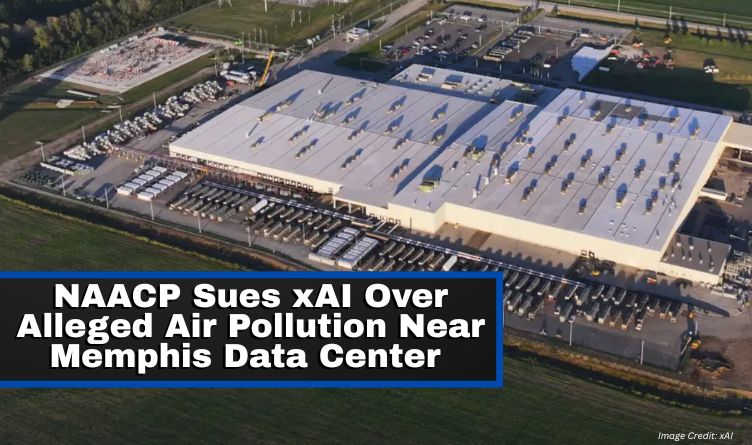
The race to dominate artificial intelligence infrastructure has officially collided with federal environmental oversight and civil rights litigation. In a decisive legal blow that reverberates across Wall Street and Silicon Valley boardrooms, a federal court has rejected SpaceX’s aggressive motion to dismiss a high-stakes lawsuit filed by the National Association for the Advancement of Colored People (NAACP). The legal challenge targets the aerospace titan's operation of a massive, power-hungry supercomputer data center in Memphis, Tennessee—a facility that local advocates charge has transformed a vulnerable, historically Black neighborhood into an industrial sacrifice zone.
At the heart of the controversy is SpaceX's desperate pursuit of compute architecture capable of powering its artificial intelligence ambitions, specifically xAI’s "Colossus" cluster. To bypass traditional, time-consuming grid connection delays, SpaceX reportedly installed dozens of methane-gas-powered combustion turbines to generate the colossal amounts of electricity required to run its advanced GPU arrays. However, this high-speed infrastructure deployment allegedly occurred without securing mandatory local and federal environmental permits, pumping dangerous levels of nitrogen oxides ($NO_x$) and other pollutants into the surrounding South Memphis air.
For institutional investors and risk management executives closely monitoring corporate governance, the court's refusal to toss the lawsuit marks a critical inflection point. Environmental compliance is no longer a mere line-item regulatory tick-box; it is an existential threat to enterprise valuation multiples and operational scalability. As institutional capital increasingly ties risk mitigation and regulatory compliance to ESG metrics, legal challenges of this magnitude carry material implications for future market liquidity and corporate reputation.
Anatomy of a Regulatory Bypass: The Memphis Deployment
The timeline of the Memphis data center deployment reads like a masterclass in Silicon Valley’s "move fast and break things" ethos crashing against the immovable object of municipal environmental law. When SpaceX and its sister AI venture, xAI, targeted Memphis for the rapid-fire construction of one of the world's largest supercomputing clusters, speed was prioritized above all else. Enterprise ROI calculations dictated that securing first-mover advantage in generative AI model training outweighed potential friction with local regulatory bodies.
To circumvent the multi-year queue required to pull megawatts of steady power from the Tennessee Valley Authority (TVA) transmission grid, operators elected to deploy a fleet of trailer-mounted combustion turbines. These unpermitted fossil-fuel generators immediately began operating around the clock. Residents of South Memphis—an area already burdened by a disproportionate concentration of industrial facilities, refineries, and legacy manufacturing plants—began reporting noxious exhaust odors, soot accumulation, and respiratory distress.
The NAACP, acting alongside local environmental justice groups, stepped in with a robust legal framework centered on violations of the federal Clean Air Act and civil rights protections. SpaceX’s legal team moved for an immediate dismissal, arguing that the plaintiffs lacked standing and that the emissions levels did not constitute an actionable immediate threat. The court’s rejection of this motion forces SpaceX into an uncomfortable position: public discovery, potential injunctive relief, and intense scrutiny over internal communications regarding environmental risk mitigation.
Verified Data & Litigation Metrics Breakdown
| Metric / Parameter | SpaceX / xAI Facility Status | Legal & Financial Implications |
|---|---|---|
| Primary Infrastructure | "Colossus" Supercomputer Cluster (Memphis, TN) | High compute density driving aggressive power demands. |
| Power Generation Method | Unpermitted Methane Gas Combustion Turbines | Direct violation of Clean Air Act permitting mandates. |
| Primary Plaintiffs | NAACP & South Memphis Environmental Coalitions | Leveraging environmental justice and civil rights statutes. |
| Court Ruling Outcome | Motion to Dismiss Denied | Forces case to discovery phase, increasing litigation overhead. |
| Market Risk Exposure | Operational Bottlenecks & Potential Injunctions | Threatens capital allocation efficiency and AI training timelines. |
Industry & Market Implications: Who Wins, Who Loses
The broader economic and industrial repercussions of this legal battle extend far beyond the borders of Shelby County, Tennessee. As cloud compute architecture scales exponentially to meet the insatiable demands of generative AI, data center operators across the globe are facing severe power grid constraints. Many tech conglomerates have explored off-grid or auxiliary power generation solutions—such as dedicated natural gas turbines or localized nuclear small modular reactors (SMRs)—to bypass public utility bottlenecks.
The Losers: High-growth tech enterprises attempting to bypass environmental permitting processes. This ruling proves that municipal and federal regulators, bolstered by active civil rights organizations, possess the legal teeth to halt or severely encumber rogue infrastructure projects. Companies treating compliance as an afterthought now face catastrophic project delays, severe financial penalties, and immense brand erosion.
The Winners: Environmental justice advocates, local community coalitions, and regulatory compliance firms. The NAACP’s success establishes a formidable legal playbook for marginalized communities nationwide to push back against industrial pollution masked as technological innovation. Furthermore, enterprise risk mitigation consultants and green-energy infrastructure providers stand to gain as tech giants are forced to re-allocate capital toward legitimate, permitted, and sustainable power sources.
Frequently Asked Questions (People Also Ask)
Why is the NAACP suing SpaceX over its Memphis data center?
The NAACP filed suit because SpaceX and xAI deployed unpermitted methane gas combustion turbines to power the "Colossus" supercomputer. These turbines have allegedly released hazardous air pollutants into a predominantly Black, low-income neighborhood in South Memphis, violating the Clean Air Act and environmental justice protections.
What was the court's decision regarding SpaceX's motion to dismiss?
The federal court officially denied SpaceX's motion to dismiss the lawsuit. This ruling means the litigation will advance to the discovery phase, compelling SpaceX to hand over internal documents and data concerning its turbine emissions and regulatory compliance decisions.
What are the broader financial and market impacts of this ruling?
The ruling sets a major legal precedent that threatens rapid, unpermitted infrastructure scalability across the tech sector. It forces enterprise operators to re-evaluate capital allocation, factor regulatory compliance into risk mitigation strategies, and prioritize sustainable power integration over rushed deployments.
How does this impact AI data center development nationwide?
Data center developers can no longer rely on temporary, off-grid fossil fuel generation without rigorous environmental scrutiny. Communities near planned AI hubs are now empowered to demand strict transparency, public hearings, and ironclad regulatory compliance before operations commence.
Future Outlook: Key Milestones to Watch
As this landmark case progresses from the preliminary motion stage into full evidentiary discovery, institutional investors and industry observers must monitor several critical milestones. First, any forthcoming injunction requests by the plaintiffs could legally restrict the operational capacity of the Memphis supercomputer, directly impacting xAI’s model training pipelines and competitive positioning in the generative AI landscape.
Second, federal environmental agencies may feel compelled to intervene directly, establishing federal oversight precedents for off-grid AI power generation facilities springing up across the United States. Ultimately, the SpaceX-Memphis litigation will serve as the defining legal litmus test for how the technology sector balances the staggering energy demands of artificial intelligence with corporate accountability, regulatory compliance, and environmental justice.