Executive Takeaways
- Unprecedented Cadence: SpaceX officially closed out October by executing its 700th Falcon 9 orbital flight, cementing an industrial tempo unseen in aerospace history.
- Disruptive Unit Economics: The Falcon 9’s proprietary booster reusability model continues to compress launch costs, forcing legacy defense contractors and international space agencies to completely revise their capital allocation and risk mitigation strategies.
- Monetizing Infrastructure: Beyond commercial payload delivery and national security missions, the rocket serves as the primary deployment engine for Starlink, driving massive enterprise scalability and altering global telecommunications valuation multiples.
- Regulatory & Supply Chain Pressures: As launch frequencies accelerate toward daily operations, regulatory compliance, airspace management, and high-purity supply chain constraints emerge as the primary bottlenecks for future growth.
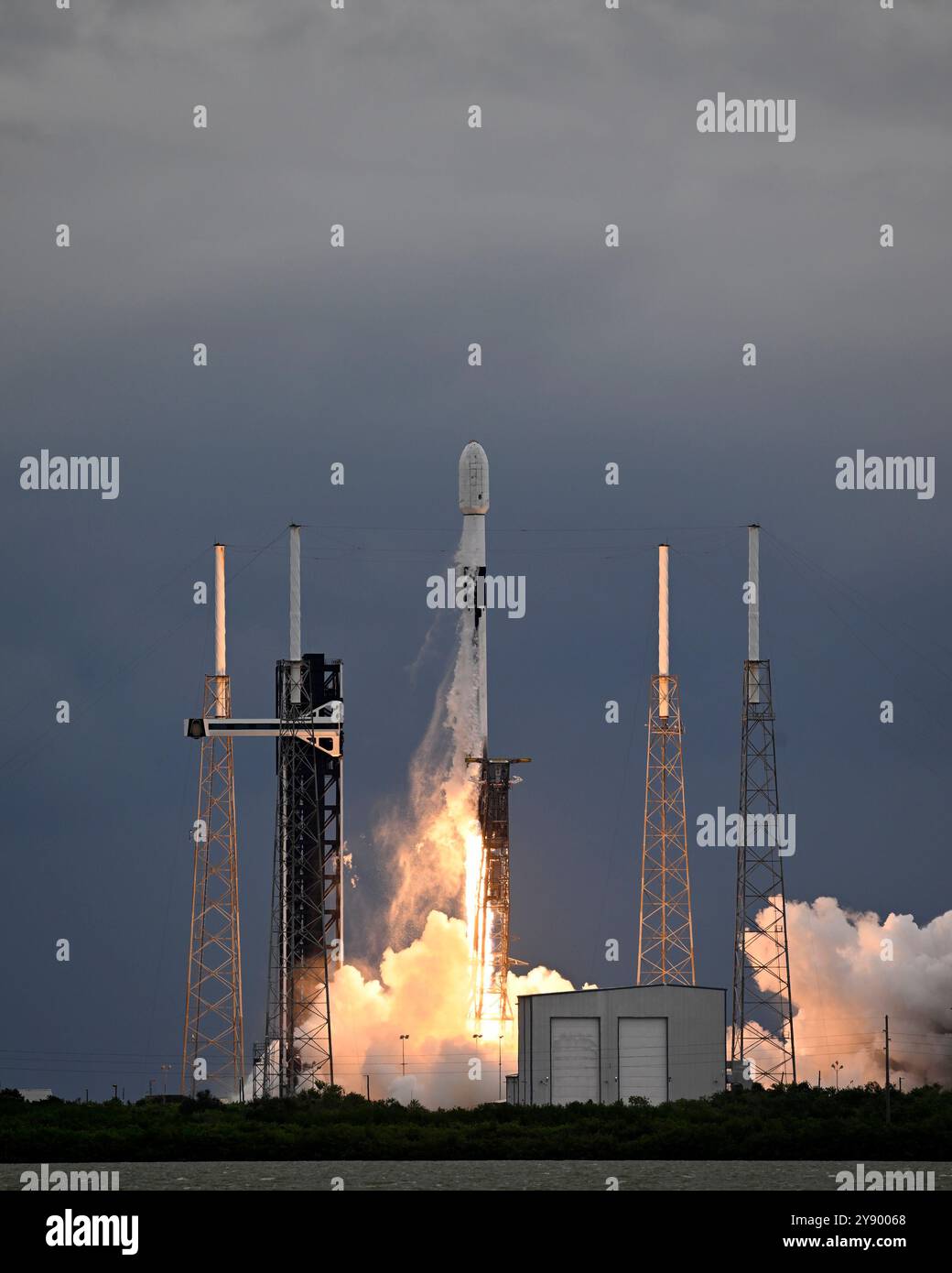
WASHINGTON & HAWTHORNE — In an industry historically defined by multi-year development delays, exorbitant cost overruns, and fragile hardware, SpaceX has achieved what once was deemed mathematically and economically impossible. As the calendar turned on October, the private aerospace titan successfully cleared its 700th Falcon 9 launch to date. This milestone is far more than a mere numerical triumph for Elon Musk’s enterprise; it represents a seismic shift in global infrastructure scalability, transforming orbital access from a bespoke, high-risk government endeavor into a high-frequency, commoditized logistics network.
For institutional investors, geopolitical strategists, and telecommunications giants alike, the 700th flight serves as an empirical proof point. The Falcon 9 has evolved from an experimental orbital delivery system into the undisputed workhorse of the modern space economy. Behind the polished press releases and livestreamed booster touchdowns lies a complex narrative of aggressive engineering iteration, radical supply chain optimization, and a fundamental rewiring of aerospace market liquidity.
The Genesis of a Workhorse: From Near-Bankruptcy to Industrial Dominance
Test Our Free AI & Tech Utilities Suite
Calculate LLM API token costs, analyze article dwell-time, or simulate tech DCA returns.
To understand the magnitude of 700 successful Falcon 9 flights, one must look back to the dark financial abyss of 2008. On the brink of insolvency following three consecutive failures of its smaller Falcon 1 rocket, SpaceX secured a life-saving $1.6 billion Commercial Resupply Services (CRS) contract from NASA. That high-stakes gamble laid the foundation for the Falcon 9, a medium-lift vehicle designed from its inception with two core mandates: structural reliability and aggressive cost reduction through first-stage reusability.
When the Falcon 9 made its maiden flight on June 6, 2010, skeptical legacy aerospace incumbents dismissed it as an over-leveraged startup burning venture capital. Fast forward to the present day, and that initial skepticism has been replaced by existential panic across traditional defense and aerospace boardrooms. By pioneering propulsive vertical landing and routine booster flight-proven reuse—with individual boosters now flying upwards of 20 and 25 times—SpaceX achieved a structural cost advantage that competitors have struggled to match.
This relentless cadence has compressed enterprise ROI timelines for satellite operators. Where commercial satellite deployment once required a five-to-seven-year capital expenditure cycle with high-insurance premiums, modern constellation operators can iterate hardware rapidly, securing launch slots on short notice and hedging against catastrophic launch failures through sheer frequency and portfolio diversification.
Financial Mechanics: How 700 Launches Reshaped Aerospace Valuations

The economics of the 700th Falcon 9 launch extend far beyond the direct revenue generated per flight. While commercial launch pricing ranges widely from $60 million to over $70 million depending on payload mass and orbit insertion requirements, the true financial genius of the program lies in margin expansion.
By manufacturing standardized Merlin engines in high volumes at its Hawthorne, California facility and repeatedly flying recovered first-stage boosters and fairings, SpaceX has systematically dismantled the traditional cost-plus contracting model favored by legacy aerospace. Each successful reuse of a booster dramatically lowers marginal hardware production costs, driving cash flow generation that is routinely plowed back into next-generation capital projects, most notably the Starship development program and the global Starlink ground-station and cloud compute architecture.
| Metric / Milestone | Falcon 1 (Early Era) | Falcon 9 (Current Era - 700th Flight) | Strategic Impact |
|---|---|---|---|
| Launch Success Rate | ~40% (2/5) | 99.2%+ (Across 700+ flights) | Drastic reduction in payload insurance premiums. |
| First-Stage Recovery | None (Expendable) | Routine (Over 350+ booster recoveries) | Enables high-margin recurring cash flows. |
| Maximum Payload to LEO | ~420 kg | Up to 22,800 kg (Expendable) / 17,400 kg (Reusable) | Unlocks heavy institutional and mega-constellation deployment. |
| Flight Cadence | Sporadic (Years between flights) | Multiple launches per week | Establishes a true orbital logistics monopoly. |
This operational dominance has translated directly into private market valuation multiples that dwarf traditional defense primes. With private secondary transactions valuing SpaceX well north of $200 billion, investors are pricing in not just a launch provider, but a vertically integrated global utility spanning orbital delivery, direct-to-device cellular broadband, and high-speed enterprise connectivity.
Industry & Market Implications: Who Wins, Who Loses
The implications of reaching 700 Falcon 9 flights ripple across multiple industrial sectors, creating clear economic winners and losers.
The Winners
- Commercial Satellite Operators: Companies building low-Earth orbit (LEO) constellations benefit from reliable, frequent, and cost-effective access to space, drastically shortening their path to revenue generation.
- National Security & Defense: The U.S. Space Force and intelligence community enjoy unprecedented assured access to space, utilizing Falcon 9 and Falcon Heavy for critical national security payloads with minimal schedule disruption.
- Global Consumers & Enterprises: Starlink subscribers, ranging from maritime fleets and aviation networks to remote rural households, receive continuous network enhancements driven by the rapid cadence of deployment flights.
The Losers
- Legacy Aerospace Contractors: Traditional prime contractors burdened by legacy cost-plus manufacturing models face severe margin compression and protracted development schedules.
- International Launch Providers: Space agencies and commercial entities in Europe, Russia, and Asia find themselves priced out of the global market, struggling to develop competitive reusable alternatives while losing market share.
- Traditional Launch Insurers: Underwriters face shifting risk paradigms as high reliability lowers claim frequencies, though rising total payload values concentrate systemic risk on massive mega-constellation deployments.
Frequently Asked Questions (People Also Ask)
How many times can a single Falcon 9 booster fly?
SpaceX has successfully flown individual Falcon 9 first-stage boosters upwards of 20 to 25 times. The company continually pushes engineering margins and inspects hardware post-flight to safely extend the operational lifespan of each booster, driving down the marginal cost of every subsequent mission.
What percentage of SpaceX launches are for Starlink versus third-party clients?
While exact figures fluctuate monthly, a significant majority of Falcon 9 flights in recent years have been dedicated to deploying SpaceX’s own Starlink internet constellation. However, SpaceX maintains a robust manifest of commercial, civil, and national security payloads for external clients, including NASA, the Department of Defense, and international sovereign governments.
How does the Falcon 9 maintain such a high success rate?
The Falcon 9’s reliability stems from an iterative engineering philosophy, rigorous automated testing, and massive data feedback loops from hundreds of prior flights. When anomalies occur, SpaceX implements rapid hardware and software remediations across the entire active fleet, ensuring continuous risk mitigation.
Will the Falcon 9 eventually be retired in favor of Starship?
Yes, long-term strategic plans involve transitioning heavy-lift and interplanetary missions to Starship. However, because of the Falcon 9’s unmatched flight-proven reliability, cadence, and regulatory certifications, it will remain the cornerstone of orbital logistics for commercial and government payloads for the foreseeable future.
Future Outlook: Navigating the Next 300 Flights to Millennial Status
As SpaceX sets its sights beyond the 700-flight milestone, the operational focus shifts toward maintaining safety standards while pushing launch cadence even higher. Achieving a near-daily launch tempo introduces unprecedented challenges in regulatory compliance, FAA airspace management, and coastal environmental monitoring.
Furthermore, capital allocation will increasingly split between sustaining the mature Falcon product line and funding the deep-space capabilities of Starship. If SpaceX can successfully replicate the reusability and operational cadence of the Falcon 9 with its fully reusable next-generation vehicle, the economic paradigms of the global space economy will undergo yet another tectonic shift.
For now, the 700th Falcon 9 flight stands as an undeniable testament to industrial execution. In an era marked by macroeconomic uncertainty and supply chain fragility, SpaceX has engineered a high-frequency orbital highway—proving that space, once the exclusive domain of superpowers, has officially entered the era of commercial logistics.