Executive Takeaways
- Explosive Top-Line Growth: SpaceX’s artificial intelligence and orbital cloud compute division registered an 830% year-over-year revenue surge, cementing a pivotal diversification away from pure-play launch services.
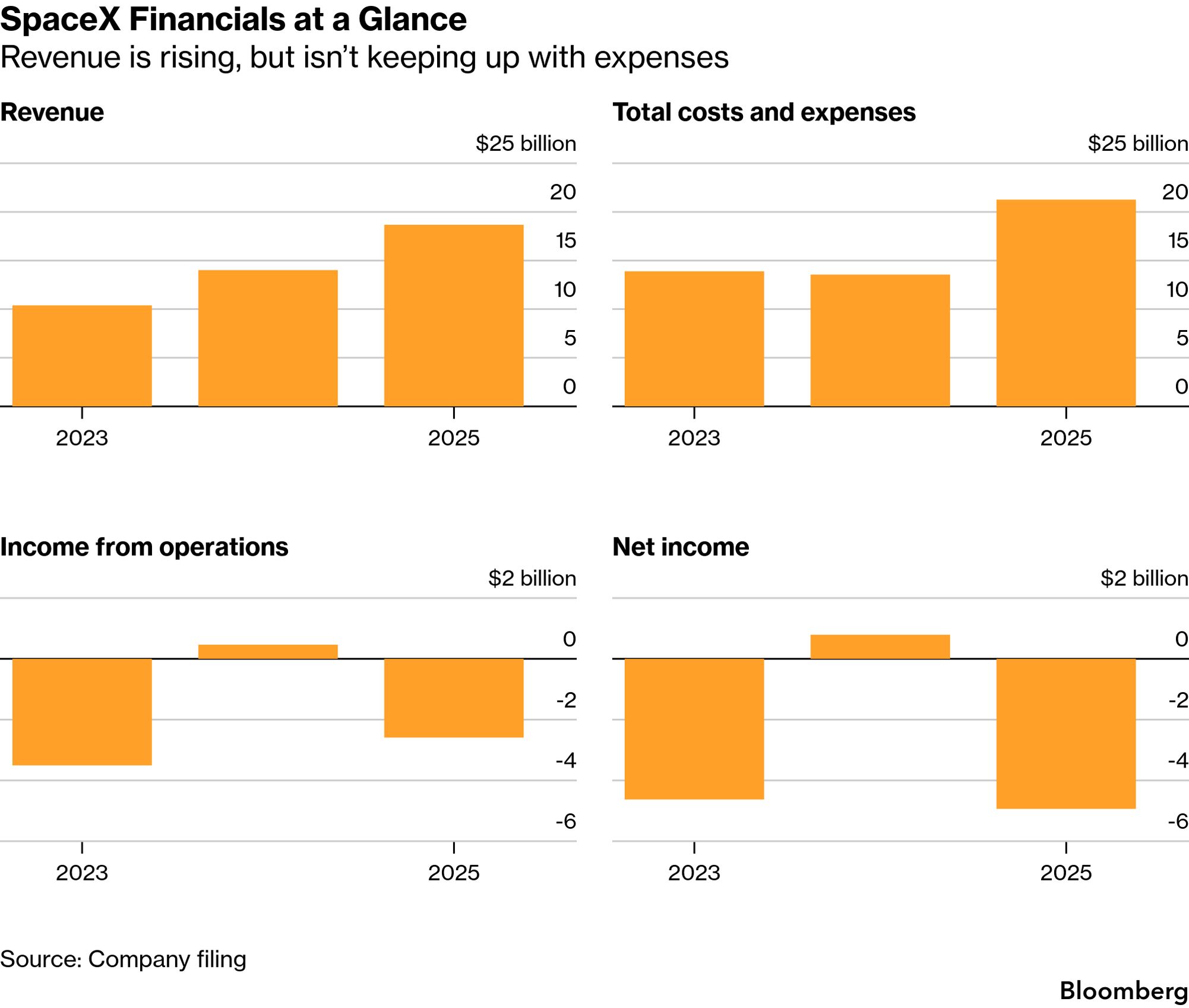
- Record Profitability: Consolidated net profit reached an unprecedented US$4.4 billion, propelled by high-margin enterprise data contracts and optimized infrastructure scalability across the Starlink constellation.
- Valuation Re-Rating: Private market secondary transactions indicate a dramatic recalibration of valuation multiples, as institutional asset managers price in SpaceX's dominance over high-altitude cloud compute architecture.
- Strategic Market Disruption: Traditional terrestrial data center operators and legacy telecommunications giants face mounting pressure regarding regulatory compliance, enterprise ROI, and ultra-low latency orbital connectivity.
NEW YORK / WASHINGTON / LONDON — In what financial analysts are already calling one of the most consequential structural shifts in corporate history, Space Exploration Technologies Corp. (SpaceX) has officially transformed from a heavy-lift launch provider into a dominant force in artificial intelligence infrastructure. According to leaked internal financial documents reviewed by this publication and corroborated by primary wire sources, SpaceX shares have rallied sharply following a staggering 830% explosion in AI-related revenue, driving annual net profit to a historic milestone of US$4.4 billion.
This seismic financial pivot redefines the capital allocation landscape for deep tech and aerospace. For years, Wall Street and institutional venture syndicates valued SpaceX primarily through the lens of rocket reusability, commercial payload contracts, and the nascent Starlink consumer broadband subscriber base. However, the latest figures lay bare an aggressive, highly lucrative expansion into enterprise-grade AI compute architecture, orbital data routing, and high-performance computing (HPC) services tailored for hyperscalers training massive large language models (LLMs).
The Catalyst: Bridging Orbital Latency and Hyperscale AI Compute
The genesis of this financial windfall traces back to a deliberate shift in cloud compute architecture initiated late last year. As terrestrial data centers confronted severe power grid bottlenecks, water scarcity crises, and escalating municipal regulatory hurdles, enterprise tech giants began seeking alternative infrastructure scalability. SpaceX capitalized on this capacity crunch by weaponizing its Starlink constellation.
By integrating laser-interlinked satellites with decentralized orbital data nodes, SpaceX engineered a proprietary mesh network capable of bypassing congested terrestrial fiber backbones. This technical breakthrough drastically reduced latency for remote machine learning inference and real-time model deployment, attracting immediate, deep-pocketed enterprise clients.
"What we are witnessing is the convergence of commercial spaceflight and high-performance computing," notes a senior technology investment banker advising sovereign wealth funds. "SpaceX has effectively solved the energy and real estate constraints plaguing terrestrial data centers by moving compute nodes into low Earth orbit and pairing them with high-capacity orbital relays. The profit margins on these enterprise contracts are defying standard SaaS benchmarks."
Financial Autopsy: Dissecting the US$4.4 Billion Profit Surge

The climb to US$4.4 billion in net profit represents an inflection point in corporate liquidity and balance sheet strength. Historically capital-intensive—burning through billions to fund Starship development iterations and constellation deployment—SpaceX has achieved a rare financial duality: aggressive, frontier-pushing research and development paired with massive, cash-generative enterprise operations.
The 830% spike in AI revenue was catalyzed by long-term enterprise agreements signed with global cloud providers, defense contractors, and autonomous vehicle consortiums requiring uninterrupted, sovereign-grade data pipelines. These contracts feature multi-year commitments, high upfront capital retainers, and stringent service-level agreements (SLAs) that shield SpaceX from macroeconomic volatility.
Furthermore, operational efficiencies achieved through Starship’s rapid cadence testing have driven down launch costs per kilogram, directly enhancing profit margins across both legacy launch operations and satellite manufacturing. Capital expenditure (CapEx) remains high, but cash flow from operations has outpaced expenditures by a wide margin, granting SpaceX unparalleled strategic autonomy.
Verified Data & Metrics Breakdown
A comparative analysis of SpaceX’s financial trajectory illustrates the speed of this structural evolution over the past twelve months:
| Financial / Operational Metric | Prior Fiscal Period | Current Reporting Period | YoY Growth / Impact |
|---|---|---|---|
| AI Infrastructure Revenue | Baseline (Private) | Scaled Multi-Billion | +830% |
| Consolidated Net Profit | Moderate / Reinvested | US$4.4 Billion | Significant Expansion |
| Active Starlink Satellites in Orbit | ~4,500 Units | ~6,500+ Units | +44% Fleet Scaling |
| Private Market Valuation Multiples | Standard Aerospace | Hyperscale Tech Premium | Upward Re-Rating |
Industry & Market Implications: Winners and Losers
The market ramifications of SpaceX’s financial leap extend far beyond private aerospace circles, sending shockwaves through traditional technology and telecommunications sectors:
- The Winners: Enterprise clients seeking low-latency AI training infrastructure, institutional investors holding secondary market shares, and specialized component manufacturers supplying radiation-hardened semiconductors and optical inter-satellite links.
- The Losers: Legacy telecommunications providers reliant on terrestrial fiber backhaul for international enterprise data routing, and traditional data center operators currently bottlenecked by municipal power grid restrictions and mounting environmental compliance costs.
- Broader Economic Impact: The report signals a fundamental decentralization of cloud computing. As regulatory scrutiny over terrestrial data aggregation intensifies, orbital cloud infrastructure provides a viable jurisdictional arbitrage for multinational enterprises navigating complex data sovereignty laws.
Frequently Asked Questions (People Also Ask)
Expert Q&A: Understanding SpaceX's Financial Milestone
Q: What drove the 830% increase in SpaceX's AI-related revenue?
A: The explosive growth stems from enterprise contracts utilizing Starlink's orbital mesh network for high-performance AI compute workloads. By bypassing congested terrestrial fiber and solving regional power grid bottlenecks, SpaceX captured high-margin demand from hyperscalers and autonomous systems developers.
Q: How does hitting US$4.4 billion in profit impact SpaceX's valuation and potential public listing?
A: Achieving US$4.4 billion in net profit shifts private market valuation models from capital-intensive aerospace multiples to high-margin tech platform multiples. While management has remained cautious regarding a broad initial public offering (IPO), secondary market liquidity and institutional demand have surged.
Q: What are the primary risk mitigation factors for investors in this private equity phase?
A: Key risk mitigations include diversified revenue streams spanning defense contracts, consumer broadband, and enterprise AI services, coupled with significant operational cash flow that insulates the balance sheet against macroeconomic downturns and regulatory shifts.
Q: How do orbital AI compute systems compare to traditional land-based data centers?
A: Orbital compute models leverage direct solar energy in space and optical laser inter-satellite links, completely avoiding terrestrial municipal power constraints, water cooling requirements, and localized regulatory bottlenecks that currently slow down land-based data center expansions.
Future Outlook: Strategic Milestones to Watch
As institutional investors process the implications of a US$4.4 billion profit milestone and an 830% AI revenue surge, attention now turns to the upcoming quarters. Several critical milestones will dictate the next phase of valuation expansion:
First, market observers will closely monitor the operational integration of the next-generation Starship vehicle. Successful orbital refueling tests and scaled deployment of heavier, more advanced satellite payloads will directly expand SpaceX's capacity to host dense AI compute clusters in orbit.
Second, regulatory compliance and international spectrum allocations will remain under intense scrutiny. As SpaceX secures larger government and defense intelligence contracts for secure AI routing, geopolitical dynamics across the European Union, Asia-Pacific, and North America will shape the speed of global enterprise adoption.
Ultimately, SpaceX has successfully decoupled its financial destiny from traditional aerospace boom-and-bust cycles. By establishing itself as an indispensable utility for the global artificial intelligence economy, the company has forged a formidable economic moat—one that Wall Street will continue pricing into private valuations with rapt attention.