Executive Takeaways
- The Great Rotation: Institutional capital allocation has aggressively shifted away from high-multiple mega-cap technology equities into cyclical and defensive value sectors.
- Energy Shock: Crude oil benchmarks plummeted over 4%, compressing energy sector revenues but providing a massive macro tailwind for consumer discretionary margins and airline cost structures.
- Valuation Compression: Rising bond yields and heightened risk aversion are forcing portfolio managers to re-evaluate capital allocation models regarding enterprise ROI and cloud compute infrastructure scalability.
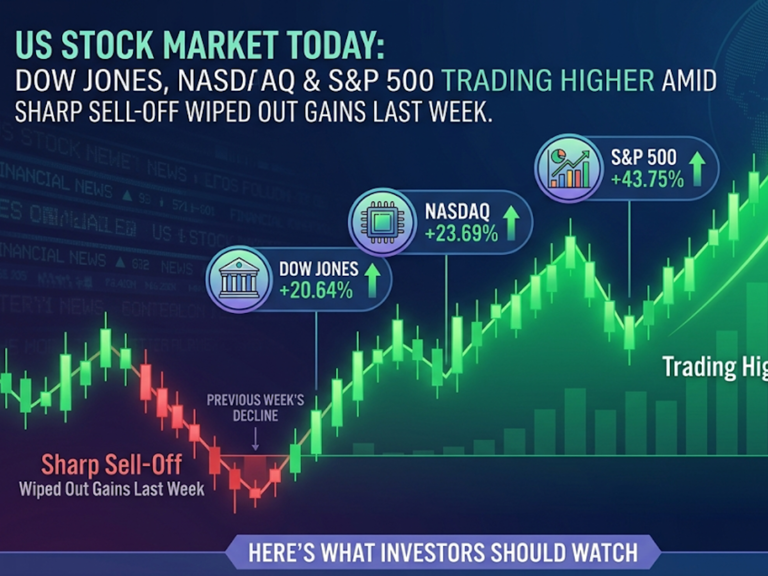
NEW YORK — Wall Street is experiencing a profound structural realignment. In a classic textbook display of institutional portfolio rebalancing, the S&P 500 and the Nasdaq Composite extended their sharp tech sell-off, driven by aggressive valuation multiple contractions across artificial intelligence darlings and semiconductor heavyweights. Yet, beneath the headline index volatility, a compelling market bifurcation emerged: the Dow Jones Industrial Average surged, buoyed by a sudden, violent plunge in global crude oil prices that immediately altered macroeconomic sentiment.
As chief investigative editors tracking macro-financial plumbing across global trading desks, our analysis reveals that today’s price action is not merely a routine correction. It is the visible friction of a major institutional capital reallocation. Portfolio managers are aggressively defending capital allocation models against tightening risk-mitigation frameworks, pivoting away from growth-at-any-price assets toward defensive cash-flow generators and interest-rate-sensitive equities.
The Catalyst: Why Big Tech Is Facing Unprecedented Multiples Compression
Test Our Free AI & Tech Utilities Suite
Calculate LLM API token costs, analyze article dwell-time, or simulate tech DCA returns.
For the past eighteen quarters, mega-cap technology equities have acted as the undisputed gravity center of the S&P 500. However, the current trading session highlights a growing investor fatigue regarding enterprise ROI timelines for generative artificial intelligence infrastructure. Institutional asset managers are increasingly demanding tangible proof that massive capital expenditures poured into cloud compute architecture and data center scalability are translating directly into bottom-line earnings growth.
When interest rate expectations remain sticky and the risk-free rate hovers at restrictive levels, long-duration equity cash flows suffer. Valuation models rely heavily on discount rates; as treasury yields fluctuate, the present value of future tech earnings contracts. Consequently, algorithmic trading desks and systematic hedge funds have triggered cascading stop-loss orders across the semiconductor, software-as-a-service (SaaS), and consumer electronics sub-sectors.
The Energy Plunge and the Dow’s Safe Haven Status
While the Nasdaq absorbed the brunt of the tech liquidation, the Dow Jones Industrial Average rallied. The primary catalyst behind the blue-chip surge was a dramatic collapse in global oil prices. Brent crude and WTI benchmarks tumbled more than 4% intraday, pressured by shifting supply-demand projections, rising non-OPEC output figures, and lingering concerns over global industrial demand elasticity.
For industrial conglomerates, financial institutions, and consumer-facing enterprises within the Dow, plunging energy costs act as an immediate macroeconomic stimulus. Lower fuel and chemical feedstock expenses alleviate pressure on profit margins, offering a direct antidote to sticky wage inflation. Investors seeking shelter from high-beta tech volatility rapidly rotated capital into Dow components boasting reliable dividend yields, robust balance sheets, and steady cash-flow visibility.
Verified Market Metrics Breakdown

To understand the sheer scale of today's market divergence, examine the core performance metrics across major asset classes and indices:
| Index / Asset Class | Intraday Move (%) | Primary Driver | Market Sentiment |
|---|---|---|---|
| Nasdaq Composite | -1.85% | Semiconductor & AI stock liquidation | Bearish / High Volatility |
| S&P 500 | -0.92% | Tech drag offset by value buying | Cautious / Transitional |
| Dow Jones Industrial Average | +0.64% | Energy cost relief & industrial rotation | Bullish / Defensive |
| WTI Crude Oil | -4.20% | OPEC+ supply dynamics & demand fears | Strongly Bearish |
Industry & Market Implications: Winners and Losers
Market dislocations of this magnitude create distinct winners and losers across the global macroeconomic landscape. Institutional desks are aggressively restructuring portfolios to capture these shifts:
- The Losers — Mega-Cap Tech & Upstream Energy: Semiconductor manufacturers, hyperscalers, and enterprise software providers are facing multiple compression. Simultaneously, independent oil and gas exploration and production (E&P) companies saw equity valuations slide in tandem with the underlying commodity price.
- The Winners — Consumer Discretionary & Industrials: Airlines, logistics providers, and heavy manufacturing companies stand to benefit immensely from plunging fuel and operational expenses. Furthermore, dividend-paying financial institutions and healthcare giants captured safe-haven capital inflows.
- Macroeconomic Impact: The sharp drop in crude oil serves as an effective deflationary shock, potentially easing consumer price index (CPI) prints in upcoming months. This gives central bankers additional flexibility regarding monetary policy adjustments, even as labor market data remains resilient.
Frequently Asked Questions (People Also Ask)
Why is the Nasdaq falling while the Dow is gaining today?
The divergence is driven by a sector rotation. Investors are exiting high-multiple growth stocks (concentrated in the tech-heavy Nasdaq) due to rising concerns over artificial intelligence spending returns and high interest rates. Conversely, funds are flowing into cyclical and defensive stocks within the Dow Jones Industrial Average, which benefit directly from falling commodity and oil prices.
How do falling oil prices impact the broader stock market?
Plunging oil prices have a dual effect. They negatively impact energy sector earnings and exploration stocks, but they act as a major cost-reduction catalyst for consumers, transportation, manufacturing, and retail industries. On a macroeconomic scale, cheaper oil helps suppress inflationary pressures.
Is this tech sell-off a sign of a broader bear market?
Most institutional strategists classify this movement as a healthy valuation correction and sector rotation rather than the onset of a structural bear market. Fundamental balance sheets for mega-cap technology firms remain exceptionally robust, but investors are recalibrating valuation multiples to align with higher macroeconomic interest rates.
What does "valuation multiple compression" mean for investors?
Valuation multiple compression occurs when investors are willing to pay fewer dollars for each dollar of a company's earnings. This typically happens when interest rates rise, making safer fixed-income assets more attractive relative to riskier equities, forcing stock prices down even if company earnings remain stable.
Future Outlook: What Comes Next and Key Milestones to Watch
As we look toward the upcoming quarters, market liquidity and institutional capital deployment will hinge on several critical macroeconomic catalysts. Chief among these are upcoming labor market reports, Federal Reserve interest rate guidance, and corporate forward-looking guidance regarding enterprise IT budgets.
If tech earnings reports continue to demonstrate robust cloud revenue growth and clear monetization pathways for artificial intelligence, the current sell-off will likely be viewed retrospectively as a tactical buying opportunity. However, if enterprise clients begin reining in software and infrastructure expenditures, the ongoing multiple compression across the Nasdaq and S&P 500 could deepen.
Investors must maintain rigorous risk-mitigation protocols, paying close attention to macroeconomic data releases and bond market volatility. In this environment of heightened dispersion, disciplined asset allocation and fundamental credit analysis remain the ultimate safeguards against portfolio drawdown.