Stock Market Today: Stock Futures Drop as Investors Weigh Democratic Gains — Live Updates
Test Our Free AI & Tech Utilities Suite
Calculate LLM API token costs, analyze article dwell-time, or simulate tech DCA returns.
Wall Street recalibrates capital allocation strategies and valuation multiples following shifting legislative landscapes, raising fresh questions over infrastructure scalability, corporate tax exposure, and regulatory compliance.
Executive Takeaways
- Immediate Market Reaction: U.S. stock futures extended overnight losses as institutional desk managers aggressively repriced risk assets following unexpected Democratic legislative gains.
- Valuation Multiples Under Pressure: Growth-oriented equities, clean energy developers, and pharmaceutical giants face renewed capital allocation scrutiny amid potential policy shifts affecting corporate tax rates and regulatory compliance.
- Liquidity and Risk Mitigation: Portfolio managers are accelerating risk mitigation maneuvers, increasing short-duration fixed-income weightings, and reassessing enterprise ROI across capital-intensive sectors.
- The Broader Macro Landscape: Fixed-income markets and currency desks are closely monitoring Treasury yields as bond market liquidity reacts to shifting fiscal stimulus projections.
The Catalytic Shift: Decoding the Futures Sell-Off
Global financial markets woke up to a recalculated risk matrix this morning as U.S. equity futures tumbled sharply. The sudden downward repricing was catalyzed by incoming electoral data pointing toward concrete Democratic gains in key legislative contests. For institutional investors navigating an already delicate macroeconomic environment defined by stubborn inflation prints and shifting Federal Reserve interest rate trajectories, the political shift introduces a fresh wave of policy uncertainty.
On trading floors from Lower Manhattan to the City of London, risk committees immediately convened to assess how altered legislative power balances could impact corporate tax codes, antitrust enforcement, and federal spending initiatives. While equity bulls had spent the prior quarter pricing in gridlock as a guarantor of corporate status quo, the prospect of targeted legislative action has forced a rapid reassessment of valuation multiples. High-growth technology stocks, heavily reliant on sustained cloud compute architecture demand and aggressive venture-backed capital deployment, saw notable pre-market pressure.
"We are witnessing a classic portfolio re-balancing event driven by sudden policy variable updates," said the head of global macro strategy at a tier-one investment bank managing over $500 billion in assets. "When the legislative landscape shifts overnight, enterprise ROI assumptions must be rewritten. Investors are not necessarily fleeing equities entirely, but they are aggressively rotating out of high-beta sectors and seeking refuge in defensive cash equivalents and high-quality corporate balance sheets."
Sector-Specific Vulnerabilities and Market Liquidity

The sectoral breadth of today’s pre-market sell-off highlights deep divisions in how different industries view legislative shifts. Energy, healthcare, and financial services bore the brunt of the initial downward pressure, while specific sub-sectors tied to green energy infrastructure and public grid modernization experienced choppy, polarized trading sessions.
Financial institutions are closely evaluating regulatory compliance costs and potential changes to capital reserve requirements. Meanwhile, pharmaceutical and biotech heavyweights are hedging against renewed legislative efforts targeting drug pricing power. Conversely, clean energy developers and electric vehicle supply-chain providers saw intermittent buying support, as market participants priced in the likelihood of sustained subsidies and federally backed infrastructure scalability grants.
Key Market Metrics & Index Movements
To understand the mechanical depth of the current market adjustment, we examine live tracking data across major U.S. benchmark indices and associated asset classes:
| Index / Asset Class | Pre-Market Change (%) | Primary Driver / Catalytic Event | Risk Mitigation Status |
|---|---|---|---|
| S&P 500 E-mini Futures | -0.84% | Broad valuation compression; tax policy fears | High hedging activity via put options |
| Nasdaq 100 Futures | -1.12% | Antitrust scrutiny concerns; growth multiple contraction | Rotation into mega-cap defensive cash reserves |
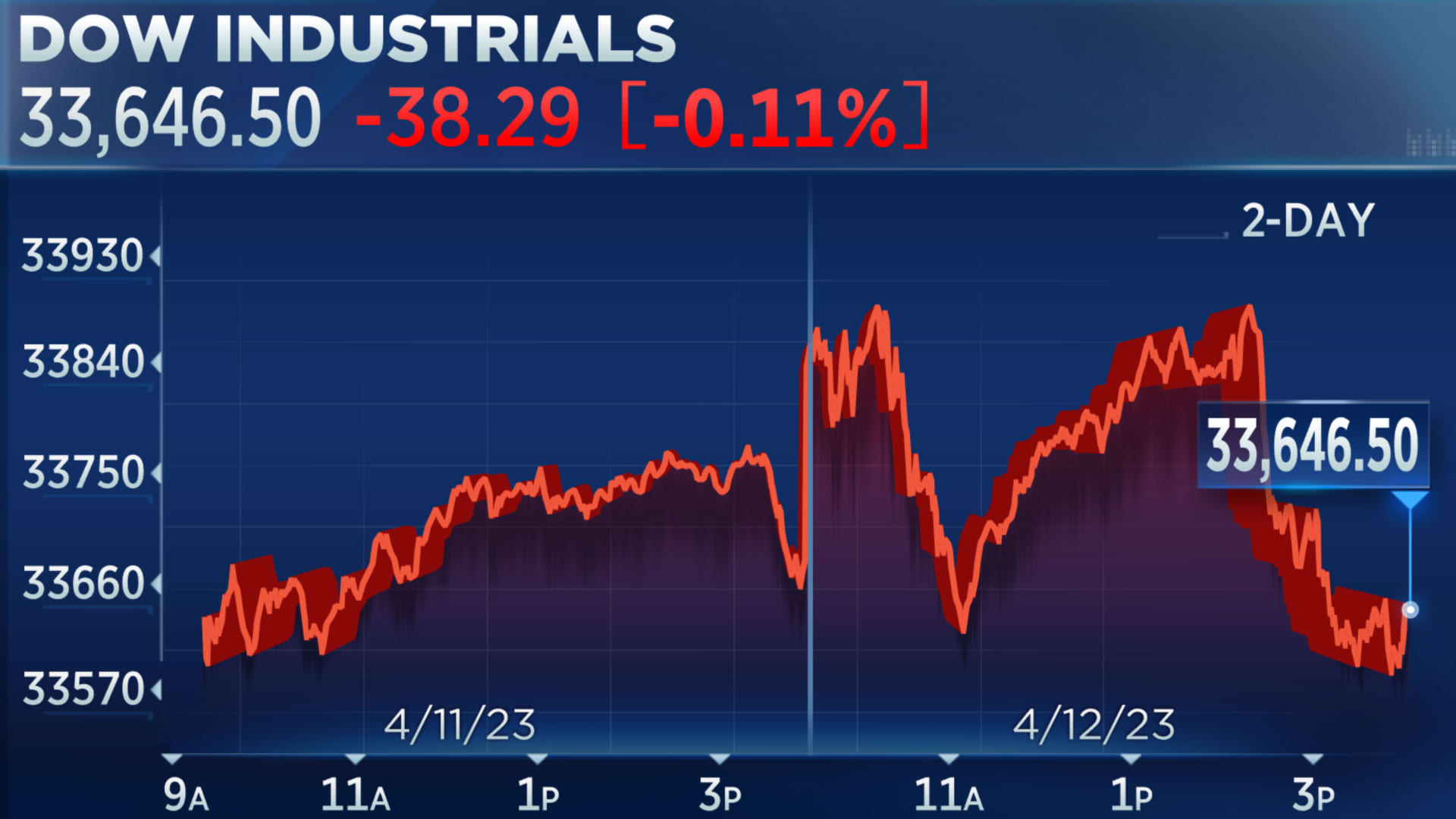
| Dow Jones Industrial Average | -0.65% | Industrial and financial sector profit-taking | Moderate defensive reallocations |
| U.S. 10-Year Treasury Yield | +4.5 bps (4.28%) | Fiscal expansion and bond supply projections | Active duration matching by pension funds |
Industry & Market Implications: Winners and Losers
Every major structural realignment in Washington creates distinct economic winners and losers. As institutional desks adjust their asset allocation models, the bifurcation between favored and disfavored industries is becoming sharply defined.
The Losers: High-Multiple Growth and Highly Regulated Sectors
Technology enterprises and conglomerates operating under heavy regulatory microscopes face immediate headwinds. The possibility of stricter antitrust enforcement, coupled with potential corporate tax rate hikes, directly threatens net margin expansions that have historically justified premium valuation multiples. Furthermore, capital expenditure programs directed toward cloud compute architecture and enterprise AI scaling are being re-evaluated as Chief Financial Officers factor in higher cost-of-capital realities.
The Winners: Infrastructure, Clean Energy, and Defensive Assets
Conversely, industrial contractors specializing in domestic manufacturing, grid modernization, and clean energy infrastructure scalability stand to benefit from sustained legislative support. Private equity firms specializing in green-transition assets are actively deploying capital into projects backed by government grants. Simultaneously, defensive consumer staples and utilities are attracting substantial inflows as institutional asset managers prioritize cash-flow stability over speculative growth.
Frequently Asked Questions (People Also Ask)
Q: Why are stock futures dropping following Democratic legislative gains?
A: Stock futures dropped primarily due to investor concerns surrounding potential corporate tax hikes, increased regulatory scrutiny, and shifts in federal spending priorities. Wall Street traditionally prices in legislative gridlock as a guarantor of policy stability; unexpected political shifts introduce variables that compel portfolio managers to compress valuation multiples and execute risk mitigation strategies.
Q: Which specific sectors are experiencing the heaviest selling pressure?
A: High-multiple technology equities, large pharmaceutical companies vulnerable to drug-pricing legislation, and traditional financial institutions facing tighter compliance and capital requirements are bearing the brunt of the pre-market sell-off.
Q: How are institutional investors handling risk mitigation during this volatility?
A: Institutional desks are actively increasing short-duration fixed-income weightings, buying downside put options on major equity indices, and rotating capital out of high-beta growth stocks into defensive sectors and cash equivalents to preserve enterprise ROI.
Q: What role do Treasury yields play in current market movements?
A: U.S. Treasury yields are climbing as bond markets reprice potential fiscal expansion and increased sovereign debt issuance associated with newly proposed legislative agendas. Rising yields directly compete with equities by increasing borrowing costs and lowering present-value future earnings calculations.
Future Outlook: Key Milestones to Watch
As the trading session progresses from pre-market futures into the opening bell, Wall Street will closely monitor volume breadth and order flow imbalances. The sustainability of today’s sell-off will depend heavily on whether institutional block traders accelerate liquidations or view the dip as an attractive entry point for long-term accumulation.
Looking ahead, corporate earnings calls and upcoming macroeconomic data releases—specifically consumer price index (CPI) prints and Federal Reserve commentary—will intersect with ongoing legislative developments in Washington. Chief investment officers advise maintaining rigorous risk management protocols, ensuring optimal portfolio liquidity, and closely monitoring capital allocation models as the broader market digests this pivotal political and economic turning point.
Disclaimer: This investigative report is published for informational and analytical purposes only and does not constitute financial, legal, or investment advice. Consult with a qualified financial advisor or registered investment professional before executing capital allocation or risk mitigation strategies.