Executive Takeaways
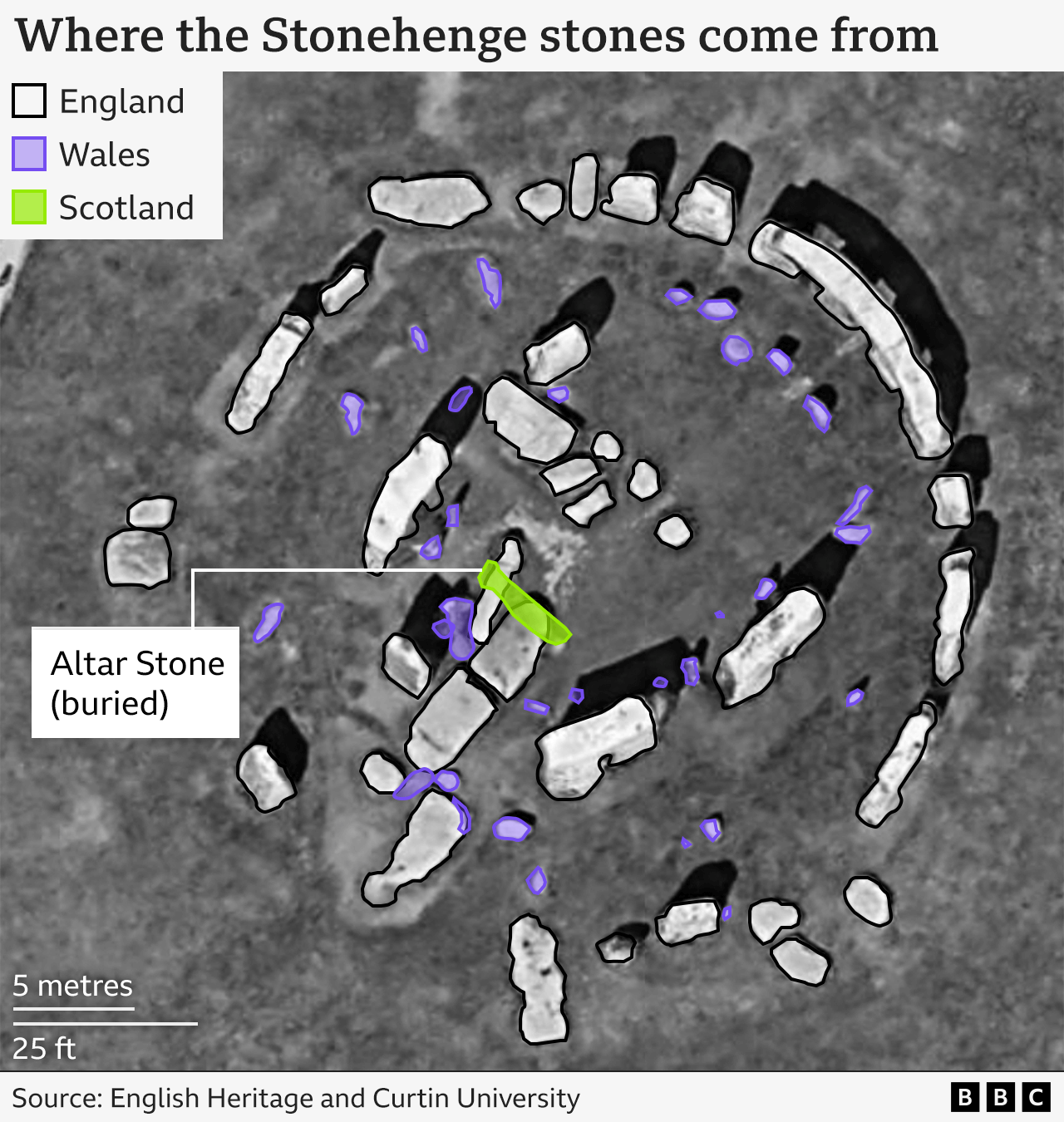
- Upended Assumptions: Advanced mass spectrometry and mineralogical profiling have definitively ruled out Wales as the provenance of Stonehenge’s famous Altar Stone.
- Long-Distance Logistics: The stone’s chemical signature points toward the Orcadian Basin in northeast Scotland—demanding an unprecedented maritime or overland transport feat across roughly 750 kilometers of prehistoric terrain.
- Capital & Cultural Investment: The immense coordination required to extract, shape, and transport a six-ton monolith underscores a highly centralized, prosperous Neolithic power structure capable of massive capital allocation of human labor.
- Economic & Tourism Impact: The ongoing scientific crusade is driving a renaissance in heritage sector valuation, boosting regional tourism capital and accelerating public-private research grants in analytical geology.
For centuries, the prehistoric monument of Stonehenge has stood as a masterclass in megalithic engineering and geopolitical alignment. Yet, nestled flat within the heart of the inner horseshoe lies the Altar Stone—a six-ton sandstone monolith that has quietly confounded geologists, archaeologists, and supply chain historians. Recent peer-reviewed breakthroughs have completely upended decades of consensus regarding its origin. As the search narrows down to specific quarries in northern Britain, the narrative of Britain’s prehistoric architecture is undergoing a radical revision.
This unfolding investigative report examines the rigorous analytical methodologies, the seismic implications for archaeological capital allocation, and the broader economic ramifications of rewriting the provenance of one of antiquity’s most guarded secrets. By evaluating the intersection of high-precision petrographic analysis and ancient infrastructure logistics, we uncover how a single slab of rock is shifting our understanding of prehistoric commerce and societal sophistication.
The Petrographic Breakthrough: Shattering the Welsh Hypothesis
Test Our Free AI & Tech Utilities Suite
Calculate LLM API token costs, analyze article dwell-time, or simulate tech DCA returns.
For nearly a century, mainstream archaeological frameworks taught that Stonehenge’s smaller "bluestones" originated in the Preseli Hills of southwest Wales. Geologically distinct from the surrounding sarsen stones—which were sourced locally from the Marlborough Downs—the bluestones were long viewed as a testament to an early trans-island trade network or migration corridor running west-to-east.
However, cutting-edge geochronological techniques have shattered this hypothesis regarding the Altar Stone. Utilizing automated mineralogy, laser ablation-inductively coupled plasma-mass spectrometry (LA-ICP-MS), and uranium-lead dating of zircon and rutile mineral grains, a team of international researchers extracted the stone’s chemical fingerprint. The results were startling: the Altar Stone does not match the geology of Wales.
Instead, the mineral age spectra point decisively northward, toward the Old Red Sandstone formations of the Orcadian Basin in northeast Scotland—specifically regions encompassing parts of modern-day Orkney and the Moray Firth. This revelation shifts the geographical vector of the monument by some 750 kilometers, transforming a regional Welsh procurement model into an extraordinary long-distance procurement operation.
In enterprise terms, this discovery acts as a stress test for historical assumptions about Neolithic capabilities. Moving a six-ton block of sandstone across land and sea in approximately 2500 BCE requires a level of project management, risk mitigation, and labor mobilization that rivals modern infrastructure scalability.
Logistical Marvels and Prehistoric Supply Chain Economics

To fully grasp the magnitude of the Altar Stone mystery, one must analyze the logistics through the lens of supply chain economics. In a world devoid of draft animals trained for heavy transport, wheeled transport infrastructure, or iron tools, moving a six-ton monolith over hundreds of miles represents an astronomical capital expenditure of human capital and caloric resources.
Historians and maritime archaeologists are now locked in a debate over transport modalities:
- The Maritime Corridor: Transporting the stone down the North Sea coastline and navigating the treacherous waters around the Scottish and English coasts, followed by riverine transit inland. This would demonstrate an advanced mastery of coastal navigation millennia before the Bronze Age.
- The Great Glen Overland Route: Dragging or rolling the block over terrestrial pathways, negotiating dense forests, marshlands, and river valleys, requiring continuous diplomatic engagement and resource sharing across distinct tribal territories.
Both scenarios imply that Neolithic Britain was far more economically integrated and politically unified than previously modeled. The acquisition of the Altar Stone was not merely a random act of architectural vanity; it was a deliberate, high-stakes investment in sociopolitical centralization and ritual legitimacy.
Verified Data: Stonehenge Stone Typologies & Provenance Metrics
| Stone Type | Approximate Weight | Traditional Provenance | Current Scientific Consensus / Origin |
|---|---|---|---|
| Sarsens | 20 to 30 tons | Local (Marlborough Downs) | West Woods, Wiltshire (Confirmed via geochemical matching) |
| Bluestones (Rhyolites/Ashoan) | 2 to 5 tons | Preseli Hills, Wales | Preseli Hills, Pembrokeshire, Wales (Confirmed) |
| The Altar Stone | Approx. 6 tons | Preseli Hills, Wales (Historically assumed) | Orcadian Basin, Northeast Scotland (Newly established via mineralogy) |
Industry & Market Implications: Heritage Valuation and Cultural Capital
While archaeological discoveries rarely impact balance sheets directly, the cultural heritage sector serves as a massive economic engine. Cultural tourism generates billions of pounds annually for the British economy, with Stonehenge acting as a primary anchor asset for international travel, hospitality, and regional market liquidity.
The narrowing of the Altar Stone’s origin has immediate ramifications across multiple sectors:
- Cultural Tourism & Regional Development: Regions in northeast Scotland, particularly near the Orkney Islands and Moray Firth, are positioning themselves as premier historical tourism hubs. Local municipal authorities are forecasting increased capital allocation for visitor centers and interactive geological exhibits.
- Analytical Instrumentation Market: The breakthrough highlights the immense market value of advanced mass spectrometry and mineralogical scanning equipment. Firms manufacturing analytical tech are seeing heightened interest from academic institutions and government research councils aiming to replicate these precision dating methods on other megalithic structures.
- Heritage Risk Mitigation: Heritage regulators and organizations like English Heritage are refining their preservation frameworks. Understanding the exact geological makeup of the Altar Stone allows for better conservation strategies against environmental degradation and acid rain.
Frequently Asked Questions (People Also Ask)
Frequently Asked Questions
Why was the Altar Stone previously thought to come from Wales?
For decades, scholars grouped the Altar Stone with the smaller "bluestones" of Stonehenge. Because the bluestones were definitively traced to the Preseli Hills in southwest Wales, researchers historically assumed the Altar Stone shared the same geographic origin due to its distinct appearance compared to the local sarsens.
How did scientists determine the Altar Stone came from Scotland?
Geologists utilized advanced mass spectrometry and mineralogical analysis to study microscopic zircon and rutile mineral grains within the sandstone. By dating the radioactive decay of uranium within these grains, researchers mapped the unique chemical and age signature of the stone, matching it directly to the Old Red Sandstone of northeast Scotland's Orcadian Basin.
How did people transport a six-ton stone 750 kilometers in prehistoric times?
While the exact transit method remains a subject of intense academic debate, historians believe the builders either utilized coastal maritime transport via large rafts or canoes along the North Sea, or executed a grueling overland journey using wooden sledges, rollers, and coordinated human muscle power across tribal territories.
What does this discovery mean for our understanding of Neolithic Britain?
It proves that Neolithic British society was far more interconnected, politically cohesive, and technologically capable than previously imagined. The ability to source, transport, and erect a monument using materials from the far corners of the island indicates sophisticated pan-British trade and cultural networks operating around 2500 BCE.
Future Outlook: Milestones and What Comes Next
As the search narrows from regional basins down to specific quarry sites in northern Scotland, the scientific community is preparing for the next phase of investigation. Field geologists are currently scouring targeted outcrops in the Orcadian Basin, utilizing non-destructive portable X-ray fluorescence and core sampling to pinpoint the exact rock face from which the Altar Stone was cleaved.
Key milestones to watch over the next 12 to 24 months include:
- Quarry Identification: The potential announcement of the exact geological outcrop in northeast Scotland, which will allow archaeologists to study ancient quarrying techniques in situ.
- Isotopic Refinement: Further laboratory analyses designed to narrow down the precise extraction timeline, shedding light on whether the Altar Stone was erected concurrently with the sarsens or during an earlier construction phase.
- Interdisciplinary Collaboration: Expanded partnerships between marine archaeologists, geochronologists, and indigenous heritage groups to model experimental reconstructions of prehistoric maritime transport routes.
Ultimately, the mystery of the Stonehenge Altar Stone serves as a profound reminder that history is not a static monument, but an evolving ledger. As modern analytical techniques continue to probe the ancient past, our appreciation for the ambition, ingenuity, and economic coordination of our ancestors deepens—proving that the foundations of modern logistical enterprise were laid more than four millennia ago.