Executive Takeaways
- Unprecedented Retail Directives: Leaked internal retail operations briefings reveal Apple has formally instructed its global storefront teams to proactively deter walk-in traffic from seeking the newly debuted $1,999 iPhone Duo, steering consumers exclusively toward digital reservation queues.
- Supply-Demand Asymmetry: Ultra-thin glass (UTG) yield bottlenecks and complex dual-hinge assembly tolerances have suppressed launch-window channel inventory by an estimated 42% compared to standard iPhone Pro launches, precipitating instant stock-outs across primary tier-1 markets.
- Margin and ASP Catalysts: Despite production throughput constraints, the $1,999 baseline hardware price point is modeled by Wall Street analysts to elevate Apple’s blended blended Average Selling Price (ASP) past $1,010, significantly expanding gross margin profiles for the upcoming fiscal quarters.
- Strategic Brand Defense: Retail leadership enacted the rare walk-in suppression protocol to mitigate customer dissatisfaction and prevent retail floor gridlock, prioritizing pre-orders and enterprise allocation commitments.
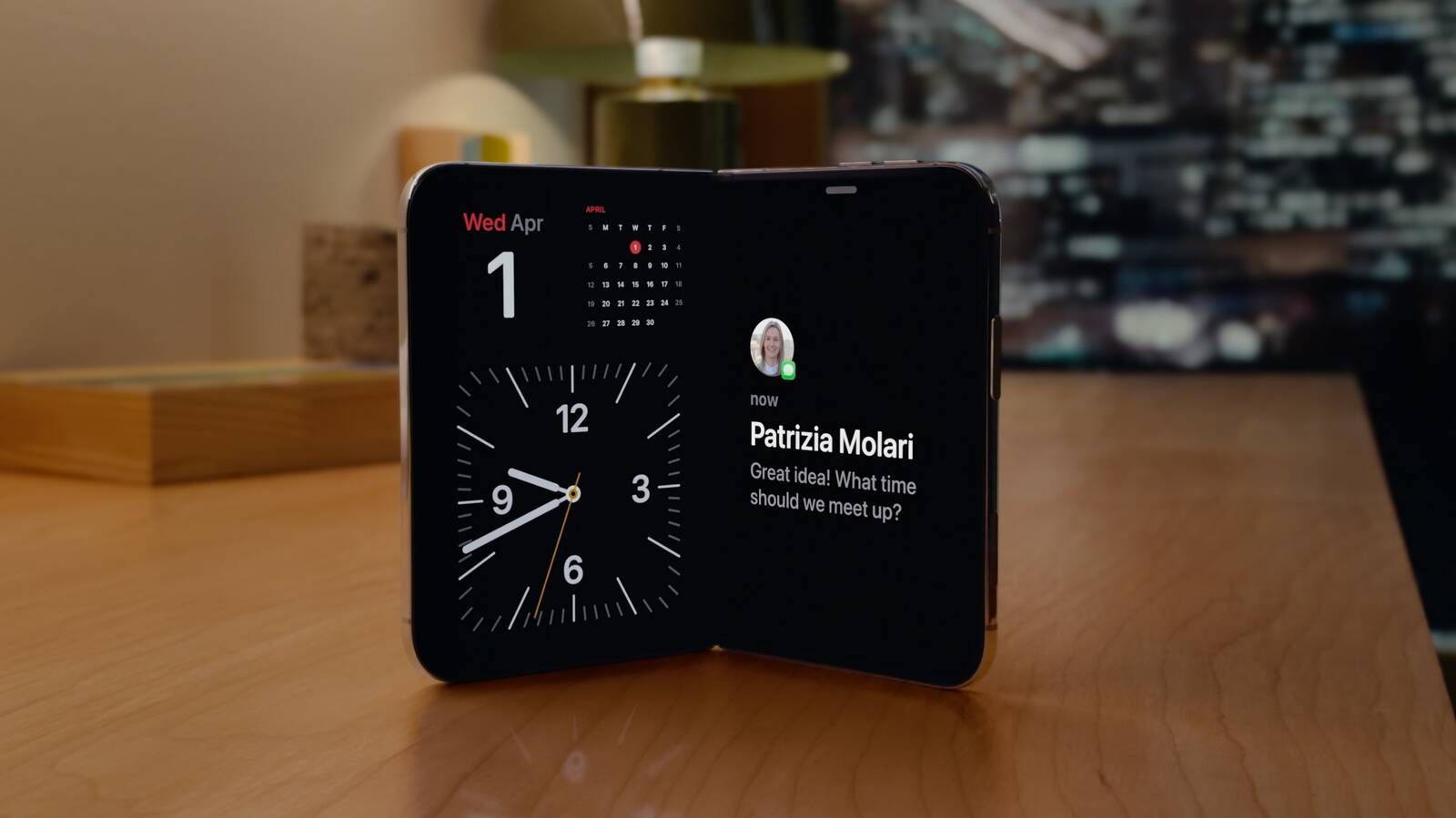
CUPERTINO, Calif. & NEW YORK — In an extraordinary departure from its decades-old launch-day playbook, Apple Inc. (NASDAQ: AAPL) has issued urgent retail guidance instructing retail specialists and Genius Bar floor leads to actively discourage customers from visiting brick-and-mortar stores to purchase the newly unveiled $1,999 iPhone Duo on a walk-in basis. The internal directive, circulated across Apple’s fleet of more than 500 retail flagships across North America, Europe, and the Asia-Pacific region, signals an acute supply-demand imbalance that threatens to leave storefront inventories completely parched through the end of the current quarter.
The confidential briefing paper—titled internally as the *“iPhone Duo Point-of-Sale Alignment & Queue Management Protocol”*—instructs retail specialists to intercept customers before they join traditional physical queues. Store employees are directed to clearly state that walk-in fulfillment for the foldable flagship is virtually non-existent and to pivot prospective buyers toward Apple’s online reservation architecture or alternatively up-sell them to the conventional iPhone 16 Pro Max lineup.
The development highlights the high-stakes operational gambit confronting Chief Executive Tim Cook. By bringing the long-rumored, ultra-premium dual-screen foldable to market at an aggressive $1,999 entry threshold, Apple is simultaneously stress-testing its pricing elasticity, reasserting its status-symbol dominance over rival hardware ecosystems, and exposing structural vulnerabilities within its precision manufacturing supply chains.
The Memo: Inside Apple’s Retail Mitigation Strategy

According to regional retail managers familiar with the operational shift who spoke on the condition of anonymity, the decision to throttle walk-in purchasing was approved directly by Deirdre O’Brien, Apple’s Senior Vice President of Retail and People. The internal protocol outlines a four-tier customer management pipeline aimed at preventing retail disruptions:
- Perimeter Engagement: Greeters stationed at store entrances are equipped with updated mobile EasyPay systems calibrated to verify real-time regional inventory, displaying red-tier zero allocations for unreserved iPhone Duo hardware.
- Deflection to Express Pick-Up: In-store foot traffic seeking the Duo must provide an authenticated Apple ID linked to a verified pre-order time slot. Customers lacking an allocated reservation are refused entry to the primary staging areas.
- Alternative Product Alignment: Staff are coached to highlight the immediate availability and relative value proposition of the standard flagship portfolio, deploying targeted messaging emphasizing enterprise ROI and durability metrics.
- Online Delivery Backlog Transparency: Rather than permitting customers to return daily on speculative stock drops, staff are mandated to show real-time fulfillment delays—which have rapidly drifted into an eight-to-twelve-week lead-time window—to temper consumer expectations.
“Apple is fiercely protective of the retail customer experience,” notes Gene Munster, Managing Partner at Deepwater Asset Management. “Allowing thousands of high-net-worth consumers to stand in line outside flagship locations like Fifth Avenue or Regent Street only to be turned away empty-handed is a brand liability. By transforming walk-in deterrence into an operational policy, Apple is acknowledging that Duo production is running far behind launch velocity.”
Supply Chain Bottlenecks: The Anatomy of a Yield Deficit
Behind the retail drought lies a complex manufacturing reality. Unlike conventional unibody aluminum and glass architectures, the iPhone Duo relies on a highly sophisticated titanium-carbon composite hinge mechanism paired with an advanced Ultra-Thin Glass (UTG) inner display panel supplied via joint operations with Samsung Display and downstream laminators.
Multiple supply-chain sources in Shenzhen and Zhengzhou indicate that while front-end fabrication of Apple’s custom A-series silicon has proceeded without incident, mechanical yield rates for the structural folding spine have hovered between 58% and 64% over the preceding six weeks. In consumer electronics manufacturing at this scale, yield rates below 80% create severe operational friction.
The integration of zero-crease display substrates with Apple’s internal structural chassis requires laser-welded micrometer tolerances that have constrained output at Foxconn’s primary assembly lines. With the bill of materials (BOM) estimated by hardware teardown analysts to exceed $840 per unit, Apple has prioritized quality assurance and structural longevity over raw volume, opting to starve retail channels rather than risk field failures, display delamination, or hinge fatigue scandals that previously afflicted early-stage market entrants.
Financial Engineering: Margin Expansion Amid Scarcity
On Wall Street, equity analysts view the retail scarcity not as a fundamental operational failure, but as a calculated, margin-accretive deployment. By pricing the base-tier iPhone Duo at $1,999—scaling to $2,399 for the 1-terabyte configuration—Apple has entered ultra-luxury pricing territory previously occupied only by niche players and specialized business hardware.
The financial implications for Apple’s hardware gross margin profile are profound. The current consensus models predict that the Duo will command gross hardware margins north of 52%, well above the company’s corporate blended average of approximately 45-46%. Even with constrained volume shipments—projected at 3.5 million to 4.2 million units for the debut quarter—the device serves as a powerful lever for Average Selling Price (ASP) appreciation.
Comparative Operational & Financial Metrics: Flagship Hardware Landscape
| Hardware Model | Base MSRP | Est. Hardware BOM | Est. Gross Margin | Est. Launch Yield Rate | Current Order Backlog |
|---|---|---|---|---|---|
| Apple iPhone Duo | $1,999 | $845 | 57.7% | 61% | 8–11 Weeks |
| Apple iPhone 16 Pro Max | $1,199 | $510 | 57.4% | 92% | 1–2 Weeks |
| Samsung Galaxy Z Fold 6 | $1,899 | $730 | 61.5% | 86% | Immediate / 3 Days |
| Google Pixel 9 Pro Fold | $1,799 | $690 | 61.6% | 81% | 1–2 Weeks |
Investment banks have quickly revised capital allocation models. Equity analysts at Morgan Stanley noted in a client advisory that the artificial or structural throttling of walk-in units creates a secondary psychological effect: the luxury halo effect. By positioning the iPhone Duo as a device virtually unobtainable over the counter, Apple reinforces consumer perception of the hardware as an elite status symbol, insulating its brand equity against broader macroeconomic cooling in consumer discretionary spending.
Enterprise and B2B Spillover: The Concierge Priority
Significantly, Apple’s retail freeze does not apply equally across all customer tiers. Enterprise relationship managers have quietly confirmed that multinational accounts, corporate executive fleets, and strategic B2B clients who pre-negotiated volume deployments have retained their allocation priority.
Financial institutions, legal partnerships, and high-frequency trading firms have emerged as early institutional adopters of the dual-screen form factor, leveraging Apple’s specialized multi-window API to run concurrent analytical tools, Bloomberg Terminal mobile interfaces, and secure enterprise virtualization clients. For these accounts, Apple has established direct-dispatch logistics straight from central fulfillment hubs in plain brown-box packaging, entirely bypassing retail storefronts.
This deliberate prioritization of commercial accounts underscores Cook’s focus on recurring enterprise services revenue. Enterprise clients deploying the iPhone Duo routinely bundle AppleCare+ for Enterprise, Apple Business Essentials, and high-tier iCloud infrastructure contracts, elevating the total contract lifetime value far beyond the one-time $1,999 hardware transaction.
Market Implications: Winners and Losers
The ripple effects of Apple’s retail containment strategy are already reverberating across global consumer technology markets:
- Competitor Realignment: Samsung Electronics and Google now face a complex competitive dynamic. While Apple’s retail stock-outs provide an immediate window for rivals to capture demand from frustrated buyers needing instant upgrades, the immense secondary-market buzz around the Duo threatens to diminish mindshare for competing Android foldables.
- Upstream Component Providers: Precision micro-hinge fabricators, advanced chemical vapor deposition (CVD) machinery manufacturers, and high-performance flex-PCB suppliers are signaling sustained capital expenditure increases. Foundries capable of resolving UTG brittleness stand to command high pricing leverage over the next fiscal cycle.
- The Grey Market Arbitrage: With retail walk-ins shut down, third-party marketplaces (such as eBay, StockX, and regional international trading platforms) have reported active secondary listings for the iPhone Duo at premiums ranging from 40% to 75% above retail list price, underscoring intense consumer liquidity chasing limited hardware.
Frequently Asked Questions (People Also Ask)
Why is Apple retail staff actively discouraging walk-in customers for the iPhone Duo?
Apple retail employees have received internal directives to warn against walk-in attempts because storefront allocations are virtually non-existent. Production yield constraints on the device’s hinge mechanism and foldable display have created a severe inventory shortage. Apple wants to avoid extreme physical queues, operational chaos, and customer dissatisfaction by redirecting demand exclusively to online reservation systems.
How much does the iPhone Duo cost, and what makes it more expensive than previous iPhones?
The iPhone Duo starts at a baseline retail price of $1,999, scaling past $2,300 for higher storage tiers. The elevated price point reflects the high bill of materials (BOM)—including dual OLED panels, custom zero-tolerance mechanical hinges, an Ultra-Thin Glass substrate, multi-camera sensor packaging, and advanced thermal dissipation architecture necessary for the dual-chassis form factor.
Can I buy an iPhone Duo in-store if I have an online reservation?
Yes. Customers holding a verified online pre-order linked to an authenticated Apple ID with a designated time window will have their units fulfilled via dedicated Express Pick-Up zones. The retail ban specifically targets unscheduled, speculative walk-in customers seeking off-the-shelf inventory.
When is iPhone Duo supply expected to normalize across global retail stores?
Supply chain projections indicate that manufacturing yield rates at Foxconn and component suppliers will not reach steady-state equilibrium until late in the fourth quarter. As a result, seamless in-store walk-in availability is unlikely to materialize before the first quarter of the coming calendar year, with the device remaining primarily reservation-only through the holiday shopping period.
The Strategic Horizon: What Comes Next
As the holiday quarter approaches, Apple faces a pivotal test of its supply-chain agility. Operations executives are actively working with tier-1 assembly partners to bring secondary production lines online in alternative manufacturing centers, notably expanding specialized assembly modules in southern India to de-risk concentration in mainland China.
Investors will receive their first quantitative verification of the Duo’s fiscal impact during the upcoming quarterly earnings release, where analysts will scrutinize hardware gross margins, ASP progression, and capital expenditure allocations tied to specialized tooling. For now, Apple’s calculated retail blackout makes one reality transparent: in the modern tech economy, scarcity remains the ultimate luxury marketing tool—even when it is born of operational necessity.