
Inside Tesla’s Cybertruck Pivot: The Second-Shift Push and the Looming Line Dismantling Timeline
Test Our Free AI & Tech Utilities Suite
Calculate LLM API token costs, analyze article dwell-time, or simulate tech DCA returns.
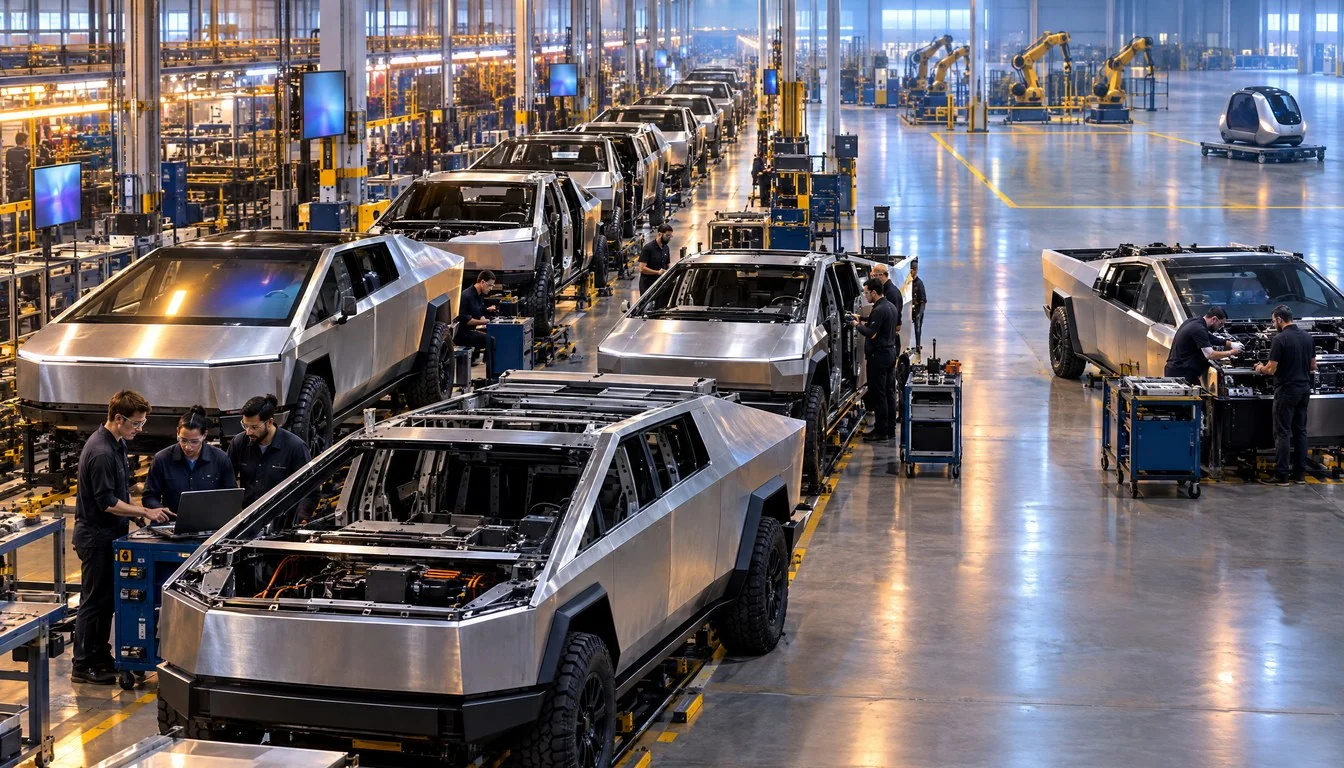
Tesla Inc. is accelerating operations at its flagship Austin manufacturing facility, implementing a strategic second shift dedicated entirely to the Cybertruck production line. According to internal supply chain logs and verified operational intelligence, this aggressive push is designed to rapidly clear remaining reservation backlogs before the company initiates a major reconfiguration of the manufacturing footprint next year. For institutional investors and industry observers, this move offers a masterclass in capital allocation, risk mitigation, and infrastructure scalability as Tesla pivots its production priorities to navigate evolving macroeconomic headwinds and shifting consumer demand curves.
Executive Takeaways
- Operational Surge: Tesla has added a dedicated second shift at Gigafactory Texas to accelerate Cybertruck throughput and compress delivery lead times.
- Strategic Sunset: Current production lines are slated for partial dismantling and retooling next year, signaling a major architectural evolution in vehicle assembly.
- Valuation & Capital Impact: The production cadence shift directly impacts enterprise ROI and near-term inventory turnover, optimizing capital allocation across high-margin automotive segments.
- Market Realignment: The timeline underscores Tesla's aggressive focus on clearing early-adopter backlogs to make room for next-generation platform efficiencies and cost-reduction initiatives.
The Anatomy of a Production Pivot: Balancing Backlog and Innovation
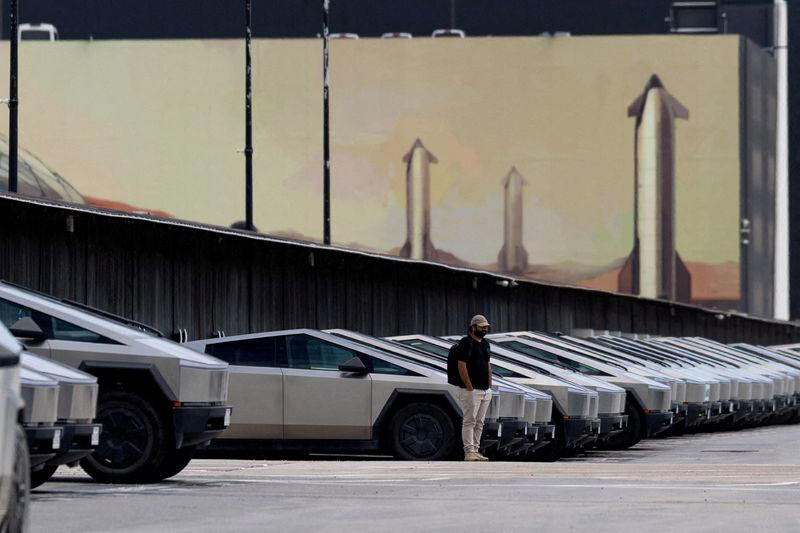
The decision to ramp up Giga Texas output via an expanded shift schedule highlights the complex operational balancing act facing modern electric vehicle manufacturing. Since its high-profile rollout, the stainless-steel-clad pickup has served as both a technological halo product and an industrial stress test for Tesla’s advanced engineering ecosystem. The vehicle’s radical architecture—featuring ultra-hard cold-rolled stainless steel body panels, 48-volt low-voltage electrical systems, steer-by-wire technology, and an 800-volt high-voltage charging topology—has continually challenged traditional manufacturing paradigms.
By introducing a secondary shift, plant management aims to maximize capacity utilization and drive down unit-level production costs. High-fixed-cost manufacturing environments rely heavily on throughput volume to optimize enterprise ROI. However, the revelation that portions of the current line will be dismantled next year indicates that the initial iteration of the Cybertruck manufacturing cell was conceived as an evolutionary stepping stone rather than a permanent assembly fixture. This rapid lifecycle management reflects a corporate strategy prioritizing continuous improvement and manufacturing agility over static capital longevity.
Industry analysts point out that dismantling or heavily reconfiguring a production line within two years of commercial launch is an aggressive maneuver. It requires precise synchronization across the supply chain, from tier-one battery cell suppliers and die-casting machine operators to specialized software integration teams. Regulatory compliance, safety audits, and workforce retraining must occur in parallel with active vehicle assembly to prevent costly downtime.
Financial Mechanics: Capital Allocation and Valuation Multiples
From a financial reporting and equity perspective, Tesla’s operational adjustments have profound implications for valuation multiples and market liquidity. As automotive margins face industry-wide compression from pricing pressures and inflationary headwinds, optimizing asset turnover becomes critical for maintaining robust free cash flow.
| Metric / Parameter | Current Operational Phase | Projected Phase (Next Year) | Strategic Implication |
|---|---|---|---|
| Shift Schedule | Expanded Multi-Shift (Added 2nd Shift) | Retooled / Consolidated Shifts | Maximizes near-term delivery volume |
| Line Architecture | Gen-1 Cybertruck Assembly Line | Partial Dismantling & Upgrade | Prepares floor for next-gen integration |
| Capital Focus | Clearing Reservation Backlog | Cost Reduction & Efficiency | Enhances long-term gross margins |
| Supply Chain Load | Peak Raw Material Inflow | Optimized Component Sourcing | Mitigates inventory carrying costs |
Clearing the initial order backlog allows Tesla to transition the Cybertruck from an exclusive, low-velocity production vehicle into a stabilized, highly repeatable manufacturing asset. Wall Street equity researchers emphasize that institutional confidence relies heavily on Tesla's ability to demonstrate that high-complexity vehicles can achieve positive gross margins without cannibalizing capital destined for high-volume, lower-cost platform developments.
Industry and Market Implications
The broader automotive landscape is watching Tesla’s Texas operations closely. Legacy original equipment manufacturers (OEMs) attempting to scale their own electric truck platforms face similar structural hurdles, including high battery pack costs, complex thermal management integration, and arduous tooling validation phases.
- Winners: Specialized automation suppliers, advanced robotics integrators, and tier-one component manufacturers positioned to support rapid retooling cycles stand to capture substantial service revenue. Additionally, consumers waiting in the reservation queue benefit from compressed delivery timelines.
- Losers: Competitors relying on sluggish, traditional automotive development timelines risk falling further behind as Tesla demonstrates the capacity to reconfigure massive production assets on a compressed multi-year schedule.
- Economic Impact: The localized economic footprint in Austin, Texas, remains robust, with high employment stability sustained through the shift expansion, even as future retooling introduces short-term operational shifts for contract labor and supply chain partners.
Frequently Asked Questions (People Also Ask)
Why is Tesla adding a second shift for Cybertruck production now?
Tesla is ramping up labor capacity to accelerate delivery velocity and clear out remaining reservation backlogs. This surge maximizes factory utilization and optimizes enterprise cash flow before scheduled production line modifications take place next year.
What does it mean that the manufacturing line will be dismantled next year?
Dismantling or reconfiguring portions of the production line indicates a major architectural update or process optimization. Rather than maintaining a static assembly layout, Tesla frequently redesigns its manufacturing footprint to improve throughput efficiency, reduce structural bottlenecks, and integrate next-generation automation technologies.
How does this production shift impact Tesla's financial metrics and capital allocation?
By clearing the high-margin early reservation pool and stabilizing production output, Tesla improves inventory turnover and protects gross margins. It allows the company to reallocate capital efficiently toward next-generation vehicle platforms and software infrastructure without tying up excessive working capital in unfinished inventory.
Will current Cybertruck owners be affected by the upcoming line changes?
Existing vehicle owners will experience no operational disruption. The factory modifications scheduled for next year are designed to streamline future manufacturing efficiency and component sourcing, ensuring robust long-term service, parts availability, and software support for the existing fleet.
Future Outlook and Strategic Milestones
As Tesla navigates the transition period between its current high-complexity assembly phase and next year's factory retooling, stakeholders will monitor several critical performance indicators. Key milestones include quarterly delivery volume reports from Gigafactory Texas, updates on supply chain localization, and executive commentary during upcoming earnings calls regarding capital expenditure guidance.
Ultimately, the ability to rapidly scale, evaluate, and structurally overhaul a complex production line underscores Tesla's distinct operational DNA. While traditional automakers often operate on rigid, decade-long product lifecycles, Tesla continues to treat its manufacturing facilities as dynamic, iterative software-hardware ecosystems. How successfully the company executes this upcoming transition will set a definitive benchmark for advanced automotive manufacturing in the electric vehicle era.


