Executive Takeaways
- Monetization of Core Functionality: Verizon is moving to attach a $10-per-month network provisioning fee to Apple’s cross-device ecosystem handoff features that route through cellular IP Multimedia Subsystem (IMS) networks.
- The ARPU Imperative: The initiative reflects severe carrier pressure to lift Average Revenue Per User (ARPU) and service debt incurred from multi-billion-dollar C-band spectrum investments amid stagnant postpaid phone net adds.
- Architectural Battleground: The move exposes a deep operational rift between Apple’s proprietary peer-to-peer cloud compute architecture and carrier-level cellular routing infrastructure.
- Regulatory and Churn Headwinds: Industry analysts warn the strategy risks accelerating customer defections to rival carriers while inviting scrutiny from the Federal Communications Commission (FCC) regarding traffic classification and auxiliary fees.
The Catalyst: A Paywall at the Carrier-Ecosystem Nexus
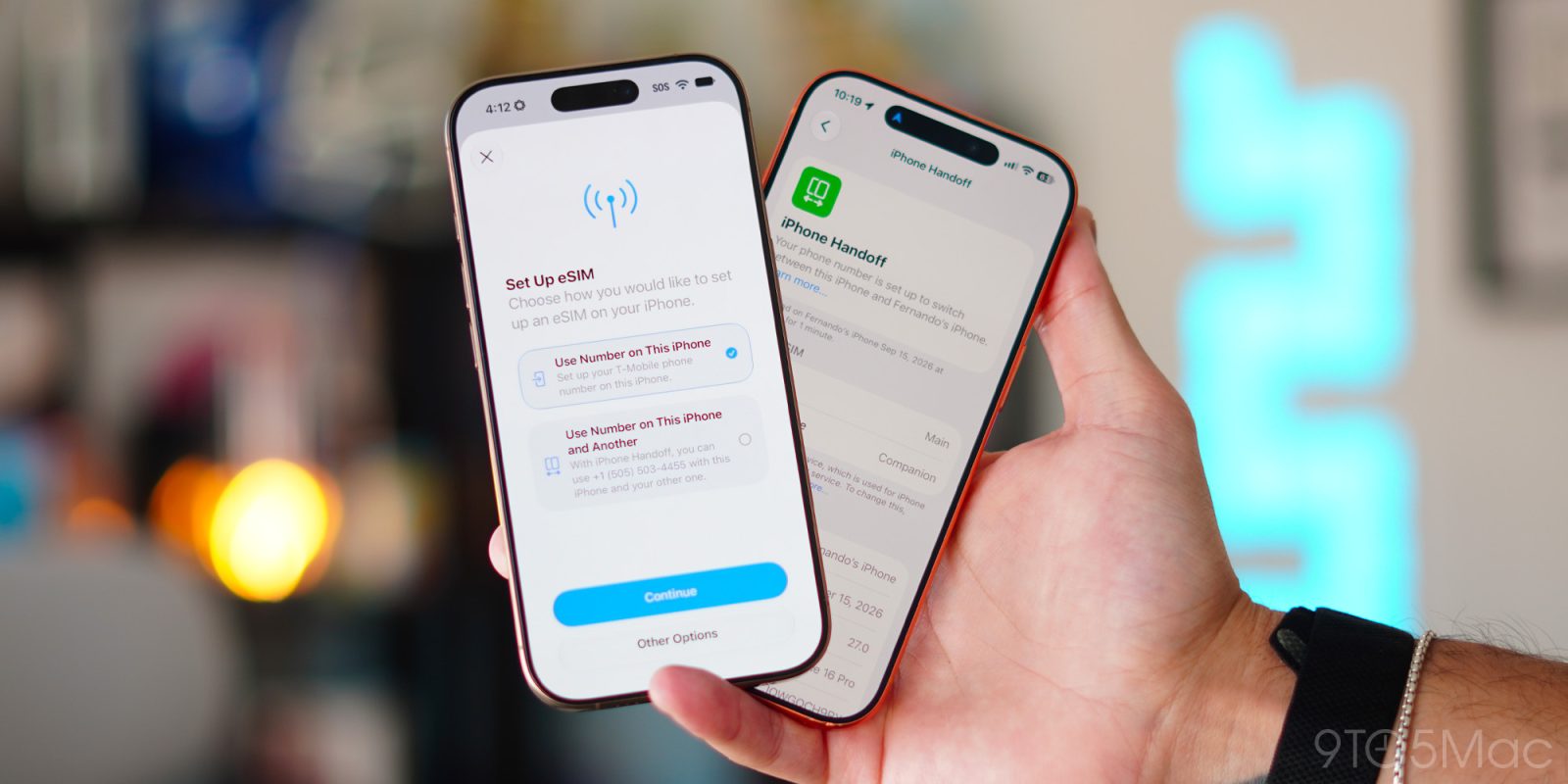
In a financial climate defined by saturated handset penetration and capital allocation strain, Verizon Communications has drawn a controversial line across the consumer technology landscape. Internal operational directives and channel partner disclosures confirm that the telecommunications giant intends to roll out a $10-per-month platform fee for customers utilizing advanced cross-device cellular handoff features on Apple hardware.
The service charge targets functionality that consumers have long treated as an inherent, hardware-level convenience: the real-time, uninterrupted handoff of active voice, video, and multi-endpoint data sessions between an iPhone, an iPad, a Mac, or an Apple Watch when crossing the boundary from local local-area networks to cellular edge architecture. While local Continuity tasks operating purely over Bluetooth Low Energy (BLE) and peer-to-peer Wi-Fi will remain uninhibited by the fee, any workflow requiring persistent network-state replication via Verizon’s core cellular routing layers will soon require an explicit service subscription.
The move represents one of the boldest efforts by an American tier-one carrier to unbundle native operating system workflows and reclassify them as premium, network-level value-added services (VAS). For Wall Street, the decision tests consumer pricing power and churn elasticity; for Cupertino, it constitutes an existential challenge to the frictionless user experience that underpins Apple’s walled garden.
Deconstructing the Architecture: Local Peer-to-Peer vs. Cellular Core Handoff
To understand the mechanics of Verizon’s planned surcharge, one must isolate the underlying network topology. Since the introduction of iOS 8 and OS X Yosemite, Apple’s Continuity and Handoff frameworks have largely operated over an ad-hoc local mesh. When an iPhone syncs an ongoing call, Safari tab, or draft email to an adjacent Mac, it leverages proximity-based BLE discovery followed by a secure, direct Wi-Fi link, brokered by Apple’s end-to-end encrypted Identity Services (IDS) and iCloud infrastructure.
However, modern enterprise and consumer multi-device workflows increasingly decouple from localized environments. When a user steps outside of an office Wi-Fi umbrella while conducting an enterprise call or high-bandwidth collaboration session on an iPad or MacBook without an integrated cellular baseband, the underlying data stream must be maintained. Apple achieves this via cloud-routed cellular handoff, relaying active states through the user’s primary iPhone cellular subscription using carrier-side IMS (IP Multimedia Subsystem) and VoLTE/VoNR (Voice over New Radio) infrastructure.
Historically, carriers absorbed this signaling load as standard cellular data encapsulation. Verizon’s new architecture, internally categorized under an expanded dynamic multi-endpoint provisioning framework, introduces a network-level policy inspection layer. If the carrier’s core packet gateway detects simultaneous state routing across multiple virtualized device profiles under a single MSISDN (Mobile Station International Subscriber Directory Number) without a dedicated hardware line access fee, an auxiliary service profile is triggered. Consumers who do not pay the $10-per-month surcharge will see network-level sessions dropped at the perimeter of the local network, forcing an abrupt manual reconnect rather than an autonomous handoff.
The Financial Rationale: Capex Recovery and the Fight for Margin Expansion
The strategic deployment of this fee cannot be evaluated outside Verizon’s broader balance-sheet pressures. The telecommunications sector has spent the past five years deploying historic capital outlays into mid-band spectrum acquisitions, 5G standalone (SA) deployments, and fiber backhaul densification. Verizon alone committed more than $50 billion to C-band spectrum auctions and subsequent network infrastructure scalability.
With terminal handset penetration and low churn rates cementing the domestic wireless market into an effective zero-sum game, carrier valuation multiples have become acutely dependent on ARPU expansion and capital discipline. Traditional postpaid subscriber growth metrics have yielded to EBITDA margin preservation and risk mitigation strategies designed to service corporate debt.
Verizon views cross-device cellular handoff not as a passive OS feature, but as an unmonetized strain on signaling resources, cell-site capacity, and backhaul egress. By levying a $10 monthly recurring charge (MRC), the carrier seeks to establish a high-margin software-like revenue stream that leverages existing core assets without requiring incremental capital expenditures. If applied to even 8% of Verizon’s postpaid consumer and business base, the recurring run-rate would inject upwards of $1.1 billion in high-margin enterprise cash flows annually.
Carrier Monetization Strategies: A Comparative Analysis
The following breakdown details the divergent architectural, financial, and strategic models employed by major US telecommunications operators regarding cross-device continuity and advanced data routing.
| Metric / Dimension | Verizon Wireless | AT&T Inc. | T-Mobile US |
|---|---|---|---|
| Continuity Core Strategy | Tiered auxiliary billing ($10/mo standalone provision) | Integrated into premium Unlimited tiers (NumberSync) | Zero-rated within native Magenta/Experience tariffs (DIGITS) |
| Underlying IMS Architecture | Multi-endpoint packet-gateway session validation | Virtual network routing via federated core | Direct cloud proxy signaling integration |
| Targeted Segment | High-bandwidth remote & power-user ecosystem clients | Enterprise fleet deployments and blended consumer lines | Mass-market retention play via "Un-carrier" branding |
| Projected ARPU Impact | +$0.85 to +$1.40 blended across total postpaid base | Neutral (bundled into rate-plan migration incentives) | Neutral to negative (utilized to drive gross line adds) |
| Regulatory Scrutiny Risk | High (Potential FCC Part 8 transparency & neutrality review) | Low to Moderate (Pre-existing tariff structures) | Low (Inclusive zero-tier structure) |
The Silicon Valley Backlash: Apple’s Ecosystem Hegemony at Stake
In Cupertino, the monetization of OS-level functions by a distribution partner represents a direct operational transgression. Apple has methodically built its multi-trillion-dollar valuation on ecosystem "stickiness"—the structural reality that an iPhone user is dramatically less likely to churn if their Mac, Apple Watch, and iPad operate as an integrated compute node.
By inserting an arbitrary tollbooth into this workflow, Verizon effectively degrades the perceived value proposition of Apple’s premium hardware. The dynamic mirrors historic clashes between carriers and device manufacturers, notably the mid-2000s battles over visual voicemail, carrier-branded bloatware, and Wi-Fi tethering fees. Apple successfully eliminated carrier interference in core software design by maintaining an iron grip over the iOS operating system environment. However, the transmission of packets over cellular spectrum remains, by definition, the legal and physical domain of licensed network operators.
Sources familiar with Apple’s hardware engineering and regulatory operations suggest that the company’s software teams are already exploring workarounds. These include dynamic tunneling architectures that camouflage cellular continuity traffic within standard TLS-encrypted generic data packets, preventing carrier Deep Packet Inspection (DPI) from isolating handoff-specific IMS headers. If Apple succeeds in routing this data as generic application traffic, Verizon would be forced into the precarious legal and public relations posture of throttling base data streams or directly challenging Apple’s transport-layer protocols.
Industry & Market Implications: Winners, Losers, and Systemic Risk
The second-order consequences of Verizon’s strategy will reverberate through enterprise procurement, wireless equity valuations, and telecommunications policy.
The Enterprise Sector
Corporate IT departments managing blended device fleets will face an immediate cost increase. Organizations that supply MacBooks and iPhones to hybrid workers have relied on native, frictionless handoff to maintain continuous connectivity during travel. A $10-per-user surcharge scales rapidly: an enterprise with 5,000 remote knowledge workers faces an unbudgeted $600,000 annual operational expenditure increase. Enterprise CIOs will likely demand enterprise ROI justifications or push their workforces toward corporate VPNs and standard hotspot workflows to bypass the surcharge.
The Competitive Landscape
T-Mobile and AT&T stand to gain distinct marketing leverage. By positioning their networks as open conduits that do not penalize consumers for operating within the Apple ecosystem, competitors can market unencumbered device handoff as a retention engine, turning Verizon’s short-term ARPU optimization into a vulnerability for customer churn.
Regulatory and Antitrust Dynamics
The maneuver arrives at a delicate moment for regulatory compliance. Under the reinstated Open Internet guidelines, the Federal Communications Commission maintains oversight regarding discriminatory network behavior and anti-competitive tiering. While carriers possess the statutory right to charge for distinct network provisions, critics are preparing to argue that monetizing device-level signaling without demonstrable incremental network congestion constitutes an arbitrary tax on consumer equipment capabilities, running counter to net neutrality principles.
Frequently Asked Questions (People Also Ask)
Why is Verizon charging a fee for a native Apple feature like Handoff?
Verizon is not charging for local, device-to-device Handoff that occurs over Bluetooth and Wi-Fi. The fee specifically targets handoff operations that transition through carrier-managed cellular networks and IMS (IP Multimedia Subsystem) routing cores, such as maintaining persistent, un-dropped calls and unified session data across secondary Apple devices without standalone cellular plans when out of local Wi-Fi range.
Will basic iPhone Handoff still work on my Mac and iPad for free?
Yes. If your iPhone, Mac, and iPad are on the same local Wi-Fi network and paired via Bluetooth with the same Apple ID, standard Continuity features—such as Universal Clipboard, local Handoff of Safari tabs, and local peer-to-peer AirDrop—will continue to operate without carrier involvement or fees.
Can I bypass the Verizon fee by using standard mobile hotspotting?
Yes, though it eliminates the operational convenience of seamless handoff. If you manually connect your iPad or Mac to your iPhone’s Personal Hotspot, data will be drawn from your plan's existing mobile hotspot allocation without incurring the $10 handoff continuity charge, though native session-state handoff for uninterrupted voice calls may not transfer automatically.
How will this affect enterprise fleets and corporate-managed devices?
Enterprise administrators will face critical configuration choices. Mobile Device Management (MDM) platforms will need to either authorize the additional billing tier via enterprise telecom expense management systems or deploy configuration profiles that disable carrier-dependent cellular continuity to mitigate unauthorized monthly recurring charges.
Future Outlook: Strategic Milestones and Systemic Friction
The road ahead for Verizon’s monetization drive will be defined by regulatory engagement, competitive posturing, and customer resistance. The carrier's quarterly earnings over the coming fiscal year will offer immediate clarity on the program’s financial viability, specifically through shifts in postpaid phone churn metrics and Consumer Group ARPU performance.
Three critical milestones will determine the trajectory of this initiative:
- The Regulatory Intercession: Whether public interest coalitions or the FCC will file formal inquiries challenging the classification of continuity signaling under Title II regulatory frameworks.
- Apple’s Architectural Counter-Offensive: The release of subsequent iOS and macOS maintenance builds that may obfuscate signaling packets or alter how secondary endpoints handshake with primary baseband modems.
- Carrier Collusion or Isolation: Whether peer carriers follow Verizon's blueprint to build a consensus monetization layer around multi-device ecosystems, or remain unbundled to maximize competitive market share gains.
If Verizon succeeds in sustaining the fee, it will have established a significant precedent: the commercial right of physical network providers to gatekeep and monetize operating-system-level integrations. If it retreats under customer churn and technical counter-measures, it will signal that the economic sovereignty of the modern technology landscape belongs, irreversibly, to the platform architects in Silicon Valley.