As the digital economy scales to unprecedented heights in 2026, the threat matrix facing global enterprise infrastructure has undergone a seismic shift. No longer confined to localized extortion plots or politically motivated hacktivism, Distributed Denial of Service (DDoS) assaults have evolved into industrial-scale, automated cyber warfare. According to telemetry data published by CyberSecurityNews, the baseline for enterprise threat modeling was shattered earlier this year when leading security operations centers (SOCs) successfully neutralized a staggering 30 Terabits-per-second (Tbps) volumetric flood.
For Chief Information Security Officers (CISOs), boardrooms, and institutional investors, this escalation transforms cybersecurity from an operational overhead into a critical pillar of market valuation and business continuity. When an enterprise goes dark, the immediate evaporation of liquidity, transactional throughput, and brand equity can trigger severe valuation multiples compression. This comprehensive investigative report evaluates the top 10 DDoS protection services of 2026, scoring them across critical vectors: global mitigation capacity, time-to-mitigation speed, architectural resilience, and capital-efficient enterprise ROI.
Executive Takeaways
The 2026 Threat Landscape: Why Volumetric Floods Are Accelerating
Test Our Free AI & Tech Utilities Suite
Calculate LLM API token costs, analyze article dwell-time, or simulate tech DCA returns.
The catalytic event of the 2026 threat landscape is the democratization of high-bandwidth botnets. Cybercriminal syndicates have successfully weaponized misconfigured cloud storage buckets, compromised edge-computing nodes, and insecure Internet of Things (IoT) ecosystems to orchestrate hyper-distributed assaults. Unlike the localized volumetric spikes of the early 2020s, today's attacks are multi-vector operations that simultaneously target network layers (Layer 3/4) with massive UDP/SYN floods while executing sophisticated, human-mimicking HTTP floods against application APIs (Layer 7).
From a capital allocation perspective, enterprise infrastructure scalability is continuously tested. A single unmitigated 30 Tbps flood can cripple Tier-1 telecommunication backbones, forcing ISPs to black-hole traffic and inadvertently locking out legitimate global clientele. Consequently, enterprise risk mitigation strategies have shifted from reactive patching to proactive, edge-native traffic scrubbing that intercepts malicious payloads hundreds of miles away from origin servers.
Financial institutions, global e-commerce giants, and SaaS providers are aggressively reallocating IT budgets toward managed DDoS solutions that offer guaranteed Service Level Agreements (SLAs), sub-second mitigation speeds, and deterministic pricing structures. To navigate this complex procurement landscape, we have analyzed and scored the definitive industry leaders.
Comparative Analysis: Top 10 DDoS Protection Services of 2026
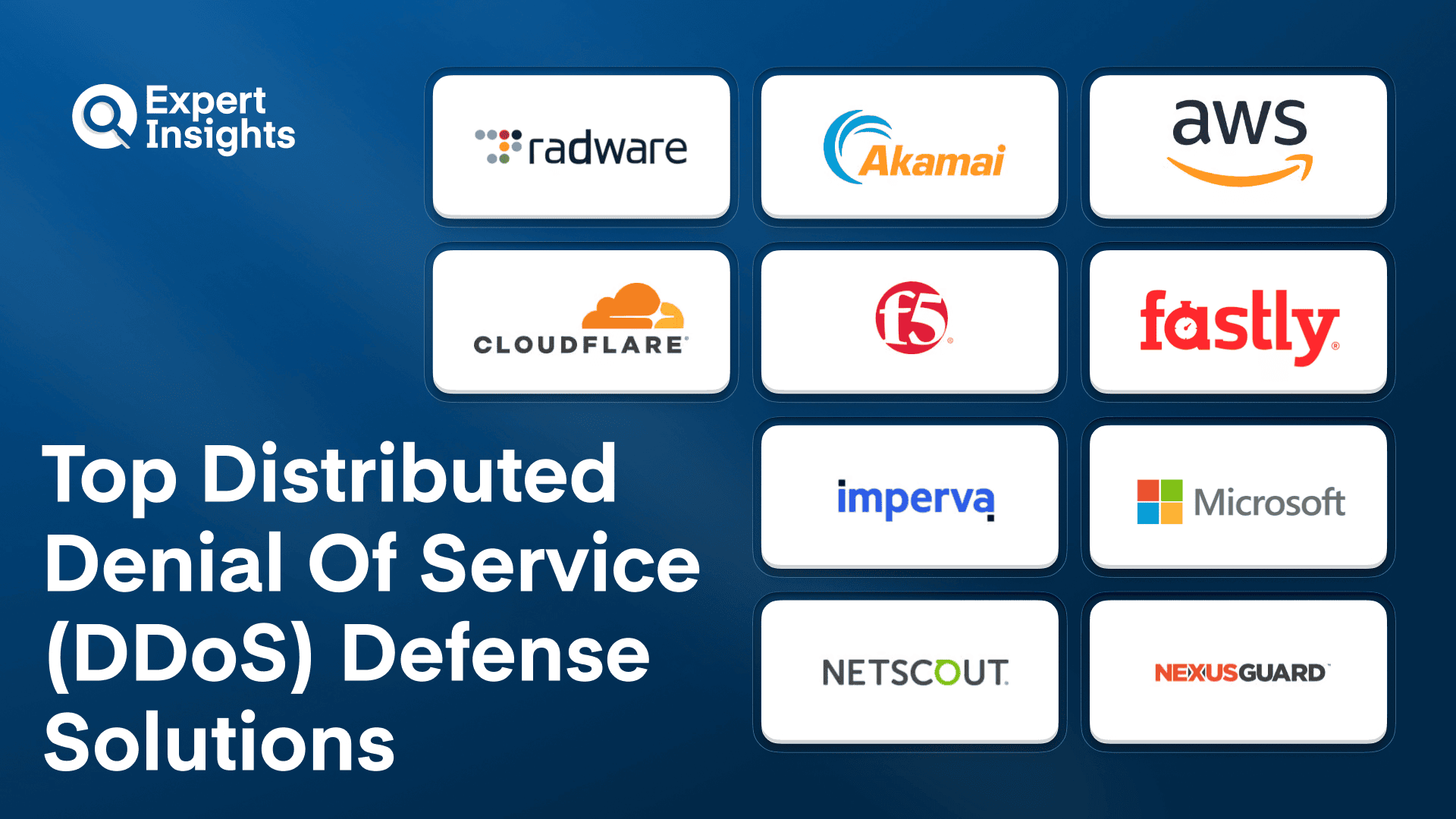
| Provider | Scrubbing Capacity | Mitigation Speed | Primary Architecture | Enterprise Cost Efficiency | Best Suited For |
|---|---|---|---|---|---|
| Cloudflare Magic Transit | 350+ Tbps | < 3 Seconds | Anycast Edge Network | High (Flat-rate tiering) | Global Enterprises & SaaS |
| Akamai Prolexic | 250+ Tbps | Instant (0-sec SLA) | Distributed Cloud Scrubbing | Moderate-High | Financial Services & Banking |
| AWS Shield Advanced | 100+ Tbps (Native) | Real-time | Cloud-Native Integration | High (For AWS workloads) | Cloud-Native Infrastructure |
| Microsoft Azure DDoS Protection | 90+ Tbps | Automated Learning | Azure Global Backbone | High (For Azure users) | Enterprise Hybrid Clouds |
| Google Cloud Armor | 100+ Tbps | Sub-second | Global Anycast & WAF | Competitive | High-Throughput APIs |
| Radware DefensePro | Custom / Hybrid | < 15 Seconds | On-Premises + Cloud Hybrid | Enterprise Capital Outlay | Telecoms & Enterprises |
| Imperva Cloud DDoS Protection | 150+ Tbps | < 3 Seconds | Global Proxy Network | Moderate | Data-Dense Web Properties |
| F5 Distributed Cloud (Silverline) | 120+ Tbps | < 5 Seconds | Multi-Cloud Security Fabric | Enterprise Pricing | Complex Multi-Cloud Apps |
| Netscout Arbor Cloud | 15+ Tbps | < 10 Seconds | Hybrid Transit Scrubbing | High for Carriers | Service Providers & ISPs |
| Sucuri Website Security | 20+ Tbps | < 30 Seconds | Reverse Proxy CDN | SMB to Mid-Market | SMBs & E-Commerce Sites |
Deep Dive: Evaluating Market Leaders and Their Technological Moats
1. Cloudflare Magic Transit: The Global Scale Leader
Cloudflare continues to dominate the enterprise security sector in 2026, anchoring its market leadership on an astonishing 350+ Tbps global Anycast network. By pushing threat intelligence and mitigation rules directly to the network edge across thousands of cities worldwide, Cloudflare successfully absorbs multi-terabit volumetric floods before they ever touch an organization's origin infrastructure. Its integration with Zero Trust architecture and comprehensive Web Application Firewalls (WAF) provides a seamless ecosystem for multinational enterprises seeking unified risk mitigation.
2. Akamai Prolexic: The Financial-Grade Standard
For institutions where downtime translates to millions of dollars in lost transaction volume per minute, Akamai Prolexic remains the gold standard. Backed by a high-capacity distributed scrubbing network and a zero-second mitigation SLA, Prolexic specializes in complex, stateful application-layer attacks. Its deep packet inspection (DPI) capabilities and dedicated Security Operations Center (SOC) support make it the preferred choice for central banks, stock exchanges, and tier-1 payment gateways.
3. Hyperscaler Native Solutions (AWS, Azure, Google Cloud)
Organizations operating entirely within single-vendor cloud compute architectures increasingly rely on native services such as AWS Shield Advanced, Azure DDoS Protection, and Google Cloud Armor. These solutions offer distinct financial advantages by eliminating data egress fees associated with third-party scrubbing centers. Furthermore, their tight integration with cloud load balancers and auto-scaling groups ensures that infrastructure can dynamically provision additional compute resources to absorb sudden traffic surges.
Industry & Market Implications: Winners, Losers, and Economic Realities
The escalation of volumetric attacks toward the 30 Tbps threshold carries profound economic implications for the global technology sector. Market winners are unambiguously the cybersecurity vendors possessing massive, capital-intensive global backbone networks capable of absorbing multi-terabit loads without degrading legitimate user experience. These firms are experiencing robust valuation multiples expansion as enterprise software spending shifts decisively toward defensive resilience.
Conversely, traditional, hardware-dependent on-premises appliance vendors are experiencing significant structural headwinds. Organizations are rapidly deprecating physical scrubbing boxes housed in corporate data centers in favor of cloud-native, software-defined edge protection. Furthermore, smaller regional internet service providers (ISPs) that lack robust upstream scrubbing partnerships risk losing enterprise clients who demand absolute uptime guarantees and rigorous regulatory compliance.
From an investor standpoint, capital allocation strategies within cybersecurity portfolios are pivoting away from niche point solutions toward integrated platforms that combine DDoS protection, WAF, bot management, and API security under a single pane of glass.
Frequently Asked Questions (People Also Ask)
What is the difference between volumetric (Layer 3/4) and application-layer (Layer 7) DDoS protection?
Volumetric attacks (Layers 3 and 4) aim to saturate network bandwidth by flooding infrastructure with massive volumes of raw data packets (measured in Tbps or packets-per-second). Protection services counter this using high-capacity Anycast networks and traffic scrubbing centers. Application-layer attacks (Layer 7), by contrast, target specific web application vulnerabilities or consume server resources by mimicking legitimate user behavior (such as HTTP GET/POST floods or API scraping). Layer 7 defense requires advanced behavioral heuristics, machine learning algorithms, and WAF rules to distinguish bad bots from human users without introducing high latency.
How do modern DDoS services successfully neutralize a 30 Tbps attack?
Neutralizing a 30 Tbps flood requires a globally distributed network architecture capable of absorbing and dispersing the load across thousands of edge nodes. Instead of funneling traffic back to a single central data center, Anycast routing splits the malicious traffic and distributes it globally. Automated machine learning models instantly analyze traffic signatures at the network edge, dropping illegitimate packets while allowing valid enterprise traffic to pass through uninterrupted—all within milliseconds.
Are cloud-native DDoS solutions superior to traditional hardware appliances?
For the vast majority of modern enterprises, cloud-native solutions offer superior scalability, lower total cost of ownership (TCO), and faster mitigation speeds compared to on-premises hardware. Traditional physical appliances have fixed processing limits and can easily be overwhelmed by multi-terabit attacks. Cloud-native and hybrid providers leverage elastic cloud resources to scale mitigation capacity instantly on demand.
What should enterprises look for when calculating ROI on DDoS protection?
Enterprise ROI calculations for DDoS protection should factor in not just the subscription cost of the service, but the potential financial impact of downtime. This includes lost transactional revenue, customer churn, brand damage, regulatory penalties resulting from data breaches, and incident response labor costs. Choosing a provider with transparent, predictable pricing and robust SLAs ensures budget certainty and prevents unexpected financial exposure during prolonged attack campaigns.
Future Outlook: What Comes Next in Enterprise Defense
As we look beyond 2026, the arms race between malicious botnet operators and cybersecurity architects will undoubtedly intensify. The integration of generative artificial intelligence into attack orchestration means future DDoS campaigns will feature adaptive, polymorphic behaviors designed to bypass static behavioral rules in real-time.
In response, the next generation of DDoS protection services will rely on autonomous, AI-driven defense agents capable of predicting and neutralizing multi-vector assaults before network saturation even begins. For enterprise leaders, maintaining resilience will require continuous risk assessment, strict adherence to zero-trust principles, and strategic partnerships with top-tier cybersecurity providers capable of scaling effortlessly past the emerging 50 Tbps horizon.