By the Investigative Desk | Published May 21, 2026
For the past half-decade, mainstream financial media, venture capitalists, and risk committees have fixated on a singular digital asset narrative: the stablecoin. Pegged to fiat and backed by short-duration US Treasuries, stablecoins have successfully captured the imagination—and billions of dollars—of cross-border payment processors and crypto-native traders alike. Yet, beneath the daily chatter of issuance caps and regulatory compliance frameworks, a far more profound financial transformation is quietly taking shape across global capital markets.
According to a landmark research release by McKinsey & Company published on May 21, 2026, titled “Beyond stablecoins: The emerging architecture of on-chain money,” the conversation is no longer about tokenized dollars moving across public blockchains. Instead, global financial institutions are aggressively architecting an entirely new paradigm of on-chain value transfer—one that addresses a staggering $4 trillion scale gap in institutional liquidity, programmable settlement, and enterprise-grade ledger infrastructure.
This comprehensive investigative report examines the structural anatomy of this transition, analyzing the technological breakthroughs, geographic arbitrage, and risk mitigation strategies defining the next era of digital finance.
Executive Takeaways
Test Our Free AI & Tech Utilities Suite
Calculate LLM API token costs, analyze article dwell-time, or simulate tech DCA returns.
- The $4 Trillion Scale Gap: While stablecoin market caps command headlines, the broader institutional shift toward native on-chain money architectures addresses a $4 trillion market opportunity encompassing commercial bank money, tokenized deposits, and central bank digital currencies (CBDCs).
- Asia’s Leadership Role: Regulatory sandboxes and proactive central bank initiatives across Singapore, Hong Kong, and Japan have positioned Asia as the vanguard for cross-border wholesale tokenization, leaving Western jurisdictions playing catch-up on enterprise ROI and infrastructure scalability.
- Programmable Settlement: The evolution moves past simple store-of-value tokens toward smart-contract-enabled assets that automate complex capital allocation, corporate treasury management, and multi-party escrow without traditional clearinghouse latency.
- Enterprise Risk & Compliance: Financial institutions are prioritizing cloud compute architecture integration, cryptographic privacy controls, and real-time AML/KYC monitoring to satisfy stringent regulatory compliance mandates.
The Anatomy of the $4 Trillion Transformation
To understand the gravity of McKinsey’s findings, market analysts must first look past the retail-facing mechanics of traditional stablecoins. While Tether (USDT) and USD Coin (USDC) proved that blockchain rails could facilitate 24/7/365 settlement, they remain fundamentally dependent on off-chain reserve backing and are largely isolated from the deeper plumbing of institutional balance sheets.
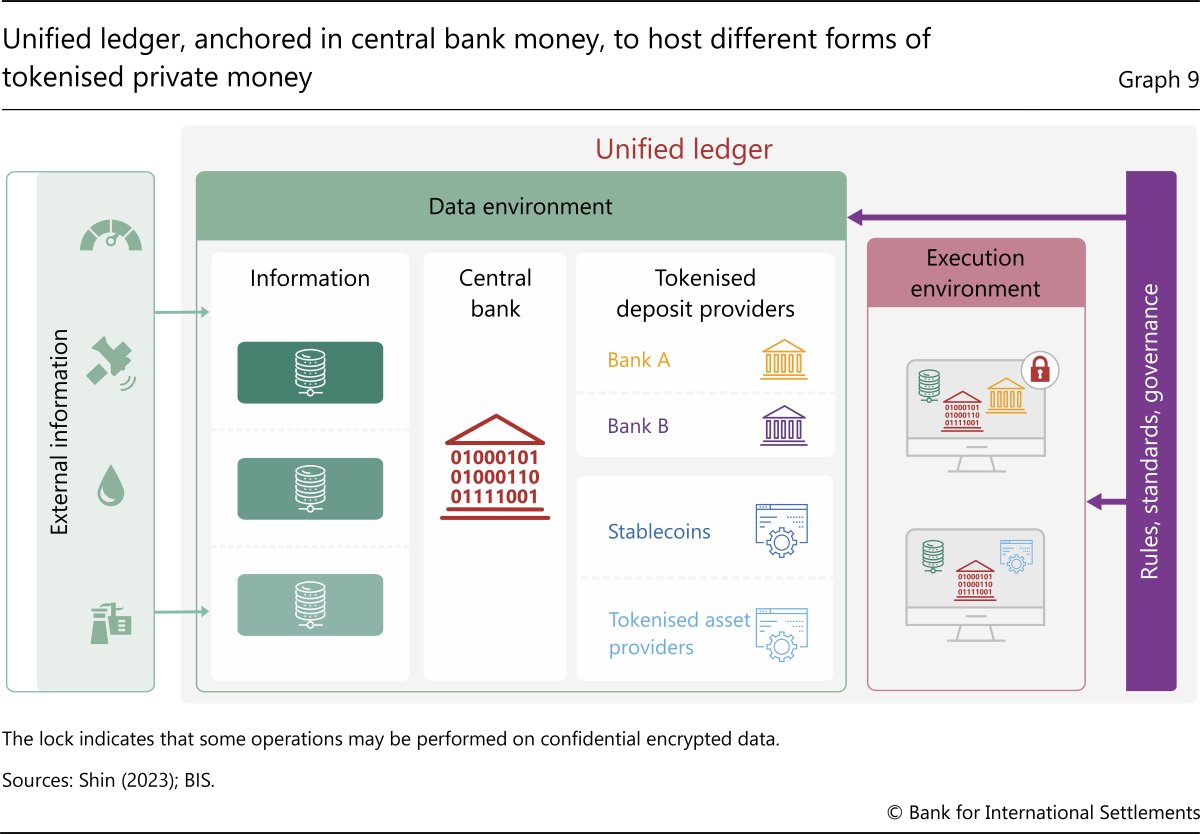
The emerging architecture of on-chain money bypasses these limitations by integrating directly into core banking systems. This involves three distinct pillars: tokenized commercial bank deposits, wholesale CBDCs (wCBDCs), and regulated programmable ledger networks. Financial institutions are no longer experimenting with decentralized finance (DeFi) protocols for speculative yield; they are re-engineering the foundational infrastructure of global liquidity.
Enterprise ROI in this space is no longer theoretical. Global custodian banks, asset management giants, and tier-1 investment banks are realizing that legacy settlement systems—characterized by T+1 or T+2 cycles, manual reconciliation, and siloed messaging networks—impose an unsustainable friction tax on global capital allocation. By migrating asset issuance and cash legs onto permissioned and hybrid blockchain rails, institutions can achieve atomic settlement, drastically reducing counterparty risk and freeing up trapped collateral.
The Technological Shift: From Public Ledgers to Hybrid Enterprise Fabrics
Early enterprise blockchain experiments in the 2018–2021 era frequently stumbled over data privacy concerns, low throughput, and public network volatility. The new architecture documented in the McKinsey report reflects a mature pivot toward enterprise-grade infrastructure. Leveraging advanced cryptographic primitives such as zero-knowledge proofs (ZKPs), modern on-chain money networks allow institutions to execute transactions with absolute privacy regarding transaction amounts and counterparties while maintaining cryptographic auditability for regulators.
Furthermore, cloud compute architecture integration has evolved. Major financial cloud providers now offer native node deployment and managed ledger services, allowing Chief Information Security Officers (CISOs) to treat on-chain infrastructure with the same security posture as traditional SWIFT or Fedwire connections. This technical scalability is a primary driver behind the capital inflows moving markets toward this $4 trillion reality.
Spotlight on Asia: Regulatory Proactivity and Market Liquidity
While Western financial capitals have been bogged down by legislative gridlock and regulation-by-enforcement paradigms, Asia has decisively seized the leadership role in on-chain financial architecture.
Jurisdictions such as the Monetary Authority of Singapore (MAS) and the Hong Kong Monetary Authority (HKMA) have deployed structured regulatory sandboxes—most notably initiatives like Project Guardian—to test institutional asset tokenization and foreign exchange settlement in controlled, live-market environments. These initiatives are not academic exercises; they involve tier-1 global banks executing real-time multi-currency transactions using tokenized commercial bank liabilities.
Market liquidity in Asian financial hubs is rapidly migrating toward these programmable rails because regional regulators have provided clear compliance frameworks. By establishing transparent legal definitions for tokenized deposits and smart contract liability, Asian regulators have lowered the risk mitigation threshold for institutional treasurers, encouraging aggressive capital deployment and cross-border collaboration.
| Architectural Dimension | Traditional Stablecoin Model | Emerging On-Chain Money Architecture |
|---|---|---|
| Primary Issuing Entity | Private fintech companies / Crypto-native firms | Tier-1 commercial banks & Central Banks (wCBDCs) |
| Addressable Market Scale | ~$150B–$200B (Retail & Crypto Trading liquidity) | $4 Trillion+ (Wholesale banking & global capital markets) |
| Settlement Mechanism | Public, permissionless token transfer | Programmable smart contracts on permissioned/hybrid rails |
| Regulatory Compliance | Varies globally; often contested | Native KYC/AML, cryptographic privacy, direct central bank oversight |
Industry & Market Implications: Who Wins and Who Loses?
As this $4 trillion transformation accelerates, the bifurcation of winners and losers across the global financial ecosystem will become starkly evident.
The Winners
Tier-1 Custodians and Prime Brokers: Financial institutions capable of bridging traditional custody with tokenized asset management will capture immense valuation multiples as corporate clients demand unified balance-sheet visibility.
Enterprise Cloud & Infrastructure Providers: Technology firms offering secure, scalable, and compliant blockchain middleware will secure lucrative, recurring enterprise SaaS contracts.
Forward-Thinking Regulators: Financial centers that embrace collaborative sandboxes will attract global fintech talent, capital formation, and primary market issuances.
The Loses
Legacy Intermediaries: Traditional clearinghouses and manual reconciliation agencies face an existential threat as atomic, peer-to-peer wholesale settlement renders their business models redundant.
Lagging Financial Jurisdictions: Banks and markets slow to adopt programmable settlement architectures will suffer from structural cost disadvantages, watching cross-border liquidity migrate toward Asian and frictionless digital hubs.
Frequently Asked Questions (People Also Ask)
What is the difference between stablecoins and the emerging architecture of on-chain money?
While stablecoins are typically issued by private entities and backed by off-chain reserves primarily used for retail or crypto-native trading, the emerging architecture of on-chain money encompasses tokenized commercial bank deposits, wholesale CBDCs, and regulated programmable ledger systems designed for core institutional banking, cross-border corporate treasury, and global capital markets.
Why does McKinsey estimate a $4 trillion scale gap?
The $4 trillion figure reflects the massive addressable volume of wholesale banking, institutional credit settlement, and interbank liquidity that traditional stablecoin markets cannot service due to regulatory, scale, and balance-sheet limitations. On-chain money architectures are specifically engineered to capture this institutional-grade liquidity.
How is Asia leading the adoption of on-chain financial architecture?
Regulatory bodies in Singapore, Hong Kong, and Japan have implemented proactive, collaborative regulatory sandboxes (such as Project Guardian). These initiatives allow financial institutions to test tokenized deposits and cross-border wholesale settlements in live environments with legal clarity, outpacing Western regulatory frameworks.
What are the primary risk mitigation challenges for institutions adopting on-chain money?
Financial institutions must navigate complex integration hurdles, including aligning cloud compute architectures with legacy core banking systems, ensuring robust cryptographic privacy, and maintaining rigorous, real-time AML/KYC compliance across hybrid blockchain networks.
Future Outlook: Milestones to Watch
The transition from retail stablecoins to institutional on-chain money infrastructure is no longer a futuristic hypothesis—it is the defining financial engineering challenge of the mid-2020s. Over the next 12 to 24 months, executive leadership must monitor several critical inflection points:
- Commercial Bank Consortiums: Watch for the expansion of multi-bank tokenized deposit networks moving from pilot testing to production-grade daily operations across G7 economies.
- Regulatory Harmonization: Track cross-border regulatory agreements regarding the legal finality of smart contract settlement and digital fiat interoperability.
- Enterprise Core Integration: Monitor announcements regarding tier-1 software vendors embedding native blockchain settlement layers into enterprise resource planning (ERP) and core banking software suites.
For institutional leaders, capital allocators, and technology strategists, the message from the latest McKinsey research is unambiguous: the infrastructure of money is being rewritten from the ledger up. Those who fail to adapt risk finding themselves stranded on the legacy side of a $4 trillion divide.