Executive Takeaways
- Unprecedented Capital Influx: Alternative asset management giants, led by Blackstone, Brookfield, and Digital Realty, have deployed hundreds of billions into data center real estate, pitching it as the ultimate inflation-hedged digital infrastructure play.
- The Grid Bottleneck: Surging power consumption driven by generative artificial intelligence and hyper-scale cloud compute architecture has collided with a fragile, aging electrical grid, threatening facility utilization rates.
- Mounting Structural Risks: Escalating development costs, tightening credit markets, rapid technology obsolescence cycles, and aggressive regulatory pushback over municipal water and power usage are compressing projected enterprise ROI.
- Liquidity and Valuation Hazards: Industry analysts warn that if AI adoption metrics fail to match capital expenditure growth, over-leveraged developers could face severe market liquidity crunches and valuation markdowns.
For the past thirty-six months, Wall Street’s premier investment banks and alternative asset managers have orchestrated one of the most aggressive capital allocation campaigns in modern financial history. The pitch to institutional investors, sovereign wealth funds, and retail syndicates has been uniform and alluring: data centers are no longer mere utilitarian IT closets; they are the high-yield, mission-critical real estate foundation of the global digital economy.
Yet beneath the polished slide decks and soaring valuation multiples, systemic risks are compounding at an alarming rate. As institutional capital pours into greenfield and brownfield developments across Northern Virginia, Silicon Valley, and emerging European hubs, developers are slamming into hard physical limits. The convergence of grid saturation, skyrocketing hardware replacement cycles, mounting environmental scrutiny, and complex supply chain dependencies has transformed what was billed as a bulletproof infrastructure play into a high-stakes high-wire act.
The Genesis of the Digital Real Estate Gold Rush
Test Our Free AI & Tech Utilities Suite
Calculate LLM API token costs, analyze article dwell-time, or simulate tech DCA returns.
The transformation of data centers from niche industrial assets into mainstream institutional real estate began in earnest during the post-pandemic cloud computing boom. As enterprises migrated legacy infrastructure to distributed cloud environments, demand for colocation space skyrocketed. However, the paradigm shifted definitively with the mainstream commercialization of generative artificial intelligence.
Unlike traditional enterprise workloads that require standard rack densities of 5 to 10 kilowatts (kW), modern AI training clusters packed with advanced Graphics Processing Units (GPUs) demand between 40 and 100 kW per rack—and next-generation liquid-cooled architectures are projected to push those thresholds even higher. This exponential leap in power density fundamentally altered the economics of digital real estate. Landlords who once measured value simply by square footage are now forced to evaluate assets through the prism of megawatt (MW) capacity and sustained electrical availability.
Sensing a generational opportunity to capture recurring lease revenue backed by investment-grade tenants, Wall Street stepped in with unprecedented force. Mega-funds launched dedicated digital infrastructure vehicles, acquiring private operators, spinning off real estate investment trusts (REITs), and executing complex sale-leaseback transactions. Blackstone’s multi-billion-dollar acquisition of QTS Realty Trust served as the bellwether deal, signaling to the broader market that data centers were the new gold standard for yield-hungry institutional portfolios.
Cracks in the Foundation: The Real Risks Piling Up
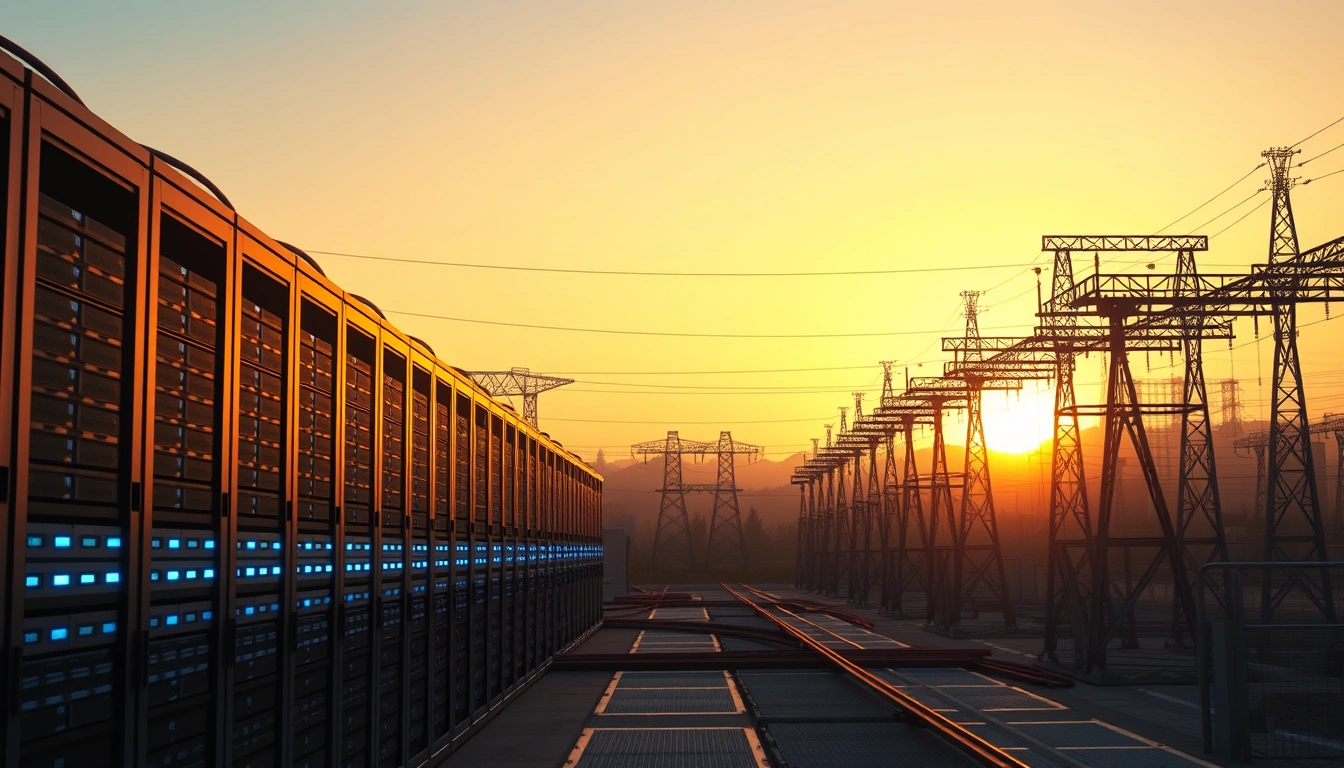
Despite the relentless marketing push from top-tier investment banks, structural headwinds are threatening to derail the sector’s expansion thesis. The risks can be categorized into four distinct pillars: infrastructure constraints, financial exposure, technological obsolescence, and regulatory pushback.
1. The Electrical Grid Wall
The most immediate and severe threat to the data center thesis is power availability. Modern hyper-scale campuses require massive electrical loads—often equivalent to the energy consumption of a mid-sized city. Utility providers across the United States and Europe are struggling to upgrade transmission lines and generation capacity fast enough to keep pace with demand. In key markets like Northern Virginia’s "Data Center Alley," transmission bottlenecks have forced utility operators to warn that new hookups could face delays stretching into the late 2020s. Without guaranteed power purchase agreements (PPAs), multi-million-dollar real estate assets risk sitting dark and unproductive.
2. Capital Intensity and Compressed Margins
Developing a tier-4 hyper-scale data center is intensely capital-expensive, frequently running into the billions of dollars per campus. As central banks maintain elevated interest rates to combat persistent inflation, the cost of project financing has spiked. Developers relying on floating-rate debt or aggressive leverage are seeing their debt-service coverage ratios compress. Furthermore, supply chain bottlenecks for critical electrical components—specifically high-voltage transformers, switchgear, and backup diesel generators—have extended construction timelines from 18 months to over three years, inflating carrying costs and delaying the realization of projected enterprise ROI.
3. Hyper-Fast Technological Obsolescence
Traditional real estate investments benefit from multi-decade holding periods with minimal structural alterations. Data centers operate under an entirely different evolutionary clock. Rapid advancements in semiconductor design, server architecture, and cooling methodologies mean that a facility state-of-the-art in 2024 could become functionally obsolete by 2030. Landlords face the constant capital expenditure burden of retrofitting legacy raised-floor rooms with high-pressure air containment systems or full liquid-cooling infrastructure to prevent tenant churn.
4. Environmental and Regulatory Backlash
Data centers are exceptionally resource-intensive, consuming millions of gallons of water daily for evaporative cooling systems alongside relentless gigawatt-hours of electricity. Local municipalities, environmental advocacy groups, and federal regulators are pushing back. Communities near proposed development sites are successfully organizing against zoning variances, citing grid reliability concerns, noise pollution from massive cooling fans, and carbon emission footprints. The regulatory compliance landscape is shifting from a rubber-stamp process to a contentious public battleground.
Comparative Metrics: The Data Center Investment Landscape
To understand the shifting dynamics of institutional capital allocation in digital infrastructure, the following table contrasts the baseline assumptions of the 2021–2022 boom against the operational realities facing Wall Street underwriters today:
| Metric / Parameter | The 2021-2022 Boom Era | Current Market Reality (2026) |
|---|---|---|
| Average Rack Density | 5 kW to 10 kW per rack | 40 kW to 100+ kW (AI-driven) |
| Grid Connection Lead Time | 12 to 18 months | 36 to 60+ months in primary markets |
| Cost of Capital (Debt) | Low (ZIRP / Sub-4% yields) | Elevated (Stricter debt covenants & higher base rates) |
| Primary Bottleneck | Land acquisition & fiber connectivity | Electrical substation capacity & transformer supply |
| Cooling Methodology | Standard air cooling / CRAC units | Hybrid air/liquid-to-chip systems required |
Industry & Market Implications: Winners and Losers
The compounding risks within the data center asset class are creating clear dichotomies across financial markets. The economic fallout will not hit all participants equally; strategic positioning and balance sheet strength will dictate survival.
Who Wins
Tier-1 Landlords with Existing Power Allocations: Operators who secured grid interconnections and long-term power purchase agreements prior to the current bottleneck enjoy immense pricing power. Their existing, stabilized assets are commanding premium rental rates and low cap rates.
Alternative Energy and Nuclear Providers: Forward-thinking data center developers partnering directly with clean energy providers—particularly nuclear energy operators capable of supplying baseload, carbon-free power—are carving out a distinct competitive moat.
Specialized Infrastructure Engineers: Engineering, procurement, and construction (EPC) firms specializing in advanced liquid cooling and high-voltage electrical substation engineering are seeing unprecedented project backlogs and margin expansion.
Who Loses
Speculative Land Speculators: Real estate investors who acquired raw land parcels based on theoretical zoning potential without securing power rights are facing severe valuation markdowns as utility companies reject connection applications.
Over-Leveraged Private Equity Syndicates: Funds that underwrote data center acquisitions using aggressive leverage assumptions during periods of low interest rates are facing uncomfortable debt-refinancing walls.
Secondary and Tertiary Markets: Regions lacking robust fiber backbones, skilled technical labor pools, and resilient utility grids are failing to attract hyper-scale tenants, leaving local investors holding underperforming assets.
Frequently Asked Questions (People Also Ask)
Why is Wall Street heavily investing in data center real estate right now?
Wall Street views data centers as the premier infrastructure play of the digital age, driven by relentless enterprise cloud migration and the explosive computational demands of generative AI. Asset managers market these assets as inflation-hedged investments offering predictable, long-term lease cash flows backed by major technology corporations.
What are the primary risks facing data center real estate investors?
The most acute risks include severe electrical grid bottlenecks that delay facility openings, escalating construction and capital costs amid higher interest rates, rapid technological obsolescence requiring expensive retrofits, and mounting regulatory pushback regarding municipal water and power consumption.
How is artificial intelligence changing the physical design of data centers?
Traditional data centers operate at low rack densities (5–10 kW). AI training clusters utilize advanced GPUs that require 40 to 100+ kW per rack. This immense heat generation has forced developers to abandon standard air cooling in favor of complex liquid-cooling systems and redesigned electrical distribution architecture.
Are data center investments liquid for institutional portfolios?
Generally, no. Data centers are highly specialized, capital-intensive real estate assets. While securitized vehicles like data center REITs offer public market liquidity, direct private equity and development funds involve multi-year lock-up periods, making them vulnerable to macroeconomic shifts and market liquidity contractions.
Future Outlook: Key Milestones to Watch
As the data center asset class matures, the next twenty-four months will serve as an existential stress test for Wall Street’s thesis. Investors and analysts must monitor several critical leading indicators to gauge market health:
First, watch for developments in off-grid power integration. With traditional utility interconnect queues stretching past half a decade, successful data center operators are increasingly turning to behind-the-meter generation solutions, including small modular nuclear reactors (SMRs), utility-scale solar paired with battery storage, and localized natural gas turbines. The ability to bypass public utility bottlenecks will separate winning operators from distressed assets.
Second, track enterprise AI monetization metrics. If corporate adoption of generative AI fails to generate sufficient top-line revenue growth to justify ongoing multi-billion-dollar infrastructure expenditures, hyper-scalers could experience capital expenditure pauses. Such a correction would immediately ripple through lease commitments and depress valuation multiples across the digital real estate sector.
Finally, monitor legislative and regulatory actions at both the state and federal levels. As local power grids face brownout risks and rising consumer electricity rates attributed to massive data center consumption, lawmakers are increasingly scrutinizing tax incentives and zoning approvals. Risk mitigation, rigorous capital allocation, and technological adaptability will define the survivors of Wall Street's most ambitious real estate bet.