As the dust settles on a seismic US electoral cycle, the macroeconomic and regulatory tectonic plates underlying the artificial intelligence revolution are shifting rapidly. For the past twenty-four months, hyper-scalers, venture capital syndicates, and sovereign wealth funds have poured unprecedented amounts of capital into physical infrastructure. Driven by the generative AI gold rush, Silicon Valley and Wall Street treated electrical grid capacity, liquid-cooled server racks, and hyperscale campus real estate as infallible assets. Today, however, that consensus is fracturing. A confluence of shifting legislative priorities, impending regulatory crackdowns on energy consumption, and a sharp reassessment of enterprise return on investment (ROI) has placed the multi-trillion-dollar AI data center buildout on a collision course with political reality.
Operating from our investigative desks across financial capitals, our reporting team has tracked the unprecedented surge of private credit, municipal bond issuances, and corporate power purchase agreements (PPAs) designed to feed power-hungry GPU clusters. Yet, behind closed doors in Washington, D.C., corporate boardrooms, and institutional trading desks, anxiety is palpable. The post-election political routing of key congressional committees, combined with looming federal environmental mandates and shifting tax incentives, threatens to pull the rug out from under the most aggressive infrastructure expansion in modern financial history. This comprehensive investigation examines the macroeconomic vulnerabilities, capital allocation risks, and systemic market shifts threatening the AI data center boom.
Executive Takeaways
- Regulatory Volatility: Newly empowered legislative factions are targeting federal subsidies, tax credits (such as the 45V clean hydrogen and updated 48E investment tax credits), and zoning fast-tracks that previously supercharged data center construction.
- Grid Capacity Strain & Backlash: Surging electricity demands from hyperscalers have triggered severe local resistance, rising consumer utility bills, and bipartisan scrutiny over grid reliability, forcing a re-evaluation of co-location strategies like nuclear-powered campuses.
- Enterprise ROI Skepticism: Institutional investors are increasingly demanding hard liquidity events and tangible enterprise productivity metrics, challenging the valuation multiples of infrastructure-heavy tech conglomerates.
- Capital Reallocation Risks: Private equity firms and alternative asset managers face potential write-downs on highly leveraged, specialized real estate assets if compute demand stabilizes or shifts toward decentralized edge architectures.
The Anatomy of the Infrastructure Gold Rush
Test Our Free AI & Tech Utilities Suite
Calculate LLM API token costs, analyze article dwell-time, or simulate tech DCA returns.
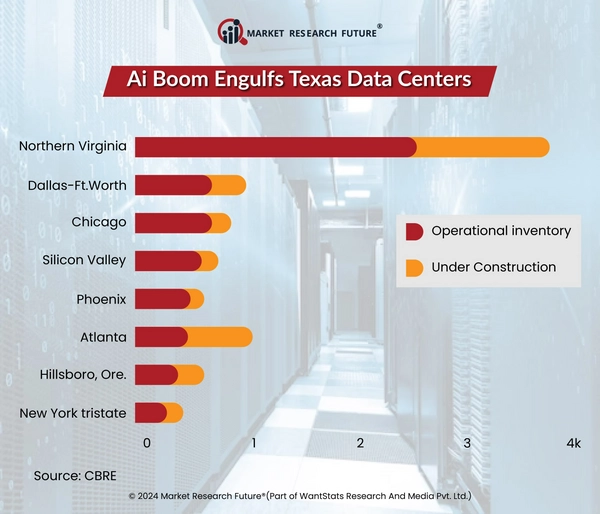
To understand the magnitude of the current upheaval, one must first analyze the sheer scale of the capital deployed since late 2022. The race to achieve artificial general intelligence (AGI) transformed tech giants into industrial real estate developers. Alphabet, Microsoft, Amazon Web Services (AWS), and Meta Platforms collectively allocated hundreds of billions of dollars toward cloud compute architecture and specialized silicon arrays. This capital expenditure (CapEx) supercycle cascaded downward into secondary markets, breathing new life into rural economies across Northern Virginia, central Ohio, Texas, and the Pacific Northwest.
However, this rapid scaling exposed structural vulnerabilities in the domestic power grid. Modern AI data centers require unprecedented power density—often exceeding 100 megawatts per facility, with next-generation campuses projected to demand gigawatt-scale power inputs rivaling small cities. To secure this energy, tech titans bypassed standard utility queues, striking controversial behind-the-meter deals with aging nuclear plants and natural gas suppliers. These arrangements temporarily solved compute latency and power scarcity issues but created acute political friction. As retail electricity rates climbed for residential ratepayers, local and federal lawmakers faced intense constituent backlash, turning data centers into a potent political flashpoint.
The Post-Election Regulatory and Legislative Pivot
The recent US election cycle fundamentally altered the legislative landscape governing technology and energy infrastructure. With shifts in congressional leadership and executive agency priorities, the regulatory environment for hyperscale operators has transformed from a permissive tailwind into a complex web of compliance hurdles and risk mitigation mandates.
Key among these legislative shifts is the bipartisan scrutiny surrounding federal subsidies for green energy procurement tied to data centers. Previous administrations heavily incentivized tech companies to pair new data centers with renewable energy generation. Now, lawmakers from both sides of the aisle are scrutinizing whether these corporate power arrangements disproportionately burden public utility grids while offering limited local employment benefits.
Furthermore, federal oversight bodies, including the Federal Energy Regulatory Commission (FERC) and the Department of Energy (DOE), are facing intense pressure to re-evaluate how grid interconnectivity requests are prioritized. Recent regulatory pushback against co-location deals—specifically agreements where data centers draw power directly from nuclear reactors without contributing to shared transmission infrastructure—signals a hardening regulatory stance. For developers relying on seamless infrastructure scalability, these administrative bottlenecks threaten project timelines and disrupt financial models built on rapid deployment schedules.
Capital Allocation, Valuation Multiples, and Risk Mitigation
The financial architecture supporting the AI data center boom relies heavily on cheap debt, alternative asset management liquidity, and inflated equity valuation multiples. As interest rate environments stabilize at higher-for-longer thresholds, the cost of capital for speculative real estate development has risen sharply.
Institutional investors are growing increasingly vocal about capital allocation strategies. While early adopter enthusiasm insulated tech boards from immediate shareholder activism, the elongated timeline for enterprise ROI is testing market patience. Asset managers are scrutinizing whether the projected demand for generative AI tools justifies the astronomical capital outlays required to build, cool, and power millions of specialized AI chips.
If enterprise clients slow their adoption rates due to budget constraints, security compliance hurdles, or underwhelming productivity gains, hyperscalers could face severe capacity oversupply. In such a scenario, the specialized nature of these facilities—fitted with liquid-cooling distribution units, reinforced flooring for heavy server racks, and dedicated substation transformers—limits their adaptive re-use value, presenting a classic stranded-asset risk.
Verified Data & Metrics: The AI Infrastructure Landscape
The following comparative breakdown illustrates the shifting metrics across financial commitments, power demands, and regulatory exposure driving the current market realignment:
| Infrastructure Metric | 2023 Baseline | Current Projections (2025-2026) | Market & Financial Impact |
|---|---|---|---|
| Hyperscale CapEx (Top 4 Tech Giants) | $140 Billion | $220+ Billion (Annualized) | Heightened scrutiny on free cash flow and shareholder returns. |
| Average Facility Power Density | 15 – 30 Megawatts | 100 – 1,000+ Megawatts | Intensifies local grid strain and accelerates regulatory pushback. |
| Federal Subsidy Exposure | High (Broad 45V/48E eligibility) | Moderate to High Risk (Pending legislative review) | Threatens project internal rates of return (IRR). |
| Average Lease Tenors (PPA / Real Estate) | 5 – 10 Years | 15 – 20 Years (Structured) | Locks operators into long-term liabilities amidst shifting demand. |
Industry & Market Implications: Winners and Losers
As the post-election regulatory framework hardens and capital discipline returns to the tech sector, a clear bifurcation of market winners and losers is emerging across the financial ecosystem.
The Winners
Tier-1 Utility Providers & Regulated Energy Monopolies: Traditional electric utilities with robust transmission infrastructure hold unprecedented pricing power. They are positioned to extract favorable long-term contracts from desperate tech operators while passing grid upgrade costs to corporate consumers.
Alternative Energy & Grid-Optimization Innovators: Companies specializing in microgrid management, energy storage systems, and behind-the-meter load-balancing technologies will see surging demand as data center operators scramble for compliant power solutions.
Disciplined Private Equity & Infrastructure Funds: Investors who maintained rigorous underwriting standards and avoided highly speculative, single-tenant data center developments are poised to acquire distressed assets at attractive valuation multiples.
The Losers
Speculative Real Estate Developers: Smaller data center developers who rushed to secure land options without locking in guaranteed power purchase agreements face severe liquidity crunches and potential project cancellations.
Over-Leveraged Tech Startups & Secondary Cloud Providers: Entities relying entirely on rented hyperscale compute without proprietary efficiency optimizations will struggle to absorb rising infrastructure leasing costs.
Local Municipalities Dependent on Hyper-Growth Tax Revenues: Towns that heavily incentivized mega-campuses through tax abatements now face infrastructure strain and public backlash without guaranteed long-term fiscal stabilization.
Frequently Asked Questions (People Also Answered)
Why is the post-election political environment threatening AI data centers?
The post-election landscape has brought renewed bipartisan scrutiny over public utility rate hikes, grid reliability, and federal green energy subsidies. Lawmakers are increasingly sensitive to constituent pushback against rising electricity bills driven by power-hungry AI server farms, leading to tighter zoning restrictions and a re-evaluation of federal tax incentives.
How are power supply constraints impacting hyperscale expansion?
Traditional utility queues are severely backlogged, often requiring three to seven years for new transmission interconnects. This has forced tech giants to pursue unconventional solutions, such as co-locating directly at nuclear power plants, which has triggered regulatory pushback from energy watchdogs concerned about grid stability and fair market pricing.
What is the risk to institutional investors financing this boom?
The primary risk centers on capital allocation efficiency and long-term asset liquidity. If enterprise adoption of generative AI fails to generate sufficient revenue growth to justify multi-billion-dollar infrastructure investments, asset managers face potential valuation markdowns and stranded-asset exposure on highly specialized real estate.
Are smaller secondary markets still viable for new data center construction?
Secondary markets face mounting friction. While they initially offered cheaper land and laxer zoning laws, local opposition, water scarcity concerns, and regional grid limitations are increasingly mirroring the bottlenecks found in Tier-1 data center hubs like Northern Virginia.
Future Outlook: Strategic Milestones to Watch
Navigating the next phase of the AI infrastructure cycle requires acute monitoring of several critical macroeconomic and regulatory milestones over the coming quarters:
- FERC Rulings on Co-Location: Upcoming federal regulatory decisions regarding direct energy connections between power generators and large load consumers will set the legal precedent for corporate energy procurement.
- Q1/Q2 Tech Earnings Reports: Institutional analysts will closely examine capital expenditure guidance from major cloud providers to determine whether CapEx growth is accelerating, plateauing, or pulling back.
- State-Level Utility Commission Hearings: Decisions by state public service commissions on rate design adjustments will dictate whether residential ratepayers or commercial data centers shoulder the cost of grid modernization.
- Enterprise Software Monetization Metrics: Wall Street will demand clearer evidence of sustainable enterprise software revenue derived from AI implementations, directly influencing overall sector valuation multiples.
Ultimately, the AI data center boom is transitioning from an unbridled land grab into a mature, highly regulated industrial sector. While the long-term technological trajectory of artificial intelligence remains potent, the era of frictionless expansion is over. Investors, operators, and policymakers must navigate a complex matrix of energy economics, regulatory oversight, and financial accountability as the market absorbs the realities of the post-election landscape.