Executive Takeaways
- Capital Efficiency Breakthrough: DeepSeek-V3 achieved frontier-class capabilities while slashing training costs to a fraction of Western counterparts, triggering a re-evaluation of enterprise infrastructure scalability and venture capital deployment.
- Architectural Shift: Moving away from dense, monolithic transformer models toward advanced Mixture-of-Experts (MoE) topologies and Multi-head Latent Attention (MLA) has rewritten the playbook for cloud compute architecture.
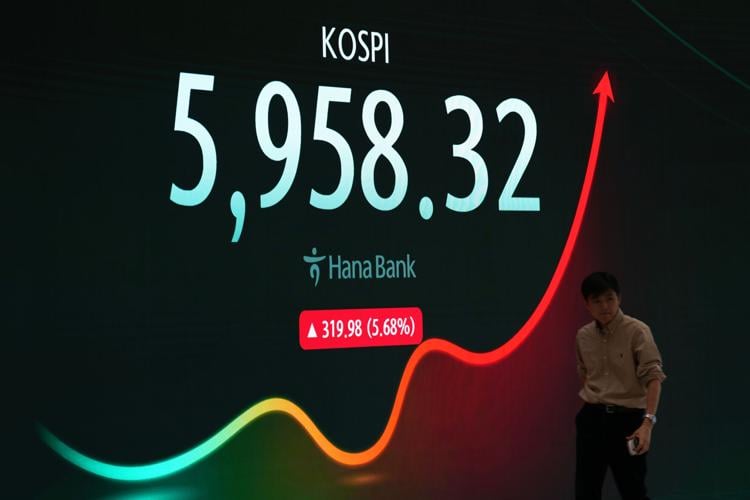
- Market Re-pricing: The model's debut sent shockwaves through semiconductor markets and tech equity valuations, forcing legacy cloud providers to rethink pricing power, margin retention, and capital expenditure strategies.
For the better part of a half-decade, the artificial intelligence paradigm was governed by a straightforward, unyielding axiom: dominance required gargantuan balance sheets, tens of thousands of elite accelerators, and hundreds of millions of dollars in raw compute expenditure. Wall Street rewarded the sheer scale of capital allocation, treating multi-billion-dollar data center investments as an unassailable moat. Then came DeepSeek-V3.
When technical disclosures surrounding DeepSeek-V3 rippled through global financial markets and Silicon Valley engineering bullpens, they did more than introduce a new open-weights contender. They fundamentally destabilized the economic assumptions underpinning the entire generative AI trade. While traditional large language models (LLMs) operate primarily as heavy cloud services anchored to plug-and-play APIs—optimistic fits for standard enterprise use cases—DeepSeek-V3 exposed the staggering inefficiencies hidden within Western AI development pipelines.
As enterprises increasingly balance innovation velocity with strict risk mitigation and margin protection, the emergence of a high-performance model built on a shoestring budget forces a hard look at balance sheet efficiency. To understand why DeepSeek-V3 represents a watershed moment for infrastructure scalability and market liquidity, one must examine the precise mechanical differences separating it from the broader LLM landscape.
The Pillars of Efficiency: Decoding the Architecture
Test Our Free AI & Tech Utilities Suite
Calculate LLM API token costs, analyze article dwell-time, or simulate tech DCA returns.
To contextualize the disruption, analysts must look past the headline training figures and examine the underlying machinery. Traditional proprietary and open-weights models rely on dense architectures where every parameter fires for every token processed. While conceptually straightforward, this brute-force approach exacts a heavy toll on memory bandwidth, inference latency, and power consumption.
DeepSeek-V3 bypasses this bottleneck through a masterclass in systems engineering. Its design rests on three core structural pillars:
- Advanced Mixture-of-Experts (MoE) Routing: Rather than activating a monolithic network, DeepSeek-V3 routes tokens to specialized sub-networks. This allows the model to scale its total parameter count to massive proportions while activating only a fraction of those parameters per forward pass, drastically reducing floating-point operations (FLOPs) during inference.
- Multi-head Latent Attention (MLA): Memory overhead during inference has long been the Achilles' heel of long-context LLMs. By compressing the Key-Value (KV) cache into a latent space, DeepSeek-V3 drastically cuts memory footprint requirements, enabling significantly higher throughput and lower serving costs on standard hardware clusters.
- Multi-Token Prediction (MTP): By training the model to predict multiple future tokens simultaneously rather than a single next token, DeepSeek accelerates training convergence and improves semantic density, extracting maximum value from every cycle of expensive silicon.
These innovations do not merely represent incremental software patches; they redefine how engineering teams approach resource constraints. In an era where regulatory compliance and capital discipline weigh heavily on executive decision-making, extracting maximum performance from limited infrastructure is the ultimate competitive advantage.
Verified Data & Metrics Breakdown

A rigorous examination of the competitive landscape requires putting empirical metrics side by side. The following comparison illustrates the structural divergence between DeepSeek-V3 and standard industry benchmarks.
| Metric / Dimension | DeepSeek-V3 | Standard Dense Frontier Models | Traditional MoE Cloud APIs |
|---|---|---|---|
| Estimated Training Cost | Under $6 Million | $100M – $1B+ | $50M – $300M |
| Total Parameter Scale | 671B Total (37B Active) | 400B – 2T+ (Dense) | Various (e.g., 50B–120B Active) |
| Attention Mechanism | Multi-head Latent Attention (MLA) | Standard Multi-Head Attention (MHA) | Grouped-Query Attention (GQA) |
| Inference Economic Profile | Highly optimized, ultra-low token cost | High memory bandwidth demand, premium pricing | Moderate-to-high API markup |
Industry & Market Implications: Winners and Losers
The arrival of DeepSeek-V3 has forced institutional investors and corporate boards to re-evaluate valuation multiples across the technology sector. The traditional narrative—that sustained AI leadership is strictly a linear function of capital expenditure—has been challenged.
The Winners: Enterprise consumers and capital-constrained startups emerge as immediate beneficiaries. By democratizing access to frontier-level reasoning capabilities at a fraction of previous inference costs, companies across financial services, healthcare, and logistics can accelerate enterprise ROI. Furthermore, hardware-efficient architectures validate alternative compute strategies, reducing single-vendor lock-in risks.
The Losers: Hyperscalers and semiconductor providers heavily reliant on perpetual, unchecked infrastructure expansion face a reckoning. If software efficiency can bypass the need for massive data center buildouts, projected revenue growth for high-end accelerator manufacturers and cloud compute providers may face downward pressure. Corporate finance teams are already asking C-suites to justify multi-billion-dollar cloud commitments when algorithmic efficiency offers a leaner path forward.
Frequently Asked Questions (People Also Ask)
What makes DeepSeek-V3 fundamentally different from standard cloud-hosted LLMs?
Unlike traditional cloud models that rely on dense, uniform architectures requiring massive computational power for every token, DeepSeek-V3 utilizes an optimized Mixture-of-Experts (MoE) framework paired with Multi-head Latent Attention. This significantly reduces active parameters per inference pass and cuts memory bandwidth requirements, yielding frontier performance at a fraction of the cost.
How does DeepSeek-V3 impact enterprise ROI and cloud compute spending?
For enterprise deployment, DeepSeek-V3 drastically lowers the total cost of ownership (TCO) for custom AI integration. Because its inference costs and memory overhead are aggressively optimized, corporate buyers can deploy sophisticated reasoning workflows without incurring the punishing API fees associated with legacy Western frontier models.
Does open-weights model efficiency threaten traditional software-as-a-service (SaaS) moats?
Yes. As high-performance open-weights models become cheaper to run locally or on private clouds, proprietary API wrappers lose pricing power. Software vendors must shift their value proposition away from raw model access toward proprietary data integrations, specialized workflows, and deep domain-specific fine-tuning.
Future Outlook: What Comes Next
The shockwaves generated by DeepSeek-V3 mark the transition from an era of unbridled capital deployment to an era of ruthless algorithmic optimization. Over the next 12 to 24 months, industry watchers should monitor several key milestones:
- Architectural Convergence: Expect Western labs to aggressively adopt similar efficiency techniques—such as advanced latent attention and refined MoE routing—to protect their gross margins and reduce training overhead.
- Edge and On-Premises Resurgence: As model efficiency climbs while resource footprints shrink, enterprise appetite for on-premises deployment and sovereign cloud architectures will accelerate, driven by strict data governance and regulatory compliance mandates.
- jCapital Allocation Shifts: Venture capitalists and corporate boards will scrutinize AI startup pitch decks through a harsher lens, prioritizing capital efficiency, algorithmic innovation, and clear paths to profitability over sheer model size.
Ultimately, DeepSeek-V3 has shattered the illusion that financial brute force is the sole pathway to intelligence. In the new landscape of artificial intelligence, ingenuity has reclaimed its crown from capital—permanently altering the economics of the digital age.