Executive Takeaways
- Unprecedented Velocity: SpaceX closed out October by executing its milestone 700th Falcon 9 launch, solidifying the vehicle's status as the most flown orbital-class rocket in history.
- Market Disruption & Capital Allocation: The unmatched flight cadence and proven first-stage booster reuse model have fundamentally altered aerospace valuation multiples and enterprise ROI across global launch markets.
- Infrastructure Scalability: The operational tempo underpins both the rapid deployment of the Starlink constellation and high-margin commercial payload delivery, driving structural shifts in cloud compute architecture and global telecommunications.
- Competitive Pressure: Legacy defense contractors and international space agencies face mounting pressure regarding regulatory compliance, risk mitigation, and cost-per-kilogram economics as SpaceX widens its moat.
WASHINGTON & HAWTHORNE — In an industry historically defined by conservative engineering timelines, exorbitant cost overruns, and protracted regulatory compliance cycles, SpaceX has once again redefined operational velocity. By closing out October with its historic 700th Falcon 9 launch, Elon Musk’s aerospace juggernaut has achieved a manufacturing and operational milestone that leaves traditional aerospace heavyweights scrambling to preserve their market share.
For institutional investors, aerospace analysts, and telecommunications executives, the 700th flight is far more than a celebratory badge for mission patches. It represents a masterclass in infrastructure scalability, supply chain optimization, and ruthless risk mitigation. As private capital pours into space-based assets, Falcon 9 has transitioned from an experimental disruptor into the undisputed global highway for orbital logistics.
The Genesis of a Workhorse: From Disruptor to Industry Standard
Test Our Free AI & Tech Utilities Suite
Calculate LLM API token costs, analyze article dwell-time, or simulate tech DCA returns.
When the Falcon 9 first cleared the pad at Cape Canaveral in June 2010, skeptics questioned whether a privately funded medium-lift vehicle could compete with state-sponsored programs. Over the subsequent decade and a half, the rocket underwent rigorous iterative engineering, transforming into the Block 5 iteration—a machine engineered for rapid turnaround, unprecedented structural safety margins, and routine booster recovery.
The catalytic event that supercharged the Falcon 9’s flight cadence was not merely commercial payload contracting, but the internal demand generated by the Starlink broadband constellation. By functioning as both the launch provider and the primary customer, SpaceX engineered a closed-loop economic ecosystem. This vertical integration insulated the company from macroeconomic volatility, optimized capital allocation, and guaranteed a baseline launch manifest that allowed engineering teams to refine reusability metrics down to a science.
By achieving routine first-stage booster recoveries—frequently exceeding 20 flights for a single booster—SpaceX systematically dismantled the traditional cost-plus contracting model. Legacy aerospace firms, bound by legacy cost structures and legacy supply chains, have found themselves structurally incapable of matching Falcon 9’s marginal cost per kilogram to orbit. The result is a profound market liquidity shift, where venture capital and defense budgets alike flow inevitably toward Hawthorne.
Verified Data & Metrics Breakdown
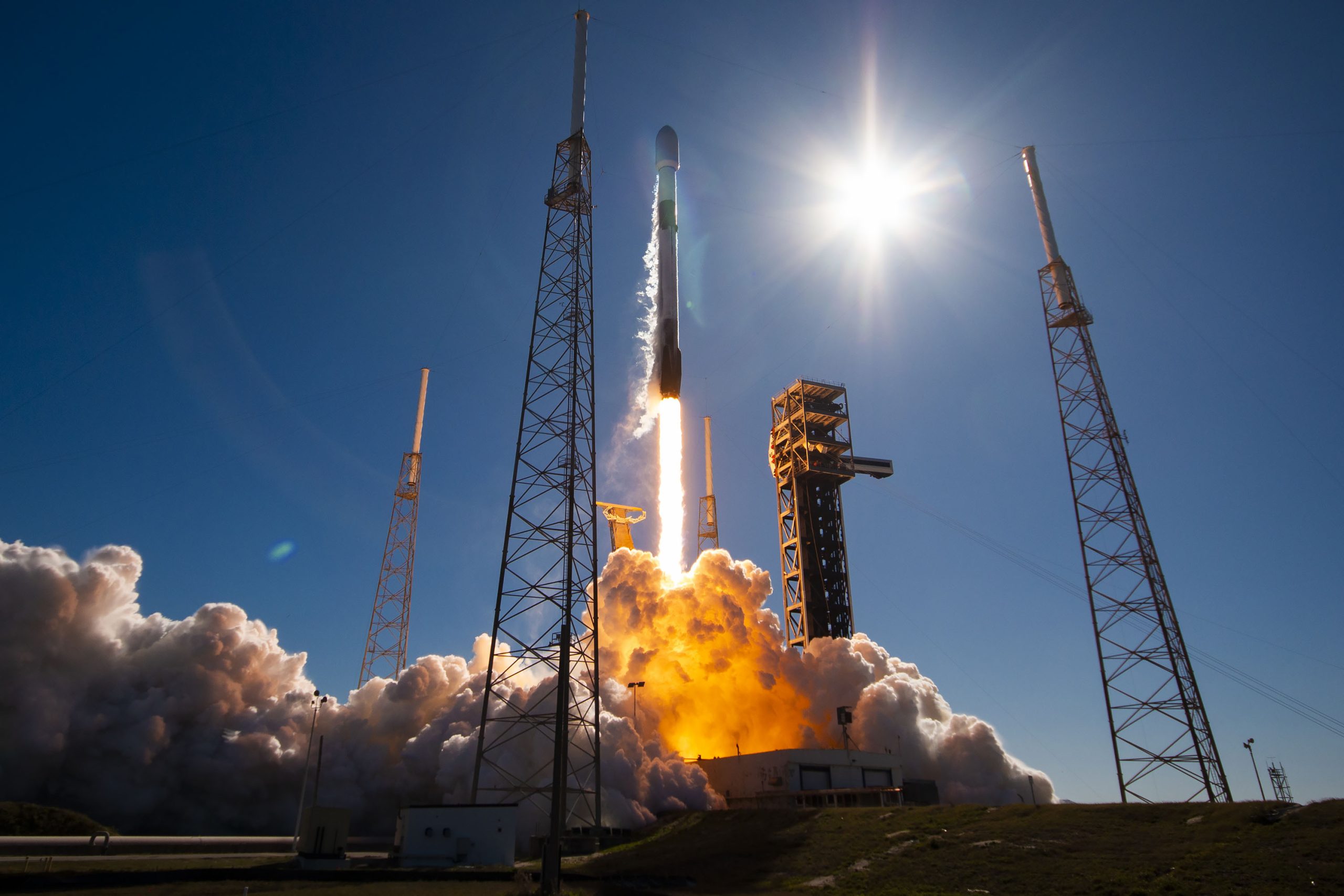
To understand the sheer industrial scale of the Falcon 9 program, market analysts look closely at the operational velocity and reuse metrics that separate SpaceX from global competitors:
| Operational Metric | Falcon 9 Program Status | Legacy Industry Benchmark |
|---|---|---|
| Total Orbital Launches | 700+ (Closed out October milestone) | Varies (Typically 50–150 for mature legacy lines) |
| First-Stage Booster Reuse Record | Up to 24 flights for a single booster | Primarily expendable (0 to minimal reuse) |
| Average Turnaround Time | Under 21 days per pad (achieved sub-week records) | Months to years |
| Payload Capacity (LEO) | Up to 22,800 kg (expendable) / ~17,400 kg (reusable) | Comparable medium-to-heavy lift classes |
Industry & Market Implications: Winners, Losers, and Economic Realities
The implications of reaching 700 successful Falcon 9 flights extend far beyond launch pads in Florida and California. The macroeconomic ripples touch global defense, telecommunications, and high-frequency financial infrastructure.
Who Wins
- Commercial Satellite Operators: Global broadband, Earth observation, and IoT enterprises now enjoy unprecedented schedule reliability and drastically reduced launch costs, accelerating enterprise ROI for space-based business models.
- Defense & Intelligence Agencies: The U.S. Space Force and National Reconnaissance Office (NRO) benefit from high-cadence national security payload delivery, ensuring rapid reconstitution of critical orbital assets in contested environments.
- SpaceX Financial Stakeholders: With cash flow heavily buoyed by Starlink subscriptions and commercial launch dominance, SpaceX's private market valuation multiples continue to command premium standing among institutional investors.
Who Loses
- Legacy Launch Providers: European, Asian, and domestic legacy aerospace contractors face an uphill battle to secure commercial contracts against a competitor offering proven flight heritage and lower cost baselines.
- Non-Reusable Supply Chains: Component manufacturers reliant on building single-use rocket hardware are seeing demand dry up as the global aerospace standard shifts permanently toward rapid reusability.
Frequently Asked Questions (People Also Ask)
Frequently Asked Questions
What makes the Falcon 9 rocket so economically disruptive?
The Falcon 9’s primary economic advantage stems from its pioneering first-stage booster reusability and rapid launch cadence. By recovering, refurbishing, and reflown primary boosters—often up to two dozen times—SpaceX drastically lowers the marginal cost per kilogram to orbit, bypassing the expensive, single-use manufacturing model utilized by traditional aerospace contractors.
How does the 700th launch impact SpaceX’s valuation and market position?
Reaching 700 successful missions serves as empirical proof of operational reliability and risk mitigation. For institutional investors, this milestone reinforces SpaceX's near-monopoly on commercial medium-lift launch services, supporting high valuation multiples and securing long-term revenue streams from both commercial enterprise clients and government defense contracts.
What role does Falcon 9 play in the deployment of Starlink?
Falcon 9 has been the foundational workhorse for building out the Starlink low-Earth orbit (LEO) constellation. The high-frequency launch schedule allows SpaceX to continuously replenish and expand its orbital infrastructure, directly supporting cloud compute architecture, global broadband distribution, and high-margin recurring telecom revenues.
Future Outlook: What Comes Next on the Horizon
Even as the champagne corks pop following the 700th Falcon 9 mission, executive leadership in Hawthorne is already pivoting toward the next paradigm shift. While Falcon 9 and Falcon Heavy continue to anchor current commercial and government manifest commitments, internal capital allocation is increasingly favoring Starship—the fully reusable, super-heavy-lift vehicle designed to eventually supersede the Falcon product line entirely.
For the immediate term, however, Falcon 9 remains the cash cow and logistical backbone of the new space economy. As global demand for sovereign satellite constellations, national security payloads, and orbital infrastructure climbs, SpaceX's proven workhorse is positioned to push toward 800, 900, and eventually 1,000 flights. For competitors, the window to close the technological and economic gap is closing rapidly, leaving the global aerospace sector watching to see how traditional players adapt to an era defined by reusable velocity.