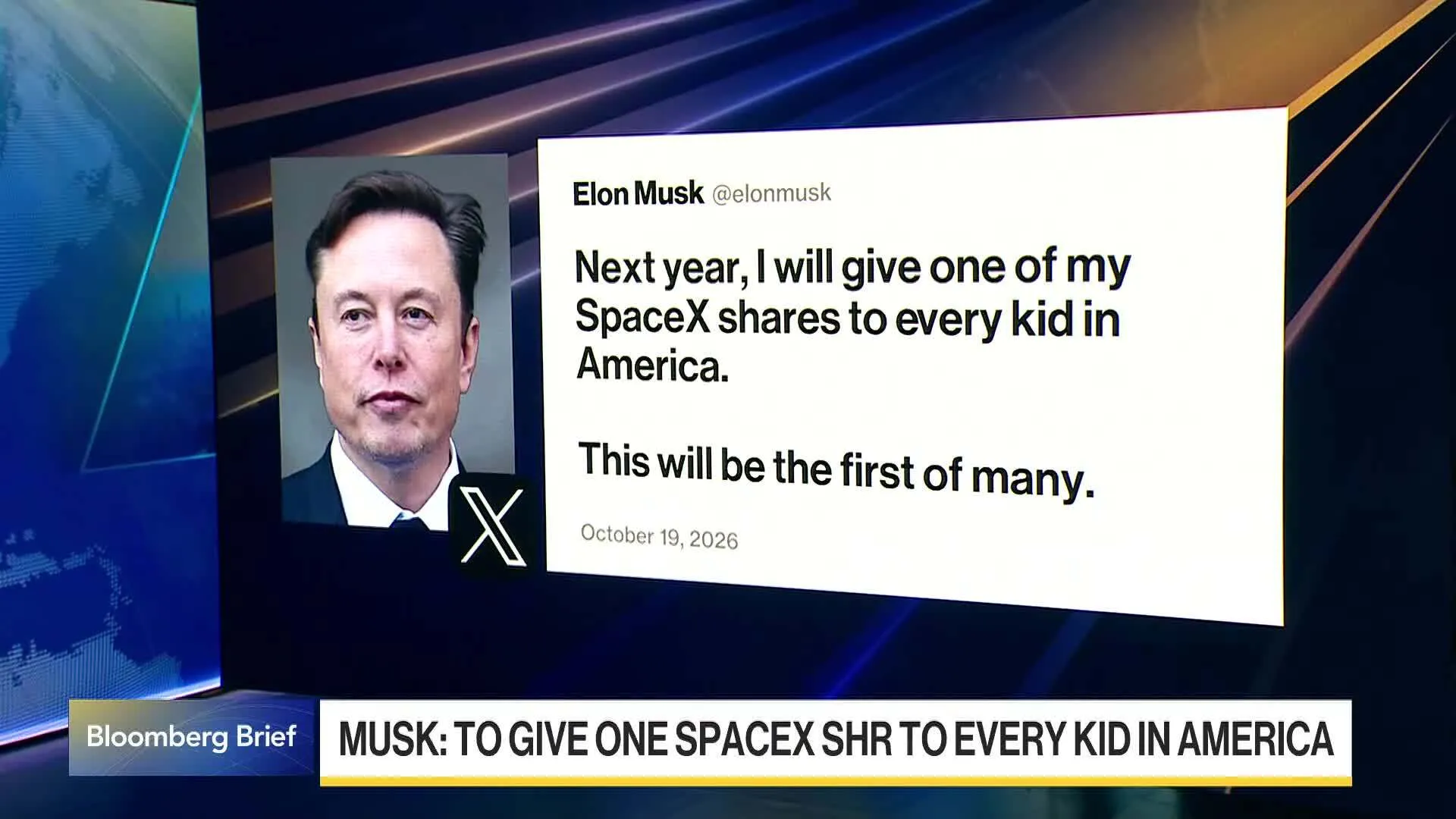
NEW YORK — In an unprecedented convergence of private equity, demographic engineering, and state-level philanthropic disruption, Elon Musk has floated a proposal that has instantly paralyzed Wall Street trading desks and regulatory compliance departments alike: pledging one share of SpaceX to every child in America. While initial reports from Axios and Business Insider sparked a viral wave of social media speculation, a deeper investigation reveals a meticulously calculated strategy. This initiative is not merely a populist stunt; it is a masterclass in capital allocation, structural enterprise valuation, and the redefining of generational wealth in the artificial intelligence and aerospace era.
As AI giants and deep-tech conglomerates systematically reshape global philanthropy, traditional models of charitable giving—defined by tax-advantaged foundations and endowment funds—are being rendered obsolete. Musk’s theoretical equity distribution forces a radical reevaluation of market liquidity, corporate governance, and how private capital can bypass legacy bureaucratic friction to deliver direct, high-growth asset ownership to the next generation.
Executive Takeaways
- Unprecedented Scale: The proposal targets tens of millions of American minors, requiring a structural corporate reorganization of SpaceX to accommodate an unprecedented retail and custodial shareholder registry.
- Valuation Multiples: Based on SpaceX’s recent private market valuations—hovering near or exceeding the $200 billion threshold—the implied equity value per child represents a transformative initial principal stake.
- Philanthropic Paradigm Shift: The initiative signals a broader movement among tech titans away from cash-based endowments toward illiquid, high-growth equity instruments designed to capture future enterprise ROI.
- Regulatory & Compliance Hurdles: Executing such a transfer involves complex navigation of SEC regulations, custodial trust law, tax implications for minors, and unprecedented market liquidity demands.
The Catalytic Spark: From Viral Headline to Structural Reality
The discourse surrounding the pledge ignited following statements corroborated by wire sources and digital media tracking. While casual observers viewed the proposition through the lens of a PR stunt, financial analysts at tier-1 investment banks immediately began stress-testing the balance sheet implications. SpaceX is currently operating as a dominant, vertically integrated aerospace and satellite communications colossus. Through its dual engines—Starship development and the Starlink orbital constellation—the company commands a valuation multiple that routinely defies traditional aerospace benchmarks, trading more like an exponential software infrastructure play than a hardware manufacturer.
By proposing to carve out a fraction of this privately held equity for every American child, Musk touches upon a fundamental tension in modern capitalism: the widening wealth gap driven by the concentration of private market appreciation. Over the past two decades, wealth creation has migrated decisively into private equity and venture capital arenas long before companies ever file an S-1 for an initial public offering. Consequently, everyday retail investors—and by extension, future generations—have been structurally locked out of the early-stage exponential growth curves that defined the ascendancy of firms like Apple, Amazon, and Tesla.
Distributing SpaceX shares directly to minors short-circuits this exclusionary dynamic. However, the operational complexity of issuing, registering, and managing tens of millions of fractional or whole private equity certificates presents an administrative labyrinth that dwarfs any corporate action in financial history.
Deconstructing the Mechanics: Valuation, Custody, and Capital Allocation
To understand the feasibility of the pledge, one must examine the fundamental arithmetic of SpaceX’s capital structure. With a private valuation eclipsing historical norms, the company’s share price reflects aggressive projections for orbital data dominance, global broadband capture, and future interplanetary logistics. Below is a comparative breakdown of the core metrics governing this unprecedented enterprise challenge:
| Metric / Parameter | Current SpaceX Baseline | Proposed Distribution Impact | Strategic Implication |
|---|---|---|---|
| Estimated Valuation | $180B – $210B+ (Private Market) | Dilution or Treasury Reallocation | Requires structural authorization from the board and existing institutional investors. |
| Target Beneficiaries | ~73 Million Minors (US Demographic) | Massive Custodial Shareholder Registry | Necessitates automated, cryptographic, or institutional trust custody solutions. |
| Asset Liquidity | Illiquid Private Shares | Restricted Transferability Pre-IPO | Beneficiaries cannot liquidate until a liquidity event, secondary tender offer, or public listing. |
| Regulatory Oversight | SEC Private Company Thresholds | Intense Compliance & Fiduciary Scrutiny | Demands specialized statutory frameworks for minor-held equity assets. |
The infrastructure scalability required to manage a shareholder base of this magnitude requires robust cloud compute architecture and specialized digital ledger systems. Traditional transfer agents would buckle under the administrative weight of opening millions of custodial accounts for infants and adolescents. Therefore, any execution of this pledge would likely rely on a novel fintech interface—potentially drawing architectural inspiration from blockchain-backed registries or state-sponsored savings trusts—to ensure regulatory compliance and risk mitigation.
Industry and Market Implications: The New Era of Tech Philanthropy
The broader economic impact of Musk’s proposal extends far beyond SpaceX’s cap table. As AI giants and multi-trillion-dollar tech enterprises accumulate unprecedented amounts of capital, traditional philanthropic vehicles—such as legacy grant-making foundations—are increasingly viewed as slow, inefficient, and detached from wealth-generation engines.
We are witnessing the dawn of active equity philanthropy. Instead of donating depreciating fiat currency or taxable dividends, visionaries are looking toward high-growth equity infrastructure as the ultimate endowment vehicle. This shift creates distinct winners and losers across the financial ecosystem:
- The Winners: Next-generation retail investors and young families who secure an immediate stake in space-based infrastructure and orbital bandwidth monopolies; fintech platforms specializing in custodial asset management and automated compliance.
- The Losers: Traditional philanthropic institutions relying on legacy endowment models; regulatory compliance officers tasked with auditing millions of newly created, minor-held private equity stakes without a clear legal precedent.
Furthermore, this move alters the political and regulatory calculus surrounding corporate monopoly power. By embedding millions of American citizens directly into the ownership structure of a critical defense and aerospace contractor, SpaceX effectively weaves its corporate survival into the fabric of domestic household wealth. It is a brilliant, systemic hedge against antitrust hostility.
Frequently Asked Questions (People Also Ask)
Would every child in America actually receive a physical stock certificate?
No. Given modern digital infrastructure and the private status of SpaceX, physical certificates are obsolete. Any such distribution would require establishing electronic custodial accounts—likely held in trust by parents, legal guardians, or a designated national depository—until the beneficiary reaches the age of majority.
How would this impact SpaceX’s valuation and existing institutional investors?
Issuing shares to tens of millions of children would represent a massive dilution event unless structured via secondary share purchases by a philanthropic vehicle, treasury stock reallocation, or specific dual-class share reorganizations. Existing institutional investors, such as venture capital funds and sovereign wealth participants, would need to approve structural amendments to the corporate charter.
Can the children sell these shares immediately?
Almost certainly not. Because SpaceX remains a privately held company, its shares lack public market liquidity. Beneficiaries would be subject to strict transfer restrictions, lock-up periods, and securities regulations until SpaceX executes an initial public offering (IPO) or implements regularized private-market tender offers.
Is this proposal legally and tax-wise feasible under current US law?
It presents a labyrinthine challenge. Transferring equity to minors triggers complex gift-tax considerations, custodial fiduciary requirements under laws like UTMA (Uniform Transfers to Minors Act), and SEC shareholder-of-record thresholds. Significant legislative or regulatory accommodations would be required to streamline the process.
Future Outlook: Milestones to Watch
While Elon Musk’s pledge remains a high-profile proposal rather than an executed corporate mandate, it serves as a crystal ball for the future of capital distribution. Observers and institutional analysts must monitor several key milestones in the coming quarters:
First, watch for any formal filings or amendments to SpaceX’s corporate charter regarding secondary market share pools or treasury restructuring. Second, pay close attention to potential SEC guidance regarding the expansion of shareholder thresholds for private deep-tech enterprises. Finally, observe how competing AI giants and tech moguls respond to this benchmark; as wealth concentration faces mounting societal scrutiny, direct equity distribution may become the gold standard for modern tech philanthropy, forever altering how future generations interface with capital markets.