The global mobile silicon market stands at an unprecedented crossroads as fresh revelations emerge regarding Samsung’s flagship hardware roadmap. The ongoing saga surrounding the Galaxy S27 Ultra chipset strategy has taken yet another dramatic turn, sending shockwaves through tier-1 component suppliers, foundry partners, and institutional investors alike. What began as industry speculation over architectural transitions and manufacturing yields has evolved into a high-stakes corporate chess match involving capital allocation, enterprise ROI, and foundry dominance.
As the smartphone industry grapples with lengthening replacement cycles and rising silicon production costs, Samsung Electronics is reportedly re-evaluating its dual-sourcing framework. This latest development threatens to upend established valuation multiples for semiconductor manufacturers while forcing a major rethink of cloud compute architecture and on-device artificial intelligence processing power. To understand the gravity of this unfolding narrative, one must examine the foundational tensions, financial imperatives, and engineering bottlenecks defining the Galaxy S27 Ultra chipset saga.
Executive Takeaways
Test Our Free AI & Tech Utilities Suite
Calculate LLM API token costs, analyze article dwell-time, or simulate tech DCA returns.
- Strategic Bifurcation: Samsung is actively debating a controversial split-chipset strategy for the Galaxy S27 Ultra, balancing proprietary Exynos silicon against next-generation Qualcomm Snapdragon architecture.
- Foundry Yield Pressures: Advanced 2-nanometer (nm) node readiness and yield stabilization at Samsung Foundry remain critical variables influencing final executive decision-making and risk mitigation.
- Market Valuation Impact: The ultimate silicon selection will directly influence component cost structures, operating margins, and market liquidity for Samsung’s Mobile eXperience (MX) division.
- Enterprise & Consumer Stakes: Enterprise buyers and power users face potential performance fragmentation depending on regional SKU allocations, directly impacting enterprise ROI and software deployment strategies.
Background & Catalytic Events: The Evolution of a Silicon Crisis
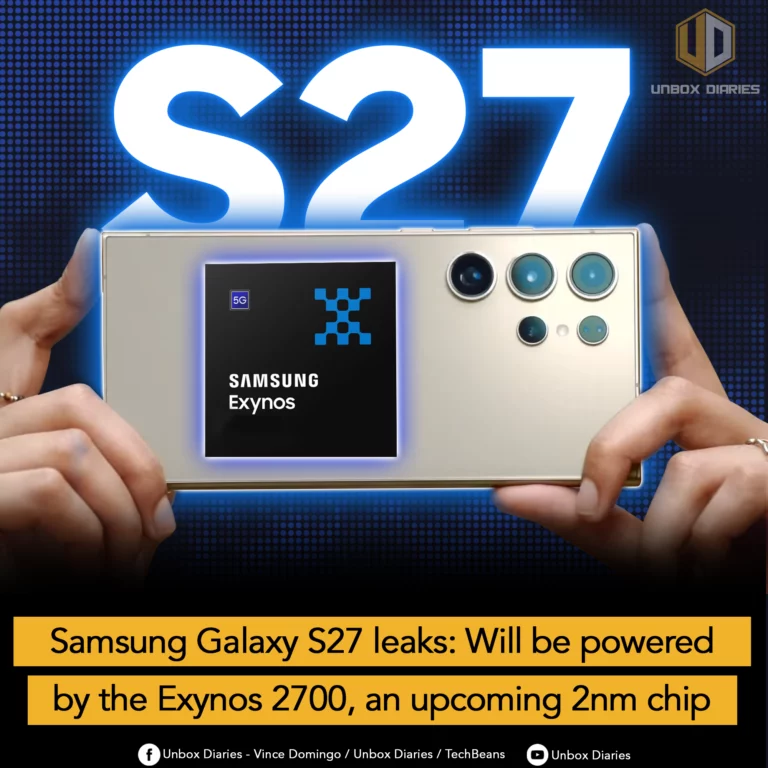
The roots of the Galaxy S27 Ultra chipset controversy trace back to the escalating costs of sub-3nm semiconductor fabrication. As lithography transitions from FinFET to Gate-All-Around (GAA) transistor architectures, research and development expenditures have soared. For Samsung, maintaining leadership in the ultra-premium mobile segment requires balancing raw processing muscle with stringent thermal envelopes and battery efficiency.
Historically, Samsung deployed a regional strategy—shipping Snapdragon-powered units to North American and select Asian markets while equipping European and domestic markets with its in-house Exynos processors. However, performance disparities in past generations created significant consumer backlash and complicated global marketing narratives. When preliminary rumors suggested that the upcoming Galaxy S27 generation might rely entirely on custom silicon, industry analysts questioned whether Samsung Foundry could achieve the necessary production volume and wafer yields to satisfy global demand.
The latest twist in the saga, highlighted recently by industry trackers and supply chain leaks, indicates a retreat from a rigid single-source approach. Facing intense competitive pressure from Apple’s A-series silicon and surging demand for localized large language model (LLM) processing, Samsung's executive board is reportedly weighing a hybrid model. This compromise aims to protect gross margins while ensuring uncompromised benchmark leadership for the Ultra tier.
| Chipset Iteration | Target Process Node | Primary Architecture Focus | Projected Risk Mitigation Status |
|---|---|---|---|
| Exynos 2700 (Proposed) | 2nm GAA (SF2) | Proprietary NPU acceleration & custom graphics | High risk; dependent on yield maturation |
| Snapdragon 8 Gen 6 / Elite Successor | Advanced TSMC N3P / 2nm | Heterogeneous computing & enterprise security | Low risk; proven manufacturing partnership |
| Legacy Exynos 2500 | 3nm GAA (SF3) | Thermal optimization & baseline efficiency | Stable; foundational testbed for GAA |
Industry & Market Implications: Winners, Losers, and Economic Realities
The ripple effects of Samsung’s chipset deliberations extend far beyond consumer electronics, touching global supply chain logistics, capital equipment manufacturers, and semiconductor foundry market share. The resolution of this saga will determine broader economic winners and losers across the high-tech landscape.
On one side, foundry giants like Taiwan Semiconductor Manufacturing Company (TSMC) stand to gain immense leverage if Samsung increases its outsourced allocation for the Galaxy S27 Ultra. A heavy reliance on external fabrication secures high-volume fab utilization rates for TSMC, reinforcing its dominant valuation multiples. Conversely, Samsung Foundry faces a crucial test of its long-term viability. Securing internal design wins for its cutting-edge 2nm process is essential to justify billions of dollars in infrastructure scalability and capital expenditure.
From a financial perspective, the Bill of Materials (BOM) for the Galaxy S27 Ultra will dictate profit margins for Samsung’s mobile division. Sourcing premium third-party silicon often compresses operating margins, forcing companies to pass costs onto enterprise buyers and consumers. Regulatory compliance requirements, particularly regarding data privacy and on-device AI processing, further complicate the equation. Devices must feature robust hardware-level security enclaves capable of meeting stringent enterprise governance standards, placing an even higher premium on advanced architectural design.
Frequently Asked Questions (People Also Ask)
Why is the Galaxy S27 Ultra chipset selection proving so controversial?
The controversy stems from the extreme cost and technical complexity of manufacturing chips on sub-3nm nodes. Samsung must balance the high performance demanded by power users and enterprise workloads against the manufacturing yields and financial viability of its in-house Exynos processors versus third-party alternatives like Qualcomm Snapdragon.
How will the chipset choice affect enterprise buyers and IT deployment?
If Samsung implements a regional split strategy, IT administrators managing global workforces may encounter performance and hardware fragmentation. This can impact software compatibility, battery life consistency, and overall enterprise ROI when deploying mobile device management (MDM) solutions across international branches.
What role does Samsung Foundry play in this ongoing saga?
Samsung Foundry is attempting to prove the commercial viability of its proprietary 2-nanometer Gate-All-Around (GAA) manufacturing process. Whether the Galaxy S27 Ultra adopts an Exynos chip built on this node serves as a bellwether for the foundry's ability to compete directly against industry leaders like TSMC for major external client contracts.
When will Samsung officially confirm the hardware specifications for the Galaxy S27 Ultra?
While industry leaks and supply chain tracking provide continuous real-time insights, Samsung typically finalizes its hardware bill of materials months ahead of its traditional unboxing and launch window, with official disclosures expected closer to the product's commercial release cycle.
Future Outlook: Milestones and Key Metrics to Watch
As the Galaxy S27 Ultra chipset saga continues to unfold, industry analysts and institutional investors will monitor several critical milestones. First, semiconductor yield reports coming out of both Samsung Foundry and rival fabrication plants will serve as the primary leading indicator for production feasibility.
Second, observers must track capital expenditure announcements and earnings call commentary from Samsung's semiconductor division. Management's guidance on 2nm adoption rates will signal whether internal design teams have successfully overcome thermal and efficiency bottlenecks. Finally, enterprise adoption trends and carrier partnerships will dictate how aggressively Samsung markets its processing architecture to B2B clients.
Ultimately, the Galaxy S27 Ultra is more than a flagship smartphone; it is a stress test for the global semiconductor supply chain. The strategic choices made in boardrooms today will reverberate across the mobile ecosystem for years to come, defining the boundaries of what is possible in mobile computing, enterprise security, and artificial intelligence integration.