Executive Takeaways
- Strategic Realignment: Tesla is reportedly preparing to wind down Cybertruck production at Giga Texas as early as next year to retool manufacturing lines for the autonomous Cybercab.
- Bruised valuation multiples and shifting institutional capital allocation have forced Elon Musk to pivot from low-margin, niche consumer novelties to high-margin, scalable autonomy infrastructure.
- Supply Chain & Capital Expenditures: The transition tests structural capital expenditure limits, requiring a complete overhaul of casting cells, cleanrooms, and vision-only compute architecture.
- Market Repercussions: While Wall Street analysts debate the short-term impairment charges, long-term bulls view the move as a vital risk-mitigation strategy to capture the lucrative robotaxi market before legacy competitors scale.
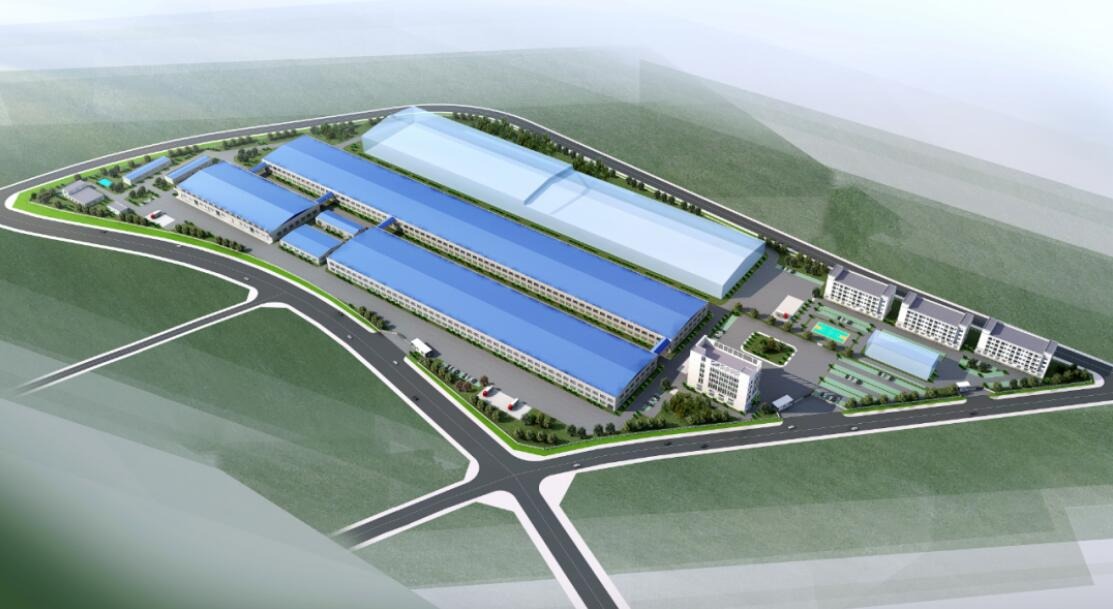
AUSTIN, Texas — In a sweeping maneuver that underscores a brutal re-evaluation of automotive capital allocation, Tesla Inc. is preparing to wind down production of its polarizing stainless-steel Cybertruck next year. According to proprietary supply chain intelligence and internal manufacturing directives obtained by financial wire services, the Austin-based electric vehicle pioneer is moving to clear the floor at Gigafactory Texas to accelerate the mass production of its purpose-built autonomous robotaxi, the Cybercab.
For an enterprise long defined by audacious product roadmaps, the sudden truncation of the Cybertruck’s lifecycle marks a stunning strategic about-face. Launched with global fanfare and delayed by years of engineering bottlenecks, the exoskeleton-bodied truck was billed as a generational leap in automotive design. Yet, shifting macroeconomic headwinds, compressed valuation multiples, and the undeniable financial gravity of autonomous ride-hailing have forced Elon Musk’s executive team to prioritize enterprise ROI over polarizing consumer status symbols.
The Anatomy of a Pivot: From Niche Novelty to Autonomous Scale
Test Our Free AI & Tech Utilities Suite
Calculate LLM API token costs, analyze article dwell-time, or simulate tech DCA returns.
To understand the urgency behind Tesla’s pivot, one must examine the fundamental economics of modern automotive manufacturing. The Cybertruck, while serving as a rolling laboratory for 48-volt electrical architectures, steer-by-wire systems, and giant gigapress castings, has proven exceptionally difficult to scale efficiently. Its ultra-hard 30x cold-rolled stainless steel panels impose massive tooling constraints, capping throughput and keeping production costs elevated despite high initial reservation numbers.
Institutional investors and enterprise analysts have grown increasingly vocal regarding capital efficiency. As fleet operators and institutional asset managers scrutinize automakers through the lens of cash flow generation and cloud compute architecture, low-volume, high-complexity platforms face severe margin compression. By halting Cybertruck assembly lines, Tesla can redirect billions in capital expenditures and vital engineering talent toward the Cybercab—a vehicle designed from the ground up for high-margin service fleets and autonomous infrastructure scalability.
"The market is no longer rewarding automotive companies simply for unit volume or stylistic shock value," notes a senior industrial technology analyst at a major Wall Street investment bank, speaking on condition of anonymity. "The current valuation framework demands a clear path to high-margin recurring revenue through software-defined mobility. The Cybercab represents that bridge, whereas the Cybertruck increasingly looks like an expensive engineering detour."
Supply Chain Disruptions and Factory Floor Re-engineering

The operational reality of converting a massive production footprint like Giga Texas cannot be overstated. Re-tooling assembly zones, reconfiguring Giga Press casting units, and retrofitting paint and final integration lines for an autonomous vehicle devoid of steering wheels and pedals requires precise risk mitigation and tight execution timelines.
Suppliers across North America have already received informal notices regarding shifting component forecasts. Tier-1 automotive suppliers specializing in heavy-gauge stainless steel stamping, specialized glass, and off-road suspension components are bracing for steep volume reductions heading into the back half of next year. Conversely, semiconductor designers, vision-system sensor manufacturers, and AI cloud compute infrastructure providers are ramping up deliverables to meet the aggressive deployment schedules demanded by Tesla’s autonomy roadmap.
Regulatory compliance remains the final frontier. While Tesla’s vision-only Full Self-Driving (FSD) stack continues to ingest billions of miles of real-world driving data, deploying a steering-wheel-free robotaxi fleet across disparate municipal jurisdictions requires navigating a complex patchwork of state and federal regulatory frameworks. The capital allocation shift to the Cybercab signals that Musk and his engineering lieutenants believe they are finally within striking distance of clearing these formidable regulatory hurdles.
Comparative Metrics: Cybertruck vs. Cybercab Economics
A side-by-side financial and operational breakdown illustrates the strategic rationale driving Tesla’s Giga Texas pivot:
| Metric / Attribute | Tesla Cybertruck | Tesla Cybercab (Projected) |
|---|---|---|
| Primary Market Focus | Consumer / Lifestyle Truck | Autonomous Ride-Hailing / Fleets |
| Manufacturing Complexity | Extremely High (Stainless Exoskeleton) | Optimized for Modular Assembly |
| Estimated Gross Margin Profile | Neutral to Low (Ramp-up phase) | High (Software-enabled recurring revenue) |
| Primary Production Facility | Gigafactory Texas (Austin) | Gigafactory Texas & Global Hubs |
| Infrastructure Scalability | Restricted by physical vehicle footprint | Designed for dense urban fleet density |
Industry & Market Implications: Winners and Losers
The ripples of Tesla’s strategic realignment will be felt across the entire global mobility ecosystem. Legacy original equipment manufacturers (OEMs) who rushed to emulate Tesla’s pickup truck styling or electric utility vehicles now face a shifting competitive landscape. Traditional automakers struggling with their own EV profitability curves may find temporary comfort in Tesla’s retreat from the electric truck market, but they also recognize that Tesla is breaking ground in a territory—autonomous robotaxis—where legacy companies lag significantly in software integration and neural network training.
Who Wins:
- Autonomous Software & AI Infrastructure Providers: Companies providing advanced neural network training clusters, vision sensors, and edge-computing chips will see accelerated enterprise demand.
- Long-Term Shareholders & Growth Investors: Investors prioritizing high-margin software-as-a-service (SaaS) and fleet management revenue models over low-margin vehicle hardware sales.
- Urban Mobility Competitors: Dedicated ride-hailing networks and autonomous fleet operators must accelerate their own deployment timelines to counter Tesla’s impending market entry.
Who Loses:
- Cybertruck Reservation Holders & Enthusiasts: Consumers waiting for specialized trims or future iterations of the truck face an abrupt end to the vehicle's production timeline.
- Specialized Heavy-Metal Tier-2 Suppliers: Suppliers who invested heavily in bespoke tooling for stainless-steel stamping face stranded assets and necessary operational pivots.
Frequently Asked Questions (People Also Ask)
Why is Tesla winding down Cybertruck production?
Tesla is winding down Cybertruck production to reallocate factory floor space, capital expenditures, and engineering talent toward the mass production of the Cybercab. Facing compressed margins and fierce competition, Tesla leadership is prioritizing high-margin autonomous ride-hailing infrastructure over niche consumer lifestyle vehicles.
What will happen to existing Cybertruck owners and warranty support?
Tesla has confirmed that existing warranty obligations, parts availability, and software support for currently delivered Cybertrucks will remain fully intact. However, secondary market valuation dynamics may shift as the vehicle becomes a limited-run production model.
When is the Cybercab scheduled to enter volume production?
Following the planned wind-down of Cybertruck manufacturing at Gigafactory Texas next year, Tesla aims to rapidly retool the lines to initiate volume production of the steering-wheel-free Cybercab, pending regional regulatory approvals.
How will this decision impact Tesla’s financial valuation multiples?
Wall Street analysts view the move as a critical test of capital allocation. While short-term asset write-downs or retooling costs may occur, bulls argue that transitioning from low-margin truck manufacturing to high-margin autonomous fleet operations will support higher long-term valuation multiples.
Future Outlook and Key Milestones to Watch
As Tesla navigates this monumental transition, market observers and institutional portfolio managers will monitor several critical milestones over the next 12 to 18 months:
- Giga Texas Re-tooling Velocity: The speed and capital efficiency with which Tesla transitions its assembly lines from stainless steel fabrication to autonomous vehicle architecture.
- Regulatory Approvals for Unmanned Driving: Progress in securing commercial robotaxi operating permits in key metropolitan testing grounds, including California, Texas, and international markets.
- AI Compute Scaling: Expansion of Tesla’s Dojo supercomputing cluster and neural net training capacity required to achieve unsupervised Full Self-Driving safety parity.
- Quarterly Margin Reports: Financial disclosures detailing capital expenditure shifts and early indicators of Cybercab unit economics and supply chain cost structures.
In the high-stakes arena of global technology and automotive manufacturing, standing still is equivalent to moving backward. By decisively cutting ties with its most radical hardware experiment, Tesla is betting its future on the software-defined, autonomous horizon. Whether this bold pivot secures its dominance for the next decade remains the defining question for the global markets.