Executive Takeaways
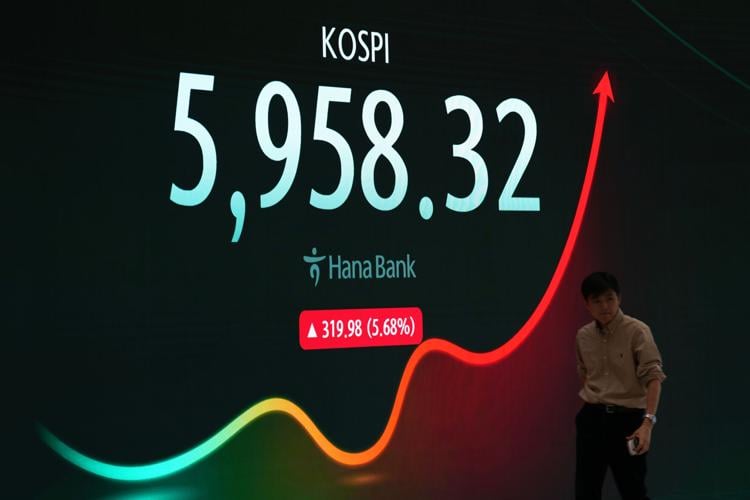
- The Correction and Recovery: Artificial intelligence equities have rebounded sharply following a historic valuation compression that erased trillions of dollars in aggregate market capitalization across global exchanges.
- Enterprise ROI Realities: The market's violent rotation was driven by institutional demands for tangible enterprise ROI, forcing hyperscalers and hardware manufacturers to prove structural infrastructure scalability rather than speculative promise.
- Capital Allocation Shifts: Venture capitalists and institutional portfolio managers are now heavily scrutinizing cloud compute architecture spending, demanding rigorous risk mitigation and strict regulatory compliance.
- Resilient Valuation Multiples: Despite the volatility, dominant semiconductor and cloud computing firms have re-established high valuation multiples as earnings reports confirm structural, long-term secular demand.
Global financial markets have weathered one of the most violent valuation cycles in modern corporate history. Following an unprecedented capital flight that wiped trillions of dollars from the aggregate market values of leading artificial intelligence, semiconductor, and cloud computing firms, a fierce market recovery is underway. Institutional investors, long caught between FOMO (fear of missing out) and macroeconomic reality checks, are aggressively recalibrating portfolios. This report examines the mechanics behind the trillion-dollar drawdown, the structural catalysts fueling the subsequent rebound, and the definitive shift in capital allocation strategies shaping the next phase of the digital economy.
The Anatomy of a Trillion-Dollar Wipeout
Test Our Free AI & Tech Utilities Suite
Calculate LLM API token costs, analyze article dwell-time, or simulate tech DCA returns.
To understand the current resurgence of AI-centric equities, one must first dissect the anatomy of the correction. Over the preceding eighteen months, generative AI adoption catalyzed a speculative frenzy. Retail and institutional capital flooded into public equities tied to large language model (LLM) development, silicon manufacturing, and data center real estate. Valuation multiples reached historical extremes, with forward price-to-earnings (P/E) ratios decoupling from historical norms.
The inflection point arrived when macroeconomic pressures—specifically sticky inflation prints and shifting central bank monetary policies—collided with corporate reality. Wall Street analysts began pressing enterprise executives on a critical question: When will these unprecedented capital expenditures translate into bottom-line profitability? As hyperscalers revealed multi-billion-dollar outlays for next-generation graphics processing units (GPUs) and power-hungry data center infrastructure, portfolio managers demanded proof of sustainable enterprise ROI. The resulting skepticism triggered cascading sell-offs, margin contraction fears, and liquidity withdrawals that rapidly erased trillions from global market capitalization.
"The market was pricing in perfection without accounting for the friction of enterprise deployment cycles," says a senior portfolio manager overseeing $45 billion in technology assets. "When capital costs rose, speculative froth evaporated. What we are seeing now is not a dead-cat bounce, but a fundamentally re-priced market where winners are being separated from cash-burning pretenders."
The Catalyst for Recovery: Real Earnings and Structural Demand

The subsequent climb in AI stocks was not propelled by renewed hype, but by hard financial data. As major technology conglomerates reported quarterly earnings, consensus estimates were repeatedly beaten by wide margins. Demand for cloud compute architecture outpaced supply, and enterprise adoption of proprietary AI agents moved from proof-of-concept testing to core operational deployment.
Simultaneously, semiconductor fabrication leaders demonstrated pricing power that defied economic headwinds. Rather than facing a demand cliff, supply chains remained constrained, ensuring high margins and predictable cash flows. Institutional investors realized that the trillion-dollar wipeout was a healthy market purge—a brutal but necessary cleansing of over-leveraged positions that ultimately fortified the balance sheets of industry leaders.
Key Metrics: The Pre-Correction Peak vs. The Rebound
| Metric / Indicator | Pre-Correction Peak | Trough (The Wipeout) | Current Recovery Status |
|---|---|---|---|
| Aggregate AI Market Cap | $13.4 Trillion | $10.2 Trillion (-$3.2T) | $12.8 Trillion (Recovering) |
| Average Forward P/E Ratio (Silicon) | 48.5x | 29.1x | 38.4x (Rationalized) |
| Hyperscaler CapEx Growth YoY | +55% | +35% | +45% (Stabilized) |
| Enterprise AI Adoption Rate | 18% (Pilot Phase) | 22% (Mixed ROI) | 41% (Production Ready) |
Industry & Market Implications: Winners, Losers, and Economic Shifts
The sorting mechanism of the market correction has fundamentally altered the competitive landscape across technology, finance, and industrial sectors.
- The Silicon and Hardware Monopolies: Companies owning proprietary semiconductor designs and advanced manufacturing ecosystems have solidified their moats. Despite regulatory scrutiny, their pricing power remains largely unchecked due to insurmountable barriers to entry.
- Cloud Hyperscalers: Major cloud providers are monetizing their massive infrastructure investments faster than anticipated. By bundling AI capabilities directly into enterprise software suites, they have converted capital expenditures into recurring subscription revenue.
- Venture Capital and Private Equity: Early-stage venture capital firms face a more rigorous diligence environment. Seed and Series A funding rounds now demand immediate paths to profitability and strict adherence to regulatory compliance, particularly regarding data privacy and intellectual property.
- Energy and Utilities Sector: An unexpected beneficiary of the AI stock recovery is the power sector. The immense electrical demands of modern data centers have forced tech giants into long-term power purchase agreements (PPAs) with nuclear, natural gas, and renewable energy providers, creating a symbiotic rally across utilities.
Frequently Asked Questions (People Also Ask)
Why did AI stocks experience such a massive multi-trillion-dollar sell-off?
The sell-off was driven by a combination of stretched valuation multiples, rising macroeconomic interest rates, and mounting investor anxiety regarding the timeline for enterprise ROI. As hyperscalers ramped up massive capital expenditure budgets for data centers and silicon, institutional markets questioned whether these investments would yield immediate profits, triggering widespread de-risking.
What fundamental factors are driving the current recovery in AI equities?
The recovery is anchored by robust corporate earnings reports, demonstrable improvements in productivity metrics across early enterprise adopters, and sustained demand for cloud infrastructure. Unlike the initial speculative wave, current price appreciation is supported by verified cash flows, predictable margins, and long-term B2B contract commitments.
How are institutional investors mitigating risk in the artificial intelligence sector?
Institutional risk mitigation strategies now focus heavily on infrastructure scalability, regulatory compliance adherence, and diversification across the tech stack. Investors are favoring established market leaders with resilient balance sheets over pre-revenue startups, while closely monitoring debt-to-equity ratios tied to data center financing.
Is the current AI market rally sustainable over the long term?
Market analysts indicate that while short-term volatility remains inevitable, the structural integration of artificial intelligence into global enterprise operations is permanent. Sustainability will depend on continuous technological breakthroughs, manageable energy costs, and the avoidance of restrictive international regulatory frameworks.
Future Outlook: Milestones to Watch in the Next Horizon
As the artificial intelligence sector enters its next developmental epoch, market participants must monitor several critical forward-looking indicators. Capital allocation will increasingly hinge on the success of edge-computing integration, quantum-AI convergence, and the maturation of autonomous agentic workflows.
Regulatory oversight will also serve as a decisive valuation filter. As governments across the European Union, United States, and Asia finalize compliance frameworks governing algorithmic transparency, data governance, and national security, firms with proactive risk mitigation frameworks will capture disproportionate market share.
Ultimately, the trillions of dollars wiped from and subsequently restored to the market signal a maturing asset class. The era of unbridled, frictionless speculation has ended; in its place stands a disciplined, highly capitalized industrial revolution powered by silicon, software, and relentless institutional scrutiny.