Executive Takeaways
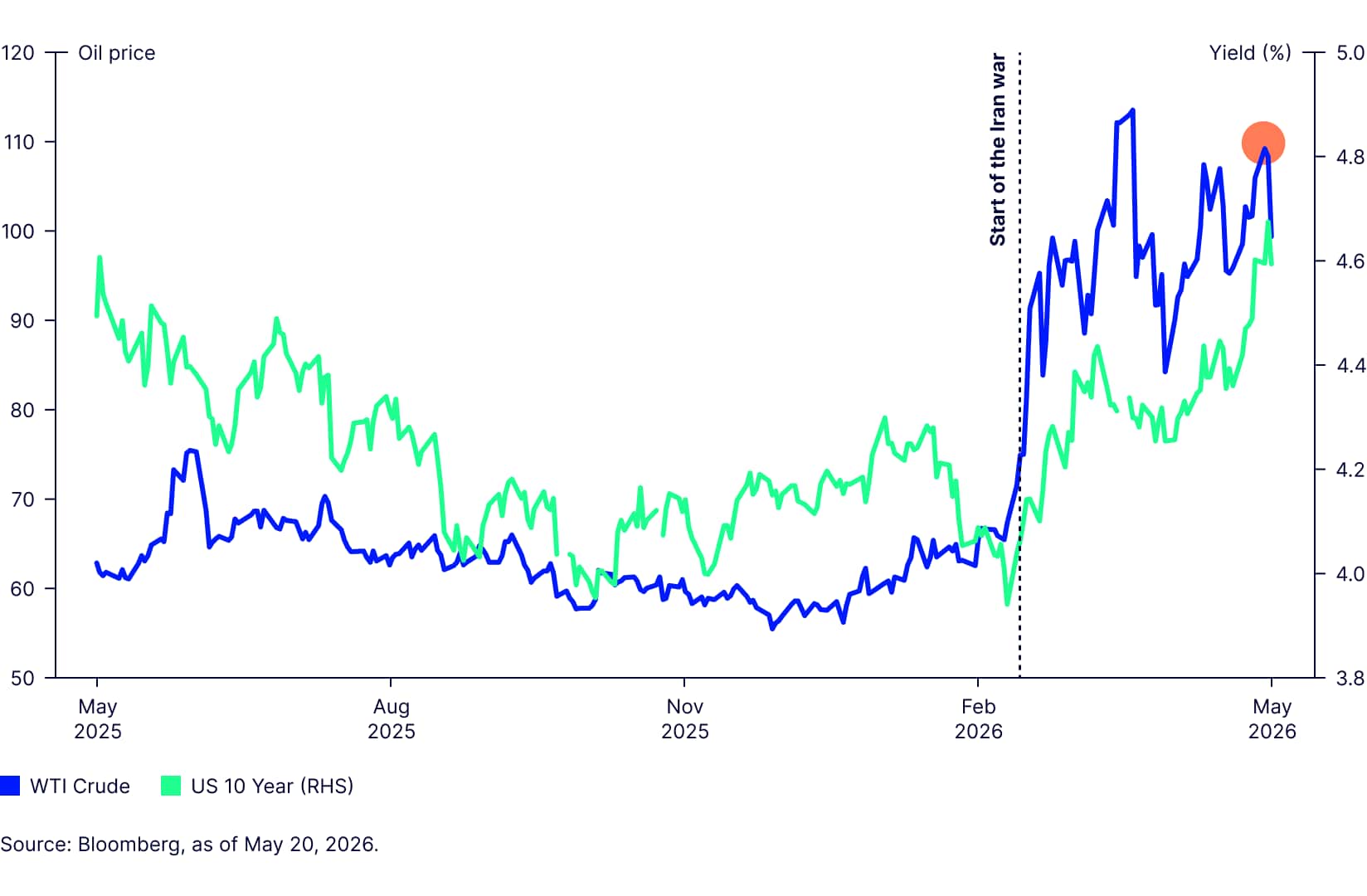
- Structural Shift, Not Temporary Volatility: Recent econometric insights from Brussels-based think tank Bruegel indicate that the global ascent of long-term bond yields is underpinned by robust shifts in investment demand and debt supply rather than institutional breakdown.
- Capital Allocation Paradigm Shift: Corporate treasurers, sovereign wealth funds, and private equity allocators must overhaul their enterprise ROI expectations as risk-free rates permanently recalibrate upward.
- Fiscal Pressures Collide with Green Transition: Massive sovereign debt issuance to fund infrastructure scalability, energy independence, and defense modernization is structurally soaking up global market liquidity.
- Valuation Multiples Under Siege: Equity markets face a rigorous re-pricing cycle as discounted cash flow (DCF) models adjust to higher terminal discount rates, altering portfolio risk mitigation strategies.
For more than a decade following the 2008 global financial crisis, global capital markets operated under a heavy blanket of financial repression. Ultra-loose monetary policy, quantitative easing (QE), and near-zero (and at times negative) policy rates lulled institutional investors into a false sense of perpetual cheap liquidity. Today, that era has definitively closed. Across global sovereign debt markets—from the US Treasury complex to German Bunds and Japanese Government Bonds—long-term interest rates have climbed to structural heights that are forcing a radical re-evaluation of asset pricing, corporate finance, and macroeconomic forecasting.
Yet, contrary to apocalyptic narratives dominating financial media regarding the institutional breakdown of monetary authorities or runaway sovereign insolvencies, rigorous empirical data tells a more nuanced, structural story. Groundbreaking research published by the Bruegel institute isolates the primary drivers behind this seismic shift: a decisive revival in global investment demand, structural changes in fiscal policy, and a fundamental realignment of sovereign debt supply. For corporate executives, asset managers, and institutional allocators, understanding these mechanics is no longer an academic exercise—it is an absolute prerequisite for survival and strategic execution in a high-rate environment.
The Anatomy of the Yield Surge: Moving Beyond Short-Term Noise
To grasp why long-term bond yields remain elevated, one must first dissect the term premium and the expectations hypothesis that govern fixed-income pricing. For years, the term premium—the extra compensation investors demand for holding long-term bonds instead of rolling over short-term bills—remained suppressed or even negative. This anomaly was largely manufactured by central bank balance sheet expansion, which absorbed massive quantities of duration risk.
As central banks pivot from quantitative easing to quantitative tightening (QT), and as inflation risks stabilize at higher bands than the pre-pandemic norm, the term premium has re-emerged. However, Bruegel’s analytical models emphasize that monetary policy tightening is only part of the equation. The more profound driver is the resurgence of the "real" economy. Investment demand has surged, propelled by generational structural transitions:
- The Industrial Re-shoring and Supply Chain Resiliency Wave: Multinational corporations are heavily investing in localized manufacturing, warehouse automation, and redundancy. This requires immense capital expenditure, financed via corporate bond issuance and commercial banking channels.
- The Green Energy Transition & Infrastructure Scalability: Transitioning global energy grids, building EV battery gigafactories, and upgrading civil infrastructure demand trillions of dollars in upfront capital allocation.
- Defense Modernization and Geopolitical Realignment: Sovereign states across Europe, Asia, and North America are dramatically expanding defense budgets, directly increasing sovereign debt issuance to fund advanced military procurement and technological integration.
This confluence of private and public sector borrowing needs has created a generational clash between capital supply and capital demand. As sovereign supply floods the primary dealer networks, institutional investors demand higher yields to clear the market, resetting the baseline for global borrowing costs.
Verified Data & Metrics Breakdown
Evaluating the scale of this structural reset requires examining the quantitative shifts across key macroeconomic and fixed-income indicators. The table below outlines the core metrics driving the current global rate environment compared to historical baselines.
| Metric / Indicator | Pre-Pandemic Era (2015-2019) | Current Market Reality | Primary Economic Driver |
|---|---|---|---|
| Global Sovereign Debt Issuance | Moderate, accommodative deficits | Record peacetime deficits | Fiscal expansion, defense, and green subsidies |
| Term Premium (10-Yr US Treasury) | Deeply negative to neutral (~ -0.30%) | Positive and rising (~ +0.30% to +0.50%) | Quantitative tightening, duration risk pricing |
| Corporate Capital Expenditure Growth | Subdued (focused on share buybacks) | Accelerated (Capex-heavy cycles) | Supply chain localization, AI & cloud compute infrastructure |
| Central Bank Balance Sheets | Expanding via asset purchases | Contracting via active roll-off (QT) | Inflation targeting, balance sheet normalization |
Industry & Market Implications: Winners and Losers in a High-Yield Regime
The macroeconomic transition from financial repression to authentic price discovery in debt markets creates stark dichotomies across global industries. Asset allocators can no longer rely on passive, index-driven growth strategies that thrived when money was virtually free.
The Winners: Who Thrives in This Environment?
- Net-Interest-Margin Banks and Private Credit: Financial institutions with strong balance sheets, strict regulatory compliance frameworks, and robust liquidity management are capturing lucrative spreads. Private credit funds stepping into the vacuum left by traditional banking retrenchment are securing highly favorable risk-adjusted returns.
- Cash-Rich Balance Sheets: Enterprises with minimal leverage and substantial cash reserves are generating significant yield on short-term liquid assets, turning treasury operations into profit centers.
- Infrastructure & Energy Asset Owners: Long-term assets tied to inflation-linked cash flows or critical supply chains retain immense pricing power, successfully passing on input costs.
The Losers: Who Faces Structural Headwinds?
- High-Beta, Unprofitable Tech and Growth Equities: Companies relying on long-dated future cash flows face severe valuation multiple compression as discount rates rise. Valuation metrics are returning to historical fundamentals.
- Highly Leveraged Real Estate and Private Equity: Commercial real estate (CRE) portfolios and LBO-heavy private equity funds are experiencing severe refinancing walls. Legacy loans maturing at low rates must now be refinanced at double or triple the cost, pressuring equity cushions.
- Fiscal-Deficit Emerging Markets: Developing economies with high dollar-denominated debt burdens face imported inflation and severe capital flight as domestic capital seeks safe, high-yielding developed market sovereign debt.
Frequently Asked Questions (People Also Ask)
What is the primary catalyst behind the global rise in long-term interest rates?
According to comprehensive economic analysis from institutions like Bruegel, the rise in long-term yields is primarily driven by an organic increase in global investment demand—such as infrastructure spending, green energy transitions, and supply chain re-shoring—combined with structural expansions in sovereign debt supply and the normalization of central bank balance sheets.
Are rising bond yields a sign of imminent institutional or financial collapse?
No. While market volatility causes acute stress in specific over-leveraged sectors (such as commercial real estate or highly indebted sovereigns), current research indicates that the yield rise reflects a healthy transition back to normal market pricing of capital, rather than a systemic breakdown of monetary or fiscal institutions.
How do higher long-term interest rates impact corporate equity valuations?
Higher risk-free rates increase the discount rate used in discounted cash flow (DCF) models. This naturally reduces the present value of future corporate earnings, leading to valuation multiple compression, particularly for growth and technology companies whose earnings are heavily weighted far into the future.
What role does quantitative tightening (QT) play in sustaining high yields?
Quantitative tightening forces central banks to stop reinvesting proceeds from maturing bonds or to actively sell assets. This removes a major price-insensitive buyer from the market, requiring private investors to absorb greater duration risk, which directly elevates the term premium component of long-term bond yields.
Future Outlook: Strategic Milestones to Watch
As global financial markets navigate this permanent structural regime change, executive leadership teams and investment committees must monitor specific leading indicators to anticipate the next phase of the economic cycle:
- Sovereign Fiscal Trajectories: Watch legislative budget battles in G7 economies. Credible fiscal consolidation plans could compress term premiums, while runaway deficits will keep upward pressure on long-end yields.
- Central Bank Terminal Rates and Balance Sheet Velocity: Track the speed at which central banks conclude quantitative tightening and whether structural inflation prints settle around 2.5% to 3% rather than the pre-pandemic 2% target.
- Corporate Refinancing Cliffs: Monitor corporate debt maturity schedules. The resilience of high-yield credit spreads through major refinancing waves will test the underlying health of global enterprise balance sheets.
Ultimately, the global rise in long-term interest rates is not a temporary market aberration. It is the restoration of market discipline, forcing capital allocation decisions to be weighed against the true economic scarcity of capital. Those enterprises and investors that adapt their operational models, shore up balance sheets, and align with this high-rate reality will emerge as the dominant market leaders of the next economic cycle.


![Cohere vs OpenAI vs Gemini: Canada’s $79 Seat Gap [2026]](https://tech-insider.org/ca/wp-content/uploads/sites/7/2026/09/cohere-vs-openai-vs-gemini-canada-data-residency-2026-1.webp)