Executive Takeaways
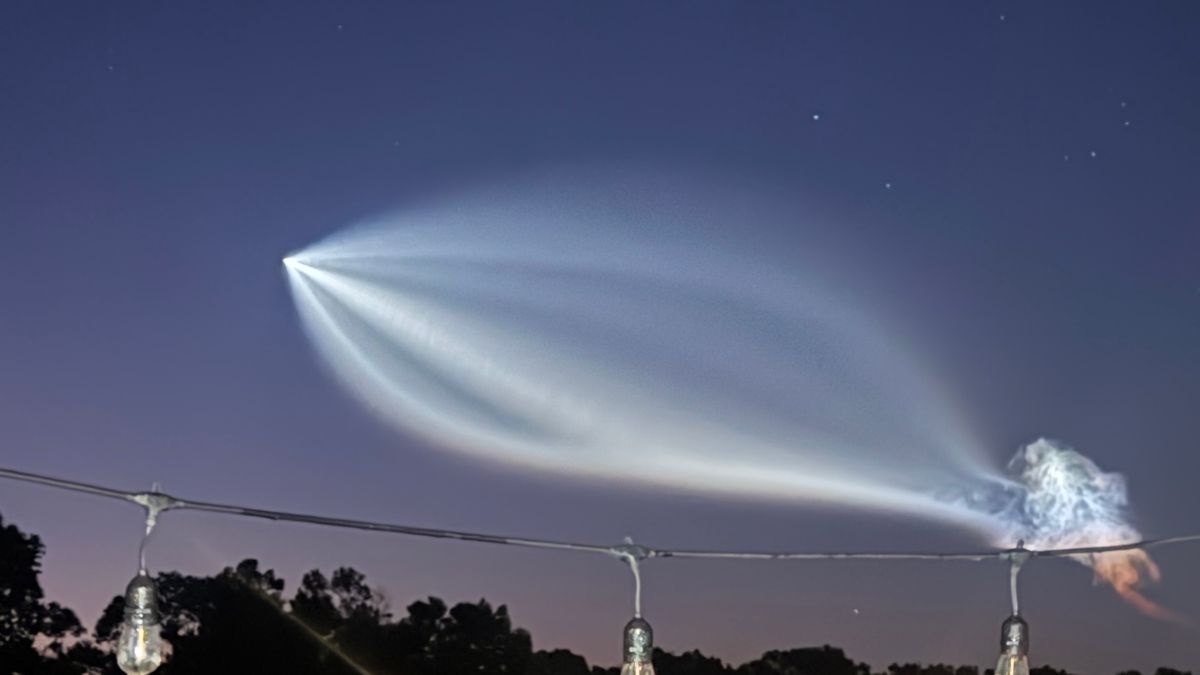
- The East Coast Phenomenon: Early Tuesday morning, thousands of residents across North Carolina witnessed a brilliant, glowing atmospheric trail—a high-altitude "twilight effect" generated by a SpaceX Falcon 9 liftoff from Florida tracking along the Eastern Seaboard.
- Orbital Mechanics Meets Atmospheric Physics: The spectacle occurred as sunlight illuminated the rocket’s expanding unburned exhaust plume in the upper mesosphere, while ground observers remained beneath the pre-dawn terminator line in darkness.
- Commercial & Valuation Implications: The launch underscores SpaceX’s aggressive launch cadence, accelerating Starlink’s path to multi-billion-dollar enterprise cash flows, disrupting legacy telecom capex models, and expanding LEO (Low Earth Orbit) enterprise infrastructure.
- Regulatory and Defense Dynamics: With flight frequencies reaching unprecedented levels, FAA airspace integration, commercial spectrum allocations, and dual-use defense initiatives (Starshield) face mounting operational scrutiny.
At 05:42 EST on Tuesday, the predawn sky across North Carolina—from the coastal barrier islands of the Outer Banks to the Piedmont and the Blue Ridge Mountains—lit up with an incandescent, translucent nebula. Observers from Charlotte to Raleigh reported an eerie, expanding cone of sapphire-and-amber light cutting through the celestial background. Within minutes, regional emergency dispatchers and social media platforms were flooded with queries speculating on everything from re-entering orbital debris to military hypersonic tests.
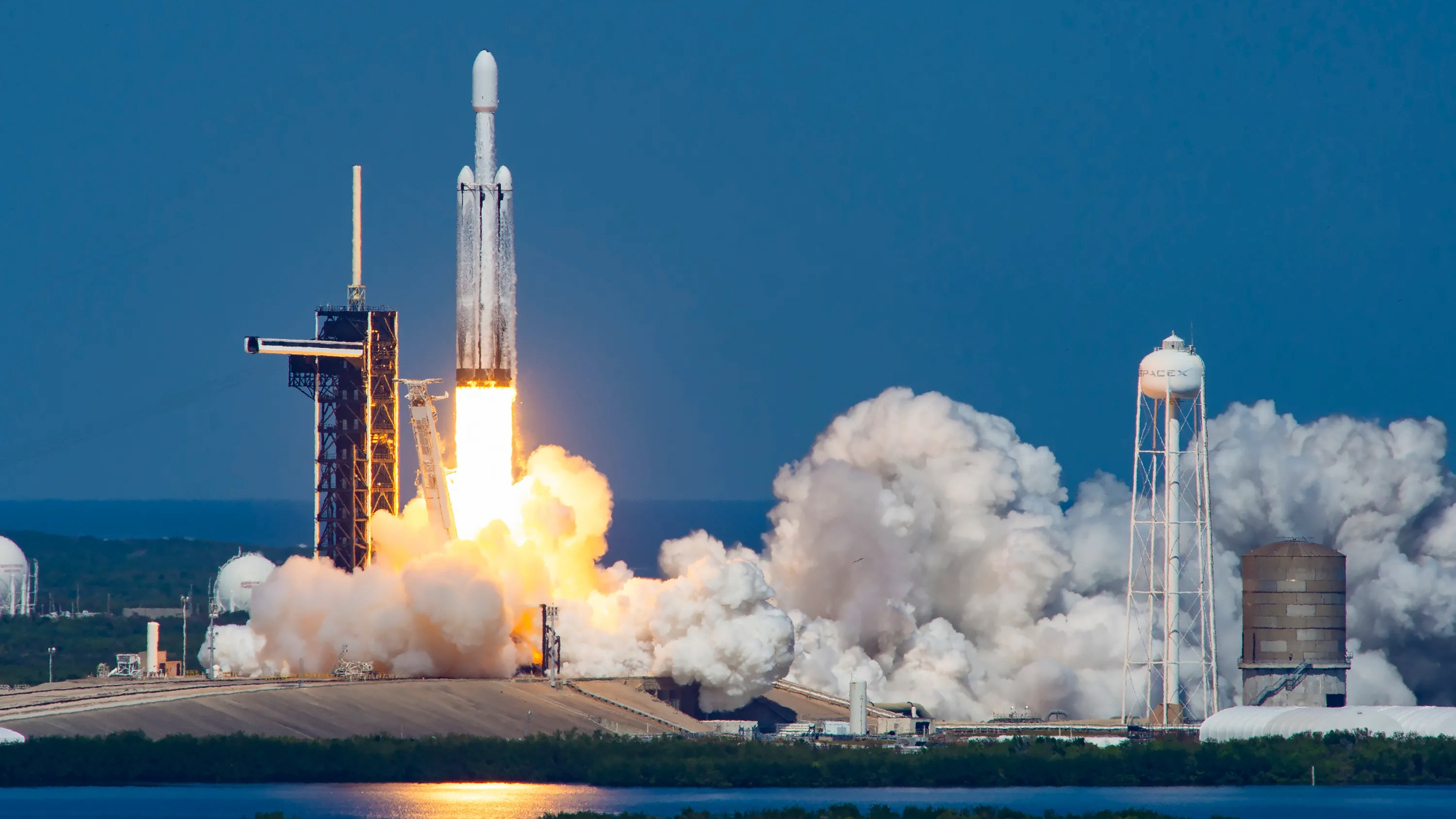
The reality was an exercise in industrial-scale aerospace logistics: another Falcon 9 vehicle lifting off from Space Launch Complex 40 (SLC-40) at Cape Canaveral Space Force Station, Florida. As the vehicle executed its standard northeast trajectory parallel to the Atlantic coastline, its Merlin 1D vacuum engine carved a routine commercial corridor into low Earth orbit. However, unique solar-geomagnetic conditions transformed this standard satellite deployment into an East Coast spectacle—and a stark visual reminder of how deeply commercial orbital supply chains have penetrated everyday airspace.
The Physics of the "Space Jellyfish": Twilight Scattering at 80 Kilometers
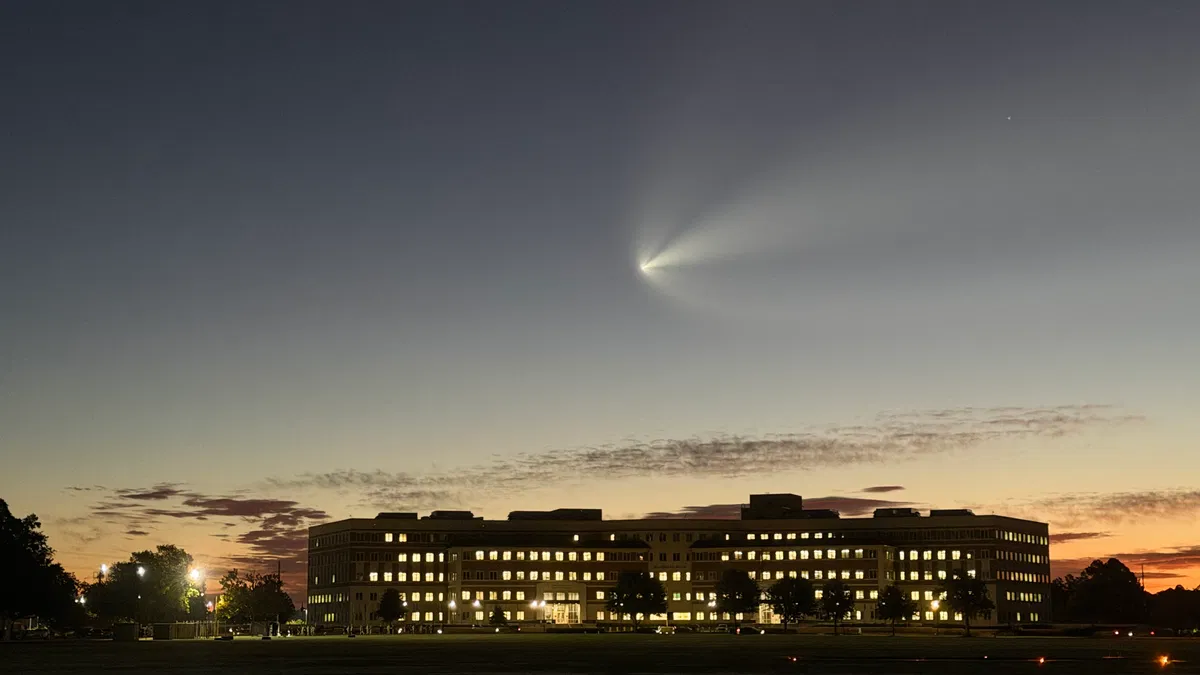
The luminous phenomenon observed across the Carolinas is known in aerospace circles as the twilight effect, colloquially termed the "space jellyfish." While ground stations in North Carolina were shrouded in astronomical twilight—well beneath the Earth’s shadow line—the Falcon 9 second stage ascended through 80 to 120 kilometers of altitude, crossing the day-night terminator line into direct sunlight.
At this extreme altitude, ambient atmospheric pressure drops to near-vacuum conditions. In a vacuum, rocket engine exhaust gases—composed primarily of water vapor, carbon dioxide, and microscopic carbon particles from the combustion of rocket-grade kerosene (RP-1) and liquid oxygen (LOX)—are no longer compressed by atmospheric backpressure. Instead, the exhaust expands radially at hyper-velocity, creating an expansive plume thousands of times larger than the rocket body itself.
When high-altitude sunlight strikes this frozen, crystalizing plume of water and carbon dioxide, Rayleigh scattering and Mie scattering occur simultaneously. Shorter blue and green wavelengths are scattered outward to observers on the dark surface below, while residual unburnt hydrocarbons cast amber and crimson hues near the nozzle. As the cold-gas nitrogen reaction control system (RCS) thrusters fire to orient the upper stage, they release distinct, pulsed rings of light that drift through the upper mesosphere, creating the ephemeral, bio-luminescent appearance that startled Carolina commuters.
Industrial Velocity: SpaceX’s Relentless Manifest Schedule
Behind the celestial aesthetics lies a manufacturing and launch tempo that has fundamentally reset enterprise expectations around space infrastructure scalability. What was once an extraordinary national event requiring months of pad turnaround has been reduced to an optimized, assembly-line process designed to maximize booster asset utilization.
SpaceX’s internal target of exceeding 140 to 150 orbital missions within a single calendar year relies almost entirely on the rapid reusability of its Falcon 9 fleet. The booster powering Tuesday morning's mission completed its descent burns and touched down autonomously on an autonomous spaceport drone ship stationed hundreds of miles offshore in the Atlantic Ocean, ready for towing, refurbishment, and redeployment inside a compressed window.
This operational velocity directly feeds the company's capital allocation strategy. By amortizing capital expenditures across dozens of re-flights per booster airframe, SpaceX has driven the marginal cost of a Falcon 9 launch down to an estimated $15 million to $28 million internally, while maintaining commercial market pricing at approximately $67 million to $70 million. For internal payloads—primarily Starlink broadband satellites—the operational cost per kilogram to low Earth orbit has dropped below thresholds previously thought impossible by legacy aerospace contractors.
Data and Operational Metrics: Falcon 9 Flight Profile vs. Legacy Architecture
| Operational Metric | Falcon 9 (Current Profile) | Legacy Medium-Heavy Launchers | Strategic Significance |
|---|---|---|---|
| Average Pad Turnaround | 3 to 5 Days (SLC-40 / LC-39A) | 45 to 90 Days | Maximizes capital efficiency and asset utilization rates. |
| Estimated Cost per Kg to LEO | ~$1,500 – $2,200 | $10,000 – $20,000+ | Compresses customer launch budgets; widens margin moats. |
| First-Stage Reusability | Up to 20+ flights per booster | 0 (Expendable architecture) | Reduces incremental depreciation; preserves critical cash flow. |
| Trajectory to 53° Inclination | Northeast corridor off NC Coast | Equatorial / Polar dedicated | Explains high visibility across Southeast US during twilight. |
| Primary Payload Capacity | ~22,800 kg (Expendable) / ~17,500 kg (Reused) | ~10,000 – ~21,000 kg | Enables rapid mass deployment of mega-constellations. |
Capital Markets, Enterprise Disruption, and the LEO Moat
The routine presence of rocket exhaust trails along the US Eastern Seaboard is the visible byproduct of a high-stakes commercial land grab in orbital telecommunications. The payload carried past North Carolina on Tuesday morning expands the Starlink megaconstellation, which now counts over 6,000 operational satellites in orbit. This network is rapidly shifting from a consumer broadband experiment to an enterprise-grade communications layer with profound geopolitical and financial implications.
From an enterprise valuation standpoint, Starlink represents the lion’s share of SpaceX’s private-market enterprise value, recently pegged north of $180 billion. Legacy satellite operators—reliant on geostationary (GEO) satellites orbiting at 36,000 kilometers—are seeing their enterprise pricing power crater. Low latency (sub-30ms) provided by LEO architectures has enabled SpaceX to capture high-margin enterprise accounts across the maritime, aviation, and defense sectors:
- Aviation and Maritime Disruption: Airlines and cruise conglomerates are migrating away from legacy providers, signing multi-year fleet contracts with Starlink to provide uninterrupted in-flight gigabit connectivity.
- Defense & Government Procurement: The Starshield division—built directly on the back of commercial Falcon 9 launches—has become a preferred pipeline for Pentagon funding, capturing classified contracts for resilient military orbital communications.
- Direct-to-Cell Telecommunications: By deploying updated satellites with direct-to-cell silicon payloads, SpaceX and enterprise telecom partners are preparing to eliminate terrestrial dead zones, bypassing billions of dollars in planned ground-based tower capex.
Traditional telecom carriers and space incumbents are forced to rethink balance sheet strategies. Launching proprietary constellations now requires matching SpaceX's launch cadence—a near-impossibility when SpaceX controls the lion's share of western launch capacity. Alternative heavy-lift vehicles, such as United Launch Alliance’s Vulcan Centaur and Arianespace’s Ariane 6, are only beginning to scale operational manifests, leaving SpaceX in an effective near-monopoly position for orbital transport across North America and Europe.
Regulatory Scrutiny and Airspace Bottlenecks
While the view from North Carolina offered breathtaking social media imagery, the frequency of these launches raises structural challenges across domestic infrastructure. The Federal Aviation Administration (FAA) must coordinate rolling airspace closures across the Atlantic coast, rerouting commercial passenger airliners to accommodate orbital launch trajectories. As launch cadence accelerates toward three missions per week, the economic cost of rerouted flights, fuel burn, and air traffic control friction continues to mount for commercial carriers.
Furthermore, the environmental and scientific communities are intensifying scrutiny. Orbital astrophysicists continue to publish concerns regarding the visual and electromagnetic pollution caused by mega-constellations, which interfere with ground-based optical and radio telescopes. In the upper atmosphere, atmospheric scientists are beginning to analyze the long-term cumulative effects of aluminum oxide and soot deposition in the stratosphere, demanding more granular regulatory oversight before the FAA issues expanded launch licensing caps.
Frequently Asked Questions (People Also Ask)
Why was the SpaceX launch visible in North Carolina if it launched from Florida?
Falcon 9 launches heading toward low Earth orbit often fly a northeast trajectory parallel to the US East Coast to reach mid-to-high inclination orbital planes. By the time the rocket travels offshore past Georgia and the Carolinas, it has reached an altitude of 60 to 100 miles (100 to 160 km). Because of the curvature of the Earth and the vehicle's extreme altitude, the rocket is visible for hundreds of miles along the seaboard, provided skies are clear.
What causes the glowing "jellyfish" effect in the sky during early morning launches?
The "space jellyfish" is an optical phenomenon known as the twilight effect. It occurs exclusively during dawn or dusk launches. While the launch site and observers on the ground are in darkness, the rocket ascends into the high mesosphere and thermosphere, where it catches direct, unshaded sunlight. The vacuum of space causes the rocket's exhaust gases to rapidly expand into a vast plume; the sunlight illuminates these high-altitude gases and ice crystals against the dark sky below.
Is the exhaust cloud toxic to residents on the ground?
No. Falcon 9’s first and second stages use rocket-grade kerosene (RP-1) and liquid oxygen (LOX). The primary exhaust byproducts are carbon dioxide, water vapor, and minor amounts of carbon (soot). By the time the visible cloud forms over North Carolina, the rocket is dozens of miles above the surface in the upper atmosphere. The gases freeze into microscopic ice crystals and disperse harmlessly throughout the upper mesosphere, posing no chemical threat to populations on the ground.
Where can I track future rocket launches visible from the US East Coast?
Launches are scheduled and tracked via platforms like Spaceflight Now, the SpaceX official mission manifest, and specialized apps such as Next Spaceflight. East Coast visibility depends on clear weather, launch azimuth (northeast launches are the most visible from the Carolinas), and launch timing (missions occurring 30 to 60 minutes before dawn or after dusk yield the most dramatic twilight effects).
Future Outlook: The Industrialization of Near-Earth Space
The dawn display over North Carolina was a dazzling anomaly for early risers, but it represents the new operational baseline for the global aerospace economy. Looking ahead to the next 24 to 36 months, this operational frequency will only intensify.
SpaceX is accelerating development and operational testing of its next-generation Starship launch system at Starbase, Texas, and preparing the historic Launch Complex 39A at Kennedy Space Center for future Starship operations. Starship is designed to deliver more than 100 metric tons of payload to orbit fully reusably, aiming to reduce per-kilogram launch costs by another order of magnitude. If successful, the capacity bottleneck that has constrained the orbital economy for six decades will effectively evaporate.
For investors, enterprise stakeholders, and consumers watching the sky from the Carolina coast, the luminous plume was more than a passing atmospheric event. It was the physical signature of an orbital supply chain operating at peak industrial volume—a visible signpost that the commercialization of low Earth orbit has transitioned from speculative science fiction into an indispensable component of 21st-century global infrastructure.