Executive Takeaways
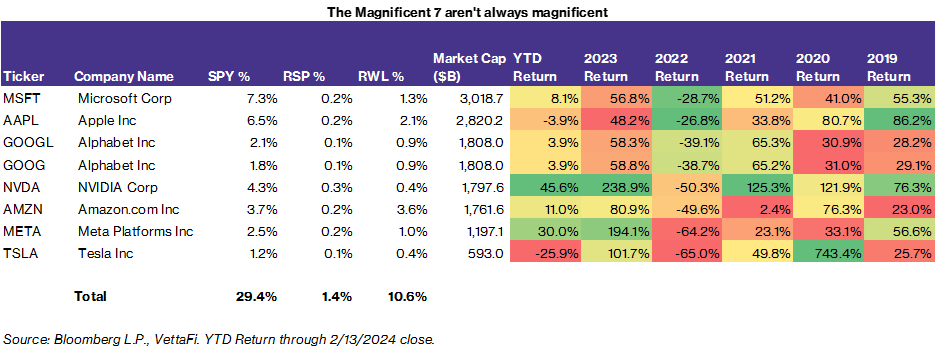
- Concentration Risk Hits Record Highs: The Magnificent Seven cohort now commands an unprecedented share of major benchmark indices, forcing passive and active portfolio managers to rethink conventional asset allocation and risk mitigation strategies.
- Analyst Sentiment Shifts: Recent broker rating breakdowns from platforms like Zacks and TradingView reveal a subtle cooling in consensus—shifting from over 80% "Strong Buy" metrics to more measured allocations as valuation multiples stretch.
- The ETF Infrastructure Boom: Specialized thematic ETFs have emerged as the primary vehicle for retail and institutional capital influx, driving massive liquidity into cloud compute architecture and generative AI infrastructure.
- Regulatory and Margin Pressures: Antitrust scrutiny, rising capital expenditure requirements, and macroeconomic headwinds are forcing institutional investors to scrutinize the enterprise ROI of the underlying mega-cap equities.
NEW YORK, LONDON, & FRANKFURT — In the high-stakes theater of global capital allocation, few phenomena have matched the gravitational pull of the "Magnificent Seven." Comprising Microsoft, Apple, NVIDIA, Alphabet, Amazon, Meta Platforms, and Tesla, this elite echelon of mega-cap technology titans has redefined modern portfolio theory. Over the past twenty-four months, these seven enterprises have transformed from high-growth disruptors into the foundational bedrock of global market liquidity.
Yet, beneath the surface of record-breaking index highs and relentless inflows, a profound structural shift is underway. According to fresh data feeds and analytics tools integrated across platforms like TradingView and Zacks Thematic, institutional sentiment is undergoing a rigorous recalibration. As brokerage recommendations fluctuate and valuation multiples face unprecedented scrutiny, understanding the mechanics of Magnificent Seven Exchange-Traded Funds (ETFs) has become the defining mandate for chief investment officers, wealth managers, and sophisticated retail investors alike.
The Structural Evolution of Mega-Cap Concentration
To understand the current obsession with Magnificent Seven ETFs, one must examine the fundamental evolution of market capitalization-weighted indices. Historically, broad-market funds like the S&P 500 provided diversified exposure across cyclical, financial, and industrial sectors. However, the exponential scaling of cloud compute architecture, artificial intelligence monetization, and digital advertising dominance has warped this equilibrium.
As these seven corporations accumulated trillions of dollars in market value, they effectively ceased acting as mere equities; they began functioning as macroeconomic barometers. Traditional index funds inadvertently transformed into concentrated bets on Big Tech. Recognizing this risk—and the corresponding public demand for targeted exposure—asset managers deployed specialized thematic ETFs designed to isolate, package, and amplify Magnificent Seven performance.
These specialized financial instruments offer distinct advantages, including streamlined portfolio rebalancing, targeted thematic exposure, and lower transaction costs compared to buying individual fractional shares. Yet, they also import concentrated systemic risk directly into retirement portfolios and institutional balance sheets. When macroeconomic shocks hit semiconductor supply chains or regulatory bodies target monopolistic practices, Magnificent Seven ETFs experience amplified volatility.
Analyst Sentiment and Brokerage Dynamics: A Shift in Consensus
Recent data highlights a fascinating psychological and analytical pivot among Wall Street sell-side analysts. Just a month prior, consensus broker ratings across major analytical terminals showed an overwhelming bullish skew, with "Strong Buy" recommendations commanding upwards of 80.95% of total ratings, while standard "Buy" recommendations hovered near 9.52%.
However, recent updates tracked via Zacks Thematic tools and TradingView data feeds indicate a tightening of sentiment. Recent metrics reveal "Strong Buy" allocations adjusting closer to 60%, with a noticeable migration toward "Hold" ratings. This downward revision does not signal an impending structural collapse of Big Tech; rather, it reflects Wall Street's acute awareness of stretched valuation multiples, surging capital expenditure requirements, and the cyclical nature of hardware and advertising spend.
| Metric / Indicator | Historical Baseline (Prior Month) | Current Reading (Latest Data) | Strategic Implication |
|---|---|---|---|
| "Strong Buy" Broker Ratio | 80.95% | 60.00% | Institutional caution regarding near-term valuation ceilings. |
| Index Concentration Weight | 28.5% (S&P 500) | 31.2% (S&P 500) | Heightened systemic correlation across passive vehicles. |
| AI Infrastructure CapEx | Accelerating | Peak Scaling Phase | Pressure on free cash flow metrics and enterprise ROI. |
| ETF Inflow Momentum | Robust Retail Surge | Institutional Hedging Active | Shift toward options-overlay and covered-call Magnificent Seven ETFs. |
As illustrated in the data breakdown above, the narrative surrounding Magnificent Seven investing has matured. Investors are moving past unbridled enthusiasm, demanding tangible proof of enterprise ROI from tens of billions of dollars poured into generative AI data centers, custom silicon development, and next-generation cloud infrastructure.
Industry and Market Implications: Winners, Losers, and Economic Ripples
The institutional embrace of Magnificent Seven ETFs creates profound ripple effects throughout the global economy. On the winning side of the ledger are specialized semiconductor foundries, high-voltage electrical grid equipment manufacturers, and hyper-scale data center real estate investment trusts (REITs). These entities ride the coattails of Big Tech’s relentless capital expenditure cycle.
Conversely, traditional sectors—including regional banking, brick-and-mortar retail, and traditional energy—face a distinct disadvantage regarding capital attraction. When passive capital flows disproportionately into mega-cap tech ETFs, the cost of capital for smaller, non-tech enterprises rises, creating a two-speed economic reality.
Furthermore, regulatory compliance has emerged as a critical variable. Antitrust investigations spanning the European Union, the United States Department of Justice, and the Federal Trade Commission pose structural threats to the monopolistic moats of several Magnificent Seven members. Portfolio managers utilizing thematic ETFs must weigh these regulatory headwinds against the undeniable earnings power of these corporate giants.
Frequently Asked Questions (People Also Ask)
What is a Magnificent Seven ETF, and how does it function?
A Magnificent Seven ETF is a specialized exchange-traded fund that concentrates its holdings exclusively—or primarily—on the seven dominant mega-cap technology stocks: Microsoft, Apple, NVIDIA, Alphabet, Amazon, Meta, and Tesla. These funds allow investors to gain targeted exposure to these high-performing equities through a single ticker symbol, automating rebalancing and reducing the capital required to purchase fractional shares individually.
How do broker rating breakdowns impact Magnificent Seven ETF performance?
Broker rating breakdowns compiled by analytical platforms like Zacks and TradingView aggregate analyst revisions (Strong Buy, Buy, Hold, Sell). When institutional analysts shift ratings from "Strong Buy" to "Hold" due to valuation concerns, it can trigger localized sell-offs, institutional rebalancing, and increased volatility within specialized thematic ETFs.
What are the primary risks associated with investing in concentrated tech ETFs?
The primary risks include extreme concentration risk, heightened sensitivity to interest rate fluctuations, regulatory and antitrust scrutiny, and high valuation multiples. Because these seven stocks dictate a massive percentage of major market indices, any fundamental correction in Big Tech can disproportionately impair the entire ETF portfolio.
Are Magnificent Seven ETFs suitable for long-term retirement portfolios?
While they offer exceptional growth potential and exposure to foundational technological innovations like artificial intelligence and cloud computing, financial advisors generally recommend using them as a tactical growth allocation rather than a core foundational holding, ensuring proper diversification across cyclical and defensive sectors.
Future Outlook and Strategic Milestones to Watch
Looking ahead, the trajectory of Magnificent Seven ETF investing will hinge on three critical macroeconomic and technological catalysts. First, investors must monitor corporate earnings reports for clear evidence that massive capital investments in artificial intelligence are translating into sustainable net income growth and expanding profit margins.
Second, global central bank monetary policy—particularly Federal Reserve interest rate decisions—will dictate the discount rates applied to future cash flows, directly influencing the valuation multiples of high-growth mega-cap equities. Finally, regulatory rulings regarding data privacy, artificial intelligence copyright frameworks, and antitrust breakups will test the resilience of these corporate empires.
For sophisticated allocators, navigating this landscape requires constant vigilance, rigorous data analysis utilizing institutional terminals like TradingView and Zacks, and a clear-eyed assessment of risk versus reward. The era of effortless, indiscriminate gains across Big Tech has yielded to a more discerning market environment—one where precision, timing, and fundamental valuation mastery will separate elite investors from the crowd.