Executive Takeaways
- The Form Factor Paradox: While consumer focus groups consistently demand compact mobile devices, global OEMs have systematically phased out sub-6-inch displays due to margin compression and component integration limits.
- Venture Capital & Capital Allocation: The 'Enough Phone' enters a high-risk consumer hardware arena, testing whether niche market liquidity and premium valuation multiples can justify independent manufacturing overheads.
- Infrastructure Scalability: Unlike legacy conglomerates, boutique hardware startups must navigate severe supply chain vulnerabilities, component allocation limits, and tight capital constraints to achieve operating profitability.
- Enterprise & Consumer ROI: Digital detox trends and enterprise risk mitigation regarding employee distraction are creating an adjacent, high-margin B2B demand vector for minimalist communication tools.
For nearly a decade, the global smartphone industry has marched to the beat of an unyielding design drum: bigger is better. As tech conglomerates optimized devices for immersive media consumption, multi-window productivity, and expansive battery cells, the physical footprint of the modern pocket computer swelled. Today, finding a flagship device with a display measuring under six inches is akin to searching for an analog rotary dial in a corporate boardroom. Yet, a persistent chorus of consumers, digital wellness advocates, and minimalist designers has chanted a counter-narrative: We want small phones.
Enter the "Enough Phone"—a disruptive hardware entrant designed to test whether the vocal consumer demand for compact, pocket-friendly devices translates into actual market liquidity and viable commercial scale. As industry analysts pore over Google Trends and wire reports tracking the device's sudden surge in public interest, financial markets are asking a fundamental question: Is the compact phone movement a nostalgic echo chamber, or a legitimate enterprise whitespace ripe for exploitation?
The Anatomy of the Oversized Monopoly
Test Our Free AI & Tech Utilities Suite
Calculate LLM API token costs, analyze article dwell-time, or simulate tech DCA returns.
To understand the high-stakes gamble of the Enough Phone, one must first dissect the macroeconomic and structural forces that drove the smartphone industry toward massive form factors. Over the past ten years, hardware margins have become inextricably linked to ecosystem lock-in and media consumption metrics. Larger screens provide greater real estate for high-CPM programmatic advertising, complex application interfaces, and expansive multi-lens camera arrays.
Furthermore, from a supply chain and engineering perspective, miniaturization is profoundly expensive. Packing advanced 5G modems, multi-cell battery architectures, thermal management vapor chambers, and periscope zoom lenses into a chassis weighing under 140 grams introduces severe manufacturing bottlenecks. Major original equipment manufacturers (OEMs)—including Apple, Samsung, and Google—found that compact iterations, such as the iPhone mini series or smaller-format flagship variants, failed to capture the volume thresholds necessary to satisfy enterprise ROI targets. Consequently, these tech giants quietly reallocated capital toward foldable displays and ultra-sized phablets.
However, this macro-consolidation left a distinct vacuum in the market. A vocal cohort of consumers, increasingly fatigued by perpetual digital tethering and screen fatigue, began expressing cognitive dissonance regarding their devices. The Enough Phone has positioned itself precisely at this cultural and economic intersection, leveraging minimalist design principles to challenge the hegemony of the 6.7-inch display.
Financial Viability and Capital Allocation in Boutique Hardware
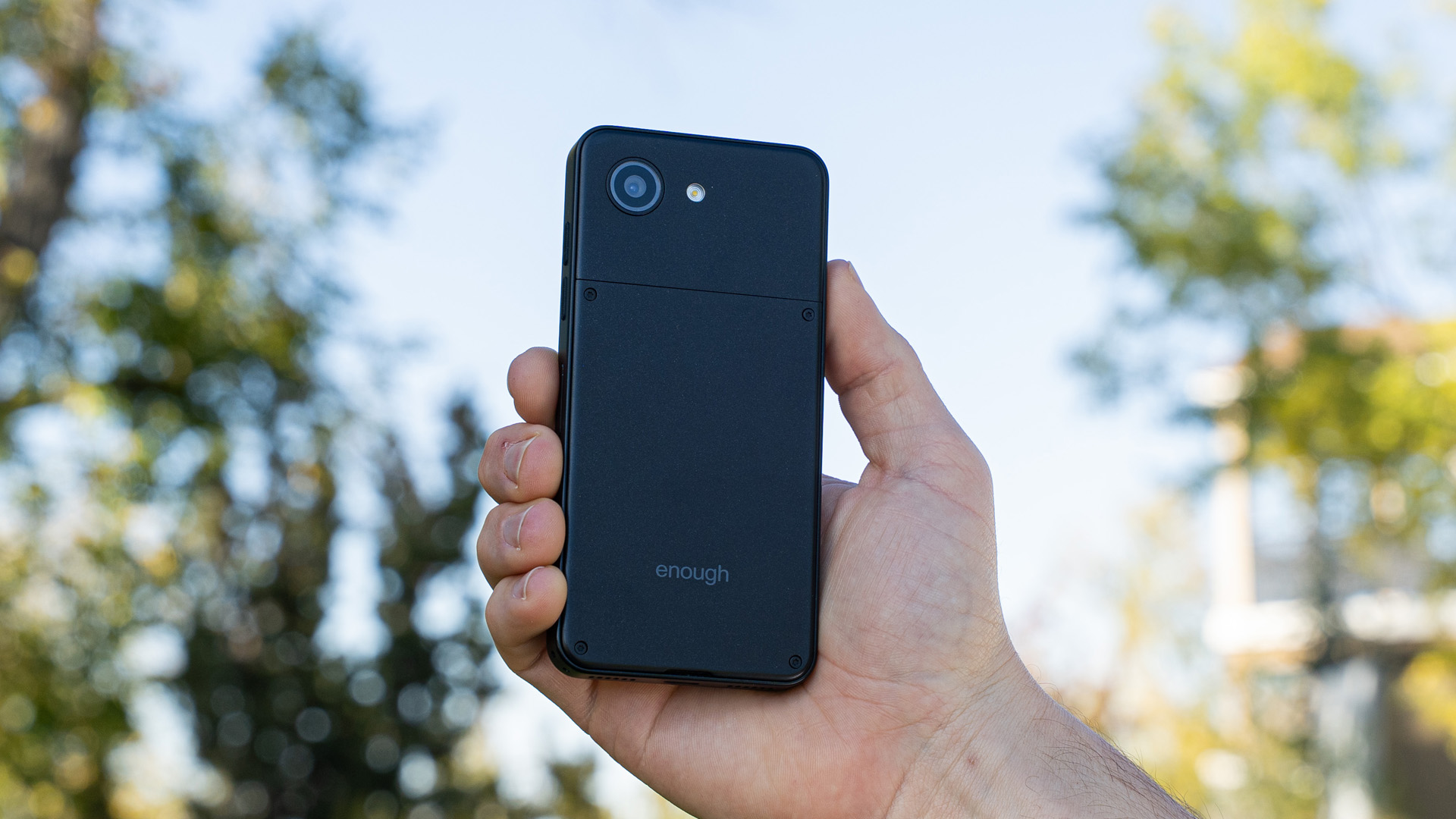
Launching a physical consumer electronics product in an era dominated by trillion-dollar supply chain titans is an exercise in extreme risk mitigation. Unlike legacy players that leverage massive economies of scale to compress unit costs, independent hardware startups face steep component pricing and unforgiving working capital requirements.
The strategic blueprint for the Enough Phone relies heavily on targeted market segmentation rather than mass-market volume domination. By appealing directly to consumers seeking digital minimalism, privacy-conscious professionals, and corporate executives searching for distraction-free communication devices, the brand aims to secure higher gross margins per unit sold. This boutique pricing strategy mirrors high-end mechanical watchmaking or bespoke leather goods: lower volume, higher margin, and exceptional brand loyalty.
However, venture investors are watching closely. The failure rate of independent smartphone ventures—famously illustrated by historical casualties like the Essential Phone or the Nextbit Robin—underscores the ruthless nature of cloud compute integration, operating system maintenance, and regulatory compliance. Navigating global cellular certifications (such as FCC, CE, and carrier-specific approvals) demands deep capital reserves and rigorous project management.
| Metric / Specification | Industry Standard Flagship | The 'Enough Phone' Target |
|---|---|---|
| Display Size | 6.5 to 6.8 inches | Under 5.0 inches (Ultra-Compact) |
| Primary Value Proposition | Immersive media & multi-window productivity | Digital well-being, ergonomics & essential utility |
| Target Audience | Mass consumer / mobile-first enterprise | Minimalists, digital detoxers, B2B executives |
| Manufacturing Scale | Tens of millions of units annually | Boutique production runs (niche liquidity) |
Industry Implications: Who Wins and Who Loses?
The success or failure of the Enough Phone carries profound implications across the tech ecosystem:
- The Winners: Niche hardware designers, digital wellness software developers, and alternative OS providers stand to gain. If the device proves that a profitable market exists for sub-6-inch form factors, component suppliers specializing in micro-displays and high-density, small-form-factor batteries will see a welcome surge in enterprise contracts. Furthermore, consumers regain negotiating leverage against an industry that has forced oversized screens upon them.
- The Losers: Major OEMs that categorically abandoned the compact segment may face reputational friction if consumer enthusiasm for small devices converts into sustained market share. Additionally, advertising-dependent tech platforms could see marginal headwinds if a sub-segment of the population adopts minimalist hardware that drastically reduces daily screen time and ad-impression exposure.
Frequently Asked Questions (People Also Ask)
Why did major smartphone manufacturers stop making small phones?
Major OEMs phased out compact devices primarily due to declining consumer volume relative to phablets, engineering constraints regarding battery life and thermal dissipation, and the strategic imperative to maximize screen real estate for digital advertising and media consumption.
How does the Enough Phone plan to survive against industry giants?
Instead of competing on mass-market volume, the Enough Phone targets a high-margin, underserved demographic of digital minimalists and professionals seeking privacy and reduced screen addiction, utilizing boutique manufacturing economics and specialized distribution channels.
What are the primary technical challenges in building a modern small smartphone?
Engineering a compact device requires overcoming significant hurdles, including integrating 5G antennas, maintaining adequate battery capacity within a reduced physical volume, managing thermal output from powerful processors, and securing cost-effective component allocation from dominant supply chain partners.
Future Outlook and Key Milestones to Watch
The journey of the Enough Phone from viral concept to commercial reality will serve as a definitive litmus test for consumer hardware diversification. Over the next 12 to 18 months, industry analysts will monitor several critical milestones: pre-order conversion rates, supply chain resilience amid global semiconductor fluctuations, and the software ecosystem's ability to support streamlined, distraction-free user experiences.
If the Enough Phone successfully captures a sustainable share of the premium niche market, it could catalyze a broader industry counter-trend, prompting major tier-one manufacturers to reconsider compact form factors. Conversely, a commercial misstep will reinforce the prevailing wisdom of the tech giants: that when it comes to the modern mobile market, consumers may talk about wanting small phones, but their wallets ultimately belong to the screen.