Executive Takeaways
- Primordial Reservoir Confirmed: Cutting-edge isotopic analysis of ocean island basalts proves that material trapped during Earth's accretion 4.5 billion years ago is actively leaking from the core into the mantle.
- Geochemical Fingerprints: The detection of ultra-rare tungsten-182 and primordial noble gas ratios (specifically Helium-3 to Helium-4) provides irrefutable physical evidence of core-mantle interaction.
- Macroeconomic & Resource Re-evaluation: While not an immediate commercial mining vector, these findings fundamentally alter valuation multiples and risk mitigation frameworks in deep-earth resource exploration and geophysical risk assessment.
- Infrastructural Shifts: Advanced high-performance computing (HPC) modeling and seismic tomography are accelerating, driving massive capital allocation toward subterranean earth-imaging technologies.
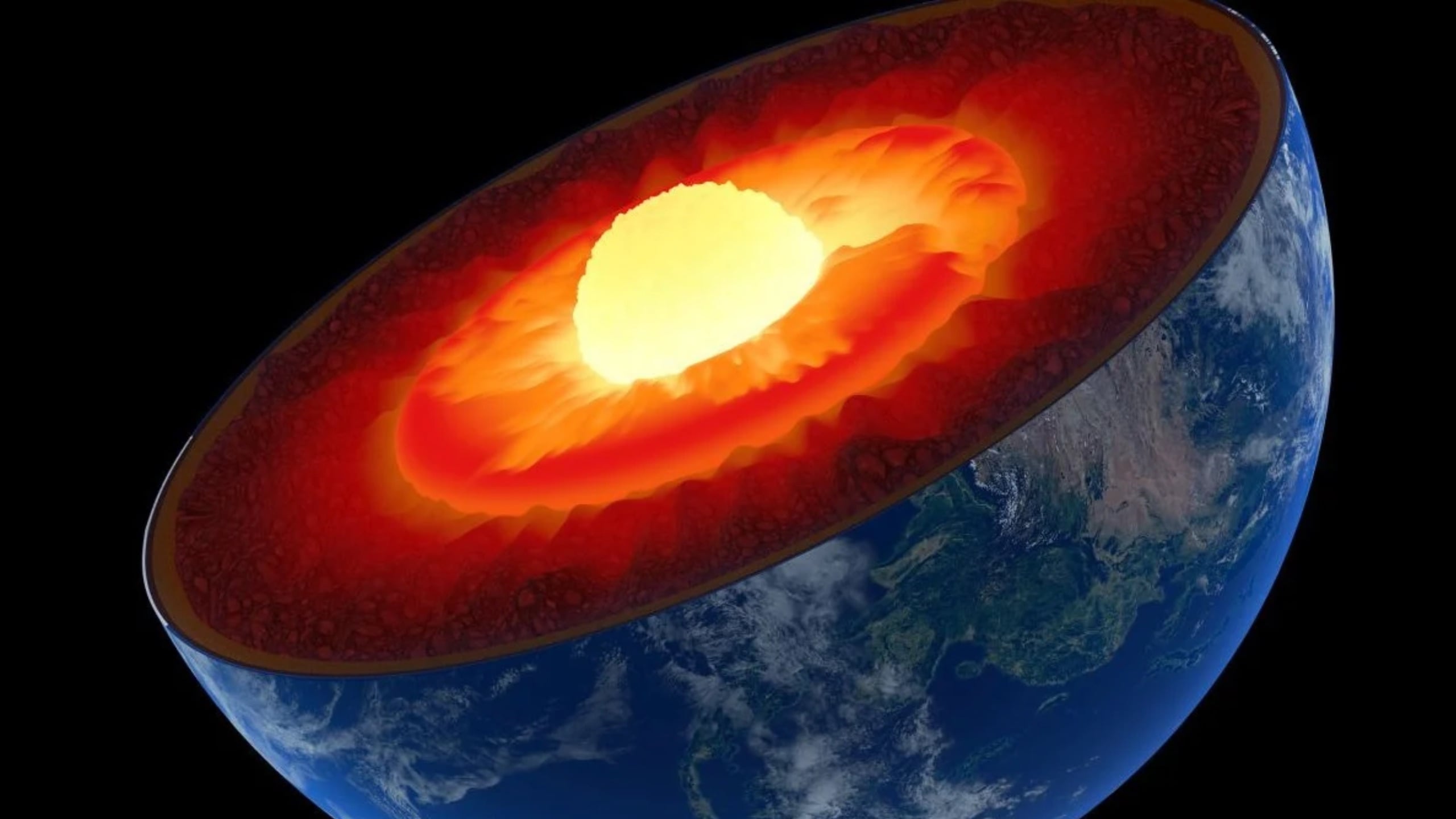
For centuries, standard textbook geophysics presented Earth’s interior as a series of neat, concentric Russian nesting dolls: a solid inner core, a churning liquid outer core, a viscous mantle, and a brittle outer crust. Conventional scientific consensus held that these layers operated in relative isolation, separated by immense thermodynamic barriers following the planet's violent birth during the chaotic genesis of the solar system 4.5 billion years ago.
That rigid paradigm has officially fractured.
In a series of landmark geochemical discoveries spearheaded by international teams analyzing deep-mantle plumes, researchers have confirmed that Earth’s core is not a sealed vault. It is leaking. A continuous, albeit sluggish, stream of primordial material—trapped since the Hadean Eon—is migrating upward through the mantle, punching through thousands of kilometers of rock to deposit chemical signatures of our planet's infancy onto the surface.
This revelation forces a fundamental rewrite of planetary evolution models. For institutional investors, commodity strategists, and technology leaders, the implications extend far beyond academic geology. Understanding the dynamic, porous nature of Earth’s deep interior recalibrates our understanding of planetary stability, resource distribution, and the long-term risk mitigation strategies required for global infrastructure projects.
The Genesis of the Leak: Unlocking the Hadean Vault
To understand the magnitude of this discovery, one must look back to the very formation of the Earth. Approximately 4.5 billion years ago, the young planet was a molten ocean of magma, bombarded by planetesimals and protoplanets. During this chaotic epoch, heavy molten iron and nickel sank toward the center, pulling dense siderophile (iron-loving) elements down with them to form the core. Lighter silicate materials remained above, cooling to form the mantle and crust.
Standard geophysical models assumed that once this core-mantle boundary (CMB) solidified its chemical segregation, the two layers became chemically sequestered. However, geochemists studying rare basalt lavas erupted from isolated oceanic hotspots—such as Samoa, Hawaii, and Iceland—began noticing geochemical anomalies that defied this closure hypothesis.
The smoking gun lies in tungsten isotopes. Natural tungsten has several isotopes, but tungsten-182 ($^{182}\text{W}$) is produced by the radioactive decay of hafnium-182 ($^{182}\text{Hf}$), a short-lived isotope that vanished within the first 50 million years of the solar system's history. Because hafnium prefers silicate rocks (mantle) and tungsten prefers metal (core), any material originating deep within the core should possess a distinctively lower $^{182}\text{W}$ ratio compared to the bulk mantle.
By deploying high-precision multi-collector inductively coupled plasma mass spectrometry (MC-ICP-MS), researchers detected these exact, depleted $^{182}\text{W}$ signatures in modern lavas. The data confirmed that primordial geochemical reservoirs, undisturbed since the planet’s accretion, are escaping the core-mantle boundary layer (known to seismologists as the D'' layer) and hitching a ride upward via mantle plumes.
Verified Data and Geochemical Metrics Breakdown
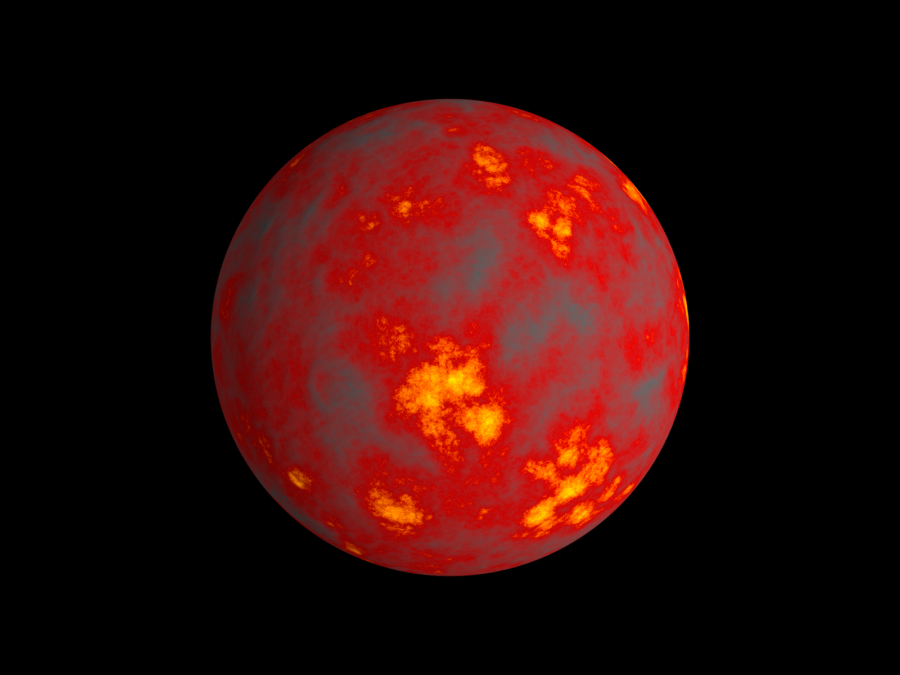
The following metrics highlight the analytical parameters and isotopic signatures that validated the core-leakage hypothesis:
| Isotopic / Chemical Marker | Normal Mantle Baseline | Core-Derived Plume Signature | Geological Significance |
|---|---|---|---|
| Tungsten-182 ($^{182}\text{W}$) | Higher relative abundance (crust/mantle processed) | Measurably depleted | Proves direct chemical exchange with the metallic core. |
| Helium-3 / Helium-4 ($^3\text{He}/^4\text{He}$) | Low ratio (diluted by radiogenic $^4\text{He}$) | Extremely high ratio (primordial solar nebula gas) | Indicates un-degassed volatile reservoirs from planet formation. |
| Platinum-Group Elements (PGEs) | Balanced crustal abundances | Elevated siderophile trace markers | Reflects deep-seated metallic entrainment into silicate melts. |
| Depth of Origin | Upper to mid-mantle (0 - 660 km) | ~2,900 km (Core-Mantle Boundary) | Locates the active bleeding zone at the base of the mantle. |
Industry & Market Implications: Risk Mitigation and Capital Allocation
While the prospect of a leaking core sounds like a Hollywood disaster film plot, the practical realities are firmly rooted in advanced geophysics, macroeconomics, and enterprise risk management. How does this discovery translate across global industries?
1. Geothermal Energy and Subsurface Infrastructure
Understanding the thermal and material fluxes at the core-mantle boundary directly impacts deep-earth thermodynamic models. Corporations investing in next-generation enhanced geothermal systems (EGS) rely heavily on precise heat-flow forecasting. If core-mantle plumes deliver localized thermal anomalies with greater frequency than previously modeled, capital allocation for high-enthalpy geothermal sites may see shifts in regional prioritization.
2. Seismic Risk Mitigation and Financial Valuation
The interaction between the liquid outer core and the lower mantle governs the generation of Earth’s magnetic field and influences large-scale tectonic movements. Insurance syndicates, reinsurance firms, and infrastructure funds continuously refine their catastrophic risk models (CAT models). Enhanced data regarding deep-mantle convection currents improves long-term forecasting accuracy for seismic hazards, safeguarding asset valuations in high-risk tectonic zones.
3. High-Performance Computing (HPC) and Cloud Architecture
Mapping the core's interior requires unprecedented data processing capabilities. Seismic tomography combined with quantum-level geochemical modeling demands massive cloud compute architecture. Tech enterprises providing high-performance computing clusters and AI-driven predictive modeling tools are experiencing surging enterprise demand from academic institutions and national laboratories tasked with simulating deep-earth geodynamics.
Frequently Asked Questions (People Also Ask)
Is the core leaking anything that poses a danger to human life on the surface?
No. The material leaking from the core consists of microscopic isotopic signatures, trace elements, and primordial noble gases like Helium-3. This process occurs over millions of years at a depth of nearly 3,000 kilometers beneath our feet. It presents zero physical danger to surface life or global climate stability.
How do scientists know the material comes from the core and not just a deep mantle pocket?
The definitive proof rests on siderophile (iron-loving) element ratios, specifically tungsten-182 ($^{182}\text{W}$). Because the core is predominantly iron and nickel, it stripped tungsten from the silicate mantle during Earth's formation. Finding this specific core-fractionated isotopic signature in surface volcanic rocks can only be explained by physical transport from the core-mantle boundary.
Can we mine these primordial materials leaking from the core?
Practically speaking, no. The source of the leak is located at the core-mantle boundary, roughly 2,900 kilometers (1,800 miles) beneath the Earth's surface under extreme pressures and temperatures. Current deep-drilling technology (such as the Kola Superdeep Borehole) has barely scratched 12 kilometers. These materials are valuable strictly for scientific research and geophysical modeling.
Does this core leakage affect Earth’s magnetic field?
The leakage itself is a byproduct of thermal and chemical dynamics at the base of the outer core—the very region where Earth's geodynamo generates our protective magnetic field. While the leak does not weaken the field, studying it provides critical insights into the long-term evolution and stability of the geomagnetic shield.
Future Outlook: What Comes Next
As geochemists and seismologists merge datasets, the next frontier will involve real-time tracking of mantle plume dynamics. Key milestones to watch over the next 24 to 36 months include:
- Advanced Seismic Imaging Deployments: Expanded global deployment of broadband seismometer arrays to map ultra-low velocity zones (ULVZs) at the base of the mantle with higher resolution.
- Refined Cosmochemical Timelines: Implementation of next-generation mass spectrometers capable of isolating even trace noble gas signatures from ancient volcanic provinces.
- Regulatory and Resource Integration: Greater collaboration between deep-earth research consortia and energy conglomerates seeking to integrate mantle-plume thermal data into regional infrastructure planning and regulatory compliance frameworks.
The confirmation that Earth’s core is bleeding primordial matter reminds us that our planet is not a static, finished product. It is a living, evolving thermodynamic engine—one whose deepest secrets are only now beginning to surface.