Executive Takeaways
Test Our Free AI & Tech Utilities Suite
Calculate LLM API token costs, analyze article dwell-time, or simulate tech DCA returns.
- Unprecedented Inference Deflation: Released in July 2026, DeepSeek V4-Pro delivers repository-scale software engineering capabilities at $0.21 per million blended tokens—roughly 5% (a 20x cost reduction) of the operational expense required by proprietary peers like Claude Opus 4.8 and GPT-5.5.
- Near-Parity Benchmark Performance: On the industry-standard SWE-bench Verified (2026 Edition), DeepSeek V4-Pro scored 71.2%, lingering within statistical error margins of Claude Opus 4.8 (73.8%) and GPT-5.5 (72.5%), shattering the assumption that frontier coding agent intelligence requires exponential capital expenditure.
- SaaS Margin Recapture: Enterprise Chief Technology Officers and Chief Information Officers are aggressively migrating developer environments, CI/CD automated refactoring pipelines, and code-generation agents to low-cost open-weight and API architectures to restore compressed software gross margins.
- Hyperscaler Infrastructure Squeeze: The severe cost divergence is forcing major cloud service providers (CSPs) and frontier model developers to reassess multi-billion-dollar GPU capital allocation plans, shifting focus from pure parameter scale to hyper-optimized inference density and custom silicon topologies.
The July 2026 Disruption: Paradigm Shift in Compute Economics
For three years, the consensus across Silicon Valley and Wall Street held that enterprise-grade automated software engineering required massive capital expenditure. Scaling laws dictated that elite coding capabilities—specifically multi-file repository refactoring, automated vulnerability patching, and autonomous unit test synthesis—demanded ultra-large, proprietary dense models supported by tens of thousands of liquid-cooled graphics processing units (GPUs).
That consensus shattered this week. Data released on July 18, 2026, across wire networks confirms that Hangzhou-based AI research lab DeepSeek has deployed DeepSeek V4-Pro, a frontier-class model optimized explicitly for code architecture and execution. The model achieves competitive parity with Western hyperscaler flagships—specifically Anthropic’s Claude Opus 4.8 and OpenAI’s GPT-5.5—while charging enterprise clients a fraction of the cost.
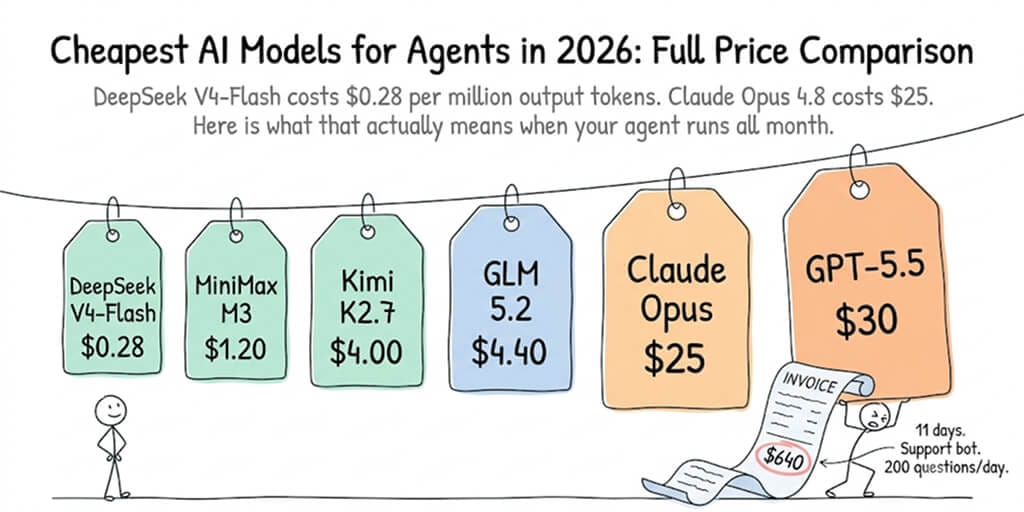
At an API entry price of $0.14 per million input tokens and $0.28 per million output tokens, DeepSeek V4-Pro operates at a blended token price roughly 20 times lower than Claude Opus 4.8 ($3.00 input / $15.00 output) and 18 times lower than GPT-5.5 ($2.50 input / $10.00 output). For Global 2000 enterprises spending upwards of $50 million annually on developer productivity tools and automated coding pipelines, this pricing arbitrage represents an immediate, structural realignment of enterprise IT budget allocation.
Architectural Mastery: How DeepSeek Engineerd a 95% Price Reduction
The stark unit-economic divergence between DeepSeek V4-Pro and its competitors is not the result of loss-leader subsidization, but rather fundamentally different algorithmic and system-level engineering choices. While Western frontier labs focused heavily on scaling raw parameter counts and expansive general-knowledge training runs, DeepSeek’s architecture emphasizes inference efficiency, hardware utilization, and targeted algorithmic distillation.
1. Sparse Mixture-of-Experts (MoE) with Fine-Grained Routing
DeepSeek V4-Pro utilizes an advanced Mixture-of-Experts architecture containing over 600 billion total parameters, yet it activates only a small fraction (approximately 37 billion parameters) per token. Unlike traditional MoE implementations that route tokens to one or two large expert subnetworks, V4-Pro breaks experts into fine-grained sub-modules. This allows the neural network to isolate domain-specific code syntax, memory allocation rules, and language semantics without activating unnecessary weights, preserving compute cycles and dramatically reducing memory bandwidth requirements.
2. Native Multi-Head Latent Attention (MLA) & FP8 Precision Execution
In classical transformer architectures, the Key-Value (KV) cache serves as a major memory bottleneck during long-context repository parsing. DeepSeek V4-Pro integrates native Multi-Head Latent Attention (MLA), which compresses the KV cache into a low-dimensional latent space. Combined with end-to-end 8-bit floating-point (FP8) quantization across training and inference stages, the model drastically minimizes VRAM footprint per user session. Consequently, enterprise infrastructure providers can host substantially higher concurrent developer sessions per server node, boosting hardware return on investment (ROI) and driving operational costs down to historical lows.
3. Domain-Specific Execution-Guided Distillation
Rather than relying solely on passive token prediction over static code repositories, DeepSeek V4-Pro was trained within closed-loop execution environments. The model iteratively generated code, executed it against static analysis tools and sandboxed compilers, and refined its weights based on runtime feedback and memory usage optimization. This execution-guided reinforcement learning (RL) process yielded high algorithmic density, allowing a smaller operational parameter footprint to match or exceed the problem-solving depth of legacy, general-purpose dense models.
Benchmark Performance: HumanEval, SWE-bench, and Real-World Code bases
To measure the structural efficiency of DeepSeek V4-Pro, enterprise procurement teams and third-party benchmark firms evaluated the model across standardized software engineering tests. Historical benchmarks like static HumanEval (Python code completion) have reached saturation; consequently, modern evaluation focuses heavily on SWE-bench Verified (2026 Edition), which presents models with complex, multi-file software patches based on real GitHub issues, complete with execution environments and regression testing.
| Model Name | Developer / Provider | Blended Cost (per 1M Tokens)* | SWE-bench Verified (2026) | Context Window | Architectural Profile |
|---|---|---|---|---|---|
| DeepSeek V4-Pro | DeepSeek AI | $0.21 | 71.2% | 128k Tokens | Sparse MoE / MLA / FP8 Native |
| Claude Opus 4.8 | Anthropic | $9.00 | 73.8% | 200k Tokens | Dense-Hybrid Reasoning Agent |
| GPT-5.5 | OpenAI | $6.25 | 72.5% | 256k Tokens | Adaptive Multi-Modal System |
| Qwen 3.6 Max-Preview | Alibaba Cloud | $0.385 | 69.8% | 128k Tokens | Dense/MoE Hybrid Architecture |
*Blended cost calculated assuming a standardized enterprise workload ratio of 3:1 input-to-output token distribution.
The metrics demonstrate that while Claude Opus 4.8 maintains a slight 2.6 percentage point lead on multi-step context reasoning, its unit price is nearly 43 times higher than DeepSeek V4-Pro on output tokens. For enterprise application logic where autonomous agents run continuously in background CI/CD workers—generating millions of lines of intermediate code, test cases, and diagnostic logs—the marginal gain in reasoning accuracy from proprietary models often fails to justify the dramatic expansion in total cost of ownership (TCO).
Industry & Financial Implications: Re-Evaluating the Enterprise Software Stack
The emergence of high-capability, ultra-low-cost coding models introduces sweeping structural disruptions across the venture capital, public software, and hyperscaler compute markets.
1. SaaS Margin Recapture and API Cost Restructuring
Over the past three years, developer-focused software-as-a-service (SaaS) providers saw their gross margins compress from historical averages of 75%–85% down to 50%–60% due to heavy underlying API licensing fees paid to proprietary model providers. The arrival of DeepSeek V4-Pro allows vertical AI-developer toolkits (such as automated code completion platforms, security scanning agents, and modern IDE extensions) to route standard tasks—like boilerplate generation, documentation, and syntax migration—to high-density, low-cost engines. This routing dynamic restores software margins toward historical norms.
2. The "Model Arbitrage" Router Architecture
Enterprise DevSecOps engineering teams are increasingly deploying smart model routing layers. Under this framework, 80% to 90% of routine developer queries, pull-request validations, and automated unit testing are assigned to low-cost models like DeepSeek V4-Pro or Qwen 3.6 Max. Only ultra-complex structural refactoring tasks or high-risk security architectural changes are escalated to premium, high-cost models like Claude Opus 4.8. This dynamic caps monthly compute spend without sacrificing overall code quality or corporate governance.
3. Re-Allocation of Hyperscaler Capital Expenditure
As pricing leverage shifts from model vendors to infrastructure operators, public equity markets are re-evaluating enterprise software valuation multiples. Investors are demanding that hyperscalers justify their elevated capital expenditures on giant GPU clusters. If top-tier software engineering intelligence can be hosted on mid-spec hardware nodes via aggressive FP8 optimization and Mixture-of-Experts dynamic routing, the implicit pricing power of premium closed-source API ecosystems drops significantly.
Frequently Asked Questions (People Also Ask)
How can DeepSeek offer V4-Pro at a 20x discount compared to OpenAI and Anthropic?
DeepSeek’s radical price reduction stems primarily from architectural efficiency rather than financial subsidies. By utilizing dynamic Multi-Head Latent Attention (MLA), native 8-bit floating-point (FP8) training and execution, and a sparse Mixture-of-Experts (MoE) configuration that activates only a fraction of total parameters per token, DeepSeek significantly reduces memory bandwidth requirements and GPU VRAM utilization. This enables much higher token throughput per server node, directly lowering the operational compute cost per inference call.
Is DeepSeek V4-Pro safe for proprietary corporate codebases and compliance-bound enterprise environments?
While the hosted public API operates under standard commercial terms, risk-averse enterprises, financial institutions, and government contractors frequently deploy DeepSeek models via open-weight distributions, self-hosted private cloud instances (AWS EC2, Azure Confidential Compute, or Google Cloud Vertex AI), or dedicated local hardware clusters. This private deployment eliminates cross-border telemetry risks, guarantees data residency, and maintains strict compliance with ISO 27001, SOC 2 Type II, and GDPR requirements.
How does DeepSeek V4-Pro compare to Claude Opus 4.8 on complex repository-level coding tasks?
On standard benchmarks like SWE-bench Verified (2026 Edition), DeepSeek V4-Pro scores 71.2%, closely trailing Claude Opus 4.8 (73.8%). While Claude Opus 4.8 still demonstrates edge-case superiority in ultra-long context reasoning, multi-repo architectural refactoring, and edge-case error tracing, DeepSeek V4-Pro handles everyday development, bug fixes, automated test creation, and pull-request verification at roughly 5% of the total operational cost.
What impact will this pricing shift have on developer tool pricing models?
As underlying LLM inference costs collapse, developer tool vendors and enterprise software providers are expected to transition away from strict per-seat or restricted usage tier limits toward unlimited compute plans or outcome-based pricing models. The severe drop in API expenses enables software platforms to bundle rich automated agent capabilities directly into baseline subscriptions without eroding gross profit margins.
Future Outlook: The 2026–2027 Autonomous Engineering Trajectory
The launch of DeepSeek V4-Pro marks the transition of automated software development from a high-cost luxury to a commoditized utility. Looking into late 2026 and 2027, the battle line among frontier AI laboratories will shift away from basic language understanding and static coding syntax toward full-stack autonomous system execution.
Industry analysts expect future enterprise deployments to focus heavily on continuous multi-agent environments—where virtual engineering pods (consisting of automated product managers, security testers, backend refactorers, and continuous integration agents) operate around the clock. In this agent-dense paradigm, an organization may execute hundreds of millions of output tokens daily to maintain legacy codebases and systematically eliminate technical debt.
In an environment where agentic execution runs continuously in the background, token economics become the single determining factor in corporate deployment feasibility. By driving token costs down by 95% without compromising technical reasoning capabilities, models like DeepSeek V4-Pro are accelerating the broad adoption of fully autonomous software maintenance across the global enterprise ecosystem.