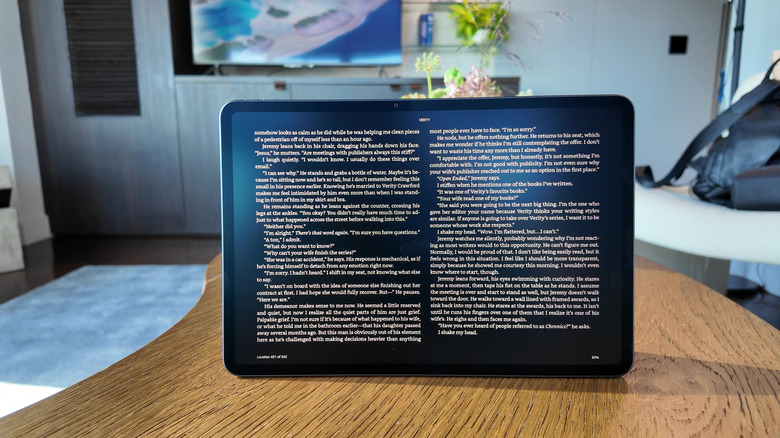
For more than a decade, Apple Inc. has maintained an iron-clad grip on the global tablet market. The iPad, born as a media-consumption bridge between the iPhone and the MacBook, has evolved into a premium silicon showcase, commanding massive gross margins and locking users into Cupertino’s high-walled services ecosystem. However, a quiet, multi-year counter-offensive from Seattle is reaching a critical inflection point. Amazon is systematically weaponizing its Fire and Alexa-integrated tablet lineup, transforming what were once dismissed as low-cost e-readers into sophisticated, AI-driven ambient computing hubs designed to undermine the iPad��s market dominance.
This is not merely a battle of glass and aluminum; it is a fundamental clash of corporate capital allocation, cloud compute architecture, and customer lifetime value (LTV) strategies. As generative AI reshapes consumer electronics, Amazon is positioning its next-generation Alexa-powered tablets as the ultimate physical interface for the smart home and the enterprise, presenting a direct threat to Apple’s high-margin hardware paradigm.
Executive Takeaways
- The Shift to Ambient Intelligence: Amazon is transitioning its tablet strategy from low-cost media consumption devices to high-utility, LLM-powered ambient displays that challenge Apple’s premium productivity positioning.
- The "Vega" OS Gambit: Amazon’s quiet development of its proprietary "Vega" operating system aims to replace the Android-forked FireOS, cutting ties with Google's ecosystem, reducing licensing vulnerabilities, and drastically improving cloud-to-edge latency.
- Asymmetrical Pricing & Unit Economics: While Apple optimizes for immediate hardware gross margins (often exceeding 35%), Amazon utilizes an aggressive loss-leader model, prioritizing device distribution to capture recurring, high-margin subscription revenues and e-commerce conversion.
- The Enterprise ROI Play: Armed with robust cloud scalability via Amazon Web Services (AWS), Amazon is positioning these devices as cheap, highly securable endpoints for retail, hospitality, and smart-office deployments, threatening Apple’s enterprise iPad market.
The Paradigm Shift: From Cheap Portals to AI-First Powerhouses
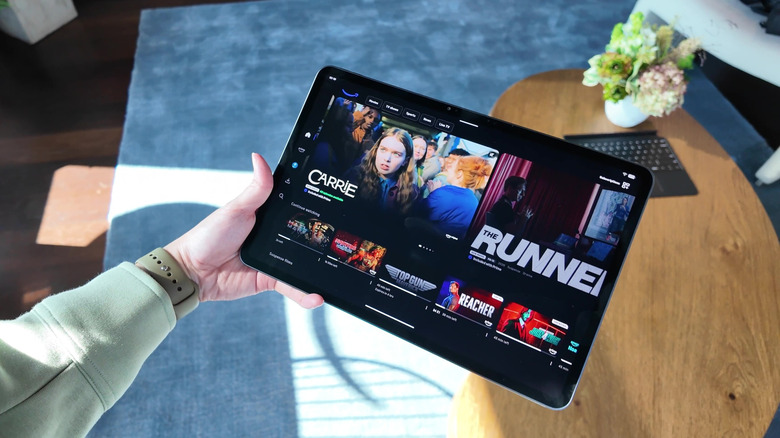
Historically, consumer tech analysts drew a sharp line between Apple’s iPad and Amazon’s Fire tablet family. The iPad was a premium productivity device powered by desktop-class M-series silicon, retailing from $329 to upwards of $2,000. Amazon’s Fire tablets were entry-level, plastic-clad portals designed for prime members to stream video and order groceries, priced aggressively under $150.
That distinction is rapidly evaporating. The catalyst is the convergence of generative artificial intelligence and natural language processing. With the integration of a completely overhauled, LLM-driven Alexa, Amazon’s tablets are no longer passive screens. They are evolving into proactive, contextual agents capable of managing entire smart home networks, executing complex multi-step productivity tasks, and serving as real-time communication bridges.
Under the leadership of Amazon’s hardware division, the company is shifting from an "app-centric" user experience—which favors Apple’s massive App Store ecosystem—to an "agent-centric" experience. For the average consumer, this means the primary interface of the tablet is no longer a grid of static apps, but an intelligent, conversational dashboard. By integrating this conversational layer directly into the hardware at an accessible price point, Amazon is democratizing advanced AI, rendering the iPad’s premium price tag increasingly difficult to justify for casual and smart-home-focused users.
The Vega OS Revolution: Breaking the Android Shackle
To understand the depth of Amazon's competitive threat, one must look below the surface at the operating system level. For years, Amazon’s Fire tablets operated on FireOS, a heavily modified, "forked" version of open-source Android. This dependency introduced structural inefficiencies, requiring Amazon to constantly adapt its software layers to Google's underlying framework, which limited system optimization and bloated local resource utilization.
According to internal industry intelligence, Amazon’s shift to its proprietary, Linux-based operating system, codenamed "Vega," is a strategic masterstroke designed to optimize cloud compute architecture. Vega is engineered specifically for low-latency, cloud-connected ambient devices. By stripping away decades of Android legacy code, Vega allows Amazon’s hardware to run more efficiently on cheaper chipsets, drastically reducing the bill of materials (BOM) cost.
More importantly, Vega is optimized for real-time AI inference. Instead of relying entirely on expensive, power-hungry on-device Neural Processing Units (NPUs)—a path Apple has taken with its costly "Apple Intelligence" hardware requirements—Amazon’s Vega-powered tablets are designed to seamlessly offload complex LLM workloads to AWS’s hyperscale cloud infrastructure. This hybrid edge-to-cloud compute model ensures that even a sub-$150 Amazon tablet can deliver lightning-fast, ultra-sophisticated AI interactions that rival or exceed the capabilities of a premium iPad.
The Financial Architecture: Hardware Margins vs. Ecosystem Lifetime Value
The strategic battle between Apple and Amazon highlights two fundamentally different philosophies of capital allocation and valuation multiples:
Apple’s Premium Hardware Extraction Model
Apple’s business model depends on extracting immediate, high-margin profits from the sale of physical devices. The company utilizes premium materials (anodized aluminum, liquid retina displays, proprietary silicon) to maintain high average selling prices (ASPs). This revenue is then bolstered by high-margin service attachments like iCloud, Apple Music, and Apple Care. If Apple discounts its hardware, its gross margins compress, directly impacting its Wall Street valuation multiples.
Amazon’s Asymmetric Ecosystem Lock-In
Amazon views hardware as a customer acquisition channel rather than a direct profit engine. The unit economics of an Alexa tablet are calculated over a multi-year horizon using Customer Lifetime Value (LTV) models. By selling hardware at or near cost of goods sold (COGS), Amazon dramatically lowers the barrier to entry. Once a user adopts an Alexa tablet, they are pulled deep into the Amazon flywheel: Prime subscriptions, audible audiobooks, smart home accessories, and, critically, frictional e-commerce purchases executed via voice or ambient screen interactions.
| Strategic Metric | Apple iPad Lineup | Amazon Alexa/Fire Tablet Lineup |
|---|---|---|
| Average Selling Price (ASP) | $450 – $1,200+ | $60 – $250 |
| Core Operating System | iPadOS (Proprietary, Closed Ecosystem) | FireOS / Transitioning to Vega (Linux-based, Cloud-first) |
| AI Processing Architecture | On-Device heavy (Apple Intelligence via local NPU) | Hybrid Edge-to-Cloud (Powered by AWS Hyperscale) |
| Primary Monetization Vector | Upfront hardware margin + Digital Service subscriptions | Downstream e-commerce, Prime subs, Smart home integration |
| Enterprise Value Proposition | High-end creative, mobile workstation, premium kiosks | Low-cost scalable endpoints, digital signage, fleet management |
Industry & Market Implications: Who Wins and Who Loses?
As Amazon scales its ambient AI hardware ecosystem, the ripple effects will be felt across several multi-billion-dollar sectors, reshuffling market share and forcing strategic pivots across the tech landscape.
The Losers: Legacy Tablet Manufacturers
The primary casualties of Amazon's aggressive push are secondary Android tablet manufacturers like Samsung, Lenovo, and Xiaomi. These OEMs (Original Equipment Manufacturers) lack the massive e-commerce and cloud infrastructure flywheels that allow Amazon to subsidize its hardware. Unable to match Amazon’s pricing while retaining profitability, these players are increasingly squeezed out of the mid-to-low tier tablet market, forcing them to compete in the highly saturated, low-margin budget space or attempt to pivot to premium tiers where Apple remains entrenched.
The Winners: Smart Home Accessory Developers & Enterprise Fleet Operators
Conversely, the rise of affordable, highly capable Alexa tablets is a massive boon for the smart home ecosystem (such as smart lighting, security cameras, and connected thermostats). These devices act as a unified command center, driving consumer adoption of Matter-compatible smart devices.
In the enterprise space, IT procurement officers are recognizing the immense enterprise ROI of Amazon's tablet ecosystem. For retail point-of-sale (POS) systems, hospitality check-in kiosks, and healthcare patient monitoring, deploying a fleet of $100 Alexa tablets that are easily provisioned, secured, and managed via AWS systems manager offers a far superior total cost of ownership (TCO) compared to deploying $500 iPads. This enterprise pivot represents a stealthy but highly lucrative erosion of Apple’s B2B market share.
People Also Ask (FAQ)
Is an Amazon Fire/Alexa tablet a viable replacement for an Apple iPad?
It depends entirely on the user's primary use case. For productivity, professional graphic design, and heavy multi-tasking, the Apple iPad—with its robust M-series chips and specialized software ecosystem—remains the industry standard. However, for media consumption, smart home control, smart assistant functionality, and casual web browsing, Amazon’s Alexa tablets offer equivalent real-world performance at a fraction of the capital allocation required for an iPad.
How does Amazon’s new Vega OS affect the usability of its tablets?
The transition to Vega OS represents a significant upgrade in device efficiency, boot times, and responsiveness. Because Vega is optimized for cloud-connected systems, it requires less local memory and processing power, translating to longer battery life and faster interactions with cloud-based AI services. While it marks a departure from standard Android app compatibility, Amazon is mitigating this by building out a robust suite of native, web-optimized applications and focusing heavily on voice-first, ambient interfaces.
How secure is Amazon’s cloud-first tablet architecture compared to Apple’s on-device processing?
Apple emphasizes on-device processing via secure enclaves as a core risk-mitigation strategy for user privacy. Amazon, however, utilizes state-of-the-art encryption both in transit and at rest within its AWS cloud compute architecture. For enterprise clients, Amazon’s tablet fleet management integration with AWS provides granular security controls, remote wiping capabilities, and strict regulatory compliance certifications (such as HIPAA and GDPR readiness), making them highly secure endpoints for corporate environments.
Future Outlook: The Milestones to Watch
Over the next 18 to 24 months, the trajectory of this hardware war will be decided by three critical milestones:
- The Global Rollout of LLM-Powered Alexa: The speed and accuracy of Amazon's next-generation conversational AI will determine if consumers view the tablets as indispensable home controllers or mere novelty screens.
- Developer Adoption of Vega OS: If Amazon can successfully incentivize developers to build highly interactive, web-based applications for its new operating system, it will neutralize Apple’s App Store moat.
- Apple’s Pricing Resilience: If macroeconomic pressures continue to strain consumer discretionary spending, Apple may be forced to introduce a more aggressively priced, entry-level iPad, directly validating Amazon’s market positioning.
Ultimately, Amazon’s Alexa tablets are proving that the future of personal computing may not belong to the most expensive silicon, but to the most integrated, intelligent, and economically accessible ecosystem.