Executive Takeaways
Test Our Free AI & Tech Utilities Suite
Calculate LLM API token costs, analyze article dwell-time, or simulate tech DCA returns.
- Algorithmic Retention Offboarding: Major mobile software developers and app marketplaces are deploying dynamic retention APIs that automatically intercept subscription cancellation attempts with targeted discounts, custom pause options, and personalized downgrade tiers.
- The FTC Regulatory Collision: The Federal Trade Commission’s (FTC) newly finalized "Click-to-Cancel" mandate is forcing enterprise engineering teams to walk a razor-thin line between legal customer retention tactics and illegal anti-consumer "dark patterns."
- Enterprise Economics: By arresting voluntary subscriber churn at the exact moment of intent, enterprise SaaS app developers are boosting Net Revenue Retention (NRR) by 15% to 30%, directly driving software valuation multiples in private and public capital markets.
- Platform Power Shift: Native app ecosystems are evolving from simple payment gateways into complex behavioral management platforms, balancing developer monetization demands against growing global regulatory oversight.
The Architectural Shift: How Apps Intercept Your Intent to Leave

For years, cancelling a digital subscription was designed to be a friction-filled administrative labyrinth. Consumers were routinely forced to navigate multi-page surveys, make phone calls during restricted business hours, or decipher intentionally misleading visual design choices known in human-computer interaction circles as "dark patterns." However, a systemic engineering transformation is now reshaping the mobile app ecosystem: subscription offboarding is no longer a static exit path, but an active, real-time algorithmic battlefield.
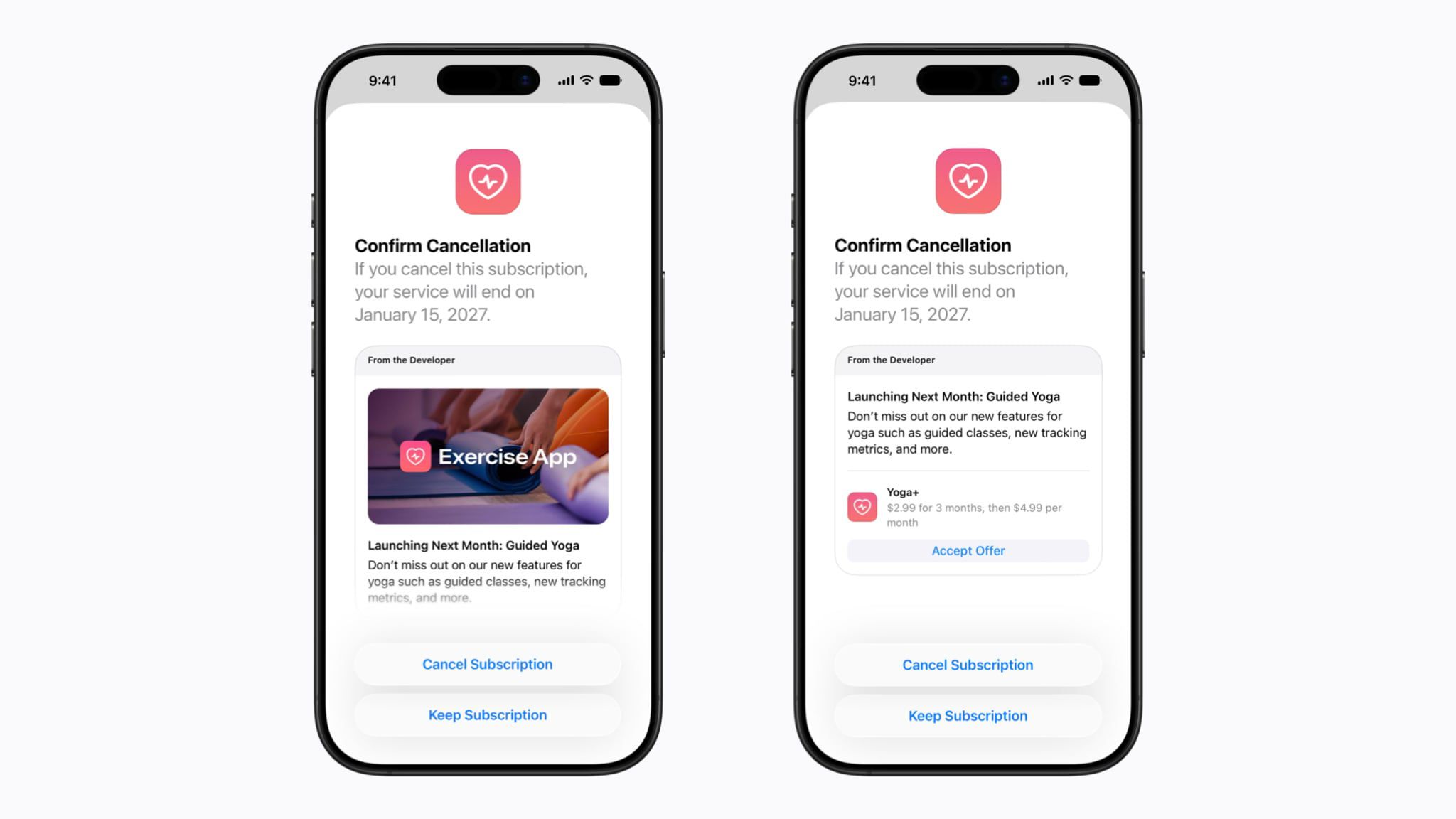
Leveraging modern native software development kits (SDKs) and subscription management infrastructure, app developers can now detect the precise millisecond a user taps "Cancel Subscription." Instead of processing the termination request immediately, cloud compute architectures trigger dynamic offboarding workflows. These system APIs query predictive churn models to evaluate the subscriber's historical lifetime value (LTV), engagement frequency, and in-app usage telemetry. Within milliseconds, the application renders a personalized counter-offer designed to alter the user's economic behavior.
If an app user has engaged less frequently over the preceding 30 days, the platform’s algorithm might automatically present a 50% discount for the next three billing cycles. If the user cites financial constraints in a mandatory micro-survey, the application dynamically offers a temporary zero-cost "pause" feature or downgrades the user to a feature-restricted lower tier. This transition—from static cancellation links to real-time predictive retention engines—represents a monumental evolution in consumer software infrastructure, fundamentally shifting how mobile applications manage subscriber churn.
The Regulatory Crosshairs: FTC’s "Click-to-Cancel" Rule vs. Algorithmic Friction
This aggressive push toward dynamic retention comes at a moment of unparalleled regulatory scrutiny. The Federal Trade Commission (FTC), alongside regulatory bodies in the European Union and the United Kingdom, has aggressively targeted unfair commercial practices designed to trap consumers in recurring payment loops. The FTC’s benchmark "Click-to-Cancel" rule explicitly mandates that the process to terminate a recurring subscription must be as easy and simple as the process used to sign up for it.
Under federal regulatory guidelines, forcing consumers to navigate multi-tiered cancellation flows, wait on hold, or engage with manipulative dialogue boxes violates Section 5 of the FTC Act and the Restore Online Shoppers’ Confidence Act (ROSCA). Regulatory enforcement agencies have levied hundreds of millions of dollars in civil penalties against enterprise firms accused of intentionally burying cancellation buttons or leveraging misleading language to prevent offboarding.
The Legal Framework Governing Digital Subscriptions
Legal counsel across Silicon Valley and international tech hubs are working alongside product teams to audit subscription flows. The central legal ambiguity centers on the distinction between permissible consumer incentives and illegal offboarding friction. Under emerging compliance standardizations:
- Permissible Intercepts: A single, transparent prompt offering an immediate discount, price reduction, or subscription pause—provided the user can decline with a single clear tap and immediately finalize cancellation.
- Impermissible Dark Patterns: Forcing users to complete mandatory length surveys before revealing the cancel button, utilizing confusing double-negative button labels (e.g., "Don't Keep My Subscription"), or requiring multi-screen confirmation loops that reset upon user error.
Despite these clear warnings, the enterprise financial incentives to push boundaries remain staggering. For software companies operating on subscription revenue models, preserving existing subscribers is drastically cheaper than acquiring new ones in an increasingly saturated user acquisition market.
The Unit Economics of Friction: Preserving Net Revenue Retention
To understand why enterprise application developers are investing heavily in real-time offboarding technology, one must look directly at subscription unit economics. In the modern SaaS and mobile app economy, corporate valuations are governed primarily by Net Revenue Retention (NRR), Average Revenue Per User (ARPU), and the ratio of Customer Lifetime Value to Customer Acquisition Cost (LTV:CAC).
As paid user acquisition costs across digital ad networks have risen over 40% due to platform privacy enforcement, acquiring a replacement customer has become capital inefficient. Consequently, preventing "voluntary churn"—instances where a user intentionally attempts to cancel—has become a board-level priority for software executives and private equity sponsors.
Implementation of dynamic cancellation intercepts routinely yields an immediate 15% to 30% reduction in voluntary churn. For a consumer subscription app generating $100 million in Annual Recurring Revenue (ARR), a 20% reduction in churn can preserve upwards of $10 million to $15 million in high-margin revenue annually. When evaluated at enterprise valuation multiples of 6x to 10x revenue, that single technological capability can add over $100 million in enterprise equity value.
Verified Data & Industry Benchmarks Breakdown
The operational metrics below detail the architectural, financial, and legal differences between legacy cancellation flows, modern dynamic retention intercepts, and regulatory compliance standards.
| Offboarding Framework | Average Voluntary Churn Reduction | Primary Mechanism / Architecture | Regulatory Compliance Risk Profile | Impact on LTV:CAC Ratio |
|---|---|---|---|---|
| Legacy Hard-Friction Flow | 35% - 50% | Multi-step phone lines, manual customer support tickets, dark patterns. | Extreme Enforcement Risk: Direct violation of FTC "Click-to-Cancel" and ROSCA guidelines. | Short-term artificially high LTV; catastrophic long-term brand damage and fine exposure. |
| Dynamic API Intercept (Modern Standard) | 15% - 30% | Real-time machine learning prompts offering custom discounts, pauses, or tier downgrades via SDK. | Moderate Risk: Compliant only if exit option is clear, direct, and unhindered by repeated prompts. | Optimized; increases LTV by 20%-30% while maintaining manageable acquisition costs. |
| One-Click Frictionless Exit (Pure Compliance) | 0% - 5% | Instantaneous zero-prompt cancellation executed via single user input action. | Zero Risk: Exceeds all regulatory compliance standards globally. | Baseline; requires continuous re-acquisition spending to maintain Net Revenue Retention. |
Platform Ecosystem Dynamics: Apple, Google, and Third-Party Infrastructure
The mechanical execution of these subscription cancellation defense tools relies heavily on mobile operating platform policies. Both Apple (via StoreKit APIs) and Google (via Google Play Billing Library) historically maintained strict control over in-app subscription management to prevent fraud and protect the consumer experience. Historically, if a user wanted to cancel an app subscription on an iPhone, they had to exit the third-party application entirely, open system settings, navigate to their Apple ID profile, and terminate the subscription within iOS native UI.
However, pressure from large developers seeking ownership over the customer relationship forced a shift. Apple and Google introduced updated native APIs that allow developers to manage subscription offboarding state natively within their apps. This permission shift empowered third-party subscription infrastructure platforms (such as RevenueCat, Chargebee, and ProsperStack) to build turn-key retention engines. Developers can now plug a simple software library into their applications, granting them full access to dynamic cancellation flows, automated A/B testing for churn mitigation offers, and deep behavioral analytics.
This architectural shift creates a dual dynamic: while it allows legitimate app businesses to offer customized service pauses and valid economic discounts to cost-conscious consumers, it simultaneously equips less transparent developers with sophisticated behavioral manipulation toolkits.
Industry & Market Implications: Who Wins, Who Loses?
The widespread adoption of dynamic offboarding algorithms creates distinct economic structural winners and losers across the digital landscape:
- Enterprise Software Developers (Winners): App publishers gain significant leverage over revenue stabilization, lowering their dependency on expensive user acquisition channels and protecting annual bottom-line cash flow metrics.
- Subscription Infrastructure Providers (Winners): Cloud platforms offering automated retention algorithms, offboarding workflows, and revenue analytics are experiencing high revenue growth and premium valuation multiples from venture capital and private equity investors.
- Consumers (Mixed Impact): Consumers who are price-sensitive gain access to mid-flow discounts and service pause features they otherwise would not have received. Conversely, consumers seeking an immediate, hassle-free exit face renewed cognitive friction and decision fatigue.
- Platform Operators & Regulators (Challenged): Apple and Google must continuously refine ecosystem policies to ensure developers do not ruin user trust, while regulatory agencies face an arms race against sophisticated software teams modifying dark patterns faster than legal enforcement actions can be litigated.
Frequently Asked Questions (People Also Ask)
Is it legal for an app to block me from cancelling my subscription?
No. Under law, including the FTC's "Click-to-Cancel" framework, an application cannot prevent or intentionally impair your ability to terminate a recurring subscription. While apps are permitted to present a single, non-deceptive counter-offer (such as a discount or pause option), they are legally required to provide an easily accessible, unambiguous path to complete the cancellation without requiring excess steps, phone calls, or deceptive loops.
What is a "dark pattern" in app subscription cancellations?
A "dark pattern" refers to a user interface design intentionally crafted to trick or manipulate users into taking actions contrary to their intent. In subscription cancellation contexts, dark patterns include using misleading button colors, double-negative options (e.g., "Cancel My Cancellation"), hiding the unsubscribe link within deep nested menus, or forcing users to navigate through lengthy, unskippable exit surveys.
How do dynamic offboarding offers work technically?
When you press a cancel button inside a modern app, an API call is routed to a specialized retention server. The system checks your profile data—such as how long you've subscribed, how often you use the app, and your billing history—and instantly runs an algorithm to select the optimal incentive (e.g., a 50% discount, a free month, or a account pause) engineered to convince you to remain a paying subscriber.
How can I instantly cancel an app subscription if the app makes it difficult?
For subscriptions managed through Apple App Store or Google Play Store, you can bypass the developer's in-app cancellation flow entirely. On iOS, open Settings > [Your Name] > Subscriptions and select the app to cancel directly through Apple. On Android, open the Google Play Store > Profile Icon > Payments & subscriptions > Subscriptions to manage and terminate recurring billing directly at the platform level.
Future Outlook: Predictive AI Defense and the Enforcement Horizon
As AI tools become fully integrated into app development stacks, the future of subscriber retention will shift from reactive offboarding intercepts to predictive churn defense. Machine learning algorithms will analyze subtle changes in user telemetry—such as a decline in daily active usage or reduced feature interaction—to offer retention incentives *before* the consumer ever opens the cancellation settings menu.
Simultaneously, regulatory agencies are preparing aggressive global compliance enforcement campaigns. The FTC, alongside European privacy and consumer protection authorities, has signaled that compliance audits of top-grossing mobile applications will accelerate. Software enterprises that rely on excessive design friction, deceptive language, or forced survey loops face substantial risk of public enforcement actions, regulatory fines, and class-action litigation.
Ultimately, the era of zero-friction app cancellations has given way to an engineered negotiation. The fundamental battleground for mobile subscriptions will no longer be fought just at the point of customer acquisition, but in the precise, code-driven moments when a consumer decides to walk away.