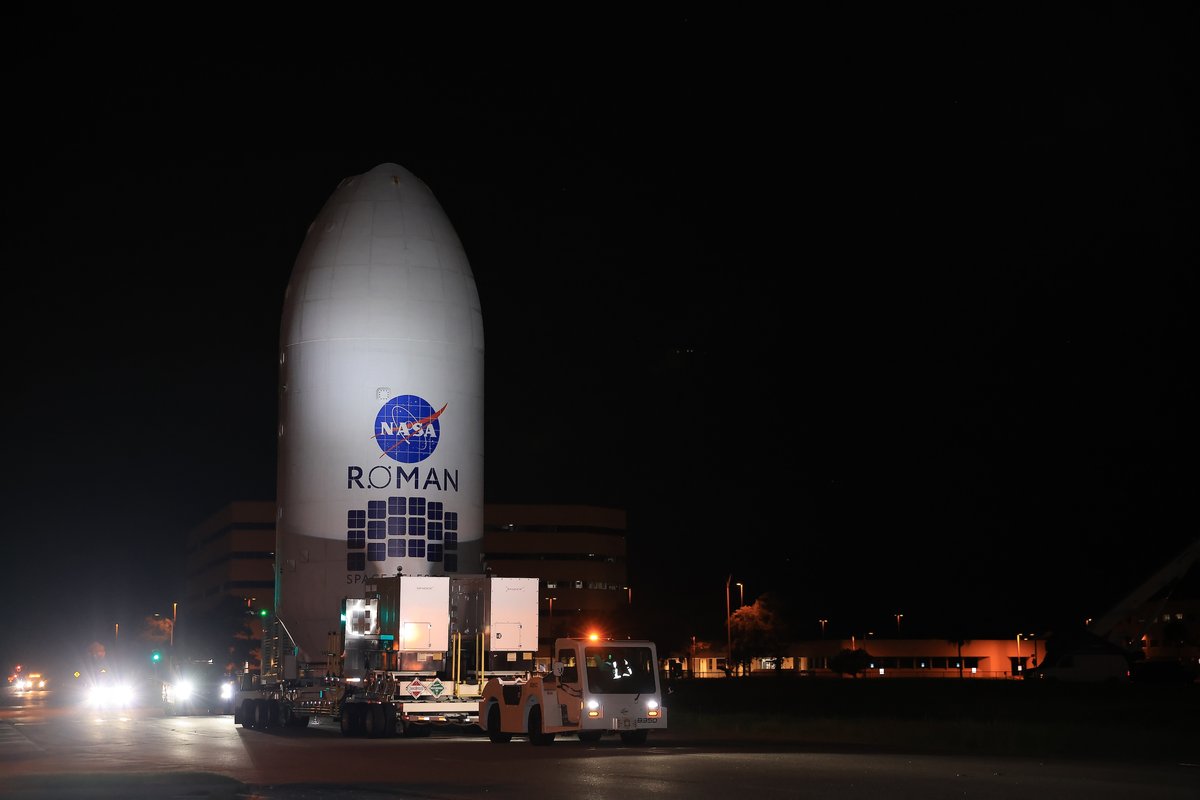
Cosmic Heavyweight: 10 Defining Discoveries Set to Rewrite Our Understanding of the Universe
WASHINGTON — For decades, humanity has peered into the deep abyss of space through keyholes. From the pioneering observations of the Hubble Space Telescope to the unprecedented infrared clarity of the James Webb Space Telescope (JWST), our cosmic horizons have expanded exponentially. Yet, a monumental shift is on the horizon. NASA’s upcoming Nancy Grace Roman Space Telescope is poised to blow the doors wide open, offering a revolutionary panoramic view of the heavens that promises to fundamentally reshape astrophysics, cosmology, and our place in the cosmos.
Set for launch by May 2027, the Roman Space Telescope carries a primary mirror the same size as Hubble’s (2.4 meters), but with a crucial technological superpower: its Wide Field Instrument boasts a field of view that is a staggering 100 times larger than Hubble’s infrared capability. Where Hubble and JWST capture breathtaking, highly detailed portraits of celestial needles in haystacks, Roman will capture the entire haystack in a single, ultra-sharp exposure.
According to principal briefings from the mission’s science teams and primary wire reports from Scientific American, the mission is designed to tackle the two greatest existential mysteries in modern physics—dark energy and dark matter—while simultaneously revolutionizing our census of exoplanets and distant galactic architectures. Here are the top 10 cosmic discoveries we expect the Roman Space Telescope to deliver.
The 10 Defining Revelations Awaiting NASA’s New Flagship
- 1. A Definitive Verdict on Dark Energy: Comprising roughly 68 percent of the universe, dark energy is the mysterious force driving the accelerated expansion of the cosmos. Roman will measure the brightness and distance of millions of supernovae and map the large-scale distribution of galaxies, providing unprecedented data to determine whether dark energy is a constant or shifting force.
- 2. Billions of Hidden Exoplanets: Utilizing a technique called gravitational microlensing—where the gravity of a foreground star magnifies the light of a background star—Roman will spot planets passing across distant stars. Scientists project the mission will discover tens of thousands of new exoplanets, including cold, rocky worlds sitting far from their host stars.
- 3. Unprecedented Mapping of Dark Matter Scaffolding: While invisible, dark matter's gravitational influence shapes the cosmos. Through gravitational lensing—how massive structures bend and distort background light—Roman will construct the most comprehensive 3D maps of dark matter scaffolding ever attempted.
- 4. The Census of Free-Floating Rogue Planets: Beyond planets bound to stars, the universe is likely littered with rogue planets ejected from their native solar systems. Roman’s massive survey capabilities will reveal these wandering worlds, shedding light on the chaotic early dynamics of planetary formation.
- 5. Unlocking the Epoch of Galaxy Evolution: By staring deep into the infrared spectrum across massive patches of sky, Roman will observe galaxies as they appeared billions of years ago. This will allow researchers to track how galaxies assembled, interacted, and grew during the universe’s formative eras.
- 6. A Treasure Trove of Comets and Kuiper Belt Objects: Closer to home, Roman will sweep the outer edges of our solar system. Astronomers expect it to discover vast numbers of trans-Neptunian objects and distant icy comets, offering clues about the pristine building blocks of our planetary system.
- 7. Direct Imaging of Giant Exoplanets: Equipped with a cutting-edge technological demonstration known as a coronagraph, Roman will block the blinding glare of nearby stars to directly image massive, Jupiter-like exoplanets and dusty circumstellar disks, paving the way for future Earth-hunting missions.
- 8. Probing the Evolution of the Milky Way: Roman will peer through the dust-obscured central bulge of our galaxy, performing a stellar census that will clarify the structural history, formation, and galactic cannibalism events that built the Milky Way.
- 9. Discovery of Ultra-Faint Dwarf Galaxies: Surrounding our galaxy are numerous satellite dwarf galaxies. Roman’s extreme sensitivity will detect extremely faint, ancient dwarf galaxies that have eluded detection, testing our theories of how small galaxies cluster around massive hosts.
- 10. The Ultimate Legacy Archive: Beyond its core targets, Roman’s public data archives will function as a generational goldmine. By surveying enormous swaths of the sky repeatedly, it will capture transient phenomena—from exploding stars to merging black holes—creating a dynamic, time-lapse digital movie of the universe.
At a Glance: Key Specifications of the Roman Space Telescope
| Feature | Specification | Scientific Impact |
|---|---|---|
| Mirror Diameter | 2.4 meters (7.9 feet) | Matches Hubble’s resolution capabilities. |
| Field of View | 100x larger than Hubble (IR) | Enables massive, rapid cosmic surveys. |
| Primary Instruments | Wide Field Instrument & Coronagraph | Exoplanet discovery and dark energy mapping. |
| Target Launch | By May 2027 | Stationed at the Sun-Earth L2 Lagrange point. |
Why Roman Matters for the Future of Astrophysics
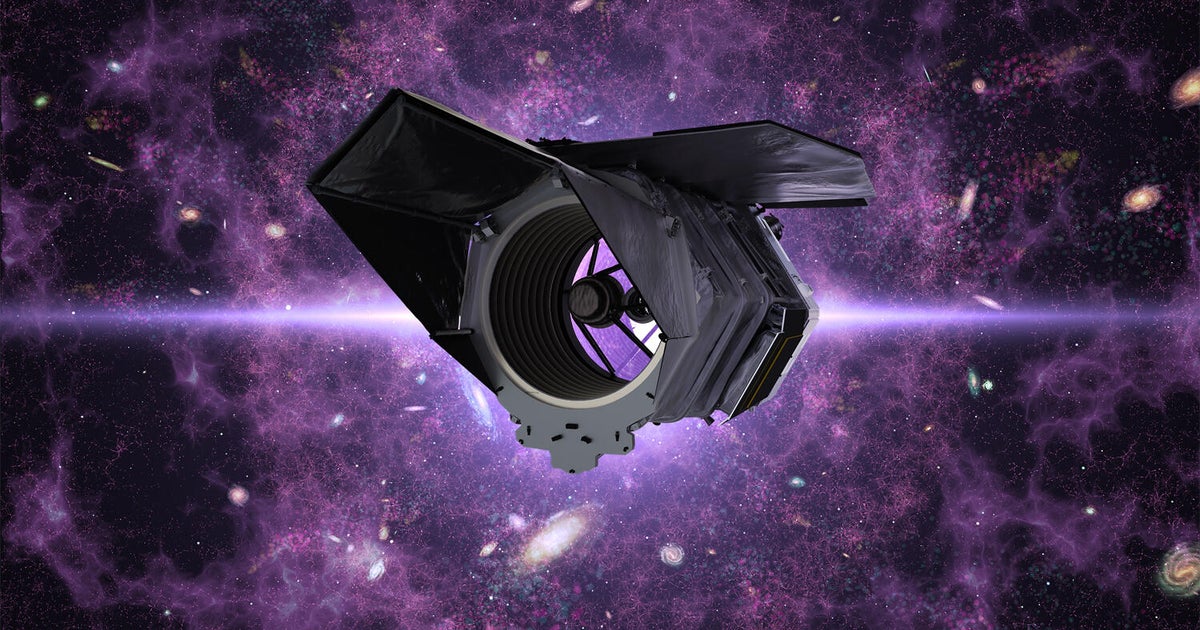
While missions like the James Webb Space Telescope are optimized for deep-dive spectroscopic analysis of individual targets, Roman operates as a wide-angle cartographer. Think of JWST as a high-powered microscope examining intricate cellular details, and Roman as a high-altitude satellite map revealing the entire geography of a continent.
"Roman is designed to answer questions that require statistical muscle—studying billions of stars and galaxies to find the subtle patterns hidden within the cosmic noise," notes senior project leadership. By bridging the gap between broad cosmic surveys and targeted high-resolution astronomy, NASA's newest observatory is set to anchor a golden era of space exploration well into the 2030s.
As engineering teams put the finishing touches on hardware integration ahead of its 2027 window, the global scientific community waits with bated breath. The universe is full of secrets, and soon, we will be able to see the big picture all at once.
Frequently Asked Questions
When is the Nancy Grace Roman Space Telescope launching?
NASA currently targets a launch for the Roman Space Telescope by May 2027. It will be positioned approximately 1 million miles away from Earth at the Sun-Earth Lagrange point 2 (L2), sharing a similar orbital neighborhood with the James Webb Space Telescope.
How does Roman differ from the James Webb Space Telescope (JWST)?
While JWST is engineered to peer deeper into the universe with unmatched infrared sensitivity and detail on narrow targets, the Roman Space Telescope is built for breadth. Its primary instrument has a field of view 100 times larger than Hubble's infrared view, allowing it to map vast regions of the sky rapidly and efficiently.