Think You Can Save the Hubble Space Telescope? NASA Wants to Know
Test Our Free AI & Tech Utilities Suite
Calculate LLM API token costs, analyze article dwell-time, or simulate tech DCA returns.
As orbital decay threatens one of humanity's most transformative scientific assets, NASA turns to commercial space pioneers for high-stakes rescue proposals. Amid tightening federal capital allocation constraints, the agency is exploring whether private-sector innovation can unlock new valuation models for orbital infrastructure maintenance.
Executive Takeaways
- Commercial Pivot: NASA has formally solicited private-sector proposals to re-boost and service the aging Hubble Space Telescope without expending federal capital reserves.
- The Orbital Clock: Without immediate intervention, atmospheric drag will cause Hubble to burn up in Earth's atmosphere by the mid-2030s, terminating a multi-billion-dollar scientific asset.
- Private Enterprise Risk Mitigation: Aerospace firms including Jared Isaacman’s Polaris Dawn backers and SpaceX have previously floated unrequited private crewed missions, highlighting a shift toward commercial risk-sharing.
- Economic & Valuation Implications: Successful public-private servicing models could fundamentally redefine asset lifecycles, valuation multiples, and infrastructure scalability for low-Earth orbit (LEO) commercialization.
Introduction: The Race to Preserve an Astronomical Icon
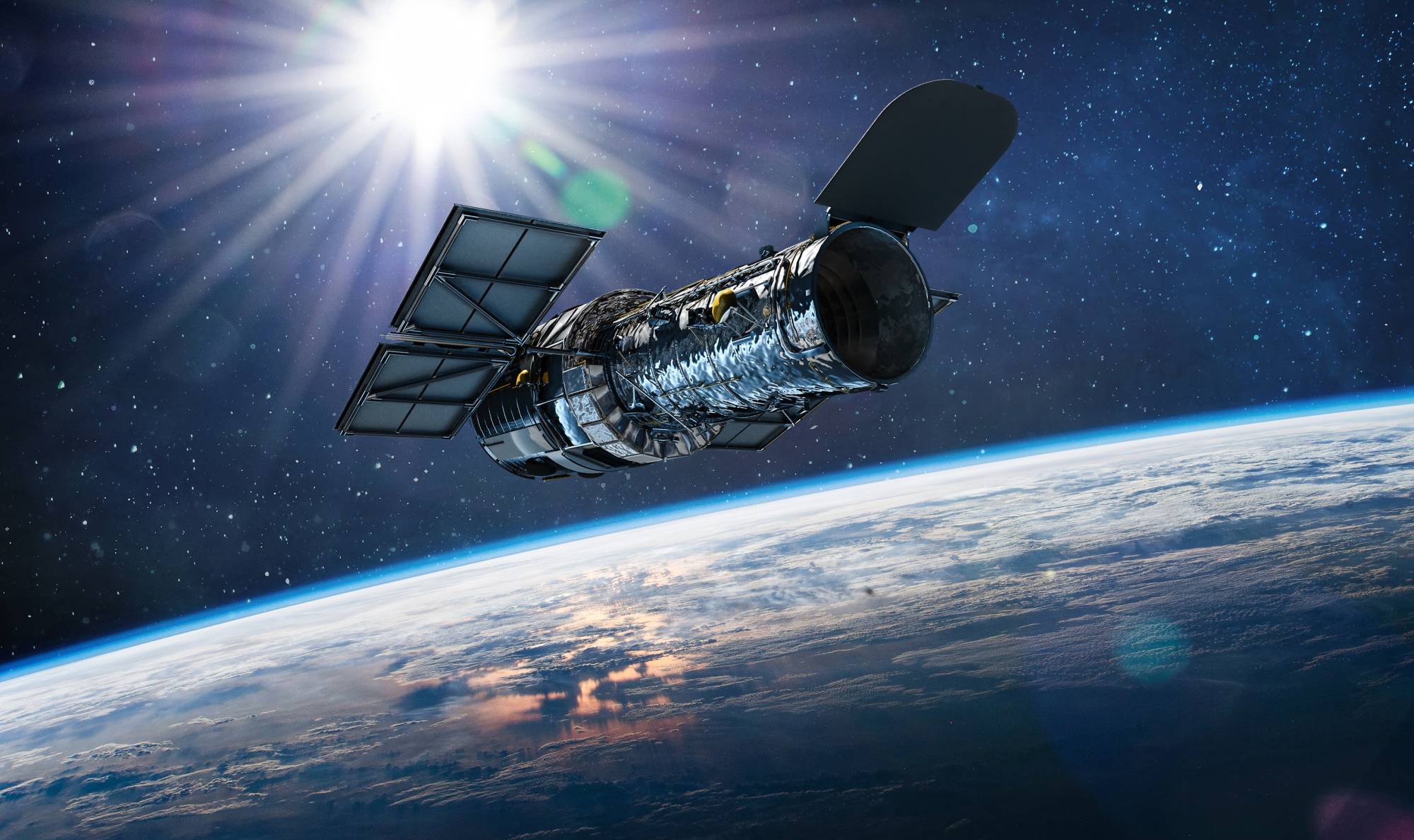
For more than three decades, the Hubble Space Telescope has served as the gold standard of observational astrophysics, reshaping our understanding of the cosmos, expansion rates, and dark energy. Yet, the engineering marvel that peered into the deep universe is now facing an existential crisis. Caught in the gravitational crosshairs of orbital decay and solar cycle expansion, Hubble’s altitude is steadily diminishing.
In response to this looming technological cliff, NASA has taken a decisive, unorthodox step: it is asking the private sector whether commercial enterprise can step in where government funding models tread lightly. By opening the floor to unsolicited and solicited proposals for Hubble’s revitalization, the agency is effectively testing whether modern aerospace capitalism can execute complex orbital infrastructure maintenance more efficiently than traditional cost-plus government contracting.
This initiative is not merely an exercise in historical preservation; it is a critical litmus test for the future of in-space servicing, assembly, and manufacturing (ISAM). For institutional investors, aerospace conglomerates, and tech-sector stakeholders, the unfolding saga of Hubble's rescue represents a fascinating nexus of regulatory compliance, enterprise ROI, and technological risk mitigation.
Catalytic Events: Why Hubble Needs Saving Now

Launched in April 1990 aboard the Space Shuttle Discovery, Hubble was designed from the outset with human servicing in mind. During the Space Shuttle era, astronauts executed five historic servicing missions that replaced failing gyroscopes, upgraded optics, and installed cutting-edge scientific instruments. However, the retirement of the Shuttle fleet in 2011 grounded NASA’s organic capability to reach Hubble’s 540-kilometer orbit.
Today, Hubble orbits at roughly 510 kilometers, slipping deeper into the tenuous outer layers of Earth's atmosphere. The severity of atmospheric drag fluctuates dynamically with solar activity. During periods of heightened solar maximums—such as the intense solar cycle currently underway—Earth's atmosphere heats up and expands outward, dramatically accelerating the orbital decay of satellites in LEO.
Without a propulsion boost to raise its orbit, gravitational pull and atmospheric friction will eventually drag Hubble past the point of no return, leading to an uncontrolled atmospheric reentry. While NASA's current telemetry indicates the telescope remains structurally sound and scientifically productive, operating in tandem with the James Webb Space Telescope (JWST), time is a scarce commodity. The window to execute a safe, stabilizing re-boost mission is closing rapidly.
The Public-Private Paradigm: Shifting Capital Allocation
Historically, maintaining orbital assets of this magnitude fell exclusively under government budgets, governed by rigid legislative mandates and bureaucratic procurement pipelines. However, the maturation of private spaceflight has fundamentally altered market liquidity and technological capability in the aerospace sector. Companies like SpaceX, Northrop Grumman, and Voyager Space have proven that commercial entities can achieve higher velocity and cost-efficiency than legacy defense contractors.
The push to rescue Hubble gained substantial momentum following a joint study initiated by NASA and SpaceX in late 2022. Utilizing an un-crewed or crewed Dragon spacecraft equipped with specialized grappling and propulsion systems, the study evaluated the feasibility of raising Hubble to a higher, more stable orbit without taxpayer-funded capital expenditure.
From an economic perspective, this model offers a blueprint for corporate infrastructure scalability. Rather than writing off legacy assets as sunk costs, private enterprises are exploring how extending the operational lifespan of high-value platforms can generate outsized intellectual property, brand equity, and technological validation. For venture capitalists and private equity firms backing the new space economy, successful execution of an orbital rescue mission serves as the ultimate proof-of-concept for commercial in-space servicing.
Verified Data and Technical Specifications Breakdown
To evaluate the scale and complexity of the proposed intervention, the following comparative matrix outlines Hubble's baseline metrics against contemporary orbital challenges and proposed commercial intervention parameters.
| Metric / Specification | Original Baseline (1990) | Current Status (2024–2026) | Proposed Commercial Intervention |
|---|---|---|---|
| Orbital Altitude | 540 Kilometers | ~510 Kilometers (Decaying) | Re-boost to 600+ Kilometers |
| Servicing Mechanism | NASA Space Shuttle (Crewed) | None (Fleet Retired) | Commercial Crewed/Uncrewed Capsule (e.g., SpaceX Dragon) |
| Funding Structure | 100% Federal Appropriations | Federal-Commercial Partnership | Privately Financed / Cost-Sharing Model |
| Projected End of Life | Early 2000s (Pre-Servicing) | Mid-2030s (Without Intervention) | Extended Operational Lifespan to 2040+ |
| Scientific Value | Primary Optical Observatory | Complementary UV/Optical Asset to JWST | Preserved Multi-Wavelength Synergies |
Industry and Market Implications
The implications of NASA’s outreach extend far beyond the astronomical community. A successful commercial rescue of Hubble will send powerful signals across multiple economic vectors:
- Aerospace & Defense Prime Contractors: Legacy players must adapt to agile, commercial-led procurement models or risk losing market share to nimble new-space upstarts that specialize in orbital logistics and satellite life-extension technologies.
- Valuation Multiples in New Space: Companies developing autonomous docking, orbital robotics, and refueling technologies stand to see enhanced valuation multiples as in-space servicing transitions from theoretical R&D to commercially validated enterprise contracts.
- Risk Mitigation and Regulatory Compliance: As LEO becomes increasingly congested, regulatory bodies like the FCC and FAA are tightening orbital debris mitigation rules. Developing active re-boost and de-orbit capabilities creates a regulatory-compliant framework for managing multi-billion-dollar infrastructure.
- Insurance and Capital Markets: The commercial space insurance sector will closely monitor these developments. Establishing reliable servicing protocols directly reduces total loss risk profiles for commercial constellations, driving down insurance premiums across the board.
Frequently Asked Questions (People Also Ask)
Why can't NASA use the Space Shuttle to service Hubble anymore?
The NASA Space Shuttle fleet was officially retired in July 2011 following the completion of the International Space Station assembly framework. The orbiters were decommissioned and placed into museums, leaving NASA without a human-rated spacecraft equipped with the robotic arm capacity and cargo bay specifications required to capture and service Hubble directly.
How would a private company actually rescue the Hubble Space Telescope?
Proposed commercial solutions, such as the one evaluated with SpaceX, involve launching a modified crewed or automated spacecraft—such as a Dragon capsule—to rendezvous with Hubble. The vehicle would dock with the telescope using a specialized fixture, utilize onboard thrusters to safely push Hubble into a higher, more stable orbit, and potentially perform minor hardware updates or stabilization procedures.
Is saving Hubble cost-effective compared to building a new telescope?
Yes. Constructing and launching a brand-new space telescope with capabilities comparable to Hubble would require billions of dollars and a development timeline spanning over a decade. A commercial re-boost or servicing mission represents a fraction of that capital expenditure, maximizing enterprise ROI on existing federal scientific assets.
What happens if NASA and private industry do nothing?
Without intervention, continuous atmospheric drag will lower Hubble’s orbit to a critical threshold by the mid-2030s. The telescope will experience uncontrolled orbital decay, re-entering Earth's atmosphere where the majority of the structure would burn up, permanently ending its unprecedented observational run.
Future Outlook: Milestones and What to Watch
As NASA evaluates responses to its commercial solicitation, several key milestones will dictate the trajectory of the Hubble rescue initiative. Industry analysts and financial markets should monitor the following indicators over the next 12 to 24 months:
- Formal Proposal Selections: Watch for NASA announcements regarding which private aerospace firms are awarded development contracts or formal Space Act Agreements for detailed mission architectures.
- Regulatory and Safety Reviews: Track how federal oversight agencies evaluate the risk profile of attaching commercial spacecraft to a delicate, aging scientific instrument that lacks modern docking standards.
- Capital Formation and Funding Announcements: Observe whether private missions will be entirely self-funded by billionaire-backed space tourism ventures or if hybrid public-private funding models will be codified into federal legislation.
Ultimately, the quest to save Hubble is a defining crucible for the modern space economy. It will determine whether private enterprise can successfully merge with public scientific heritage to preserve humanity's window to the stars, setting a definitive precedent for how we manage, maintain, and monetize critical assets in the final frontier.