Awaiting the Fire: Inside ULA’s High-Stakes Vulcan Return-to-Flight on Friday the 13th
Test Our Free AI & Tech Utilities Suite
Calculate LLM API token costs, analyze article dwell-time, or simulate tech DCA returns.
Executive Takeaways
- High-Stakes Comeback: United Launch Alliance (ULA) is preparing its heavy-lift Vulcan Centaur rocket for a critical return-to-flight mission, defying the superstitious calendar date of Friday the 13th.
- National Security & Commercial Backlog: The successful execution of this flight is paramount for unlocking a multibillion-dollar manifest comprising Department of Defense national security payloads and Amazon’s Kuiper constellation deployment.
- Mitigating Structural Risk: Following the anomalies identified in previous flight profiles, engineering teams have implemented rigorous risk mitigation protocols and hardware redesigns to ensure structural and thermal integrity.
- Market Valuation & Capital Allocation: As private equity and defense primes evaluate consolidation and infrastructure scalability within the New Space economy, ULA’s operational reliability remains a cornerstone metric for valuation multiples across the sector.
The aerospace industry is bracing for a tense window at Cape Canaveral Space Force Station as United Launch Alliance (ULA) targets an imminent return to flight for its flagship Vulcan Centaur rocket. Set against the atmospheric backdrop of Friday the 13th—a date steeped in folklore that mission controllers wryly acknowledge—this upcoming launch represents far more than a routine operational resumption. For ULA, a joint venture between aerospace giants Boeing and Lockheed Martin, this mission is a foundational test of engineering resilience, operational cadence, and strategic positioning in an increasingly unforgiving commercial launch market.
The stakes extend far beyond the immediate telemetry of a single vehicle. In an era where institutional capital allocation demands strict risk mitigation and predictable enterprise ROI, any failure in heavy-lift infrastructure cascades instantly through global supply chains, defense procurement timelines, and commercial telecommunications deployment schedules. As analysts monitor market liquidity and valuation multiples among defense contractors, ULA’s ability to execute a flawless launch sequence will serve as a critical barometer for the entire aerospace industrial base.
The Catalyst: Anatomy of the Stand-Down and Engineering Remediation
Every return-to-flight campaign is born out of exhaustive forensic engineering, and Vulcan’s current trajectory is no exception. The path to the launchpad has been defined by meticulous root-cause analyses following unexpected anomalies observed during earlier certification flights. These investigations required cross-disciplinary collaboration between ULA propulsion engineers, NASA oversight panels, and independent aerospace consultants to review every millimeter of the BE-4 methane-fueled engines and the newly developed Centaur V upper stage.
For enterprise stakeholders and defense procurement officers, the primary concern has always been infrastructure scalability paired with uncompromising reliability. The anomalies—while not catastrophic—prompted a rigorous redesign of specific thermal protection systems and nozzle components. This level of regulatory compliance and engineering transparency is non-negotiable when dealing with payloads valued in the billions of dollars, ranging from classified National Reconnaissance Office (NRO) hardware to high-throughput commercial broadband satellites.
Furthermore, the delay underscored the complex interdependencies of modern space launch architecture. Unlike legacy systems that relied on deeply mature, decades-old supply chains, Vulcan integrates cutting-edge metallurgy, advanced additive manufacturing techniques, and next-generation avionics. Balancing innovation with operational certainty requires a delicate capital allocation strategy, ensuring that testing protocols are never compromised by schedule pressure.
Verified Data and Technical Specifications Breakdown
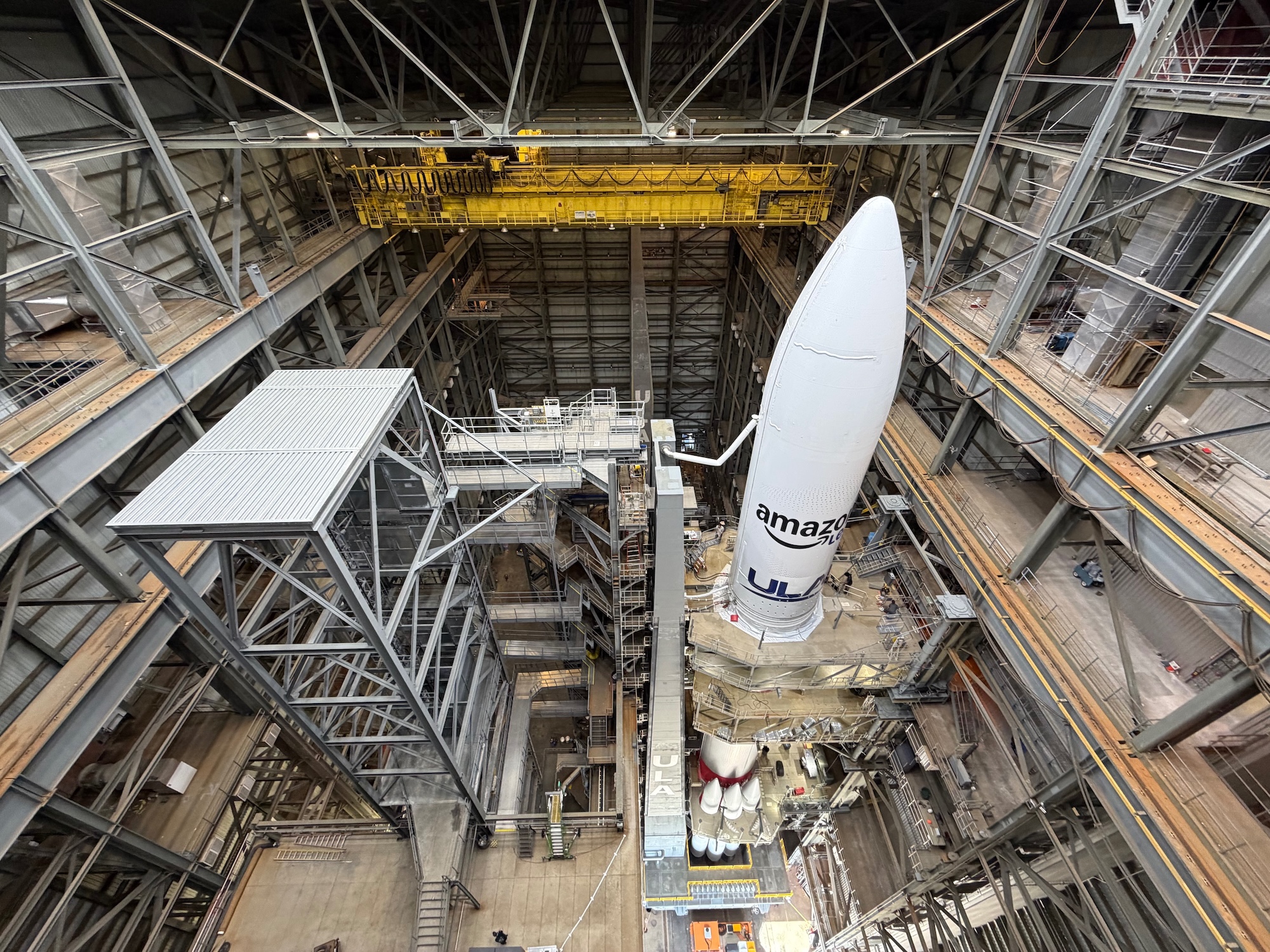
To fully grasp the operational footprint of the Vulcan Centaur system, one must evaluate the quantitative metrics that position it as a direct successor to the venerable Atlas V and Delta IV heavy systems. The following table details the core specifications, performance benchmarks, and manifest requirements governing the upcoming flight.
| Metric / Parameter | Vulcan Centaur Specification | Operational Significance |
|---|---|---|
| Primary Booster Engines | 2x Blue Origin BE-4 (Liquid Methane/LOX) | Delivers over 1.1 million pounds of thrust at liftoff; core driver of heavy-lift capability. |
| Upper Stage | Centaur V (Dual RL10C-1-1A engines) | Provides unmatched orbital insertion flexibility and long-duration coast capabilities. |
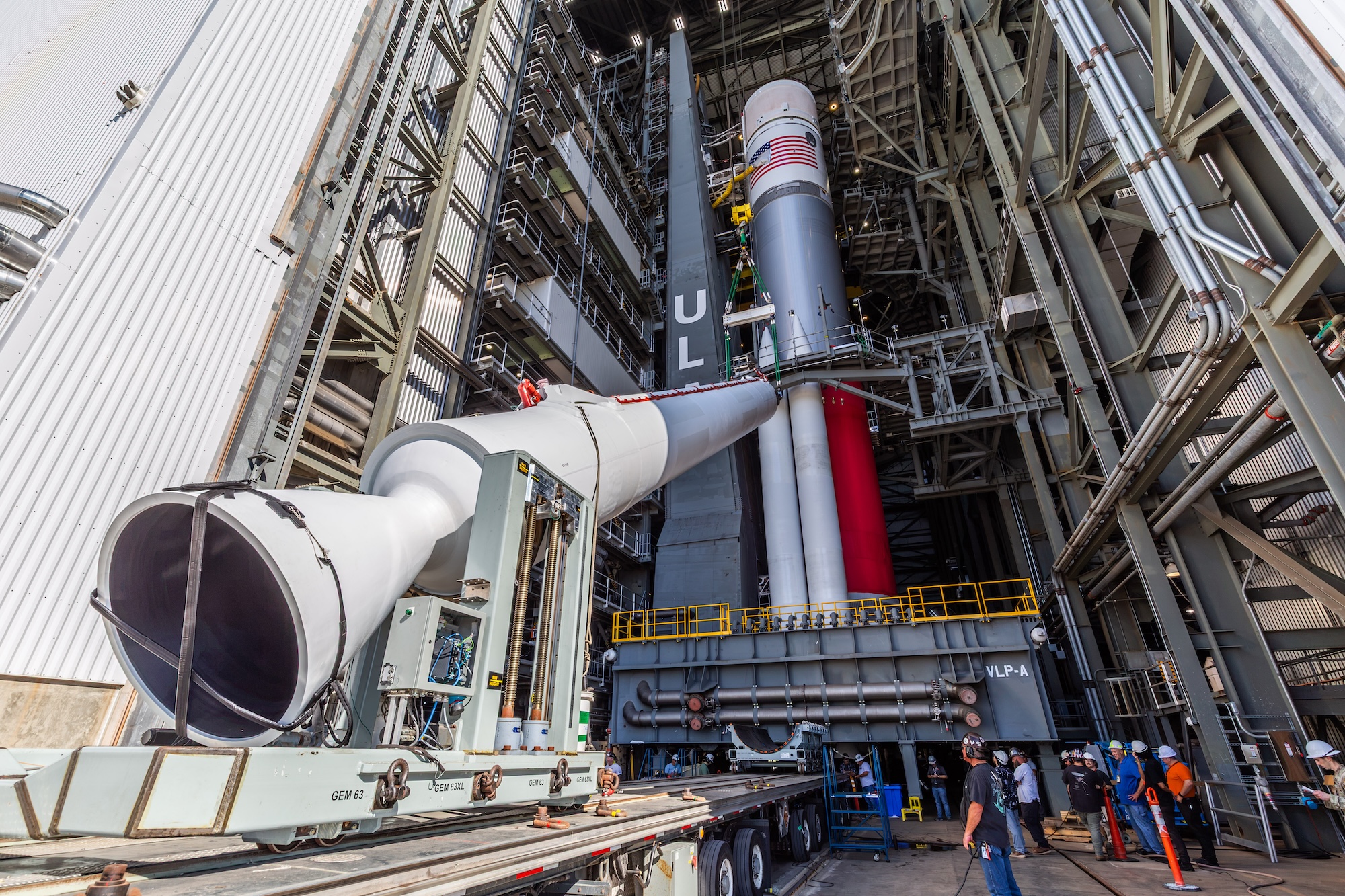
| Solid Rocket Boosters (SRBs) | Configurable (0 to 6 Northrop Grumman GEM 63XL) | Scalable thrust profile tailored for diverse low-Earth, geosynchronous, and cislunar trajectories. |
| Payload Capacity (LEO) | Up to 27,200 kg (Maximum Configuration) | Competes directly with SpaceX Falcon Heavy for massive constellations and defense architectures. |
| Primary Customer Sectors | USSF (National Security Space Launch) & Amazon Kuiper | Secures a multi-year backlog exceeding dozens of institutional and commercial flights. |
Industry and Market Implications: Winners, Losers, and Economic Ripples
The aerospace sector operates under intense financial scrutiny, where launch delays translate directly into compressed margins, deferred revenues, and increased holding costs for payload owners. The resumption of Vulcan flights introduces a vital stabilizing force into the global launch market, which has faced severe capacity constraints over the past twenty-four months.
The Commercial Landscape
On the winning side of the ledger are commercial mega-constellation operators—most notably Amazon with its Project Kuiper initiative. Amazon has reserved a massive slate of Vulcan launches to deploy its broadband satellites into low-Earth orbit, creating a direct counterweight to SpaceX’s Starlink deployment cadence. Every successful Vulcan flight mitigates supply chain bottlenecks for Amazon, protecting their long-term capital expenditure timelines and preserving projected valuation multiples.
Conversely, any stumble on Friday the 13th would reverberate immediately across the capital markets, triggering conservative reassessments by institutional investors holding positions in aerospace and defense exchange-traded funds (ETFs). The duopolistic nature of heavy-lift launch services means that systemic delays from one provider place an unsustainable operational burden on competitors, restricting market liquidity for new entrants seeking launch slots.
Defense Procurement and Sovereign Security
From a national security perspective, the Department of Defense mandates dual-supplier redundancy to prevent single-point-of-failure vulnerabilities in its launch infrastructure. ULA’s Vulcan is a designated workhorse under the National Security Space Launch (NSSL) phase 2 contracts. A successful return to flight reassures Pentagon procurement officials that the nation's critical intelligence, surveillance, and reconnaissance (ISR) satellites will reach their designated orbital slots without compromising geopolitical readiness or regulatory compliance mandates.
Frequently Asked Questions (People Also Ask)
1. Why is ULA’s Vulcan return-to-flight scheduled for Friday the 13th?
While the calendar date carries superstitious connotations, launch windows are determined strictly by celestial mechanics, orbital insertion requirements, range availability, and technical readiness. ULA mission controllers treat Friday the 13th as a standard operational day, relying on strict data-driven telemetry rather than calendar folklore.
2. What caused the initial delay and stand-down for the Vulcan rocket?
The stand-down was initiated following comprehensive reviews and minor structural anomalies observed during earlier certification and qualification testing. Engineering teams used this period to execute rigorous risk mitigation, refine thermal protection systems, and ensure absolute structural integrity across both the BE-4 booster engines and the Centaur V upper stage.
3. How does the Vulcan Centaur compare to legacy systems like the Atlas V?
Vulcan is designed to completely replace both the Atlas V and Delta IV heavy rockets. It utilizes modern liquid methane propulsion (BE-4) instead of kerosene, incorporates scalable solid rocket booster configurations, and features the advanced Centaur V upper stage, resulting in significantly higher payload capacity and reduced manufacturing costs per pound to orbit.
4. What are the broader financial and market impacts of a successful launch?
A successful return to flight validates ULA’s engineering remediation, unlocks a multibillion-dollar commercial and defense backlog, and provides crucial capacity relief to the global launch market. It directly benefits major clients like Amazon Kuiper and the U.S. Space Force while stabilizing valuation multiples for parent companies Boeing and Lockheed Martin.
Future Outlook: Milestones on the Horizon
As the countdown clock ticks toward liftoff, the broader aerospace community is looking past Friday the 13th to map out ULA’s operational roadmap for the remainder of the decade. The immediate imperative is achieving a flawless flight profile that validates the engineering modifications implemented over the past several months. Once this milestone is cleared, ULA faces the formidable challenge of scaling its launch cadence to meet the demands of its densely packed manifest.
Key indicators to watch in the subsequent quarters include:
-
* Cadence Acceleration: Transitioning from developmental and certification flights to a routine, high-frequency operational tempo capable of supporting multiple launches per year.
* Booster Reuse Development: Advancing ULA’s "SMART" (Sensible Modular Autonomous Return Technology) engine-section reuse initiative to compress operating costs and strengthen long-term margin profiles.
* Defense Certification Audits: Meeting rigorous U.S. Space Force milestones to qualify for upcoming National Security Space Launch Phase 3 procurement tranches.
Ultimately, the return of the Vulcan rocket is not merely an engineering exercise; it is a vital stress test for the commercial viability and infrastructural resilience of the New Space economy. As institutional investors and defense planners analyze the telemetry, the message from the launchpad will resonate far beyond Cape Canaveral—defining the trajectory of heavy-lift aerospace for years to come.