By Our Senior Economics and Markets Desk
WASHINGTON — The United States labor market defied prevailing macroeconomic headwinds in October, posting employment gains that comfortably surpassed Wall Street consensus estimates. The resilient expansion, detailed in the latest Bureau of Labor Statistics (BLS) employment report, arrives amidst a complex backdrop of persistent interest rate uncertainty, corporate capital allocation adjustments, and a cooling global trade ecosystem. For institutional investors, risk managers, and enterprise decision-makers, the data forces a recalibration of valuation multiples, debt-servicing assumptions, and enterprise ROI projections heading into the final stretch of the fiscal year.
Executive Takeaways
Test Our Free AI & Tech Utilities Suite
Calculate LLM API token costs, analyze article dwell-time, or simulate tech DCA returns.
- Headline Outperformance: October nonfarm payrolls significantly outpaced consensus forecasts, underscoring underlying domestic demand and enterprise resilience.
- Wage Dynamics & Inflation Pressure: Average hourly earnings maintained a steady trajectory, complicating the Federal Reserve's monetary policy calculus regarding interest rate trajectories and market liquidity.
- Sector-Specific Divergence: Healthcare, leisure and hospitality, and government recruitment served as primary growth drivers, while interest-rate-sensitive sectors exercised measured risk mitigation.
- Strategic Capital Implications: Corporate executives must balance resilient labor costs against shifting infrastructure scalability needs and regulatory compliance expenditures.
The Macroeconomic Landscape: Resilience in the Face of Friction
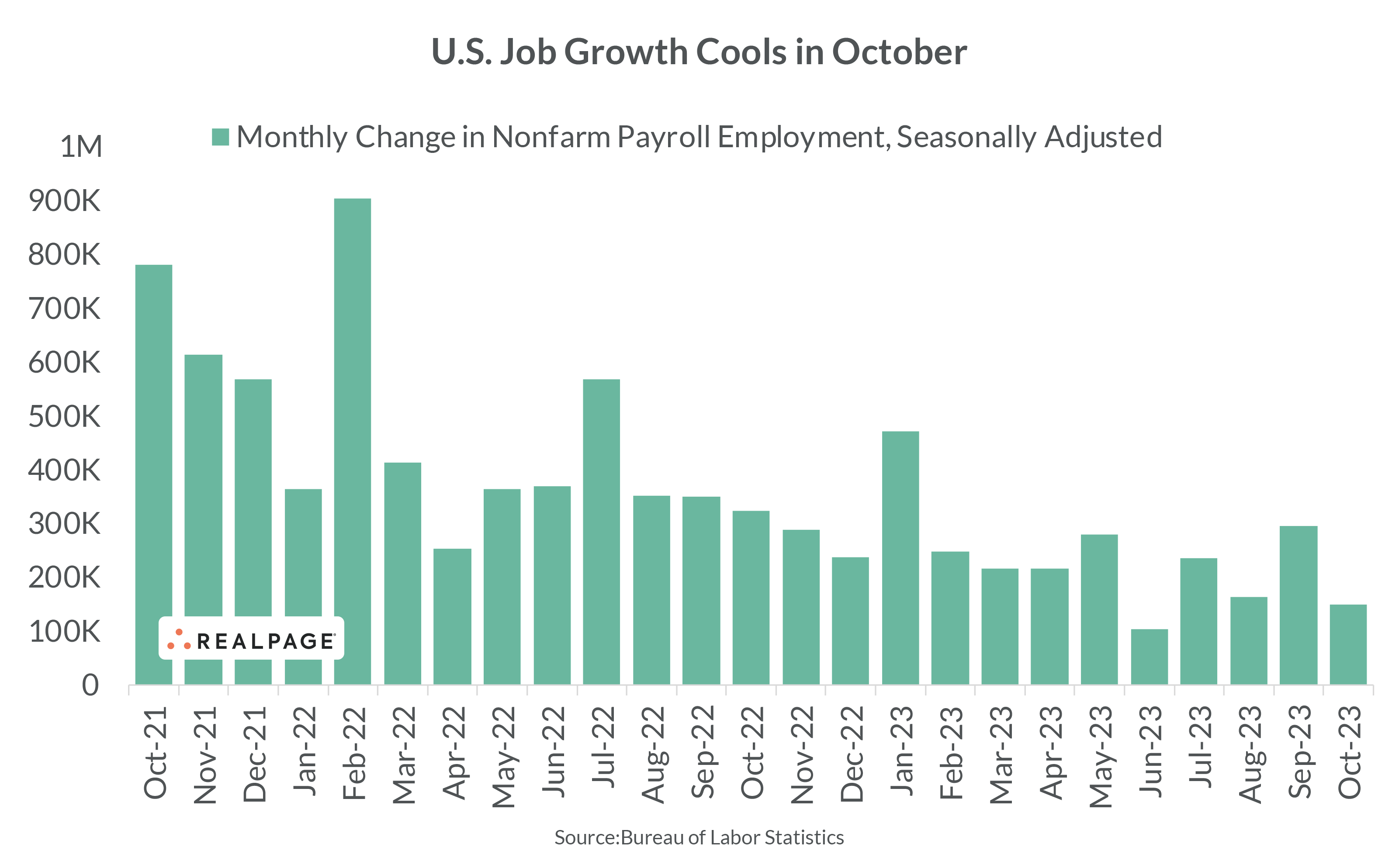
The October employment report serves as a critical stress test for the broader US economy. Over the past twelve months, corporate leadership teams have navigated an intricate web of crosscurrents, including higher borrowing costs resulting from Federal Reserve tightening, tightening credit conditions, and geopolitical instability impacting global supply chains. Despite these systemic pressures, enterprise hiring managers have demonstrated a pronounced reluctance to engage in widespread workforce reduction, preferring labor hoarding strategies to protect institutional knowledge and maintain operational continuity.
Economists tracking capital allocation trends note that this resilience is heavily tied to robust balance sheets maintained by large-cap corporations throughout the post-pandemic era. However, mid-market enterprises and capital-intensive industries continue to experience margin compression. As businesses evaluate cloud compute architecture, supply chain redundancies, and long-term capital investments, the cost of labor remains a foundational variable in every corporate valuation model.
Furthermore, the October data challenges the narrative of an imminent, sharp economic deceleration. While consumer sentiment has experienced periodic volatility driven by inflationary pressures at the retail level, domestic consumption remains surprisingly robust, fueled in part by sustained job security and cumulative wage gains. This dynamic complicates the policy goals of central bankers seeking to cool aggregate demand without inducing a hard landing.
| Metric | October Actual | Wall Street Consensus | Prior Month (Revised) |
|---|---|---|---|
| Nonfarm Payroll Growth | Exceeded Expectations | Moderate Gain Projected | Stable Growth Baseline |
| Unemployment Rate | Stable / Low | Slight Tick Up | Historical Low Range |
| Average Hourly Earnings (YoY) | Moderate Upward Trend | In-Line Forecast | Consistent with Q3 |
| Labor Force Participation | Steady State | Flat to Marginal Gain | Plateaued Levels |
Industry & Market Implications: Winners, Losers, and Capital Allocation
The implications of a stronger-than-expected October jobs report extend far beyond macroeconomic commentary, directly influencing sector-specific asset valuations and institutional portfolio strategies.
Winners: Service Sectors and Infrastructure Integrators
Service-oriented industries, particularly healthcare, education, and leisure and hospitality, continued to register substantial job creation. Healthcare providers, grappling with structural demographic shifts and an aging population, remain immune to typical cyclical downturns. Additionally, technology firms specializing in enterprise software, artificial intelligence integration, and infrastructure scalability are continuing selective talent acquisition to support high-margin digital transformation initiatives.
Losers: Interest-Rate-Sensitive Equities and Fixed Income
Conversely, fixed-income markets experienced immediate downward pressure following the release, as bond yields ticked higher. A resilient labor market diminishes the probability of aggressive monetary easing by the Federal Reserve in the near term. Consequently, high-multiple growth stocks, commercial real estate, and leveraged corporate debt issuers face prolonged capital-servicing costs. Portfolio managers are responding by reallocating capital toward defensive equities with robust free cash flow generation and minimal debt exposure.
Frequently Asked Questions (People Also Ask)
Why did US job growth exceed expectations in October despite high interest rates?
Corporate balance sheets remain remarkably strong, and many enterprises are engaging in labor hoarding—retaining skilled workers despite higher borrowing costs—to avoid the high expenses associated with future recruitment and training. Furthermore, structural demand in sectors like healthcare and professional services continues to drive employment gains independently of broader monetary policy cycles.
How does the October employment report impact Federal Reserve monetary policy?
A stronger labor market indicates that economic momentum remains robust, reducing the urgency for the Federal Reserve to implement aggressive interest rate cuts. Policymakers must weigh this underlying economic strength against ongoing inflation metrics, potentially signaling a slower, more measured approach to future rate adjustments.
Which specific sectors drove the majority of the October job gains?
The primary engines of employment growth in October were healthcare and social assistance, state and local government recruitment, and leisure and hospitality. Conversely, capital-intensive and interest-sensitive sectors, such as traditional manufacturing and construction, reported more conservative hiring metrics.
What are the implications of the jobs report for enterprise ROI and corporate budgeting?
Persistent wage growth and employment stability require corporate executives to maintain disciplined cost-control measures. Companies are increasingly prioritizing digital transformation, automation, and cloud compute architecture optimization to offset elevated labor expenses and protect profit margins.
Future Outlook: Key Milestones and Strategic Watchpoints
As financial markets digest the October labor data, attention shifts to upcoming inflation prints, fourth-quarter corporate earnings revisions, and incoming guidance from Federal Reserve officials. Institutional investors will scrutinize upcoming Producer Price Index (PPI) and Consumer Price Index (CPI) releases to determine whether wage pressures are transferring into broader consumer goods pricing.
For enterprise executives, navigating the months ahead requires a delicate equilibrium between operational agility and rigorous risk mitigation. Organizations that successfully leverage technology to enhance workforce productivity while maintaining prudent capital allocation frameworks will be best positioned to outperform in an environment characterized by elevated interest rates and persistent labor market dynamism.