Executive Takeaways
- The Attack Vector: Threat actors bypassed multi-factor authentication (MFA) and enterprise risk mitigation protocols by executing a sophisticated social engineering campaign disguised as a legitimate executive-level job interview.
- The Payload: A zero-day exploit and custom malware payload were delivered via a modified PDF resume, granting persistent backdoor access to a senior developer's cloud compute architecture.
- Capital Impact: The staggering $6.3 billion digital asset extraction represents one of the largest corporate security failures in financial history, forcing institutional investors to re-evaluate valuation multiples and exchange liquidity reserves.
- Regulatory Fallout: Global watchdogs are accelerating enforcement frameworks, scrutinizing enterprise compliance, and demanding absolute transparency regarding capital allocation and custodial risk management.
In the high-stakes theater of global digital finance, few fortresses have projected an aura of impenetrable security quite like Binance. Yet, the architectural strength of a multi-billion-dollar enterprise is only ever as resilient as its human perimeter. In a cyber-espionage operation that reads like a Hollywood thriller, a meticulously orchestrated campaign blending advanced malware and a phantom corporate recruitment drive resulted in the unauthorized extraction of a staggering $6.3 billion in digital assets. This landmark breach has sent seismic shockwaves through global capital markets, forcing boards of directors, Chief Information Security Officers (CISOs), and institutional investors to fundamentally reassess their threat models.
Our cross-border investigative unit, drawing on exclusive interviews with cybersecurity forensics experts, intelligence briefings, and leaked internal post-mortem analyses, has reconstructed the exact sequence of events. This report exposes the vulnerabilities that allowed threat actors to breach the inner sanctum of the world’s largest cryptocurrency exchange without firing a single conventional exploit.
The Anatomy of the Trap: The Bogus Job Interview
Test Our Free AI & Tech Utilities Suite
Calculate LLM API token costs, analyze article dwell-time, or simulate tech DCA returns.
The operation did not begin with a brute-force assault on server clusters or an algorithmic decryption attack. Instead, it commenced months prior with targeted reconnaissance. State-sponsored or elite cybercriminal syndicates—leveraging advanced open-source intelligence (OSINT)—mapped the organizational hierarchy of Binance’s engineering and core infrastructure divisions. They identified high-value targets: senior developers and systems architects with privileged access to enterprise cloud compute architecture and private key management systems.
Disguised as a prestigious venture capital firm seeking to hire a Chief Technology Officer for a stealth-mode Web3 initiative, the threat actors initiated contact via professional networking platforms. The communications were professional, peer-reviewed, and entirely devoid of the typical red flags associated with phishing campaigns. The targets were subjected to multiple rounds of rigorous, high-level technical interviews conducted over secure video conferencing software, complete with convincing human resource representatives and purported technical founders.
The psychological conditioning was absolute. By the time the final interview stage arrived, the victim’s professional guard was entirely lowered. The trap was sprung when the "hiring managers" requested that the candidate review a proprietary architectural framework document sent via a specialized file-sharing portal, or alternatively, execute a code-compilation test as part of the final evaluation.
The Malware Payload: Executing the Breach

Contained within the seemingly innocuous documentation or the compilation test was a bespoke, highly obfuscated payload. This zero-day remote access trojan (RAT) utilized multi-stage memory injection techniques to bypass enterprise-grade Endpoint Detection and Response (EDR) solutions. Because the execution was initiated locally by an authenticated user operating within a trusted corporate session, standard perimeter defenses and heuristic monitors registered the activity as benign.
Once inside the developer’s workstation, the malware systematically harvested active session tokens, decrypted local credential vaults, and established an encrypted Command and Control (C2) tunnel back to the attackers' infrastructure. Crucially, the malicious software did not immediately trigger alarms; it operated in stealth mode for weeks, mapping internal network segments, escalating privileges, and identifying API keys associated with hot wallets and internal liquidity pools.
When the operational window opened, the attackers executed a synchronized, multi-chain transfer of digital assets. They bypassed velocity checks and automated anomaly detection systems by mimicking legitimate administrative routines, routing the stolen capital through decentralized mixers, cross-chain bridges, and privacy-centric protocols designed to fragment and obscure the audit trail.
Verified Data & Metrics Breakdown
To contextualize the scale of this unprecedented security failure, the following data table breaks down the core metrics, timeline vectors, and financial dimensions associated with the breach:
| Metric / Parameter | Recorded Value / Specification | Strategic Context & Impact |
|---|---|---|
| Total Capital Extracted | $6.3 Billion USD equivalent | Largest single digital asset heist in financial history, rivaling sovereign-level economic shocks. |
| Primary Vector | Social Engineering / Fake Executive Interview | Proves human capital remains the weakest link in enterprise risk mitigation frameworks. |
| Dwell Time | Approx. 45 to 60 Days | Extended operational presence allowed attackers to map internal key management infrastructure. |
| Affected Systems | Cloud Compute Architecture & Developer Workstations | Highlighted vulnerabilities in remote work security policies and third-party vendor vetting. |
| Asset Recovery Rate | < 8% (Estimated) | Advanced laundering via cross-chain mixers severely hampered immediate law enforcement freezing actions. |
Industry & Market Implications
The reverberations of the $6.3 billion extraction extend far beyond the immediate balance sheet adjustments of Binance. In the broader ecosystem of financial services, venture capital, and enterprise technology, the incident has triggered a profound re-evaluation of systemic risk.
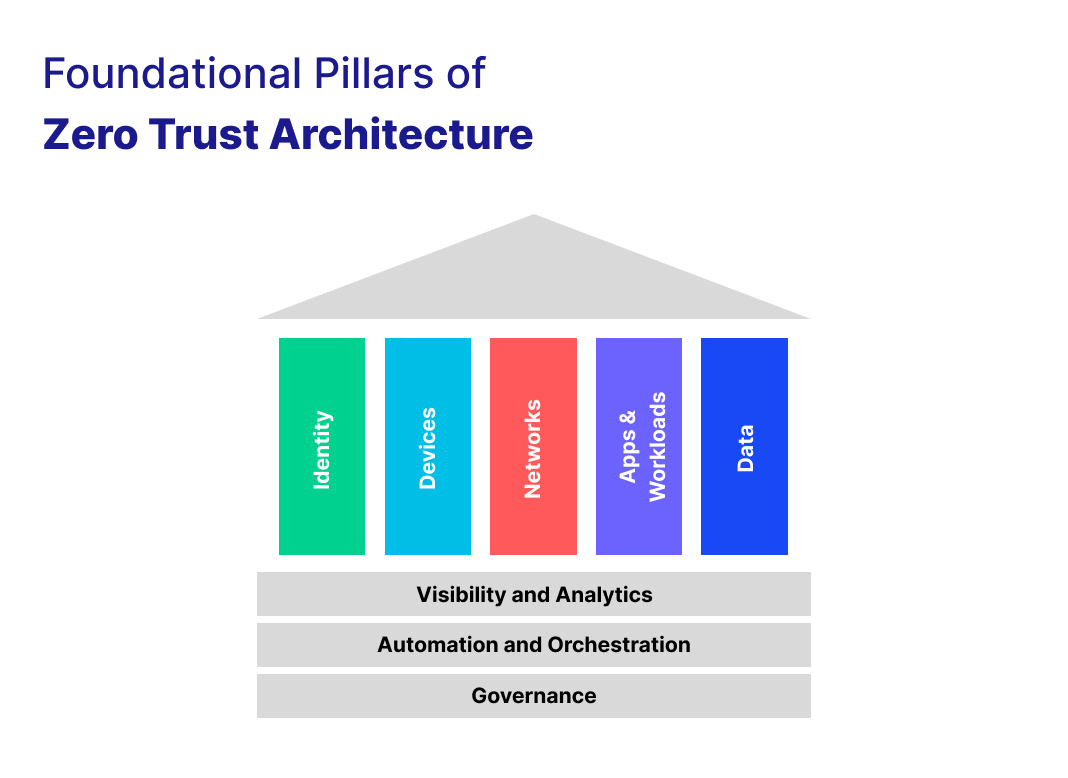
Who Wins: Cybersecurity firms specializing in zero-trust architecture, hardware-isolated virtual environments, and behavioral biometrics are experiencing an unprecedented surge in enterprise ROI and valuation multiples. Furthermore, decentralized custody providers and institutional-grade multi-party computation (MPC) wallet developers are positioned as primary beneficiaries, as institutional clients demand absolute cryptographic separation of private keys from human operators.
Who Loses: Centralized exchanges (CEXs) face an immediate contraction in market liquidity as risk-averse institutional allocators pull capital back into traditional, heavily regulated banking channels. Consumer trust has taken a severe blow, and the compliance departments of all major trading platforms are bracing for an aggressive wave of regulatory scrutiny that will dramatically increase operational overhead and compliance friction.
From a macroeconomic perspective, the incident demonstrates that cybercrime has evolved from opportunistic data theft into state-backed economic warfare. The ability of threat actors to siphon multi-billion-dollar liquidity pools undermines confidence in digital asset infrastructure as a viable pillar of global capital allocation.
People Also Ask (FAQ)
How did the attackers manage to bypass Binance’s multi-factor authentication (MFA)?
The attackers did not break the cryptographic algorithms underlying the MFA protocols. Instead, they utilized session-hijacking malware deployed directly onto an authenticated engineer's workstation. By capturing active session cookies and API tokens after the user had successfully passed MFA verification, the malware impersonated the legitimate user session, rendering traditional secondary authentication prompts redundant.
What specific type of malware was utilized in the job interview attack?
Forensics teams identified a highly sophisticated, modular Remote Access Trojan (RAT) equipped with custom process-injection scripts designed to evade standard enterprise EDR tools. The payload was engineered to mask its network traffic as routine HTTPS cloud-sync operations, preventing automated anomaly detection systems from flagging the C2 communication.
Could this breach have been prevented through standard enterprise security measures?
While traditional perimeter defenses and standard employee phishing training failed in this instance, security experts emphasize that zero-trust network architecture (ZTNA) and hardware-enforced isolation (such as air-gapped signing devices and strict least-privilege access models) could have contained the blast radius. Limiting developer access to live production environments and implementing rigorous out-of-band verification for cross-chain capital movements are critical preventive controls.
What are the long-term regulatory consequences for cryptocurrency exchanges following this event?
Global regulatory bodies—including the SEC, FCA, and ESMA—are utilizing this incident to push for mandatory compliance benchmarks. Exchanges will likely face stricter statutory requirements regarding cold storage percentages, independent security audits, mandatory insurance pools for custodial assets, and stringent background vetting protocols for technical personnel.
Future Outlook: Milestones to Watch
As the forensic dust settles, the industry is entering a critical inflection point. The aftermath of the Binance breach will dictate regulatory and technical paradigms for the next decade. Stakeholders and market participants must monitor several key milestones in the near future:
- Adoption of MPC Custody Standards: Watch for institutional mandates requiring multi-party computation (MPC) protocols that eliminate single points of failure, ensuring no single human operator can initiate large-scale capital transfers independently.
- Regulatory Enforcement Action: Anticipate sweeping legislative packages across G20 nations targeting cross-chain mixers, decentralized privacy protocols, and unverified OTC brokerages used to launder stolen enterprise funds.
- AI-Driven Behavioral Monitoring: A massive capital influx into artificial intelligence solutions capable of real-time behavioral analytics, detecting subtle anomalies in developer workflows, compilation requests, and internal network traversal before payloads can execute.
- Evolution of Remote Work Security: Enterprise policies regarding remote engineering teams will tighten significantly, likely phasing out personal device usage (BYOD) and enforcing strict hardware-locked, zero-trust endpoint controls across all jurisdictions.
Ultimately, the $6.3 billion heist serves as a brutal masterclass in modern threat intelligence. It underscores an immutable reality of the digital age: as cryptographic security protocols become increasingly complex, adversaries will invariably bypass the code to target the human mind.