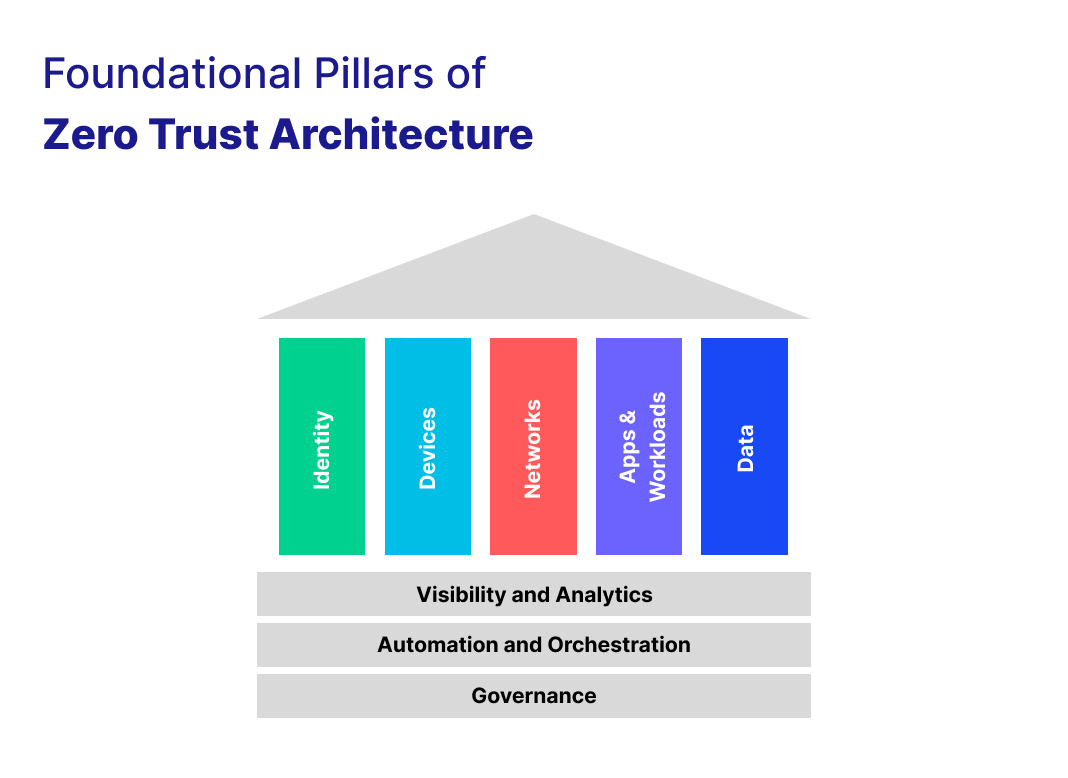
Executive Takeaways
- The Paradigm Shift: Released on March 21, 2022, Bank Policy Institute research spearheaded by Andrew Kennedy formally documented the transition of major global financial institutions away from perimeter-based defense models toward "Adaptive Trust" and Zero Trust Architecture (ZTA).
- Capital Allocation & ROI: Tier-1 investment banks and retail financial giants have collectively funneled billions into cloud compute architecture and continuous identity verification, driving measurable enterprise risk mitigation amidst soaring ransomware sophistication.
- Regulatory Compliance: Regulators globally are increasingly viewing Zero Trust frameworks not merely as best practices, but as baseline statutory requirements for maintaining operational resilience and protecting market liquidity.
For decades, the architectural blueprint of global finance relied on a reassuringly simple, if dangerously flawed, assumption: once you were inside the corporate castle, you could be trusted. Banks, asset managers, and market infrastructures built high digital walls—firewalls, secure VPNs, and segregated local area networks—operating under the premise that external threats were the sole enemy. By March 2021, that perimeter-based model was effectively obsolete. The acceleration of remote work, multi-cloud migration, and weaponized software supply chain attacks exposed the fragility of implicit trust.
It was against this volatile backdrop that the Bank Policy Institute (BPI) published a definitive white paper on March 21, 2022, authored by enterprise security strategist Andrew Kennedy: Adaptive Trust: Zero Trust Architecture in a Financial Services Environment. The report laid bare an uncomfortable reality for boardroom executives and chief information security officers (CISOs): legacy security postures were no longer sufficient to safeguard systemic market stability. This investigative report examines the catalytic events, structural mechanics, capital allocation shifts, and future trajectory of Zero Trust Architecture (ZTA) across the modern financial services ecosystem.
The Catalytic Shift: Why Legacy Perimeters Collapsed
Test Our Free AI & Tech Utilities Suite
Calculate LLM API token costs, analyze article dwell-time, or simulate tech DCA returns.
The institutional embrace of Zero Trust was not born of academic theory, but of operational necessity. Throughout the late 2010s and early 2020s, the attack surface of financial institutions expanded exponentially. The COVID-19 pandemic forced hundreds of thousands of traders, wealth managers, and risk analysts out of heavily monitored physical trading floors and branch offices into unsecured home environments. Corporate data centers simultaneously morphed into hybrid environments spanning Amazon Web Services (AWS), Microsoft Azure, and Google Cloud Platform.
Traditional perimeter defenses failed to account for this dispersion. Cybercriminals weaponized compromised credentials, moving laterally across enterprise networks with impunity once inside. High-profile supply chain incidents, such as the SolarWinds breach and the Log4j vulnerability, demonstrated that trusted vendor networks could become Trojan horses. In a sector where a single operational outage can paralyze overnight clearing systems and freeze billions in market liquidity, the status quo represented an existential threat.
Andrew Kennedy’s 2022 analysis for the BPI crystallized this structural vulnerability. The core thesis was unequivocal: financial institutions needed to abandon the "trust but verify" mantra and adopt an "never trust, always verify, continuously validate" posture. This meant dismantling flat internal networks and replacing them with micro-segmentation, continuous multi-factor authentication (MFA), and dynamic, context-aware access policies.
Anatomy of Adaptive Trust in Banking
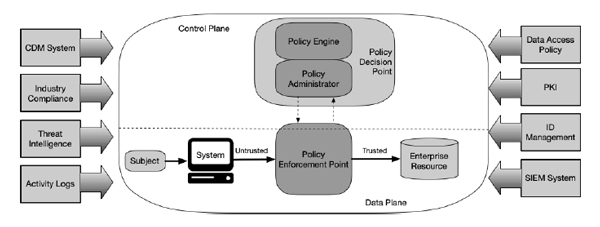
Implementing Zero Trust Architecture in a Tier-1 financial institution is vastly more complex than deploying a new software patch. It requires a fundamental re-engineering of cloud compute architecture, identity management, and data governance frameworks. Adaptive Trust takes standard Zero Trust principles—which dictate that no user or device is trusted by default—and injects real-time risk scoring based on behavioral analytics and contextual telemetry.
For instance, when a portfolio manager attempts to access high-yield trading algorithms from a corporate laptop, an adaptive trust system evaluates dozens of telemetry signals simultaneously:
- Device Health: Is the endpoint running up-to-date endpoint detection and response (EDR) software? Are there unpatched kernel vulnerabilities?
- Behavioral Telemetry: Is the user logging in at an unusual hour, or executing queries at a volume that deviates from historical baselines?
- Network Context: Is the connection originating from an approved corporate IP subnet, or an unverified public Wi-Fi access point?
If risk scores remain low, access is granted seamlessly. If anomalies are detected—such as a simultaneous login attempt from two geographically disparate locations—the system dynamically steps up authentication requirements or revokes session access entirely. This micro-segmentation ensures that even if an attacker compromises a low-level administrative account, their lateral movement is choked off immediately, protecting core banking ledgers and customer PII (Personally Identifiable Information).
| Architectural Dimension | Legacy Perimeter Model (Pre-2020) | Adaptive Zero Trust Model (Post-2022) |
|---|---|---|
| Network Trust | Implicit trust inside the corporate firewall. | Zero implicit trust; every network packet verified. |
| Authentication | Static passwords and periodic VPN logins. | Continuous, risk-scored adaptive MFA and biometrics. |
| Data Protection | Perimeter encryption; flat internal file shares. | Micro-segmentation, encryption at rest and in transit. |
| Regulatory Alignment | Check-box compliance focused on perimeter controls. | Dynamic audit trails meeting stringent SEC, OCC, and Basel standards. |
Industry & Market Implications: Capital Allocation and Valuation Multiples
The pivot toward Adaptive Trust has profound implications for corporate finance, vendor ecosystems, and institutional valuation multiples. Cybersecurity spending within the financial sector has transitioned from a back-office capital expenditure (CapEx) line item to a core strategic driver of operational resilience.
Who Wins: Cybersecurity vendors specializing in identity and access management (IAM), cloud security posture management (CSPM), and endpoint telemetry—such as CrowdStrike, Okta, Microsoft, and Palo Alto Networks—have seen extraordinary enterprise demand. Furthermore, financial institutions that successfully architect Zero Trust environments early are commanding higher valuation multiples from risk-conscious institutional investors. These firms experience fewer disruptive operational outages, lower cyber insurance premium hikes, and significantly reduced exposure to catastrophic regulatory fines.
Who Loses: Legacy networking and perimeter security vendors relying on hardware-based firewalls and traditional VPN appliances have faced severe top-line headwinds. Financial institutions are actively decommissioning legacy hardware in favor of software-defined perimeters (SDP) and Secure Access Service Edge (SASE) frameworks. Additionally, financial firms that drag their feet on ZTA implementation find themselves penalized by ratings agencies, burdened by inflated insurance deductibles, and increasingly vulnerable to predatory ransomware campaigns.
From a systemic risk perspective, the BPI report underscored that financial market stability is only as strong as its weakest node. If a regional clearinghouse or tier-3 custodian bank maintains porous legacy perimeters, it poses a contagion risk to the entire interbank lending and settlement network. Consequently, industry-wide adoption of Adaptive Trust functions as a collective economic shield.
Frequently Asked Questions (People Also Ask)
What is the primary difference between traditional security and Zero Trust Architecture in finance?
Traditional security relies on a perimeter defense model—often compared to a hard shell with a soft interior—where users inside the network are automatically trusted. Zero Trust Architecture (ZTA) assumes breach by default, requiring continuous verification of every user, device, and application request regardless of whether the traffic originates from inside or outside the corporate network.
How does Andrew Kennedy’s "Adaptive Trust" framework improve banking operations?
Andrew Kennedy’s framework moves beyond static Zero Trust rules by incorporating real-time behavioral analytics, context-aware telemetry, and dynamic risk scoring. This allows financial institutions to maintain frictionless user experiences for legitimate traders and analysts while automatically stepping up security checks or blocking sessions when anomalous behavior is detected.
What are the regulatory drivers compelling financial institutions to adopt Zero Trust?
Regulatory bodies such as the Securities and Exchange Commission (SEC), the Office of the Comptroller of the Currency (OCC), and international bodies overseeing capital adequacy and operational resilience are increasingly enforcing strict incident reporting rules and cybersecurity risk management standards. Zero Trust provides the granular audit trails and verifiable risk mitigation required to satisfy these mandates.
How does ZTA impact enterprise ROI and IT budgets in financial services?
While the initial capital allocation required to re-architect cloud and legacy environments is substantial, ZTA delivers long-term enterprise ROI by drastically reducing the probability and financial fallout of devastating data breaches, ransomware extortion payouts, and regulatory penalties. It also streamlines IT administration by consolidating redundant legacy security tools into unified software-defined architectures.
Future Outlook: The Road Ahead for Adaptive Security
As financial institutions look toward the remainder of the decade, the evolution of Adaptive Trust will be defined by the integration of Artificial Intelligence (AI) and Machine Learning (ML). As cyber syndicates increasingly leverage generative AI to automate phishing campaigns, bypass static controls, and spoof biometric identifiers, human-driven security operations centers (SOCs) will be hopelessly outmatched.
The next frontier of ZTA involves fully autonomous, AI-driven trust engines capable of neutralizing sophisticated threats in milliseconds. These systems will analyze petabytes of real-time telemetry across hybrid multi-cloud environments, dynamically adjusting access permissions and isolating compromised micro-segments without human intervention.
For executive leadership, the mandate established by the Bank Policy Institute in March 2022 remains clear: Adaptive Trust is no longer an optional technological upgrade. It is the foundational operating system of modern, resilient, and trusted global finance. Institutions that master this transition will secure their competitive advantage, protect market liquidity, and safeguard institutional trust in an increasingly hostile digital arena.