TOKYO — Japanese law enforcement authorities have taken an active-duty United States Marine into custody on suspicion of murdering a local woman, an incident that threatens to ignite severe diplomatic friction between Washington and Tokyo at a pivotal juncture for regional security in East Asia.
The arrest, confirmed by prefectural police and defense officials early Thursday, has instantly thrust the longstanding controversy surrounding the U.S. military footprint in Japan back into the political epicenter. With bilateral relations already sensitive to base-related crimes and local sovereignty concerns, the homicide probe has galvanized local leaders, reignited street-level anger, and forced senior officials in both capitals into rapid damage-control mode.
Executive Summary: What We Know Right Now
- The Incident: A U.S. Marine stationed in Japan was formally arrested by Japanese prefectural police following the discovery of a deceased Japanese woman. Police suspect foul play and have classified the case as a homicide investigation.
- Jurisdiction & Custody: Under the provisions of the U.S.–Japan Status of Forces Agreement (SOFA), the suspect is currently in Japanese civilian police custody because the alleged offense occurred off-duty and outside military facilities.
- Diplomatic Repercussions: Japan’s Ministry of Foreign Affairs has lodged a formal, high-level protest with the U.S. Embassy in Tokyo, demanding absolute cooperation with the criminal investigation and strict measures to enforce troop discipline.
- Strategic Exposure: The incident lands at an extraordinarily delicate moment, as Washington and Tokyo attempt to deepen joint military command integration and expand deterrent capabilities in response to rising geopolitical friction with China and North Korea.
The Investigation: Police Action and Custody Status

According to preliminary details released by local investigators, the victim was discovered unresponsive with severe injuries consistent with physical assault. Emergency responders pronounced her dead at the scene. Forensic investigators quickly identified the suspect through security surveillance footage, eyewitness testimony, and vehicle records linked directly to the servicemember.
Prefectural police confirmed the servicemember was detained without physical resistance. While Japanese privacy laws and investigative protocols generally preclude the full immediate release of suspect statements during early interrogations, officials confirmed that the Marine is being questioned regarding murder charges.
United States Forces Japan (USFJ) issued an urgent statement indicating full operational cooperation with civilian authorities: "The United States military views allegations of this nature with utmost gravity. We are cooperating unreservedly with Japanese law enforcement officials in their investigation. Our deepest condolences go out to the family, friends, and community of the deceased."
The SOFA Flashpoint: Legal Sovereignty and Public Outrage
Whenever an American servicemember is implicated in a violent crime on Japanese soil, the legal framework of the 1960 Status of Forces Agreement (SOFA) becomes an instant lightning rod. Under SOFA, primary jurisdiction defaults to Japanese authorities if the crime takes place off-duty and off-base—as is the case here. However, decades of historical ambiguity, jurisdictional delays, and historical transfers of custody have left a bitter taste among the host communities.
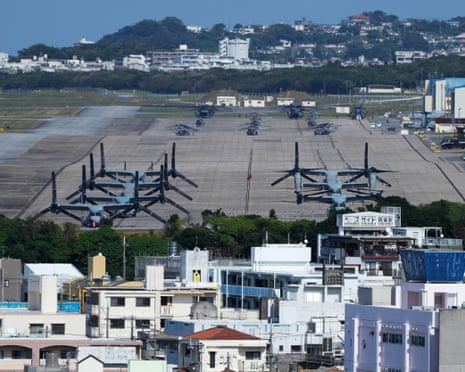
For decades, local civic leaders—particularly in southern prefectures such as Okinawa, which hosts roughly 70% of the land area exclusively used by U.S. military facilities—have campaigned against what they perceive as extraterritorial privilege. Although the Pentagon has repeatedly instituted strict curfews, liberty restrictions, and mandatory anti-harassment training courses for deployed personnel, recurrent violent crimes consistently dissolve local goodwill.
Local governors and community organizations have repeatedly expressed exhaustion over recurring cycles of military apologies followed by fresh tragedies. Protests outside base gates and prefecture administrative buildings began mobilizing within hours of the arrest announcement.
Key Metrics: The U.S. Military Footprint in Japan
| Metric / Dimension | Details & Context |
|---|---|
| Total Deployed U.S. Personnel | Approximately 54,000 active-duty servicemembers (largest forward-deployed U.S. force globally). |
| Host Nation Support (Omoiyari Yosan) | Japan provides over $1.5 billion annually to offset base operational and utility expenses. |
| Geographic Concentration | Over half of all U.S. personnel and ~70% of base land are concentrated in Okinawa Prefecture. |
| Legal Framework | 1960 U.S.–Japan Status of Forces Agreement (SOFA), Article XVII covering jurisdiction. |
| Historical Flashpoints | 1995 Okinawa schoolgirl assault; 2016 murder of a 20-year-old local woman by a U.S. contractor. |
Geopolitical and Economic Fallout
Beyond the immediate human tragedy and legal battle, this arrest threatens to complicate critical regional security objectives. Prime Minister Shigeru Ishiba’s administration faces immediate political pressure from opposition lawmakers who argue that Tokyo has failed to protect its citizens from foreign military encroachment.
At a time when Tokyo is drastically expanding its defense budget to 2% of GDP and planning a unified command structure alongside U.S. Indo-Pacific Command, public outrage over base personnel conduct acts as a powerful brake. Domestic political resistance can slow base realignments, delay joint exercises, and complicate infrastructure projects vital to defending the first island chain.
Market observers and defense analysts warn that political instability surrounding the defense posture could spill into domestic policy, compelling Japanese leadership to posture more aggressively toward Washington to placate an infuriated electorate ahead of legislative sessions.
Outlook: What Follows Next
The Japanese public prosecutor’s office has an initial period under domestic criminal procedure law to interrogate the suspect before deciding whether to issue a formal indictment. Given the severity of the charges, prosecutors are expected to seek maximum pre-indictment detention.
Concurrently, the U.S. Marine Corps Command is expected to impose immediate punitive restrictions across regional commands, including base-wide liberty cancellations, strict alcohol bans, and comprehensive personnel reviews. Whether these traditional damage-control efforts will be enough to diffuse the simmering public and diplomatic backlash remains highly doubtful.
Frequently Asked Questions
Will the U.S. Marine face trial in a Japanese or American military court?
Because the alleged crime was committed off-base while the servicemember was off-duty, Japanese civilian authorities maintain primary jurisdiction under Article XVII of the bilateral Status of Forces Agreement (SOFA). If prosecutors formally indict the suspect, the trial will proceed in a Japanese district court under Japanese law.
How does this impact the wider U.S.–Japan military alliance?
While the strategic imperative of the alliance remains intact due to security pressures from China and North Korea, the political fallout will likely complicate base operational flexibility, prompt calls for SOFA revisions, and increase domestic pressure on the Japanese government to demand stricter regulatory oversight of U.S. military personnel.