Executive Takeaways
- Index Volatility Persists: Dow Jones Industrial Average, S&P 500, and Nasdaq 100 futures are showing narrow, volatile ranges following a severe multi-session liquidation cycle.
- The Employment Catalyst: Institutional capital allocation remains paralyzed as institutional investors await the Bureau of Labor Statistics' Nonfarm Payrolls report to gauge Federal Reserve monetary policy maneuvers.
- Valuation Compression: High-multiple tech equities and cloud-compute infrastructure leaders face intense scrutiny regarding capital expenditure sustainability and infrastructure scalability amidst shifting interest rate expectations.
- Risk Mitigation Mode: Corporate treasurers and portfolio managers are executing rigorous risk mitigation strategies, rotating out of speculative growth assets into defensive, high-dividend-yielding sectors.
NEW YORK — Global equity markets are operating in a state of high-tension equilibrium early Friday morning as Dow Jones Industrial Average, S&P 500, and Nasdaq Composite futures flicker between marginal gains and steep intraday losses. The erratic price action follows a brutal, broad-based sell-off that erased billions in market capitalization across major exchanges, exposing underlying vulnerabilities in valuation multiples, labor market resilience, and corporate earnings forecasts.
As trading desks across Wall Street, the City of London, and Frankfurt position themselves for the release of the U.S. Bureau of Labor Statistics (BLS) employment report, macroeconomic indicators are being scrutinized with unprecedented intensity. The delicate interplay between labor market cooling, sticky core inflation metrics, and the Federal Reserve’s impending interest rate decisions has turned every tick of economic data into a high-stakes referendum on the health of the global economy.
Anatomy of the Sell-Off: Catalysts and Margin Pressures
Test Our Free AI & Tech Utilities Suite
Calculate LLM API token costs, analyze article dwell-time, or simulate tech DCA returns.
The precipitous decline that preceded Friday’s tentative stabilization was not an isolated flash crash, but rather the culmination of weeks of mounting systemic anxiety. Institutional investors, confronting stretched valuation multiples across artificial intelligence beneficiaries and semiconductor manufacturers, began aggressively locking in year-to-date gains. This institutional de-risking triggered cascading stop-loss orders, resulting in a sharp contraction in overall market liquidity.
Furthermore, corporate balance sheets are coming under renewed scrutiny. As enterprise customers tighten IT budgets and scrutinize enterprise ROI on software and hardware deployments, technology titans face mounting pressure to prove that their multi-billion-dollar capital expenditure cycles will yield sustainable revenue streams. Analysts at major financial institutions noted that the deceleration in cloud compute architecture spending combined with higher borrowing costs has fundamentally altered the risk-reward profile for growth-oriented equities.
Compounding these fundamental headwinds, regulatory compliance pressures and tightening monetary conditions have forced leveraged funds to rebalance portfolios. The resulting margin calls and forced liquidations exacerbated the downside momentum, turning routine sector rotations into a violent, index-wide correction.
The Employment Report: The Ultimate Macroeconomic Bellwether
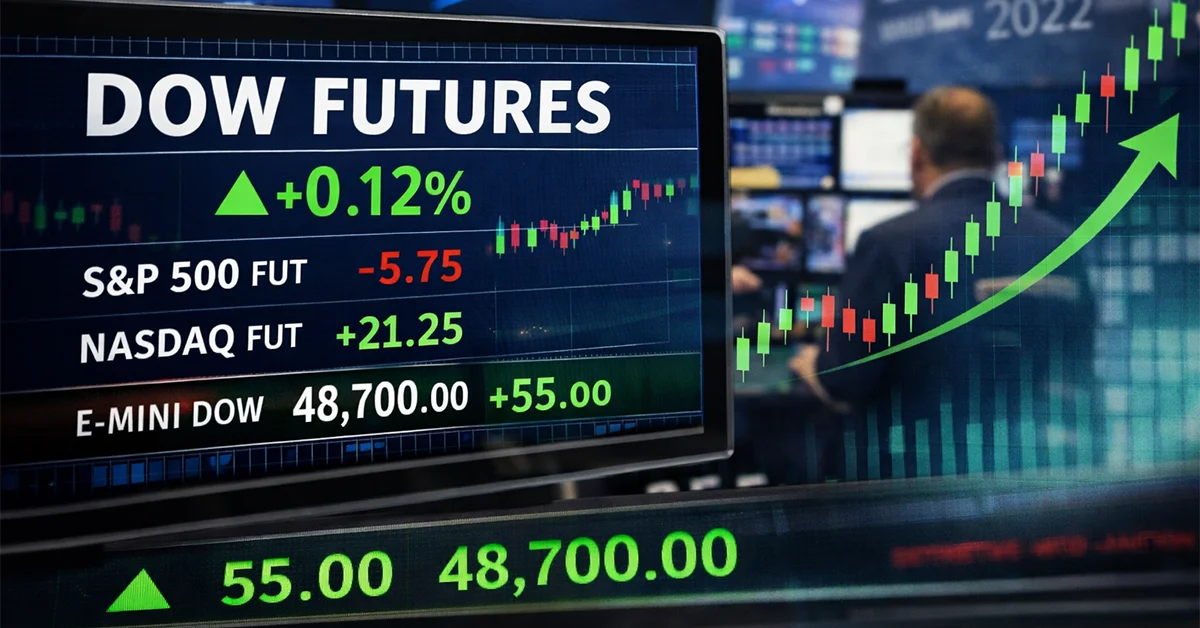
All eyes are now locked on the upcoming jobs report. For months, market participants prayed for a "Goldilocks" scenario—an economy cooling just enough to prompt Federal Reserve rate cuts without tipping into a severe recession. However, recent economic prints have muddied the waters, creating a volatile environment where "bad news is no longer good news" for equities.
If headline job creation significantly misses consensus estimates, panic over a hard landing could instantly override any optimism regarding imminent monetary easing. Conversely, an unexpectedly hot labor market could reignite fears of stubborn wage inflation, compelling the Federal Reserve to maintain a higher-for-longer stance on the federal funds rate, thereby crushing risk assets that rely on cheap capital.
| Market Index | Pre-Sell-Off Peak | Current Futures Trend | Primary Driver |
|---|---|---|---|
| Dow Jones Industrial Average | All-Time Highs | Wobbling / Sideways | Defensive sector rotation & industrial earnings |
| S&P 500 | Near Record Levels | Cautious Recovery | Broad liquidation & macro hedging |
| Nasdaq 100 | Extended Multiples | High Volatility | Tech valuation compression & capex scrutiny |
Industry & Market Implications: Winners, Losers, and Capital Flows
The current market regime is precipitating a profound divergence in capital allocation strategies across global markets:
- The Losers — High-Beta Growth & Speculative Tech: Companies with long-duration cash flows and stretched valuation multiples are bearing the brunt of the correction. Businesses failing to demonstrate immediate enterprise ROI or operating cash flow positivity are experiencing severe capital flight.
- The Winners — Defensive Sectors & Quality Yields: Utilities, healthcare, and consumer staples are capturing safe-haven inflows. Institutional portfolio managers are prioritizing robust balance sheets, strong free cash flow generation, and reliable dividend payout histories over speculative upside.
- Broader Economic Impact: The tightening of financial conditions directly affects corporate borrowing costs, commercial real estate refinancing, and consumer credit availability. As market volatility rattles consumer confidence, discretionary spending faces an increased risk of contraction heading into the final quarters of the fiscal year.
Frequently Asked Questions (People Also Ask)
Why are stock market futures wobbling ahead of the jobs report?
Market futures are experiencing heightened volatility because investors are uncertain whether upcoming employment data will signal a healthy economic cooling or an abrupt slide into recession. This ambiguity complicates the Federal Reserve's next interest rate decisions, leaving institutional funds hesitant to deploy major capital.
How does the Nonfarm Payrolls report impact the Dow, S&P 500, and Nasdaq?
The jobs report directly influences monetary policy expectations. Strong employment data can spark fears of persistent inflation and higher interest rates, which typically pressure high-multiple tech stocks on the Nasdaq. Conversely, weak job growth may fuel economic slowdown anxieties, impacting cyclical components of the Dow and S&P 500.
What is valuation compression, and why is it affecting tech stocks?
Valuation compression occurs when investors are willing to pay less for each dollar of a company's earnings, often driven by rising interest rates that make risk-free fixed income assets more attractive. Tech equities, previously valued on lofty future growth expectations, are particularly vulnerable to this multiple contraction.
How are institutional investors adjusting their portfolios during this sell-off?
Portfolio managers are executing defensive risk mitigation strategies by reducing exposure to high-beta growth equities, trimming leveraged positions, and reallocating capital into cash equivalents, short-duration Treasury bills, and defensive sectors with strong cash flow visibility.
Future Outlook and Key Milestones to Watch
Looking ahead, market direction will be dictated by a convergence of macroeconomic releases and corporate execution. Beyond the immediate employment figures, market strategists are closely monitoring upcoming consumer price index (CPI) releases, producer price metrics, and third-quarter earnings guidance.
For long-term investors, periods of macro-driven liquidation often present generational entry points into fundamentally sound enterprises with unassailable market moats and scalable business models. However, until the Federal Reserve provides definitive clarity on its terminal rate path and liquidity conditions stabilize, short-term market participants must prepare for continued choppy trading, erratic intraday swings, and unforgiving reactions to earnings misses.