Executive Takeaways
- High-Stakes Earnings Report: Advanced Micro Devices (AMD) prepares to release its critical Q3 financial results against a backdrop of extreme market volatility and heightened investor scrutiny over artificial intelligence infrastructure scalability.
- Sector-Wide Rebound: The upcoming report arrives directly on the heels of a sharp, macro-driven selloff across major semiconductor equities, testing investor risk mitigation strategies and capital allocation models.
- The Nvidia Shadow: Wall Street analysts are aggressively monitoring AMD’s MI300 series GPU adoption rates to gauge its viability as a credible enterprise alternative to Nvidia’s dominant CUDA software ecosystem.
- Macroeconomic Pressures: Supply chain bottlenecks, export controls, and shifting enterprise ROI timelines continue to shape valuation multiples across the entire global microchip complex.
NEW YORK & SAN FRANCISCO — In the high-stakes arena of global semiconductor investing, timing is everything. As Advanced Micro Devices (AMD) prepares to pull back the curtain on its third-quarter financial performance, institutional desks across Wall Street, London, and Frankfurt are bracing for a verdict that extends far beyond a single corporate balance sheet. The upcoming earnings report serves as an ultimate stress test for the broader technology sector, arriving precisely as chip stocks attempt a fragile, high-volatility recovery following last week’s brutal, liquidity-driven market correction.
For months, the narrative governing semiconductor equities has been defined by an insatiable, hyperscale-driven demand for generative artificial intelligence infrastructure. Yet, as valuation multiples expanded to historic highs, market participants increasingly demanded concrete evidence of enterprise ROI. Last week’s steep selloff laid bare the fragility of this optimism, driven by sudden macroeconomic jitters, shifting capital allocation priorities among major cloud service providers, and renewed anxiety over geopolitical supply chain vulnerabilities. Now, as buy-side and sell-side analysts parse the tea leaves ahead of AMD’s reporting window, all eyes are locked on CEO Lisa Su and her executive team to deliver a masterclass in risk mitigation, technological execution, and forward guidance.
The Anatomy of the Selloff: Macro Pressures Meet Valuation Realities
Test Our Free AI & Tech Utilities Suite
Calculate LLM API token costs, analyze article dwell-time, or simulate tech DCA returns.
To understand the gravity of AMD’s Q3 reporting date, one must first dissect the structural forces that triggered last week’s sharp equity contraction. Semiconductor stocks, traditionally cyclical and highly sensitive to macroeconomic indicators, have spent the better part of two years trading as high-beta proxies for the artificial intelligence boom. However, as central banks navigate complex interest rate trajectories and corporate clients begin scrutinizing their cloud compute architecture expenditures, institutional portfolio managers have initiated aggressive portfolio rebalancing.
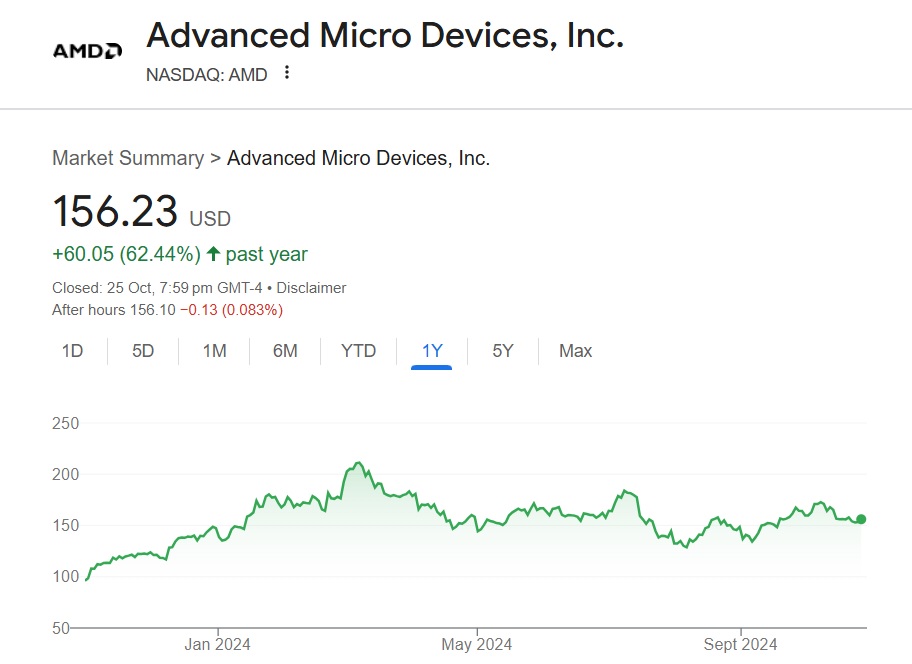
Last week’s market pullback was not merely a localized correction; it was a wholesale reassessment of risk across the hardware supply chain. High-growth, premium-valuation equities experienced heavy liquidation as quantitative funds and algorithmic traders scaled back exposure. Concerns surrounding regulatory compliance, particularly regarding advanced semiconductor export restrictions to key international markets, added an extra layer of regulatory friction. Within this turbulent environment, AMD’s stock price absorbed significant downward pressure, amplifying the stakes for its Q3 earnings release.
Market liquidity during the selloff highlighted a nervous trading community. Institutional investors are no longer satisfied with generalized hyperbole regarding future market capture. They require rigorous metrics demonstrating that capital expenditure poured into data center build-outs is translating into sustainable top-line revenue and expanding gross margins. As chip stocks attempt to rebound, the market is effectively operating on a hair-trigger, making AMD’s forthcoming numbers a pivotal near-term catalyst for the entire asset class.
The Enterprise Battleground: AMD, Nvidia, and the AI Infrastructure Race
At the heart of AMD’s Q3 narrative is the relentless corporate battle for supremacy in the AI accelerator market. While Nvidia has undeniably captured the lion's share of the market with its flagship H100 and upcoming Blackwell architectures, AMD has positioned its Instinct MI300 series as the primary institutional alternative for enterprise buyers seeking supply chain diversification and competitive pricing leverage.
Enterprise clients—ranging from hyperscale cloud providers like Microsoft, Meta, and Amazon Web Services to Fortune 500 financial institutions—are increasingly focused on infrastructure scalability and long-term cost optimization. AMD’s strategic value proposition rests on its ability to deliver high-performance computing capabilities alongside open-source software frameworks that challenge Nvidia's proprietary CUDA moat. Wall Street will be scouring the Q3 revenue figures specifically for traction in the data center segment, looking for definitive proof that the MI300 ramp is accelerating at a pace capable of justifying current valuation multiples.
Furthermore, analysts will examine gross margin trends. Semiconductor manufacturing at advanced nodes—primarily driven by foundry partners like TSMC—carries substantial upfront capital expenditure. Maintaining pricing power amidst aggressive competition while absorbing wafer cost increases will be a critical indicator of management's operational execution. Any commentary regarding supply chain allocation, advanced packaging capacity (such as Chip-on-Wafer-on-Substrate or CoWoS availability), and customer concentration risks will be scrutinized word-for-word by institutional equity researchers.
| Metric / Indicator | Prior Quarter (Q2 Actual) | Q3 Consensus Estimate | Strategic Market Implication |
|---|---|---|---|
| Total Revenue | $5.84 Billion | ~$6.71 Billion | Reflects sequential acceleration driven by data center AI adoption. |
| Data Center Segment Growth | +115% YoY | Continued Triple-Digit Growth | Crucial benchmark for MI300 series market share capture against Nvidia. |
| Non-GAAP Gross Margin | 53% | ~53.5% - 54% | Demonstrates pricing power and manufacturing cost management. |
| Client & Gaming Segments | Mixed Performance | Stabilizing PC Demand | Indicates health of traditional consumer and enterprise PC upgrade cycles. |
Industry & Market Implications: Winners, Losers, and Macro Fallout
The implications of AMD’s financial disclosure extend far beyond its immediate investor base. In the interconnected web of global technology finance, a robust earnings report coupled with confident forward guidance could ignite a durable relief rally across the entire Philadelphia Semiconductor Index (SOX). Conversely, any guidance soft spots or margin contractions could validate bearish theses, triggering a secondary wave of liquidations that would impact suppliers, equipment makers, and downstream cloud providers alike.
Who Wins in a Positive Scenario: Should AMD clear consensus estimates and raise forward projections, secondary semiconductor suppliers, memory manufacturers (such as SK Hynix and Micron providing High Bandwidth Memory or HBM), and specialized component vendors stand to benefit. It signals to the market that enterprise capital expenditure cycles remain robust, insulating hardware makers from broader macroeconomic headwinds.
Who Loses in a Negative Scenario: A disappointing print would immediately disproportionately penalize high-multiple growth equities. It would reignite fears of an artificial intelligence infrastructure bubble, forcing institutional asset allocators to rotate capital out of speculative hardware plays and into defensive, cash-flow-generative sectors. Furthermore, any sign of softening enterprise demand would cast a long shadow over upcoming earnings reports from remaining industry peers.
Frequently Asked Questions (People Also Ask)
Why is AMD’s Q3 earnings report considered critical for the broader stock market?
AMD’s report serves as a primary barometer for enterprise artificial intelligence spending and hardware demand. Coming immediately after a sharp sector-wide selloff, investors are looking to AMD’s data center revenue and forward guidance to determine whether the multi-year AI infrastructure boom remains structurally intact or faces near-term deceleration.
How does AMD compete against Nvidia in the enterprise AI chip market?
AMD competes primarily through its Instinct MI300 series accelerators. While Nvidia maintains a massive competitive advantage through its proprietary CUDA software ecosystem, AMD attracts enterprise buyers by offering competitive price-to-performance ratios, supply chain diversification alternatives, and an increasing commitment to open-source software development frameworks like ROCm.
What specific metrics are institutional investors monitoring most closely this quarter?
Wall Street analysts are focusing heavily on data center segment year-over-year revenue growth, non-GAAP gross margin stability, supply chain execution for advanced packaging (such as CoWoS), and management's forward-looking revenue guidance for the upcoming fourth quarter.
What caused the steep chip stock selloff leading up to this earnings release?
The selloff was driven by a combination of macroeconomic jitters, lofty valuation multiples that left little room for error, shifting capital expenditure priorities among cloud service providers, and renewed regulatory anxiety surrounding international semiconductor export controls.
Future Outlook: Catalysts and Milestones to Watch
As financial markets navigate the final months of the fiscal year, the trajectory of semiconductor equities will depend heavily on execution and macroeconomic stability. Following the immediate digestion of AMD’s Q3 results, market participants will quickly pivot toward several upcoming catalysts. Chief among these is the broader adoption curve of enterprise AI applications. As businesses transition from proof-of-concept pilot programs to full-scale enterprise deployments, the demand patterns for hardware accelerators will shift from experimental budgets to core operational expenditures.
Additionally, investors must monitor regulatory developments concerning international trade policies and export compliance frameworks, which retain the capacity to alter addressable markets overnight. Supply chain resilience—specifically regarding foundry capacity at TSMC and advanced packaging availability—will remain the ultimate operational bottleneck governing revenue realization.
Ultimately, AMD’s reporting window is more than a quarterly corporate ritual; it is a defining moment for market psychology. Whether the current semiconductor stock rebound matures into a sustained upward trend or succumbs to renewed volatility depends entirely on management's ability to demonstrate transparent, scalable, and highly profitable execution in an increasingly competitive global technology landscape.