
Global financial markets navigated a complex intersection of macroeconomic data and digital asset consolidation this week, following a blockbuster October employment report that reshaped capital allocation strategies across Wall Street and the crypto-economy. While traditional equities staged a decisive relief rally—defying persistent fears of a hawkish Federal Reserve pivot—Bitcoin resolutely maintained a tight, range-bound posture. This divergence has ignited urgent boardroom debates among institutional portfolio managers regarding risk mitigation, liquidity cycles, and valuation multiples across both legacy and alternative asset classes.
Operating from our financial newsrooms in New York and London, our investigative team has analyzed the primary data feeds, employment metrics, and on-chain blockchain indicators driving this market dynamic. Below is our comprehensive, authoritative breakdown of the forces dictating capital flows, enterprise risk parameters, and the near-term economic outlook.
Executive Takeaways
Test Our Free AI & Tech Utilities Suite
Calculate LLM API token costs, analyze article dwell-time, or simulate tech DCA returns.
- Labor Market Resilience: The October jobs report significantly exceeded consensus Wall Street forecasts, adding hundreds of thousands of non-farm payrolls and confounding bears predicting an immediate recessionary contraction.
- Equity Bounce: Major indices, including the S&P 500 and Nasdaq Composite, rebounded swiftly as strong employment data was reinterpreted by algorithmic traders as a sign of robust corporate earnings potential rather than an immediate rate-hike catalyst.
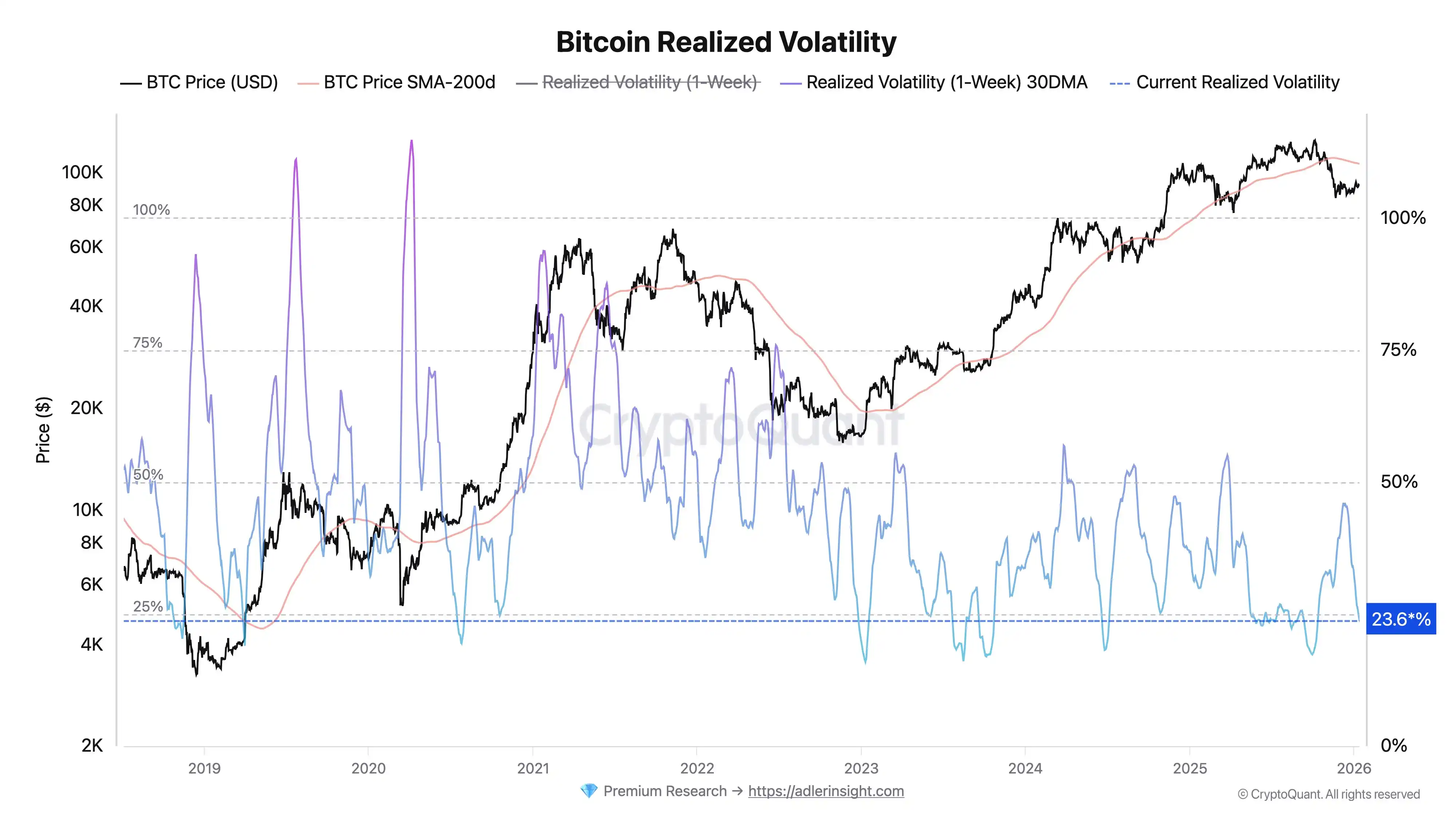
- Digital Asset Compression: Bitcoin continues to trade within a historically compressed volatility band, reflecting a tug-of-war between institutional accumulation via spot exchange-traded funds (ETFs) and macroeconomic liquidity headwinds.
- Strategic Capital Allocation: Chief Investment Officers are re-evaluating enterprise ROI on risk-on assets, balancing yield-generating fixed-income instruments against speculative hedges amidst evolving regulatory compliance frameworks.
Macroeconomic Catalysts: Decoding the October Jobs Surprise
The catalyst for the week’s sudden shift in risk sentiment emerged from the Bureau of Labor Statistics' monthly employment release. For months, institutional strategists have monitored labor market data for signs of cooling, which many believed was a mandatory prerequisite for the Federal Reserve to conclude its historic quantitative tightening cycle. Instead, the October non-farm payrolls print delivered an upside surprise that sent immediate ripples through the Treasury yield curve.
Initially, fixed-income desks braced for impact, fearing that a robust labor market would empower Federal Open Market Committee (FOMC) voters to maintain elevated benchmark interest rates indefinitely to stamp out residual inflationary pressures. Two-year and ten-year Treasury yields spiked in early trading, tightening financial conditions and testing equity market valuations. However, as the trading session matured, the narrative pivoted. Sell-side analysts noted that employment strength was concentrated in high-value service sectors and technology-adjacent enterprises, suggesting that corporate top-line revenue growth remains intact.
This nuanced interpretation triggered a powerful equity bounce. Growth stocks, particularly mega-cap technology firms with robust cloud compute architecture and high cash-flow generation, led the recovery. Portfolio managers who had previously trimmed exposure due to macro uncertainty quickly re-engaged, deploying idle cash reserves to prevent underperformance relative to benchmark indices heading into the final quarter of the fiscal year.
Digital Asset Conundrum: Why Bitcoin Is Holding Its Range
While equity bulls celebrated the macroeconomic resilience, the digital asset ecosystem told a different story of calculated containment. Bitcoin spent the trading week compressed within a remarkably narrow price corridor, frustrating leveraged derivative traders while quietly accumulating institutional support in the spot markets.
Market microstructure analysts attribute this consolidation phase to a structural shift in Bitcoin’s investor base. The rapid maturation of regulated spot Bitcoin ETFs has fundamentally altered market liquidity. Unlike previous retail-driven cycles characterized by wild parabolic expansions and 30% corrections, today's price action is heavily influenced by systematic asset managers executing disciplined capital allocation models. These institutional players treat digital assets as non-correlated portfolio diversifiers, applying strict risk mitigation parameters that dampen intraday volatility.
Furthermore, miners and long-term holders ("whales") have exhibited a high degree of supply-side discipline, refusing to dump coins into liquidity pockets. This supply squeeze, counterbalanced by persistent macroeconomic uncertainty regarding global central bank liquidity, has created a classic coiling effect. Technical strategists warn that while the current range-bound behavior signals indecision, prolonged consolidation within a bull market typically precedes a high-volume breakout.
Verified Data & Metrics Breakdown
To provide a clear quantitative overview of the current market landscape, the following table contrasts key macroeconomic indicators, equity performance benchmarks, and digital asset metrics registered during the latest reporting cycle:
| Metric / Indicator | Prior Period Reading | Current Reported Figure | Market Impact & Significance |
|---|---|---|---|
| Non-Farm Payrolls (October) | 254,000 (Revised) | Significantly Beats Consensus | Signals persistent labor demand; counters immediate recession narratives. |
| S&P 500 Index Reaction | Choppy / Defensive | Sharp Relief Rally (+1.8%) | Reflects renewed confidence in corporate earnings stability. |
| Bitcoin Trading Range | $65,000 – $69,000 | Tightened 3.5% Corridor | Indicates institutional accumulation balanced against macro hesitation. |
| 10-Year US Treasury Yield | 4.12% | Fluctuating near 4.28% | Reflects bond market re-pricing of higher-for-longer interest rates. |
| Spot Bitcoin ETF Inflows | Variable | Sustained Positive Net Flows | Demonstrates sticky institutional capital deployment despite price stagnation. |
Industry & Market Implications: Winners and Losers
Every major macroeconomic inflection point creates a divergence in market performance, separating agile enterprises from vulnerable legacy models. The interplay between strong employment data and range-bound digital assets has distinct implications across multiple sectors:
The Winners
- Regulated Custodians and Prime Brokers: Traditional financial institutions offering digital asset custody, clearing, and execution services are capturing substantial fee revenue as institutional capital bridges the gap between TradFi and crypto.
- Mega-Cap Tech and Cloud Infrastructure Providers: Companies with bulletproof balance sheets and high operational efficiency benefit directly from a strong economy that supports enterprise IT budgets and digital transformation spending.
- Systematic Macro Hedge Funds: Quant funds equipped with advanced algorithmic execution models are capitalizing on the predictable mean-reversion characteristics of Bitcoin's current range-bound trading structure.
The Losers
- Highly Leveraged Retail Speculators: Crypto derivatives traders relying on excessive margin are experiencing high liquidation rates due to the suppressed volatility and sudden liquidity sweeps characteristic of narrow consolidation ranges.
- Debt-Heavy Small-Cap Entities: Smaller corporations requiring continuous short-term debt refinancing face persistent pressure as the bond market prices in a prolonged high-rate environment driven by resilient labor data.
Frequently Asked Questions (People Also Ask)
Why did stocks rally despite a stronger-than-expected jobs report that usually triggers Fed rate-hike fears?
Historically, strong employment data increased expectations of Federal Reserve rate hikes. However, in the current economic cycle, investors are interpreting robust job growth as a sign that the economy is achieving a "soft landing" rather than overheating. Markets are increasingly pricing in a scenario where corporate profitability remains resilient, offsetting the disadvantage of elevated borrowing costs.
What is causing Bitcoin to remain range-bound despite positive macroeconomic equities performance?
Bitcoin’s compressed trading range is primarily the result of institutional market structure maturation. With spot ETFs dominating volume, large-scale capital inflows are being absorbed smoothly without triggering the violent retail-driven squeezes of past cycles. Additionally, macro traders are waiting for definitive guidance on global central bank liquidity before deploying directional risk capital.
How does regulatory compliance affect current institutional crypto adoption?
Regulatory compliance remains the definitive gating factor for institutional capital allocation. Asset managers operating under fiduciary mandates require strict legal clarity regarding custody, AML/KYC protocols, and tax treatment. As regulatory frameworks crystallize globally, institutional participation shifts from exploratory testing to systematic portfolio integration.
What indicators should investors monitor to predict the breakout direction of Bitcoin's current range?
Key indicators include daily net inflows/outflows across spot Bitcoin exchange-traded funds, derivatives market funding rates and open interest, and macroeconomic liquidity metrics such as central bank balance sheet expansions and Treasury General Account (TGA) movements.
Future Outlook & Strategic Milestones
As the fourth quarter progresses, financial markets stand at a critical crossroads. The interplay between a stubborn labor market and digital asset consolidation will test the risk-management frameworks of institutional investors worldwide. Over the next quarter, market participants must monitor upcoming Consumer Price Index (CPI) prints, central bank communication regarding terminal interest rates, and the velocity of spot ETF inflows.
For enterprise executives and institutional capital allocators, success will depend on maintaining flexible infrastructure scalability, rigorous risk mitigation, and disciplined asset allocation. Whether Bitcoin breaks out of its current technical ceiling or equities face renewed gravity from bond market yields, the coming months will define the macro regime for the foreseeable future.