
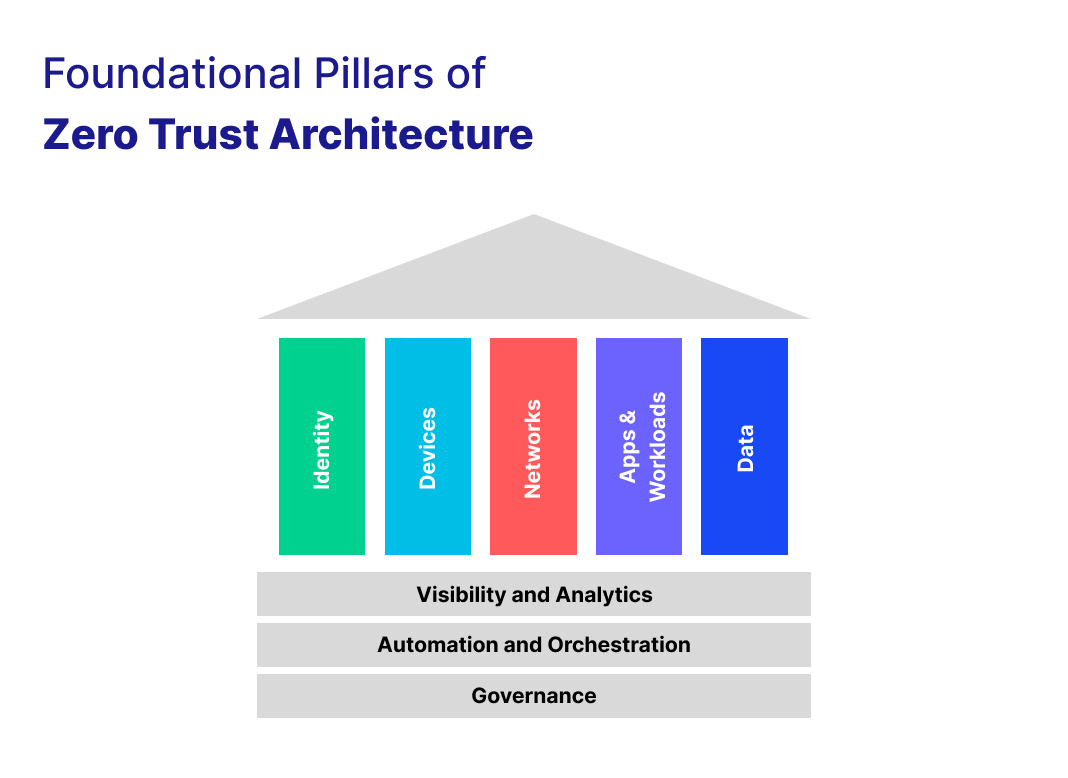
Executive Takeaways
- Paradigm Shift: Traditional perimeter-based enterprise security is obsolete, forcing global financial institutions to overhaul their cloud compute architecture and adopt continuous, context-aware "Adaptive Trust."
- BPI Blueprint: Landmark research published by the Bank Policy Institute (BPI) on March 21, 2022, authored by Andrew Kennedy, established the definitive risk-mitigation framework for deploying Zero Trust Architecture (ZTA) across heavily regulated banking environments.
- Capital Allocation & ROI: While the upfront infrastructure scalability costs run into tens of millions per institution, the long-term ROI is defended through catastrophic breach prevention, reduced cyber insurance premiums, and preserved valuation multiples.
- Regulatory Convergence: Compliance with tightening SEC, Federal Reserve, and global oversight mandates requires absolute data lineage tracking and dynamic, identity-centric access controls.
For decades, the financial services sector operated on a medieval security philosophy: build a towering, impenetrable castle wall around the corporate data center, trust everyone operating inside the keep, and vigorously repel outsiders at the drawbridge. That castle-and-moat security model is dead. In an era defined by decentralized remote workforces, multi-cloud migrations, and sophisticated nation-state threat actors, assuming implicit trust based on network locality is a multi-billion-dollar corporate liability.
The imperative to dismantle legacy perimeters reached an inflection point on March 21, 2022, when the Bank Policy Institute (BPI)—the nonpartisan public policy, research, and advocacy group representing the nation's largest commercial banks—released a seminal white paper titled "Adaptive Trust: Zero Trust Architecture in a Financial Services Environment," authored by Andrew Kennedy. This foundational document did not merely suggest a technical upgrade; it charted an existential course correction for how global financial institutions must architect their defenses to protect systemic market liquidity, sensitive customer ledgers, and critical national infrastructure.
The Catalytic Events Breaking the Perimeter
Test Our Free AI & Tech Utilities Suite
Calculate LLM API token costs, analyze article dwell-time, or simulate tech DCA returns.
The acceleration toward Zero Trust Architecture (ZTA) within banking and capital markets was not born of theoretical ambition; it was forced by a series of compounding structural vulnerabilities. Throughout the late 2010s and early 2020s, the financial sector experienced an unprecedented convergence of technological transformation and aggressive cyber-espionage.
First came the mass migration to hybrid and multi-cloud environments. As major institutions moved core transaction processing, customer relationship management, and analytical engines to Amazon Web Services (AWS), Microsoft Azure, and Google Cloud Platform, the traditional physical network perimeter dissolved. Assets were suddenly scattered across ephemeral containers, serverless functions, and SaaS applications worldwide.
Second, the COVID-19 pandemic shattered the physical office model. Overnight, hundreds of thousands of traders, wealth managers, and risk analysts logged in from residential broadband networks, turning millions of home routers into potential vectors for lateral threat movement. Legacy Virtual Private Networks (VPNs)—once considered the gold standard of remote access—proved dangerously porous once compromised. Threat actors could infiltrate a remote endpoint, slip past the VPN gateway, and roam undetected across internal corporate networks for months.
High-profile supply chain compromises, such as the SolarWinds Orion breach and subsequent zero-day exploits targeting enterprise file-transfer utilities, demonstrated that trusted vendor ecosystems could easily become Trojan horses. In this volatile threat landscape, the BPI’s 2022 intervention served as a vital roadmap, synthesizing industry consensus around a singular, uncompromising mantra: Never trust, always verify, and continuously adapt.
Deconstructing "Adaptive Trust": Core Tenets of the BPI Framework
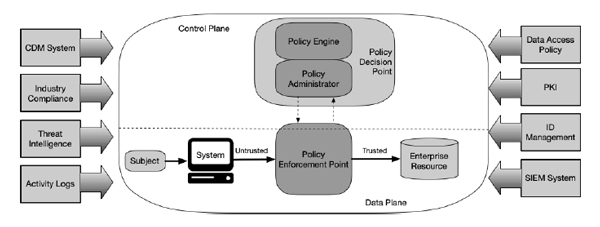
Authored by Andrew Kennedy, the BPI publication unpacked the complexities of translating Zero Trust principles—originally conceptualized by security analysts and the National Institute of Standards and Technology (NIST SP 800-207)—into the hyper-regulated, high-throughput reality of global banking.
Unlike standard enterprise IT environments, financial services infrastructure demands ultra-low latency, absolute transactional integrity, and compliance with stringent data residency and privacy laws. The BPI framework emphasizes that ZTA in banking cannot be purchased off the shelf as a single product; it is an evolutionary design philosophy encompassing identity governance, micro-segmentation, and dynamic policy enforcement.
- Continuous Identity Verification: Authentication cannot stop at the login screen. Adaptive Trust utilizes continuous, risk-based behavioral analytics. If a proprietary trading algorithm suddenly executes trades from an anomalous IP address or exhibits unusual data-access velocity, the system dynamically steps up authentication requirements or instantly revokes session privileges.
- Least-Privilege Access & Micro-Segmentation: Financial institutions are dismantling flat internal networks. By partitioning the network into hyper-granular micro-segments, a compromise in a peripheral marketing database cannot translate into lateral access to core ledger databases or SWIFT payment processing pipelines.
- Device Health and Posture Assessment: Every endpoint—whether a corporate-issued MacBook, a trader's Bloomberg terminal, or an authorized mobile device—must continuously prove its cryptographic health, patch level, and compliance posture before being granted ephemeral access to sensitive data repositories.
| Security Dimension | Legacy Perimeter Model | BPI Adaptive Trust (ZTA) Model |
|---|---|---|
| Trust Paradigm | Implicit trust inside the corporate firewall. | Zero implicit trust; verification is explicit and continuous. |
| Network Architecture | Flat networks protected by heavy perimeter firewalls and VPNs. | Micro-segmented environments with software-defined perimeters. |
| Access Control | Static role-based access control (RBAC) granted for long durations. | Dynamic, context-aware attribute-based access control (ABAC) with session limits. |
| Data Visibility | Obscured internal traffic flows; blind spots behind the firewall. | Comprehensive end-to-end telemetry, encryption, and data lineage tracking. |
Industry & Market Implications: Capital Allocation and Valuation Multiples
The transition to Adaptive Trust carries profound financial and strategic ramifications across the global banking ecosystem. Chief Information Security Officers (CISOs) are no longer viewed merely as technical operators; they are core participants in capital allocation strategy and enterprise risk management.
Who Wins
Enterprise technology vendors specializing in identity and access management (IAM), software-defined networking, automated policy orchestration, and continuous threat intelligence have experienced unprecedented demand. Major commercial banks that aggressively embraced the BPI modernization roadmap early have established a distinct competitive moat. By fortifying their operational resilience, these institutions command higher valuation multiples from equity analysts and institutional investors who increasingly penalize firms plagued by recurring cyber incidents or regulatory sanctions.
Who Loses
Legacy hardware vendors relying on traditional perimeter firewall sales face declining margins. More critically, financial institutions that underinvest in infrastructure scalability and modern ZTA frameworks risk catastrophic capital losses. A single major breach resulting in data exfiltration or systemic downtime can trigger severe regulatory enforcement actions, class-action shareholder litigation, and an immediate contraction of market capitalization.
Furthermore, the insurance market is undergoing a structural correction. Underwriters are aggressively raising cyber insurance premiums or denying coverage entirely to financial firms unable to demonstrate rigorous, auditable adherence to Zero Trust principles. Adaptive Trust has transformed from a technical nice-to-have into a baseline prerequisite for securing affordable risk mitigation and maintaining operational liquidity.
Frequently Asked Questions (People Also Ask)
What is the primary objective of the Bank Policy Institute's 2022 "Adaptive Trust" report?
The report serves as an authoritative strategic blueprint for financial institutions transitioning from legacy perimeter-based security to Zero Trust Architecture. It addresses the unique regulatory, operational, and technical challenges banks face when implementing continuous verification, micro-segmentation, and dynamic risk-based access controls across complex multi-cloud environments.
How does Zero Trust Architecture impact financial regulatory compliance?
ZTA significantly enhances regulatory compliance with mandates from bodies like the SEC, the Federal Reserve, and international data protection authorities. By enforcing rigorous data lineage tracking, strict identity governance, and granular access logging, financial institutions can readily demonstrate compliance with operational resilience standards and consumer privacy laws during regulatory audits.
Why are traditional VPNs considered insufficient in a modern banking architecture?
Traditional VPNs grant authenticated users broad, implicit trust to roam freely across an internal corporate network once logged in. If a threat actor compromises a single remote endpoint or steals user credentials, they gain unhindered lateral movement across the network. Zero Trust eliminates this vulnerability by treating every access request as untrusted, regardless of network origin.
What are the primary financial hurdles in deploying Adaptive Trust across legacy banking systems?
The primary hurdles include substantial upfront capital expenditure, the complexity of integrating modern IAM solutions with legacy mainframe applications, and potential friction for end-users if authentication controls are poorly tuned. However, these expenses are increasingly viewed by executive leadership as essential investments in long-term risk mitigation and business continuity.
Future Outlook: The Road Ahead for Financial Cyber Resilience
As we look past the initial post-pandemic implementation phase, the evolution of Adaptive Trust in financial services is accelerating toward full artificial intelligence and machine learning automation. Human security teams alone can no longer manually process the sheer volume of telemetry generated by modern cloud-native banking operations. The next frontier involves AI-driven policy engines capable of making sub-second, automated decisions regarding access privileges based on real-time threat intelligence and behavioral anomaly detection.
Key milestones for institutional risk committees to monitor over the coming fiscal cycles include:
- Regulatory Mandate Harmonization: Anticipating standardized, binding federal regulations that formally codify Zero Trust requirements for systemically important financial institutions (SIFIs).
- Quantum-Resistant Cryptography: Integrating post-quantum cryptographic standards into Zero Trust data transmission protocols to future-proof bank ledgers against quantum computing decryption threats.
- Supply Chain Zero Trust: Expanding adaptive trust frameworks to comprehensively monitor and verify third-party fintech partners, API aggregators, and software vendors in real-time.
Ultimately, the BPI’s 2022 framework was not the conclusion of the cybersecurity journey, but the starting gun. For Wall Street, City of London, and global banking executives, mastering Adaptive Trust is no longer a discretionary IT initiative—it is the bedrock upon which modern, solvent, and trustworthy financial commerce is secured.


