Executive Takeaways
- The Paradigm Shift: Generative AI and massive data-center capital expenditures are fundamentally altering corporate balance sheets, resurrecting Credit Default Swaps (CDS) as essential instruments for institutional risk mitigation.
- Infrastructure Leverage: The race for cloud compute architecture and semiconductor supply chains has created unprecedented debt exposure, forcing credit risk managers to deploy sophisticated hedging strategies.
- Valuation Multiples & Liquidity: High-yield corporate issuers funding AI initiatives face compressed valuation multiples, driving heightened market liquidity in sovereign and corporate CDS indices.
- Regulatory Compliance: Basel III and IV frameworks are intersecting with new AI credit-scoring methodologies, transforming compliance protocols across tier-1 investment banks.
For more than a decade following the 2008 global financial crisis, the Credit Default Swap (CDS) market was widely viewed as a quiet backwater of institutional finance. Once infamous as the complex derivatives at the epicentre of the subprime mortgage meltdown, CDS contracts suffered from shrinking volumes, stringent regulatory oversight, and a prolonged era of central-bank-induced low interest rates that made corporate default protection largely unnecessary. Today, that narrative has been utterly upended. On trading desks from lower Manhattan to the City of London, a singular, transformative force is driving a dramatic resurgence: artificial intelligence.
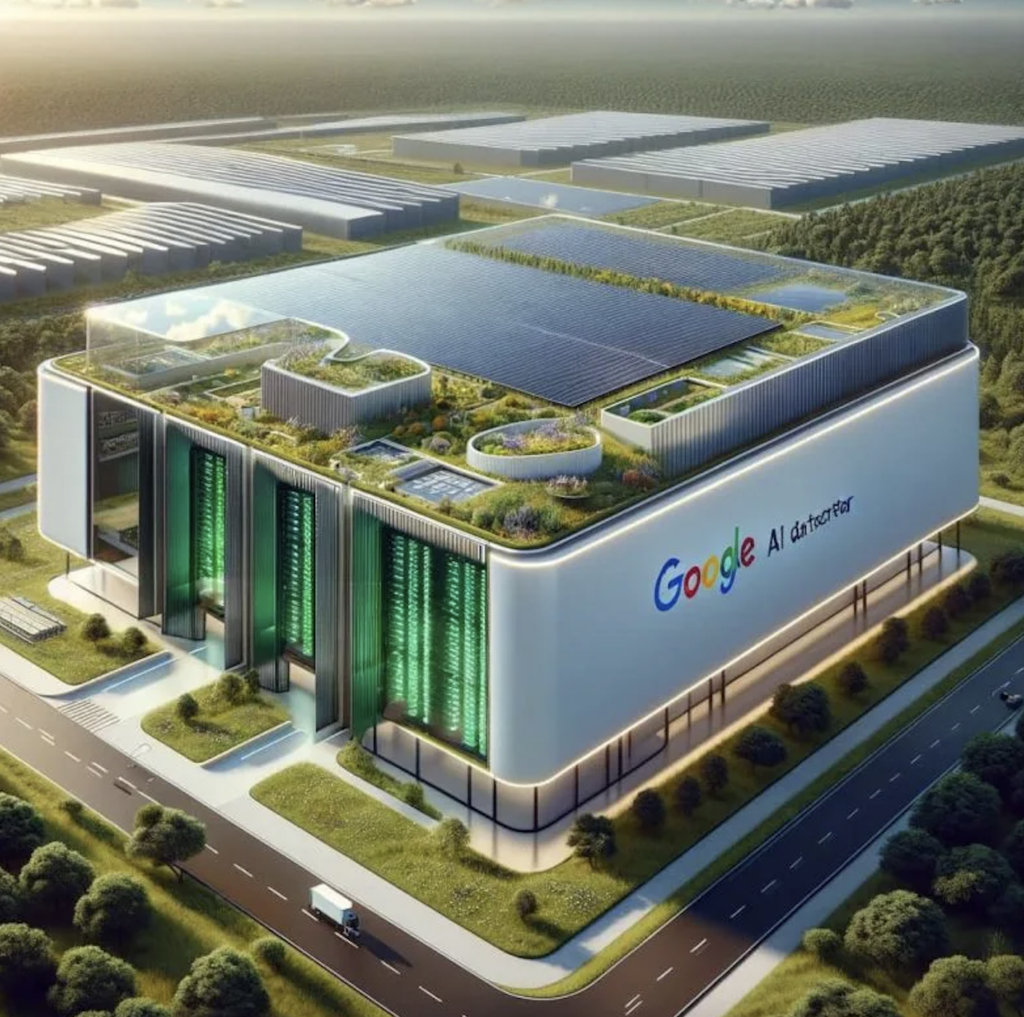
As Big Tech titans and enterprise conglomerates embark on a generational capital expenditure supercycle to build out generative AI infrastructure, the financial markets are recalibrating credit risk. The sheer scale of capital allocation required for advanced cloud compute architecture, proprietary large language model (LLM) training, and semiconductor fabrication has ignited a boom in corporate debt issuance. Consequently, institutional asset managers, hedge funds, and chief risk officers are turning back to CDS markets to hedge against credit deterioration, making credit default swaps great again.
The Catalytic Intersection of Generative AI and Corporate Leverage
Test Our Free AI & Tech Utilities Suite
Calculate LLM API token costs, analyze article dwell-time, or simulate tech DCA returns.
The modern AI boom is unlike any previous technological revolution because of its staggering capital intensity. Building frontier AI clusters requires tens of billions of dollars in upfront capital commitments, pushing even cash-rich mega-cap technology firms and traditional telecommunications, energy, and industrial giants to tap the corporate bond market. While the equity markets remain fixated on top-line revenue growth and artificial intelligence monetization timelines, debt markets are adopting a far more sober, risk-adjusted perspective.
This divergence between equity exuberance and fixed-income caution has created a fertile environment for credit derivatives. Institutional investors are actively utilizing single-name CDS and index-level products—such as the CDX North America Investment Grade Index and the iTraxx Europe—to express tactical views on corporate creditworthiness. When an enterprise announces a multi-billion-dollar debt-financed pivot toward AI infrastructure without an immediate, clear line of sight to enterprise ROI, credit markets take notice. Spreads widen, and demand for downside protection surges.
Furthermore, the systemic nature of the AI supply chain introduces correlated default risks. A liquidity squeeze or technological obsolescence cycle impacting tier-1 hardware manufacturers or specialized data-center REITs could cascade rapidly through the broader corporate credit ecosystem. Financial institutions are leveraging advanced analytics and automated market-making algorithms to price these complex correlations, breathing sophisticated new life into a derivatives market that many thought was structurally in decline.
Quantifying the Resurgence: Metrics, Spreads, and Capital Flows

The empirical evidence of the CDS revival is visible across major financial data terminals. Trading volumes, notional outstanding amounts, and bid-ask spreads for technology-adjacent corporate credit derivatives have experienced a measurable inflection point over the past four quarters. As credit risk managers re-evaluate leverage ratios against macroeconomic headwinds, the mechanics of risk transfer have shifted dramatically.
| Metric / Indicator | Pre-AI Boom (2018–2021) | Current Market State (2024–2025) | Strategic Implication |
|---|---|---|---|
| Global CDS Notional Volume | Stagnant / Declining (~$8T-$9T) | Expanding (~$12.5T+) | Heightened demand for macro and corporate risk hedging. |
| Tech-Sector Debt Issuance | Low-yield, opportunistic | Record highs for AI infrastructure funding | Increased balance-sheet leverage necessitates active credit protection. |
| CDS Index Volatility (CDX IG) | Muted, range-bound | Responsive to tech capex announcements | Derivatives pricing in binary technological shift risks. |
| Algorithmic Execution Share | Under 25% | Exceeding 55% | AI-driven execution improves market liquidity and pricing efficiency. |
Industry & Market Implications: Winners, Losers, and Systemic Risk
The rebirth of the credit default swap market under the banner of artificial intelligence creates distinct winners and losers across the financial and corporate landscapes. Understanding these dynamics is essential for institutional investors seeking to navigate the modern economic terrain.
The Winners
- Tier-1 Investment Banks & Prime Brokers: Wall Street institutions facilitating derivatives trading are seeing a lucrative resurgence in fee income and trading desk revenue as client hedging activity climbs.
- Quantitative Hedge Funds & Risk Tech Vendors: Funds equipped with sophisticated machine learning models can arbitrage pricing inefficiencies between underlying corporate bonds and single-name CDS. Risk management software providers are experiencing surging demand for real-time portfolio stress testing.
- Prudent Corporate Treasurers: Issuers who maintain disciplined capital allocation while utilizing derivatives to lock in favorable financing spreads are insulating themselves against market volatility.
The Losers & Vulnerabilities
- Over-Leveraged Tech and Infrastructure Borrowers: Companies that have aggressively mortgaged their future cash flows to purchase expensive graphics processing units (GPUs) and build data centers face severe spread widening if their AI monetization metrics disappoint.
- Traditional Long-Only Credit Investors: Asset managers slow to adopt active credit hedging strategies risk absorbing unhedged drawdowns as structural technological disruption rattles traditional industry moats.
Frequently Asked Questions (People Also Ask)
Why is AI causing a surge in Credit Default Swap (CDS) trading?
The AI boom requires unprecedented capital expenditures, prompting technology and enterprise firms to issue massive amounts of corporate debt. As leverage increases and questions surrounding enterprise ROI persist, institutional investors are utilizing Credit Default Swaps to hedge against potential credit downgrades and default risks associated with high-cost infrastructure build-outs.
How do institutional investors use CDS in the context of technology investments?
Portfolio managers use single-name CDS contracts and broad indexes (such as CDX or iTraxx) to transfer credit risk without selling their underlying bond holdings. This allows them to maintain exposure to high-yield or investment-grade debt while effectively purchasing insurance against specific corporate distress or broader sector-wide credit shocks.
Are current CDS market dynamics reminiscent of the 2008 financial crisis?
No. While the instruments are structurally similar, today's CDS market operates under much stricter regulatory compliance frameworks, higher central clearinghouse mandates, and vastly superior capital reserve requirements (such as Basel III/IV). The current activity reflects targeted hedging of corporate balance-sheet leverage rather than opaque, unregulated subprime mortgage speculation.
What role does artificial intelligence play in trading the derivatives themselves?
Beyond driving the underlying risk, AI technologies—including natural language processing for parsing credit reports and machine learning algorithms for predictive default modeling—are increasingly utilized by quantitative trading desks to execute trades, optimize liquidity, and price complex derivative structures in real time.
Future Outlook: Milestones and Strategic Horizons
Looking ahead, the convergence of artificial intelligence and credit derivatives will continue to reshape global capital markets. As enterprise deployment of generative AI transitions from proof-of-concept pilot programs to fundamental operational dependencies, the market will demand hard proof of financial return. If revenue realization lags behind the staggering capital expenditures, credit spreads will inevitably widen, testing the resilience of corporate balance sheets.
Key milestones for market participants to monitor over the next twelve to twenty-four months include:
- Corporate Refinancing Waves: The maturity wall of corporate debt issued during the initial AI infrastructure scramble, which will test issuers' ability to roll over debt at sustainable yields.
- Regulatory Evolution: Potential updates from global financial regulators regarding capital treatment for derivative exposures tied to rapidly evolving technology sectors.
- AI-Driven Credit Rating Adjustments: The integration of automated, AI-driven corporate credit assessment tools by major rating agencies, which could accelerate spread adjustments in secondary markets.
Ultimately, the renaissance of the Credit Default Swap market underscores a timeless financial maxim: every technological revolution requires a robust mechanism for managing risk. As Wall Street navigates the brave new world of artificial intelligence, CDS has decisively transitioned from a forgotten relic of past crises into an indispensable instrument for modern financial survival.